Korea Macro Daily(Beta Mode)
Chip Boom Lifts KOSPI Past 6,000; Won, Bonds Diverge
Market Snapshot
| Asset | Level | Change |
|---|---|---|
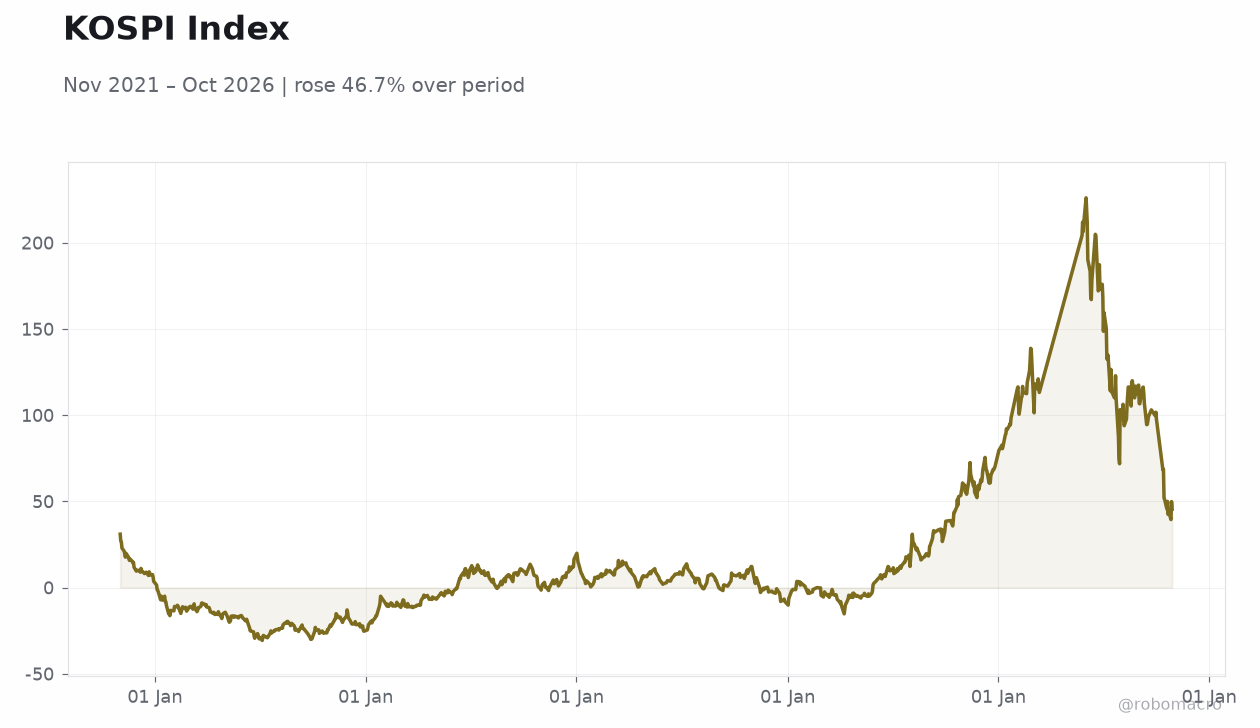
| KOSPI | 6,012.44 | +6.63% |
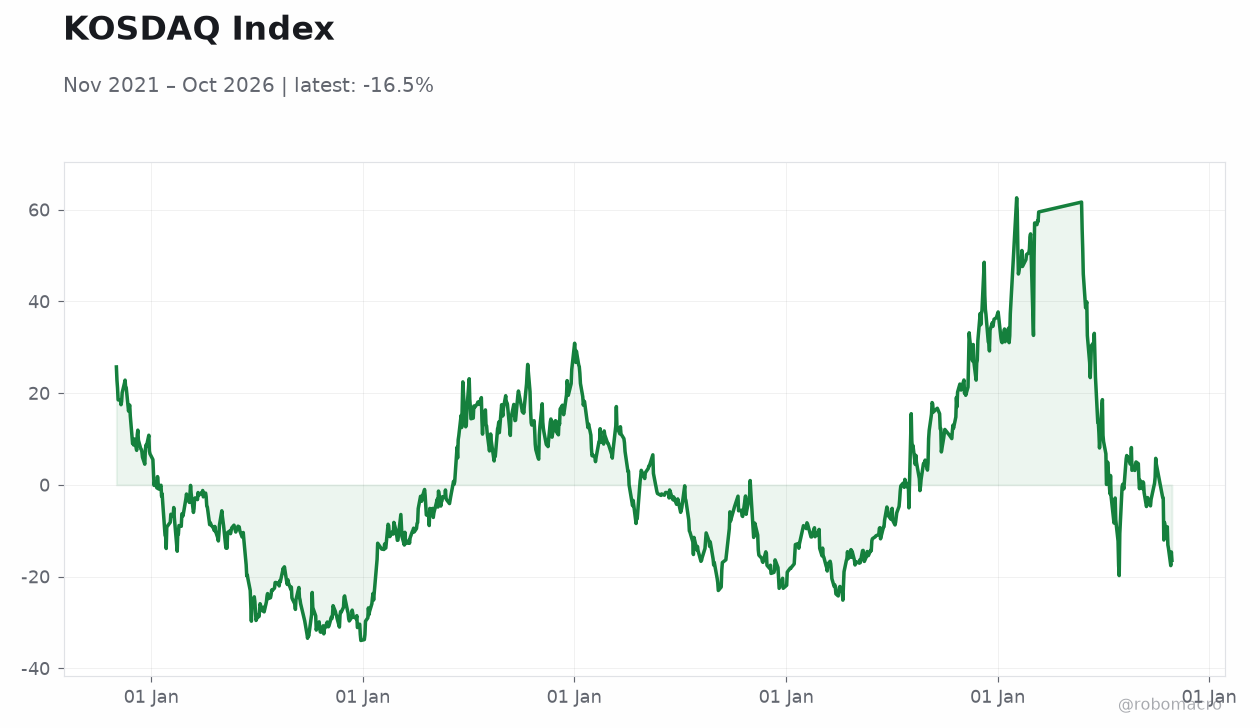
| KOSDAQ | 771.28 | +3.69% |
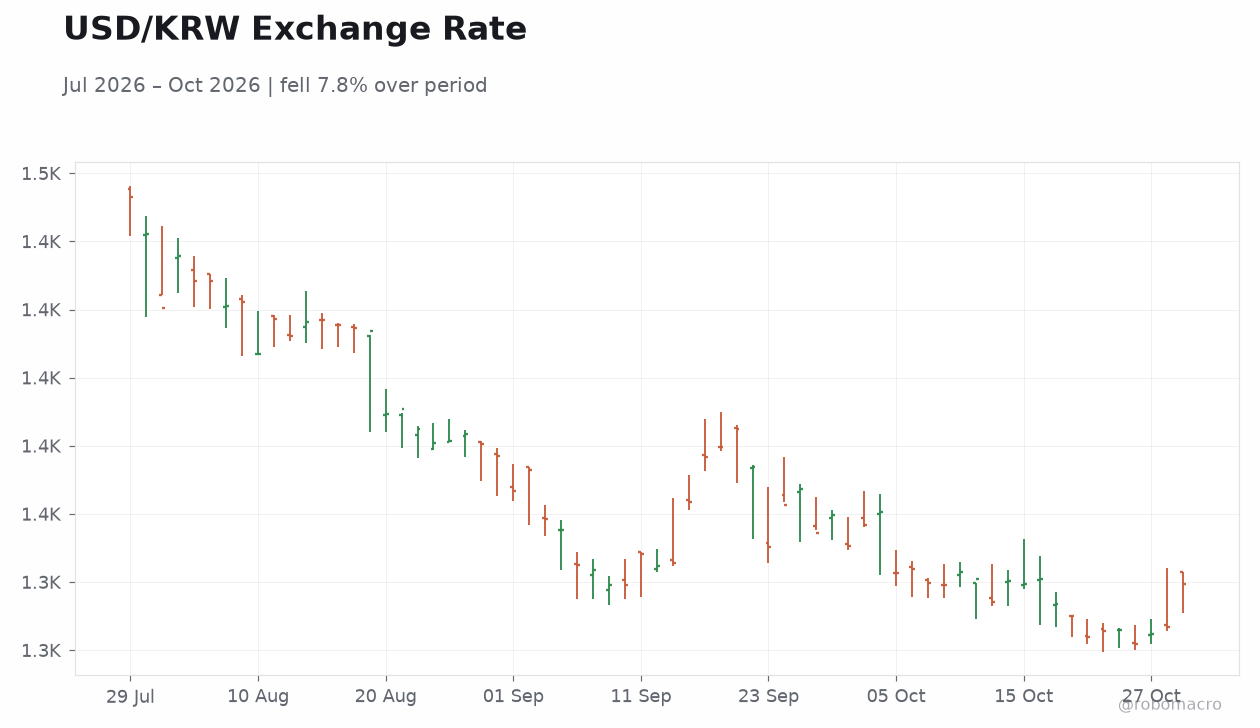
| USD/KRW | 1,339.73 | +0.97% |
| Samsung | 230,000.00 | -4.96% |
| SK Hynix | 1,532,000.00 | +3.03% |
| Brent Crude | 111.54 | -3.28% |
| Gold | 4,033.30 | -0.45% |
| Bitcoin | 79,096.54 | -2.67% |
| Korea 3Y Govt Yield | 3.80% | +4 bp |
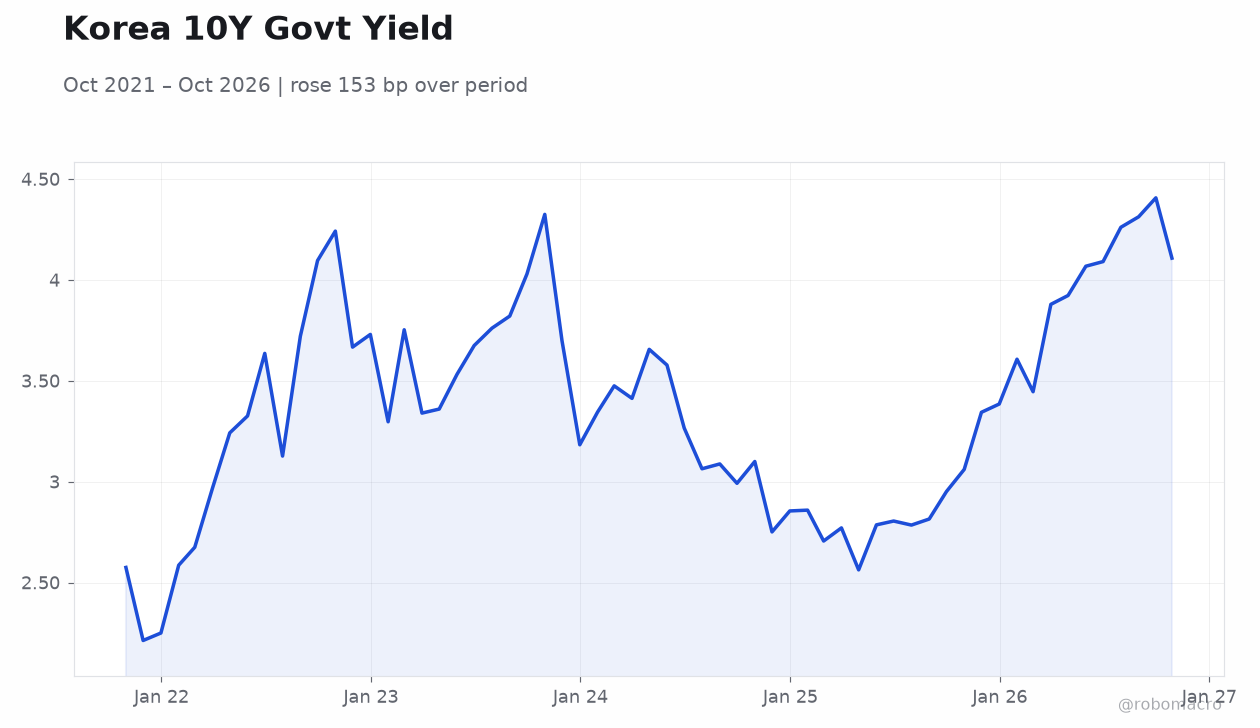
| Korea 10Y Govt Yield | 4.11% | +8 bp |
Prior Economic Events
| Data | Prior | Cons | Actual |
|---|---|---|---|
| Consumer Confidence Index | 106.60 | - | 105.40 |
| GDP Growth Quarter-over-Quarter Advance Estimate | 0.60 | 0.70 | 1 |
| GDP Growth Year-over-Year Advance Estimate | 3.70 | 3 | 3.40 |
| Business Confidence Index | 79 | - | 78 |
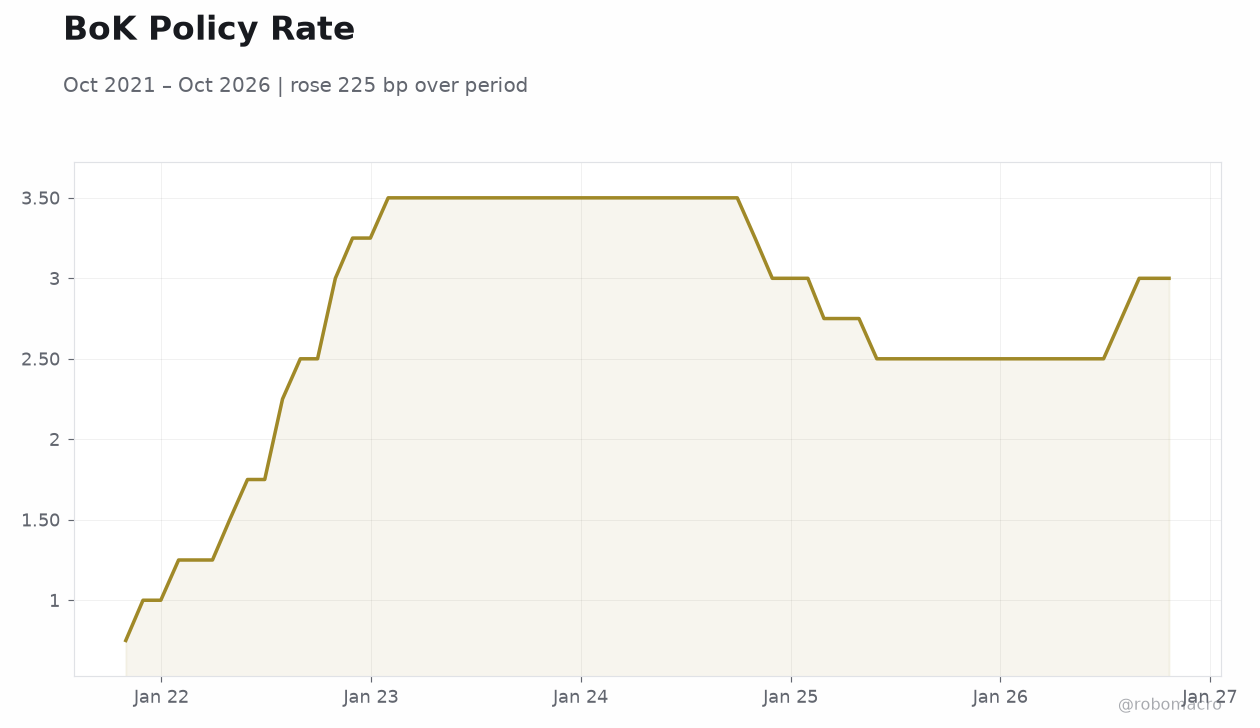 BoK Policy Rate | Type: macro_line | Policy rate %: 3 (2026-10-22) | Range: 0.75–3.5 | Trend(5pt): 0.75,3.5,3.5,2.5,3
Today's Economic Events
| Data | Prior | Cons | Time |
|---|---|---|---|
| Saturday (2026-10-31) | |||
| Exports Year-over-Year | 83.70 | - | 20:00 |
- Q3 GDP advanced 1.0% q/q and 3.4% y/y, beating consensus on AI-chip export strength
- KOSPI surged 6.63% past 6,000 on SK Hynix's record profit; Samsung fell 4.96% on chip-supply concerns
- BoK flagged won volatility as USD/KRW rose 0.97% to 1,339.73; 10Y yield climbed 8 bp to 4.11%
Yesterday's Recap
Korea's Q3 advance GDP printed 1.0% q/q versus 0.7% consensus and 3.4% y/y versus 3.0% expected, confirming an AI-semiconductor-led acceleration. Consumer Confidence slipped to 105.4 from 106.6, and Business Confidence eased to 78 from 79, signaling household and corporate caution beneath the headline growth. Equities diverged violently: KOSPI jumped 6.63% to 6,012.44 and KOSDAQ rose 3.69% to 771.28, with SK Hynix up 3.03% to 1,532,000 won after reporting a 632% on-year operating-profit surge and pledging $75bn in shareholder returns.
Samsung Electronics fell 4.96% to 230,000 won despite a 15-fold chip-profit jump, as investors balked at disclosure gaps and a worsening AI-chip shortage outlook. Rates sold off, with the 3Y yield up 4 bp to 3.80% and the 10Y up 8 bp to 4.11%, while USD/KRW rose 0.97% to 1,339.73 even as headlines noted a partial won recovery on dollar weakness. Brent crude fell 3.28% to $111.54, offering limited relief to import-cost pressure.
The Day Ahead
The domestic calendar is empty through Friday, leaving markets to digest the GDP print and chip-earnings flow. The next scheduled Korean release is October Exports Year-over-Year on Saturday, October 31, at 20:00 ET, with no consensus published and the prior reading at 83.7. Trade data will be scrutinized for confirmation that AI-chip demand is sustaining the export impulse implied by Q3 growth.
With no BoK speakers or data on deck, won direction and global risk appetite will dominate local price action. Bond investors will watch whether the 10Y holds above 4.10% after the post-GDP steepening.
Other Economic Notes
The GDP composition matters more than the headline: chip-led net exports are carrying growth while domestic confidence softens, a lopsided recovery that leaves Korea exposed to any AI-demand air pocket. Samsung's share decline despite strong chip profits highlights disclosure and execution concerns that could cap KOSPI breadth even as SK Hynix leads. Carbon-neutrality policy costs are estimated to shave 0.06–0.07 percentage points off annual growth through 2060, a slow-burn fiscal consideration.
↓ p.2