Korea Macro Daily(Beta Mode)
Korea CPI Stays Above Target as Chip Selloff Hits KOSPI
Market Snapshot
| Asset | Level | Change |
|---|---|---|
| KOSPI | 5,859.08 | +2.24% |
| KOSDAQ | 734.36 | +1.38% |
| USD/KRW | 1,344.53 | +1.43% |
| Samsung | 218,750.00 | -4.48% |
| SK Hynix | 1,384,000.00 | -5.98% |
| Brent Crude | 104.37 | -0.38% |
| Gold | 3,930.80 | -0.98% |
| Bitcoin | 77,817.44 | +1.49% |
| Korea 3Y Govt Yield | 3.74% | +3 bp |
| Korea 10Y Govt Yield | 4.03% | +2 bp |
Prior Economic Events
| Data | Prior | Cons | Actual |
|---|---|---|---|
| Inflation Rate Year-over-Year | 2.90 | 2.90 | 2.80 |
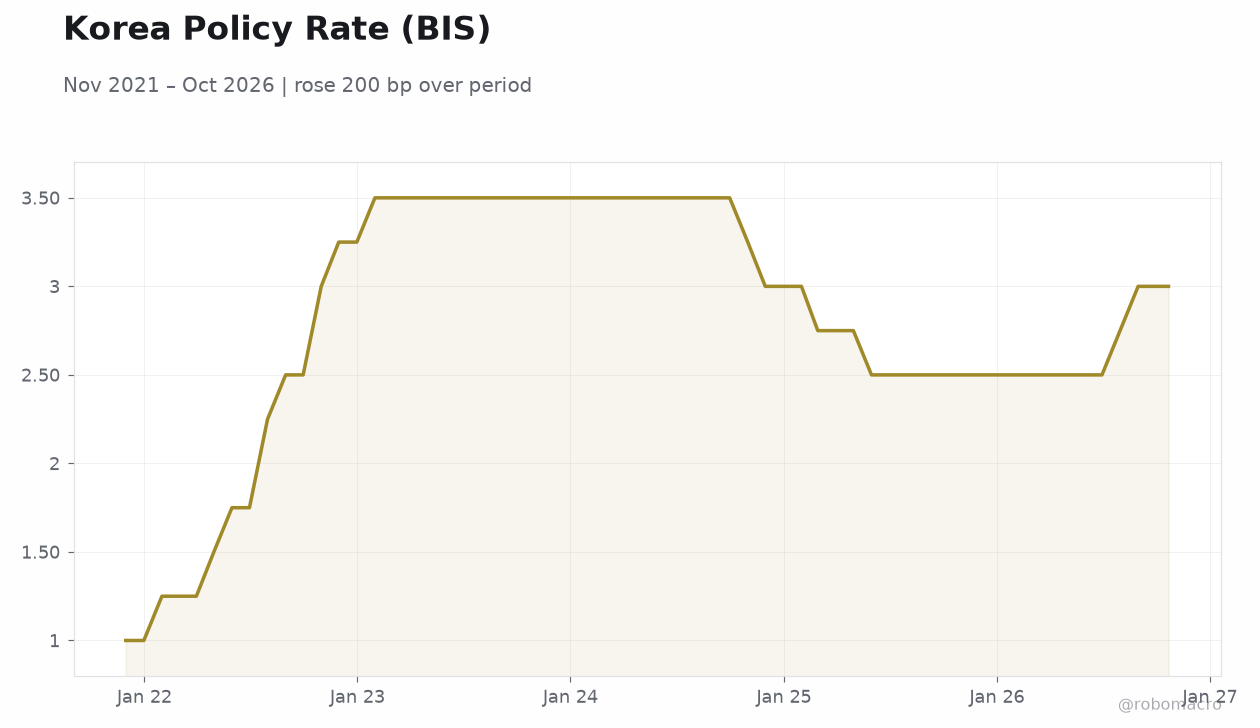 Korea Policy Rate (BIS) | Type: macro_line | Policy rate (%): 3 (2026-10-22) | Range: 1–3.5 | Trend(5pt): 1,3.5,3.5,2.5,3
Today's Economic Events
| Data | Prior | Cons | Time |
|---|---|---|---|
| No events available | |||
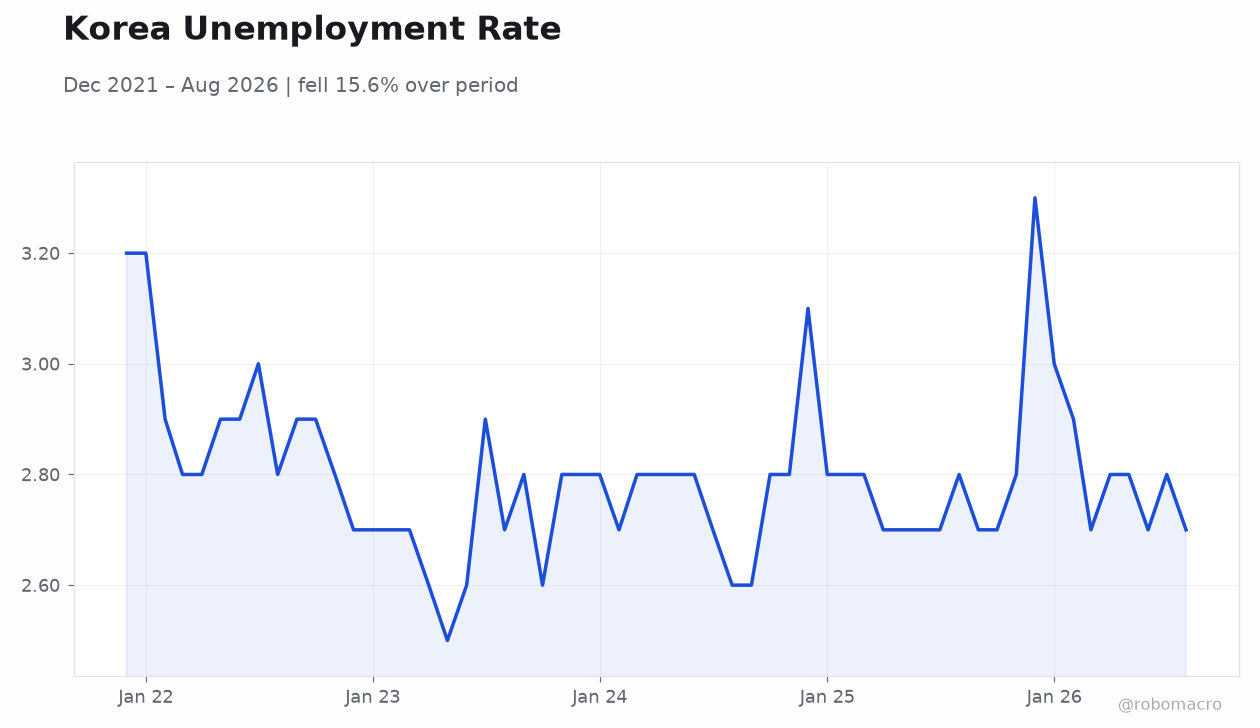
- Korea's October CPI printed at 2.8% YoY, still above the BoK's 2% target and keeping the case for further tightening alive despite a modest cooling from the prior 2.9% reading.
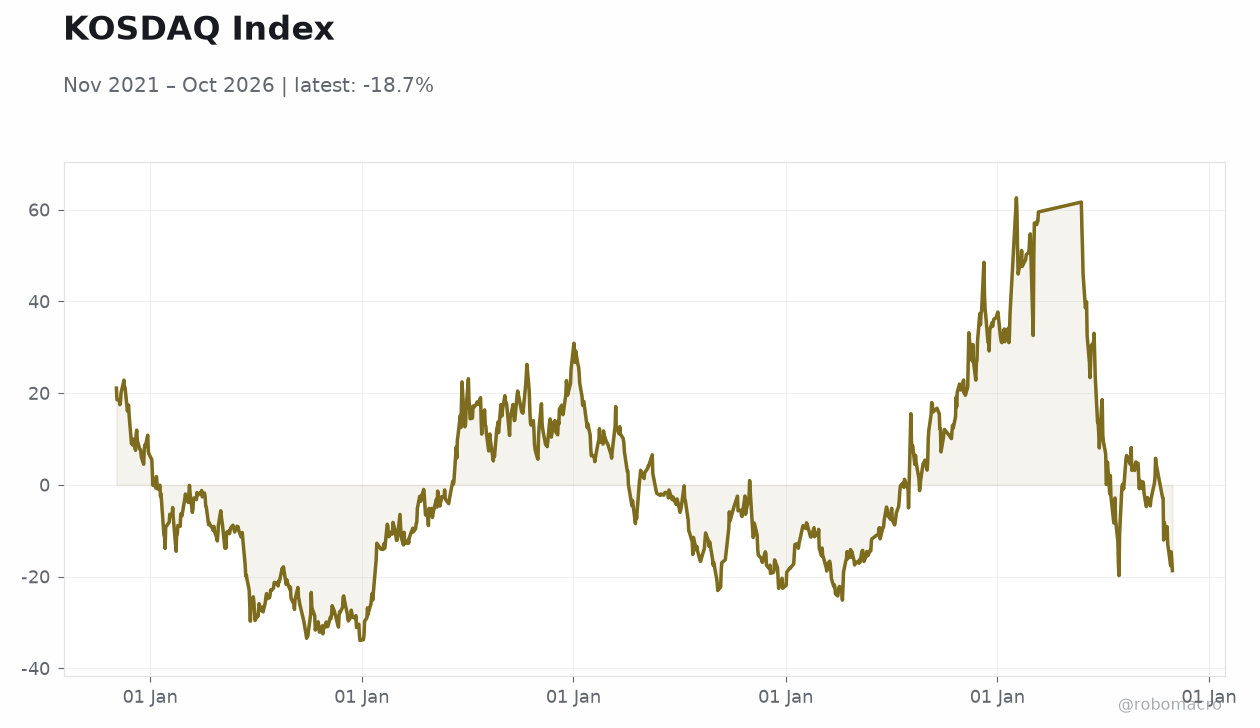
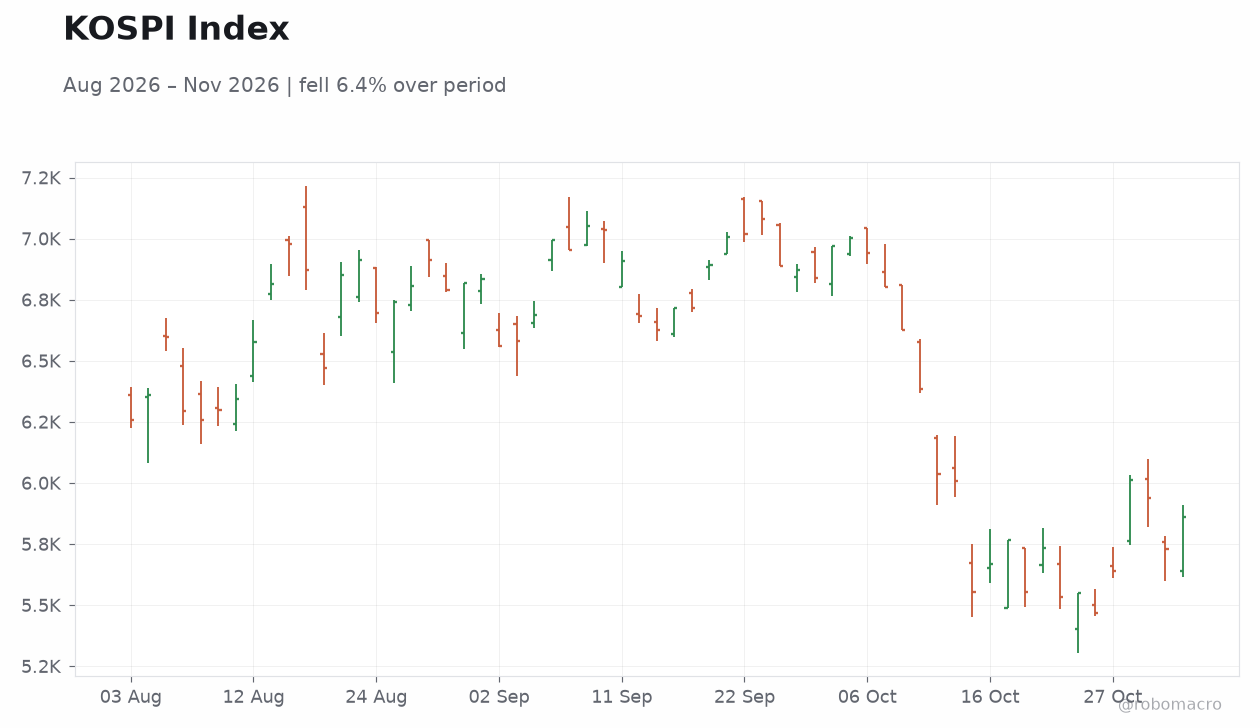
- Korean equities diverged sharply: KOSPI rose 2.24% to 5,859.08 even as Samsung (-4.48%) and SK Hynix (-5.98%) sold off on a U.S. AI-linked tech unwind.
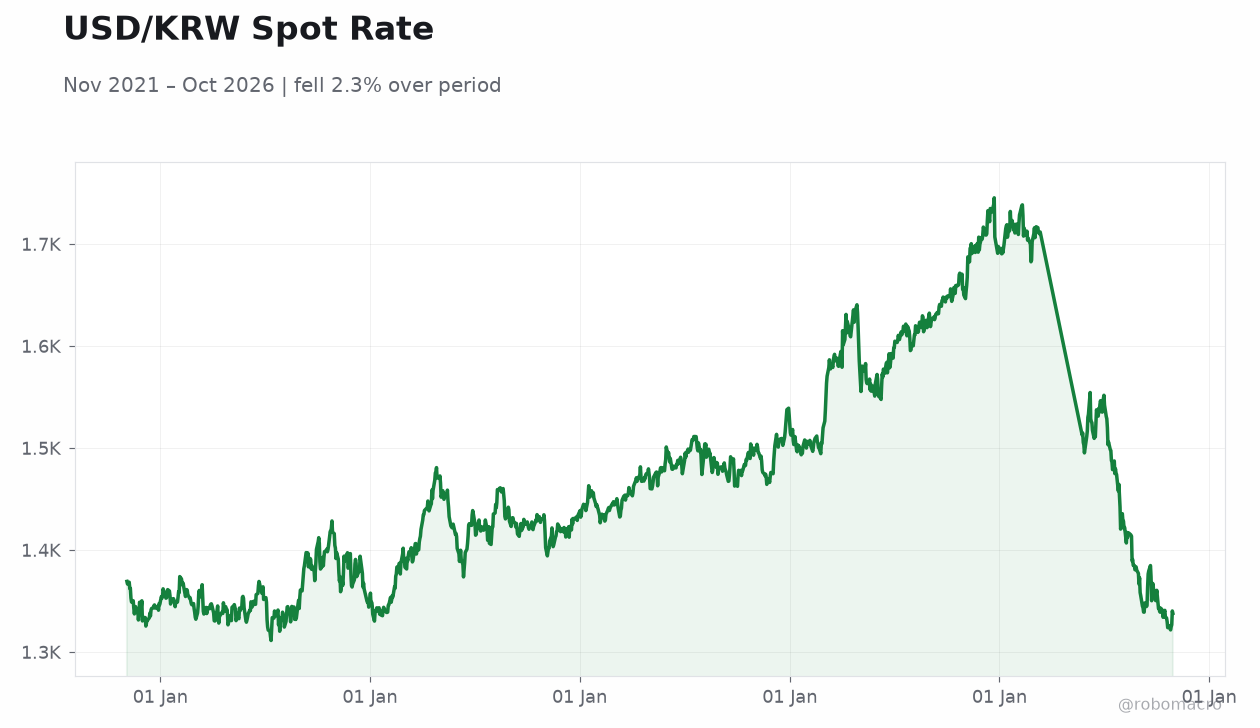
- USD/KRW jumped 1.43% to 1,344.53 while the 3-year yield rose 3 bp to 3.74% and the 10-year added 2 bp to 4.03%, reflecting sticky inflation and a firmer dollar backdrop.
Yesterday's Recap
Korea's October inflation rate came in at 2.8% year-over-year, a touch below consensus of 2.9% and the prior 2.9% print, but still comfortably above the Bank of Korea's 2% target. The release reinforced the narrative that price pressures remain entrenched, particularly in personal services and durable goods, as flagged by the BoK's own commentary. Markets reacted with unusual divergence: KOSPI rallied 2.24% to 5,859.08 and KOSDAQ gained 1.38% to 734.36, yet index heavyweights Samsung (-4.48% to KRW 218,750) and SK Hynix (-5.98% to KRW 1,384,000) were hit hard by a U.S.
AI-related selloff. The won weakened sharply, with USD/KRW rising 1.43% to 1,344.53, while rates edged higher — the 3-year yield added 3 bp to 3.74% and the 10-year rose 2 bp to 4.03%. Household loans rebounded by KRW 2.8 trillion in October, underscoring resilient credit demand even as policy stays restrictive.
The Day Ahead
No scheduled Korean data releases are on the calendar for today or tomorrow, leaving markets to trade off the inflation print and external risk sentiment. Attention turns to the Bank of Korea's next monetary policy meeting on November 26, where the committee will weigh the sticky 2.8% CPI against financial stability concerns. The 2027 budget proposal is in focus, with KRW 21.3 trillion earmarked for AI and semiconductor initiatives, signaling continued fiscal support for the export engine.
Offshore won account initiatives — Woori Bank's first step into offshore won transactions — bear watching as a channel for foreign portfolio flows. With no domestic catalysts, USD/KRW and the chip complex will likely track U.S. tech earnings and Fed messaging.
Other Economic Notes
Korea's "K-shaped" recovery is drawing scrutiny, with the semiconductor boom distorting household finances and fiscal metrics even as broader domestic demand lags. Household loans rebounding by KRW 2.8 trillion in October suggests credit growth is reaccelerating into a higher-rate environment, a combination the BoK will monitor closely. ↓ p.2