Korea Macro Daily(Beta Mode)
KOSPI Plunges 6% as AI Selloff Hits Semis
Market Snapshot
| Asset | Level | Change |
|---|---|---|
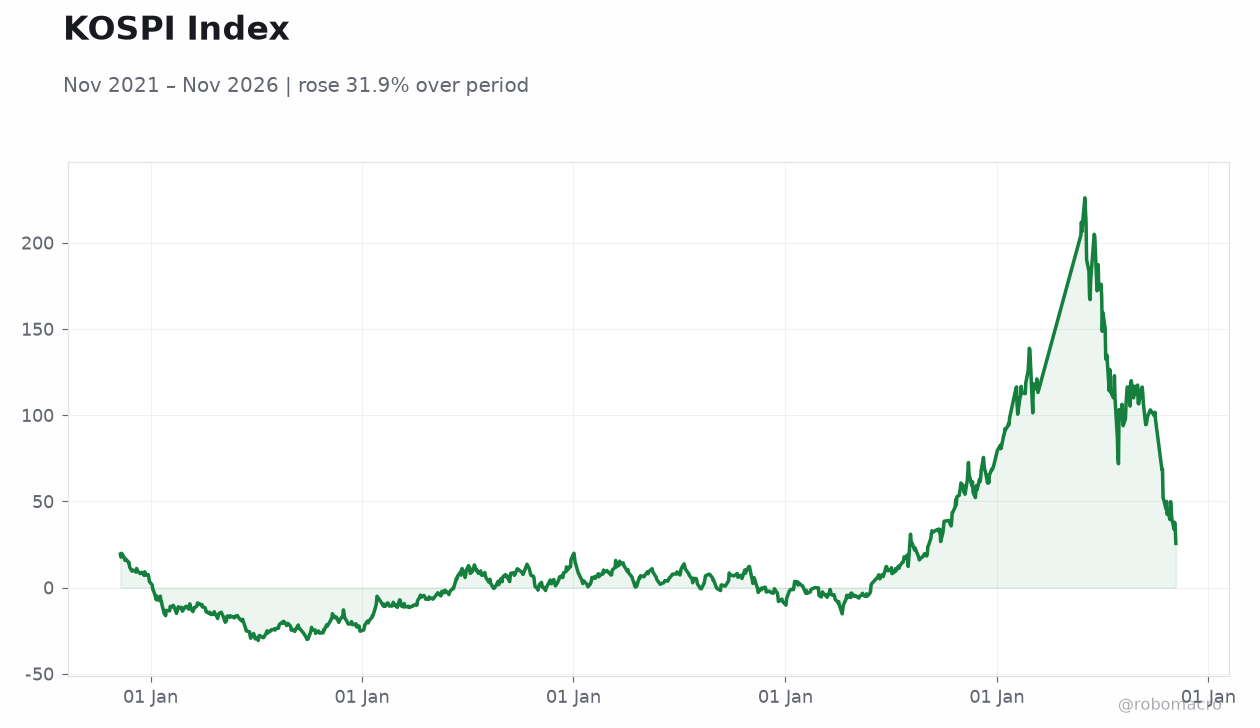
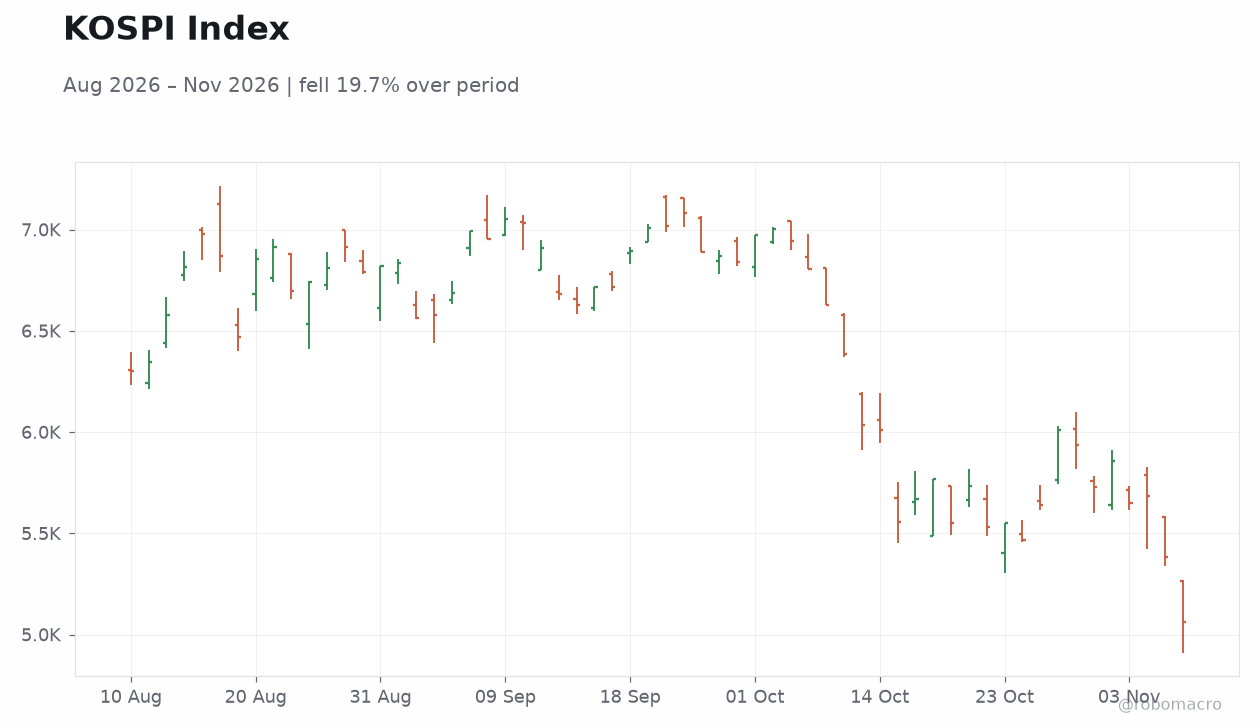
| KOSPI | 5,059.69 | -6.02% |
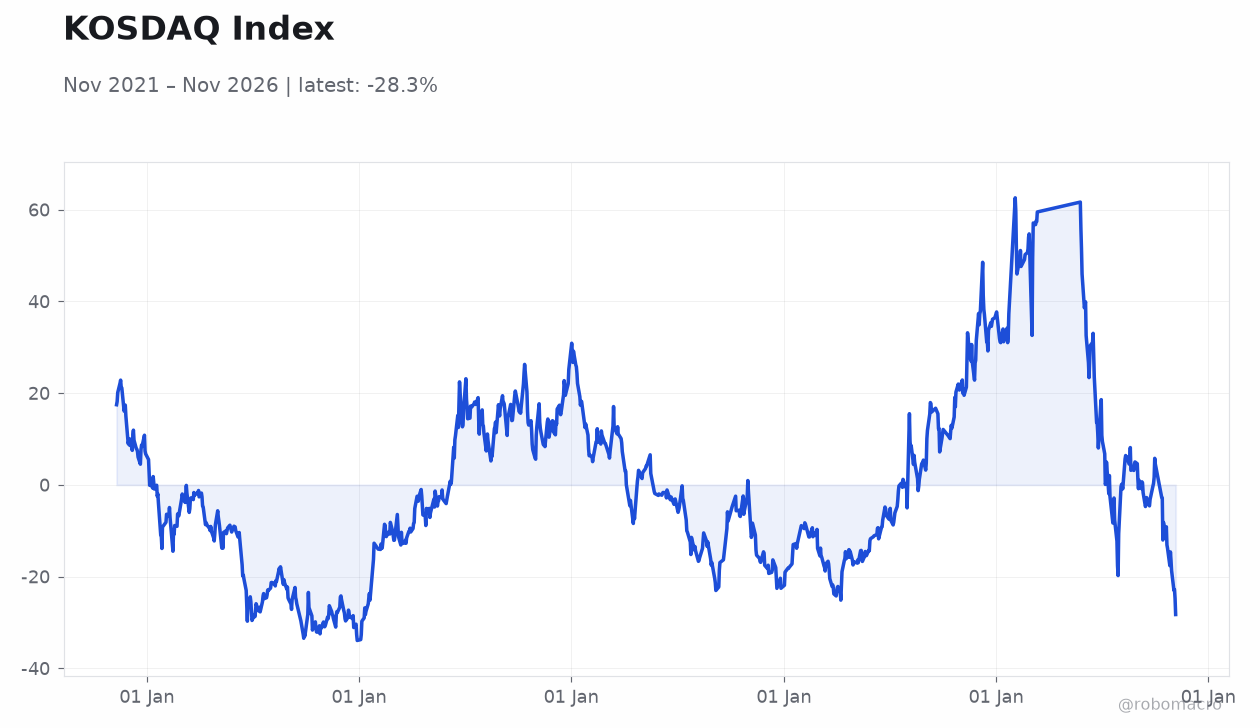
| KOSDAQ | 644.27 | -5.03% |
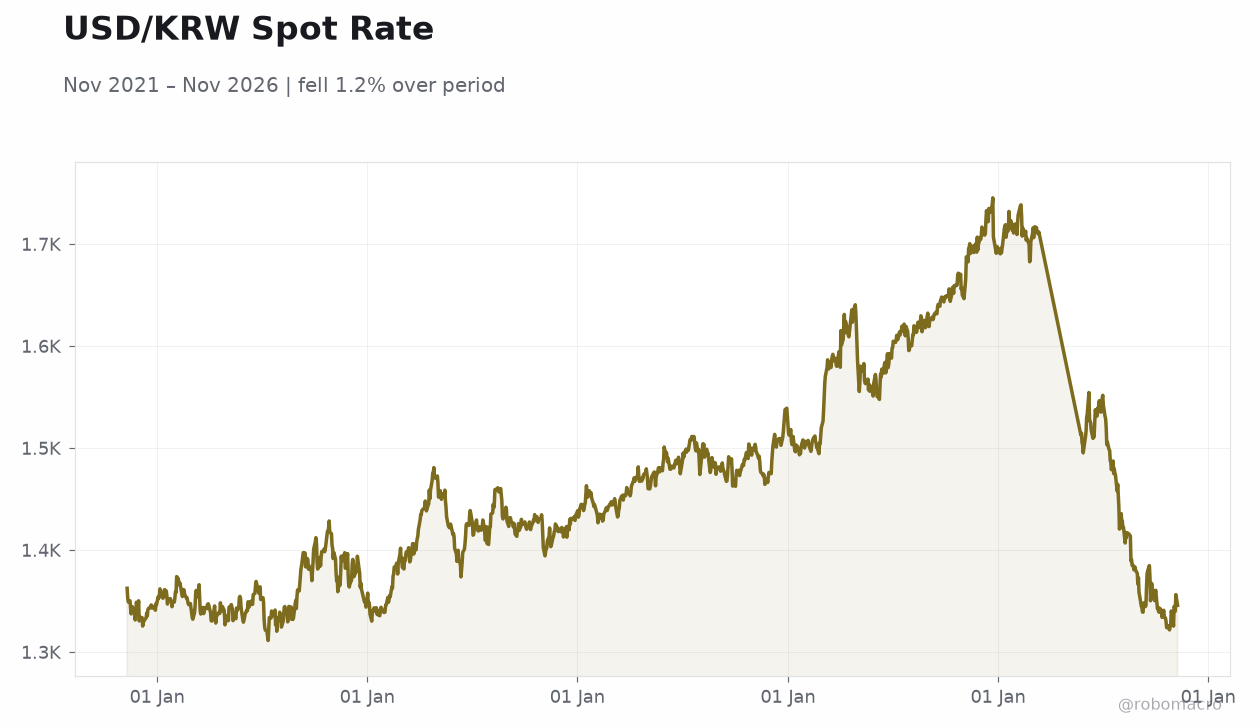
| USD/KRW | 1,340.42 | -1.17% |
| Samsung | 188,700.00 | -6.35% |
| SK Hynix | 1,132,000.00 | -10.44% |
| Brent Crude | 92.91 | -5.50% |
| Gold | 4,149.30 | +1.83% |
| Bitcoin | 74,781.36 | +0.26% |
| Korea 3Y Govt Yield | 3.64% | +3 bp |
| Korea 10Y Govt Yield | 3.85% | -4 bp |
Prior Economic Events
| Data | Prior | Cons | Actual |
|---|---|---|---|
| No events available | |||
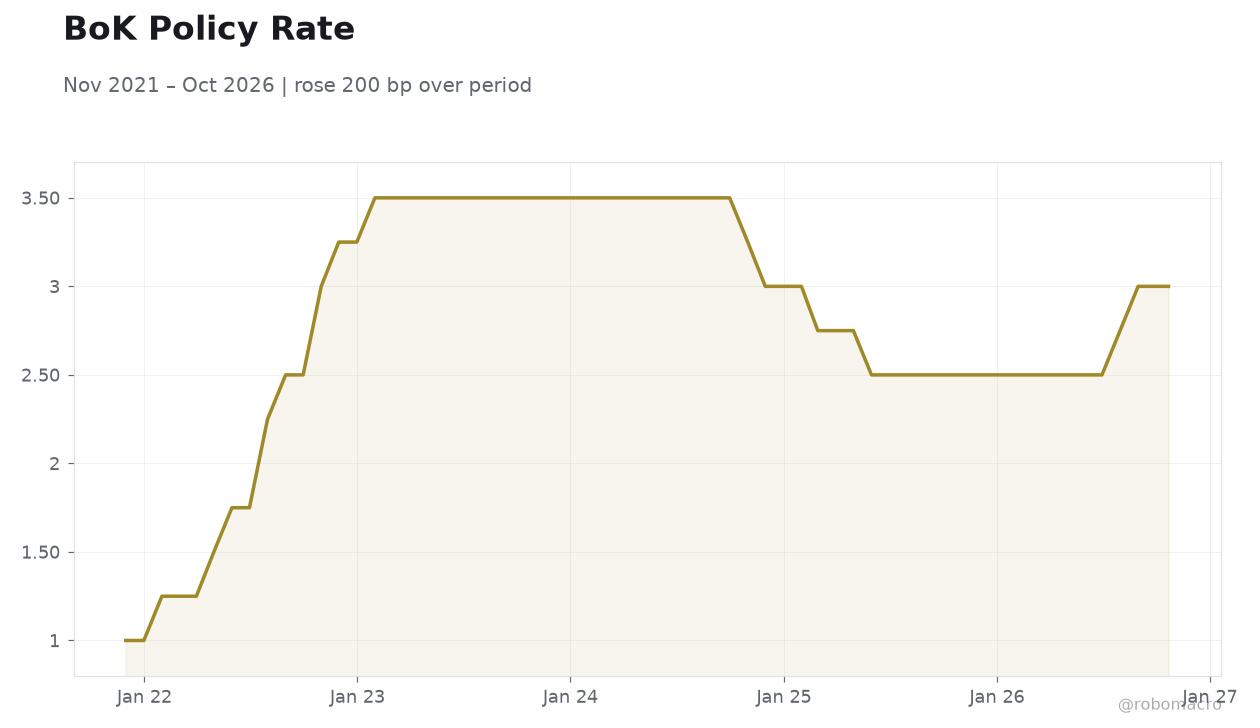 BoK Policy Rate | Type: macro_line | Policy Rate (%): 3 (2026-10-22) | Range: 1–3.5 | Trend(5pt): 1,3.5,3.5,2.5,3
Today's Economic Events
| Data | Prior | Cons | Time |
|---|---|---|---|
| Tuesday (2026-11-10) | |||
| Headline Unemployment Rate | 2.60 | - | 18:00 |
- KOSPI tumbled 6.02% to 5,059.69 and KOSDAQ fell 5.03% as a global AI-stock selloff hammered Samsung (-6.35%) and SK Hynix (-10.44%), with trading briefly halted.
- The won strengthened 1.17% to 1,340.42 on dollar sales and risk-taking flows, even as the 3-year yield rose 3 bp to 3.64% and the 10-year eased 4 bp to 3.85%.
- The BoK weighs a November hike with the KOSPI plunge as a final variable; October CPI stayed above target and household debt topped 2 quadrillion won.
Yesterday's Recap
Korean equities suffered a sharp risk-off session, with the KOSPI dropping 6.02% to 5,059.69 and the KOSDAQ falling 5.03% to 644.27, prompting the exchange to halt trading as the AI-driven selloff accelerated. Samsung Electronics slid 6.35% to 188,700 and SK Hynix plunged 10.44% to 1,132,000, bearing the brunt of semiconductor weakness tied to Nvidia-related concerns. Despite the equity rout, the won strengthened 1.17% to 1,340.42 against the dollar on dollar sales and improved risk-taking sentiment, with BofA recommending buying won dips.
Rates moved in opposite directions: the 3-year yield rose 3 bp to 3.64% while the 10-year eased 4 bp to 3.85%, steepening pressure on the curve. Brent crude fell 5.50% to 92.91, while gold rose 1.83% to 4,149.30 as a safe-haven bid emerged. Authorities exempted the credit-loan collateral ratio rule for three months as the KOSPI broke 5,000, a targeted stabilization measure.
The Day Ahead
The calendar is light, with the headline unemployment rate for South Korea scheduled for release on Tuesday, November 10 at 18:00 ET, following a prior reading of 2.6%. No consensus figure is available, so the print will be watched for signs of labor-market resilience amid the equity turmoil. Markets will also digest the prior session's dramatic semiconductor selloff and any follow-through in Samsung and SK Hynix shares.
With the BoK's November 26 meeting approaching, incoming data will feed directly into the hike-versus-hold debate. Traders will monitor won volatility and bond-curve moves for spillovers from the equity correction.
Other Economic Notes
Household debt has risen past 2 quadrillion won, with both young and old borrowers struggling to stay afloat, underscoring financial-stability risks that complicate the BoK's tightening path. October CPI remained above target, keeping inflation concerns alive even as growth-facing asset markets wobble. Korea's national debt is approaching 250 million won per child, a fiscal burden that frames longer-term spending debates.
↓ p.2