Korea Macro Daily(Beta Mode)
Seoul Surges as Chip Rally Defies Rate Worries
Market Snapshot
| Asset | Level | Change |
|---|---|---|
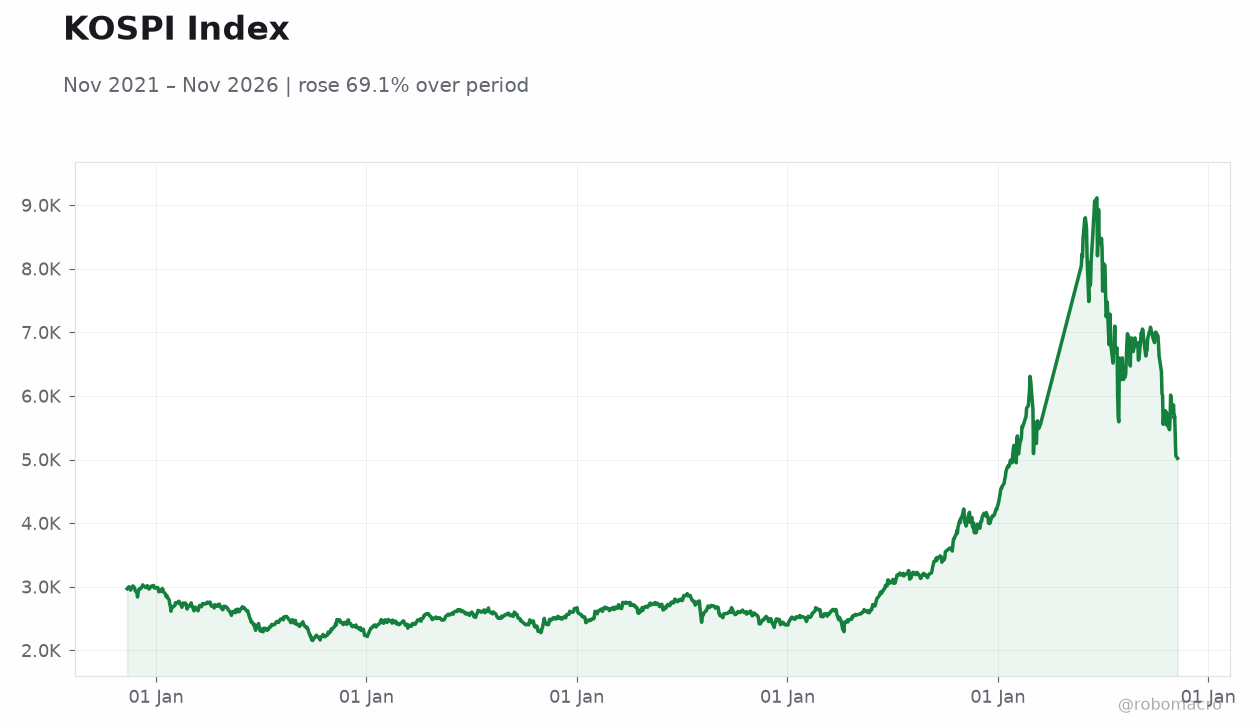
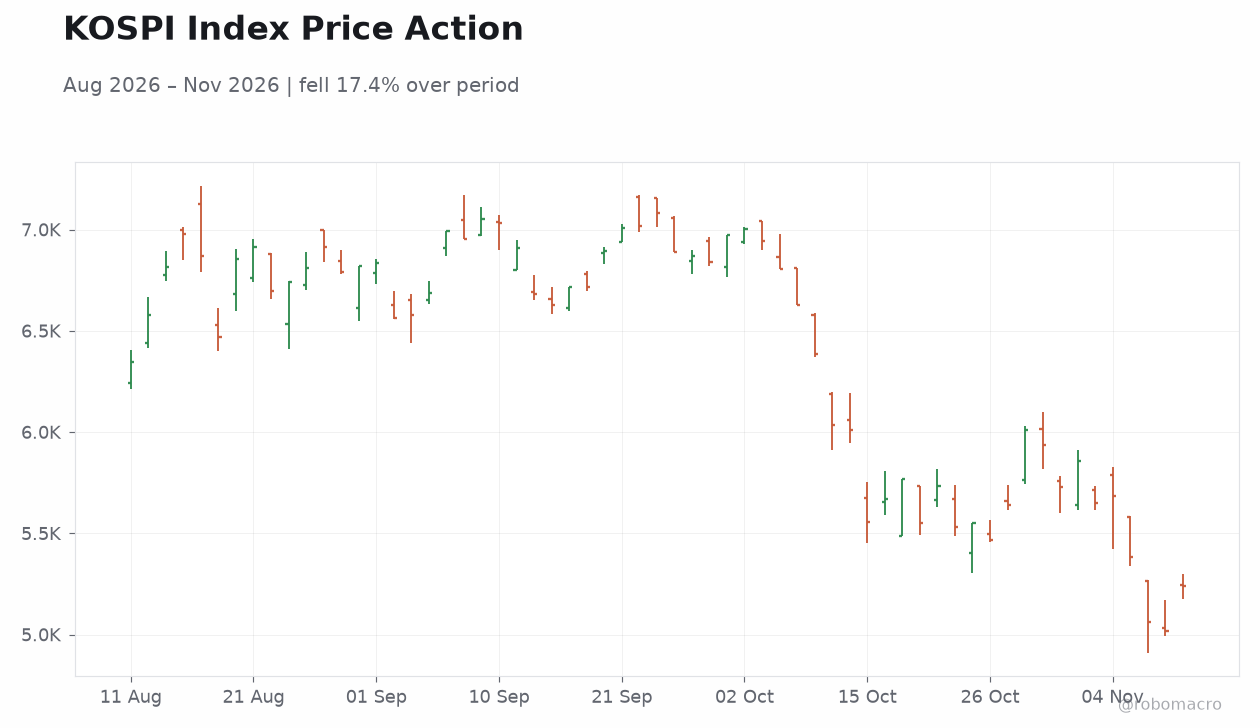
| KOSPI | 5,239.13 | +4.39% |
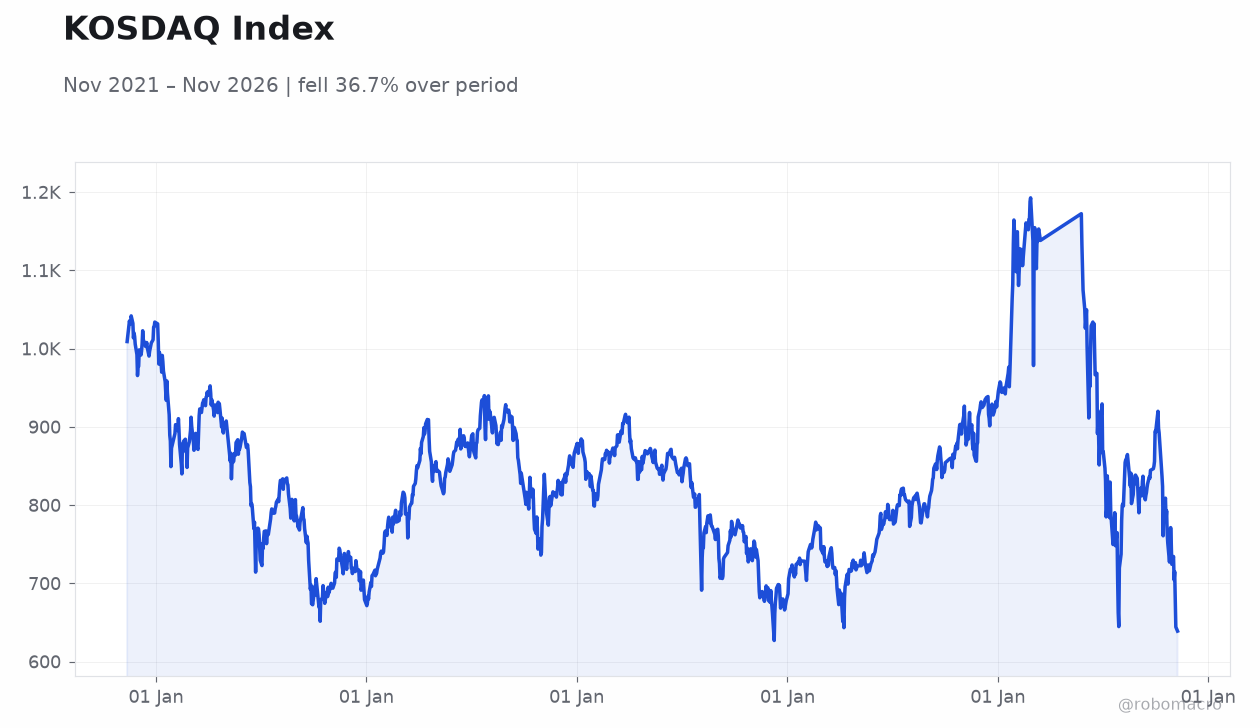
| KOSDAQ | 667.61 | +4.48% |
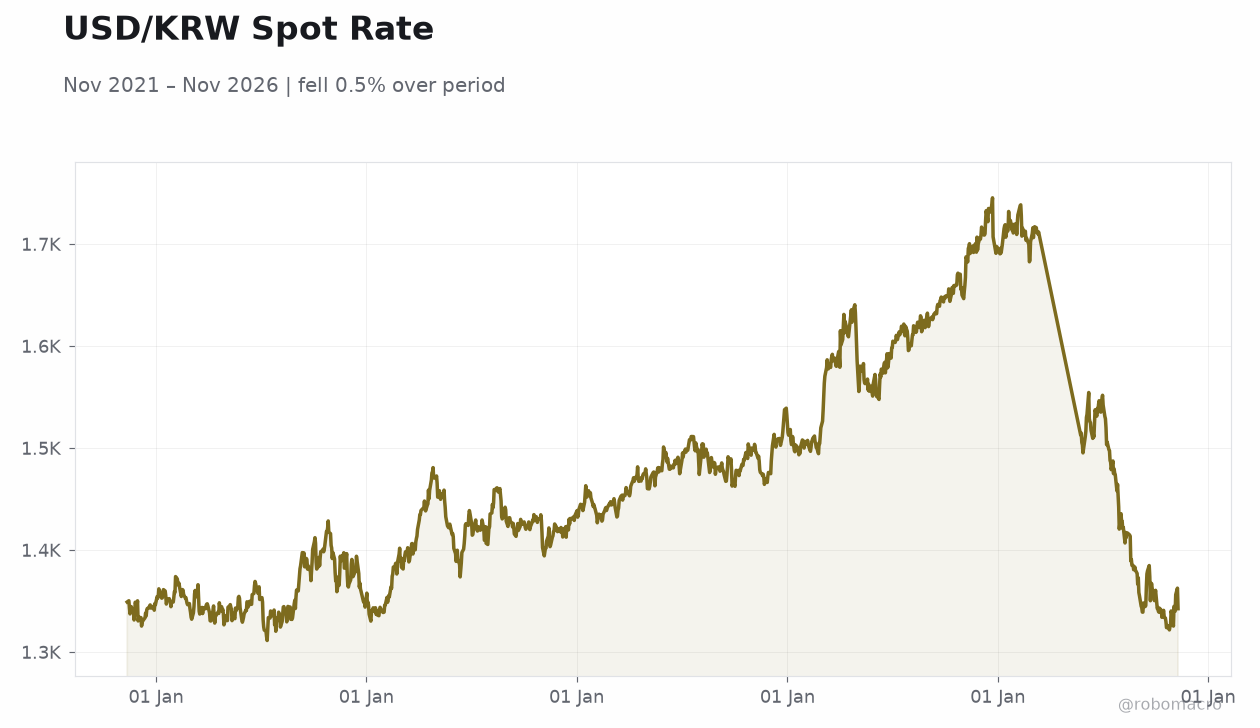
| USD/KRW | 1,338.68 | -0.38% |
| Samsung | 205,750.00 | +3.44% |
| SK Hynix | 1,282,000.00 | +5.78% |
| Brent Crude | 92.49 | +1.09% |
| Gold | 3,991.10 | -0.97% |
| Bitcoin | 74,566.96 | +1.15% |
| Korea 3Y Govt Yield | 3.63% | -1 bp |
| Korea 10Y Govt Yield | 3.86% | +1 bp |
Prior Economic Events
| Data | Prior | Cons | Actual |
|---|---|---|---|
| Headline Unemployment Rate | 2.60 | - | 2.50 |
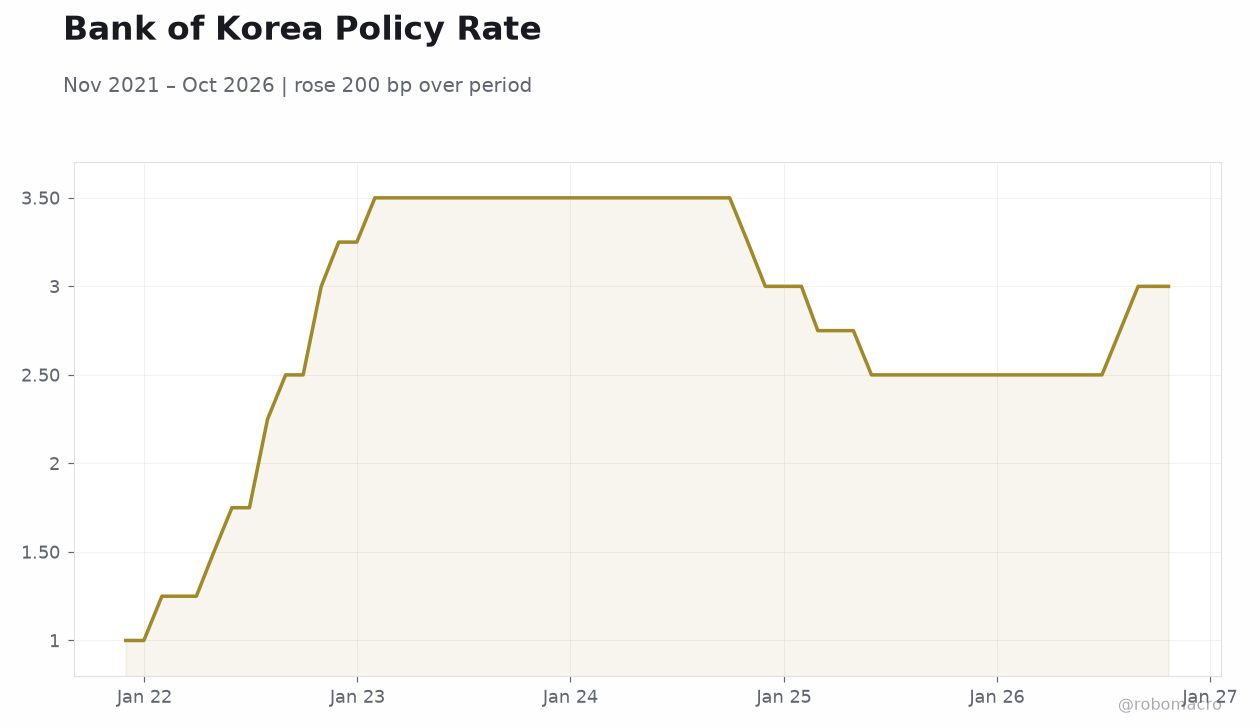 Bank of Korea Policy Rate | Type: macro_line | Policy Rate (%): 3 (2026-10-22) | Range: 1–3.5 | Trend(5pt): 1,3.5,3.5,2.5,3
Today's Economic Events
| Data | Prior | Cons | Time |
|---|---|---|---|
| No events available | |||
- KOSPI jumps 4.39% to 5,239.13 on semiconductor-led rally; KRX activates buy-side sidecar
- Headline unemployment rate falls to 2.5%, below prior 2.6% reading
- BoK faces pressure as US inflation fuels rate-hike bets; Nov 26 decision looms
Yesterday's Recap
South Korea's headline unemployment rate printed at 2.5% on November 10, down from the prior 2.6% reading, underscoring continued labor market resilience. Equities staged a powerful rally, with the KOSPI surging 4.39% to 5,239.13 and the KOSDAQ climbing 4.48% to 667.61 — gains sharp enough to trigger a buy-side sidecar activation by the Korea Exchange. Samsung Electronics rose 3.44% to 205,750 won while SK Hynix surged 5.78% to 1,282,000 won, reflecting renewed optimism around memory chip demand.
The won strengthened 0.38% against the dollar to 1,338.68, aided by sliding oil prices. In fixed income, the 3-year government yield eased 1 bp to 3.63% while the 10-year yield edged up 1 bp to 3.86%, steepening the curve modestly. The session reflected a striking divergence: risk assets rallied hard even as rate-hike concerns simmered in the background.
The Day Ahead
The calendar is empty for November 11, with no scheduled Korean data releases. Market participants will likely focus on positioning ahead of the Bank of Korea's November 26 rate decision, which has become the dominant near-term event risk. With US inflation data fueling expectations of further Federal Reserve tightening, the won and local bond yields remain vulnerable to external rate differential dynamics.
Investors will also monitor follow-through in semiconductor names after Tuesday's outsized rally, watching whether the KRX sidecar activation signals sustainable momentum or a short-covering squeeze. Absent domestic catalysts, Korean assets will likely take their cue from overnight US market moves and any shifts in global risk appetite.
Other Economic Notes
Korean bank household loans jumped 5 trillion won in October, pushing total household lending above 1,200 trillion won for the first time — a threshold that keeps household debt sustainability firmly on the policy radar. Credit card delinquency rates climbed to 3.7%, signaling emerging stress among leveraged consumers even as aggregate labor market conditions remain firm. The Fair Trade Commission imposed a record 1.63 trillion won fine on 15 banks and brokerages for treasury bond bid-rigging, a landmark enforcement action that could reshape primary dealer behavior and bond market microstructure.
Banks are reportedly considering legal challenges to portions of the penalty. ↓ p.2