Korea Macro Daily(Beta Mode)
Record Debt, Delinquencies Weigh on Outlook
Market Snapshot
| Asset | Level | Change |
|---|---|---|
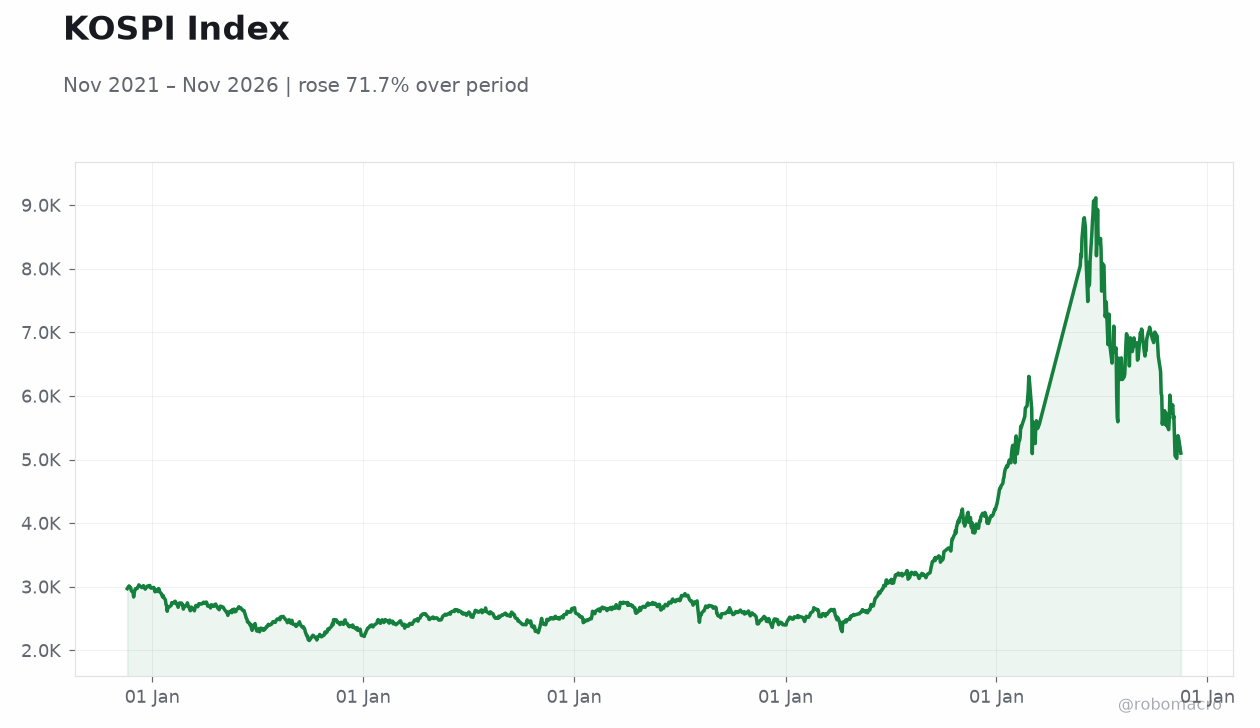
| KOSPI | 4,968.48 | -2.59% |
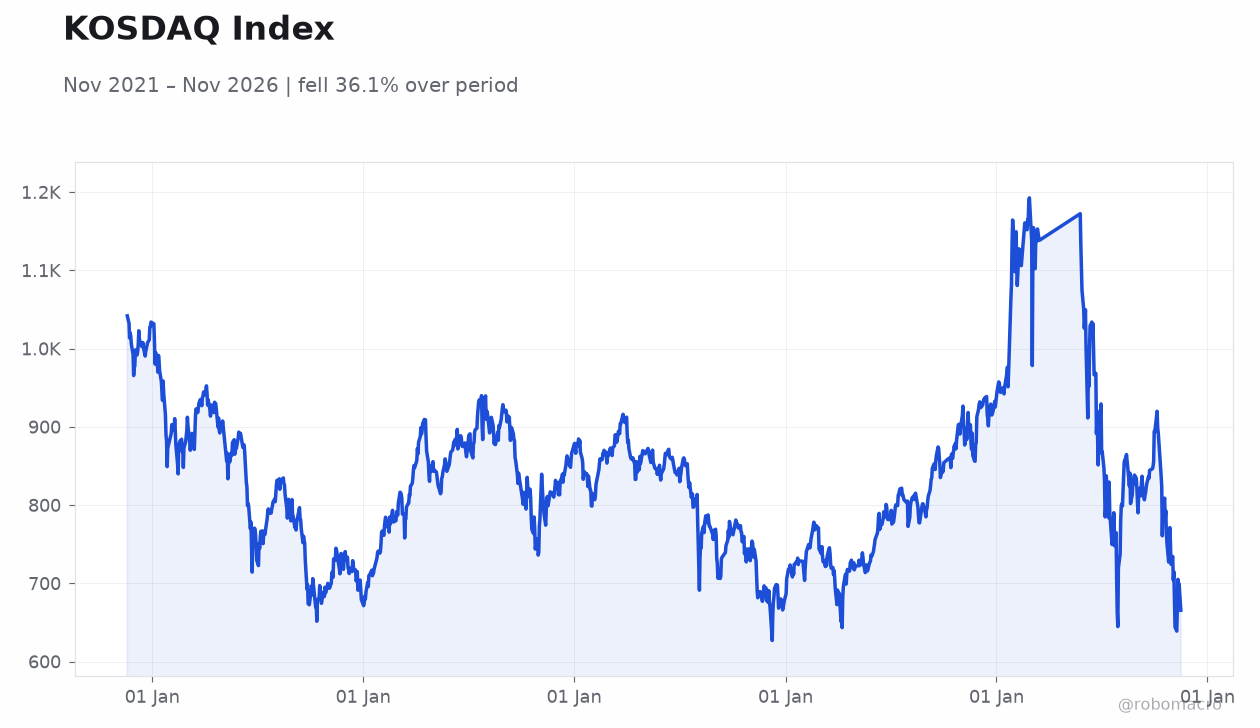
| KOSDAQ | 650.06 | -2.34% |
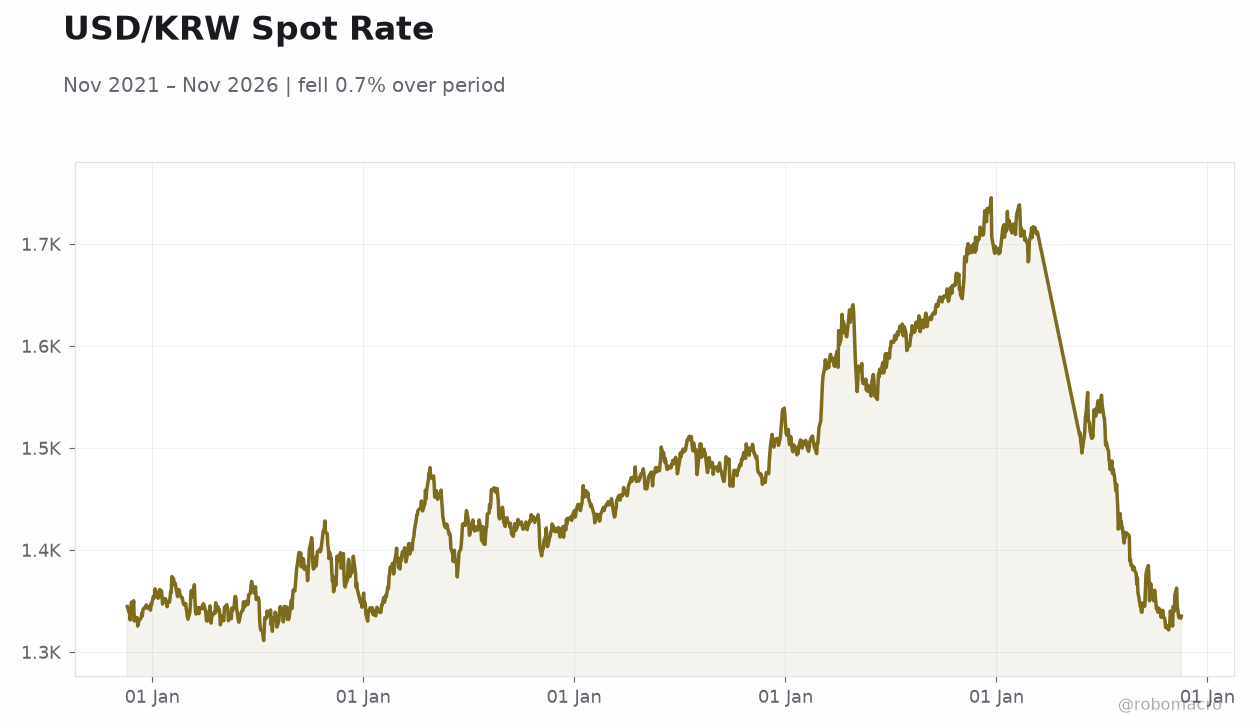
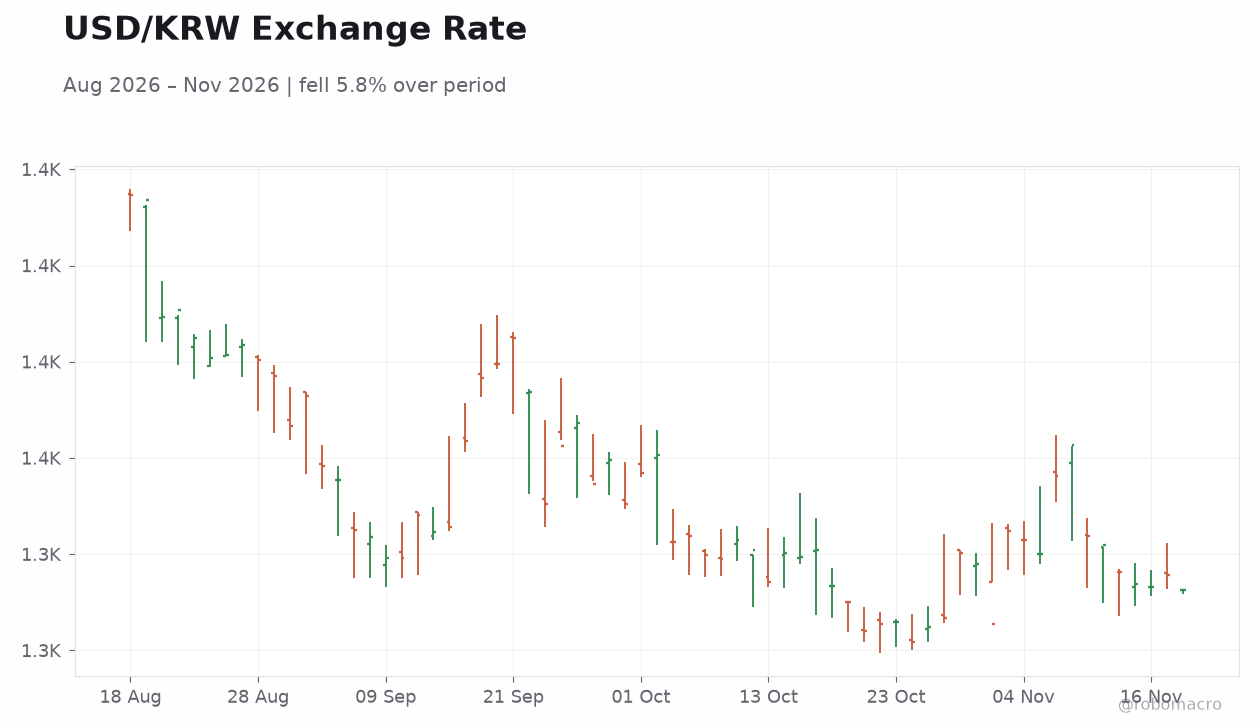
| USD/KRW | 1,332.66 | -0.23% |
| Samsung | 192,000.00 | +0.89% |
| SK Hynix | 1,141,000.00 | +3.92% |
| Brent Crude | 88.64 | -4.83% |
| Gold | 3,737.10 | -3.29% |
| Bitcoin | 62,612.59 | -3.52% |
| Korea 3Y Govt Yield | - | - |
| Korea 10Y Govt Yield | - | - |
Prior Economic Events
| Data | Prior | Cons | Actual |
|---|---|---|---|
| No events available | |||
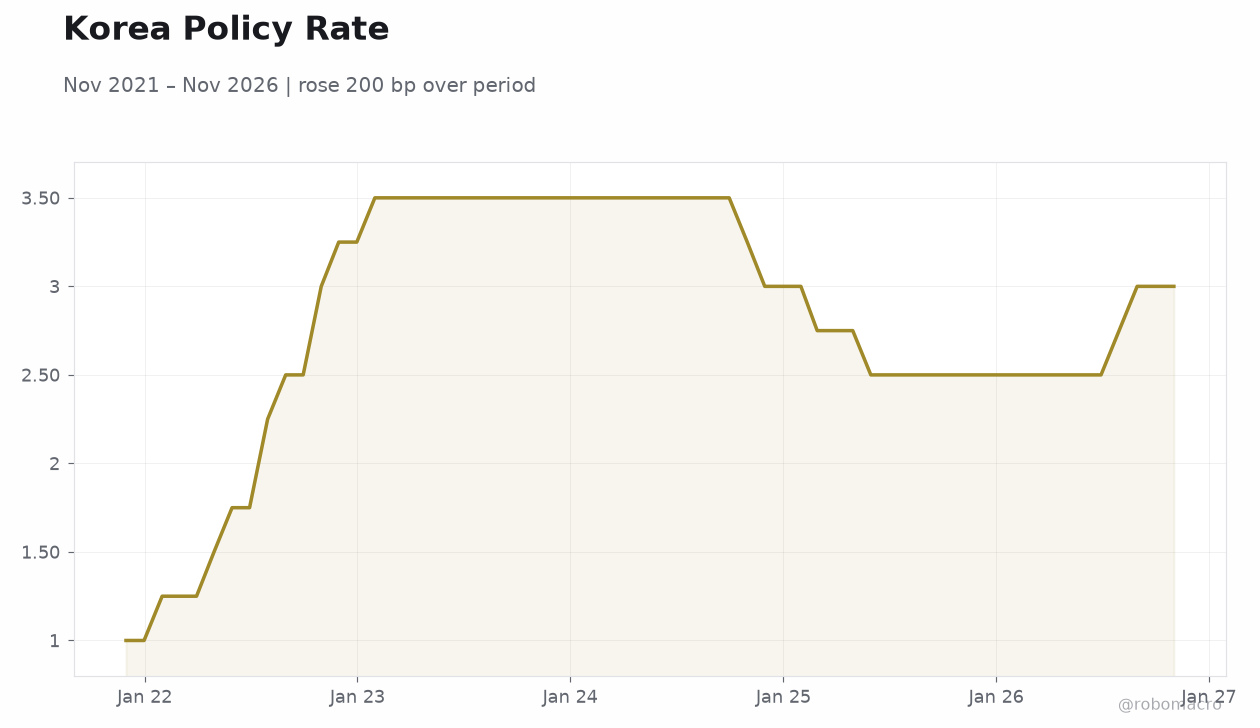 Korea Policy Rate | Type: macro_line | Policy Rate %: 3 (2026-11-02) | Range: 1–3.5 | Trend(5pt): 1,3.5,3.5,2.5,3
Today's Economic Events
| Data | Prior | Cons | Time |
|---|---|---|---|
| No events available | |||
- Household debt reaches record 2,030 trillion won
- Bank loan delinquencies rebound to 0.59% in September
- KOSPI falls 2.59% as chip names diverge
Yesterday's Recap
South Korean equities closed lower with the KOSPI declining 2.59 percent to 4,968.48 and the KOSDAQ dropping 2.34 percent to 650.06. The won strengthened modestly against the dollar, with USD/KRW easing 0.23 percent to 1,332.66. Samsung Electronics rose 0.89 percent while SK Hynix advanced 3.92 percent, reflecting selective semiconductor buying after Nvidia results.
Household debt climbed to a fresh record of 2,030 trillion won, and the bank loan delinquency rate increased to 0.59 percent in September, marking a ten-year high for the month. Credit growth slowed in the third quarter amid elevated market rates, adding pressure on small and medium enterprises already showing rising arrears. Korean SMEs continue to hire foreign workers mainly because locals decline such roles, per survey findings, while arrears on Korea’s EDCF loans reached 136.8 billion won with three nations dominating defaults.
The Day Ahead
Markets will monitor developments ahead of the Bank of Korea’s November 26 policy meeting, where the committee is expected to hold the base rate at 3.00 percent. Attention will focus on any updated guidance regarding inflation at 2.82 percent and financial stability risks from elevated household leverage. Export data and semiconductor shipment trends remain key for the won and equity sentiment.
Global risk appetite will influence flows into Korean assets given the heavy weighting of technology exporters. Stablecoin regulatory proposals favoring banks with a 50 percent plus one stake continue under discussion, with potential implications for payment system competition.
Other Economic Notes
Rising delinquencies among SMEs and sole proprietors highlight persistent stress in the domestic credit cycle despite the post-pandemic recovery. Adoption of AI tools has reduced weekly working hours by 3.7 on average according to Bank of Korea analysis, yet measured productivity gains have not materialized, pointing to implementation lags. Morgan Stanley projects the KOSPI could reach 10,000 within three to five years if semiconductor leadership and export resilience persist.
Former Bank of Korea Senior Deputy Governor Lee Jongryeol was appointed standing auditor of the National Pension Service, adding continuity to oversight of long-term financial stability issues.