Korea Macro Daily(Beta Mode)
KOSPI Rout Spurs Backstop Plans; BoK Meet Eyed
Market Snapshot
| Asset | Level | Change |
|---|---|---|
| KOSPI | 4,869.96 | -5.21% |
| KOSDAQ | 645.68 | -5.71% |
| USD/KRW | 1,346.04 | +0.84% |
| Samsung | 183,100.00 | -7.01% |
| SK Hynix | 1,113,000.00 | -5.92% |
| Brent Crude | 89.95 | -2.21% |
| Gold | 3,515.40 | -4.62% |
| Bitcoin | 60,832.58 | +1.23% |
| Korea 3Y Govt Yield | 3.64% | -8 bp |
| Korea 10Y Govt Yield | 3.86% | -8 bp |
Prior Economic Events
| Data | Prior | Cons | Actual |
|---|---|---|---|
| No events available | |||
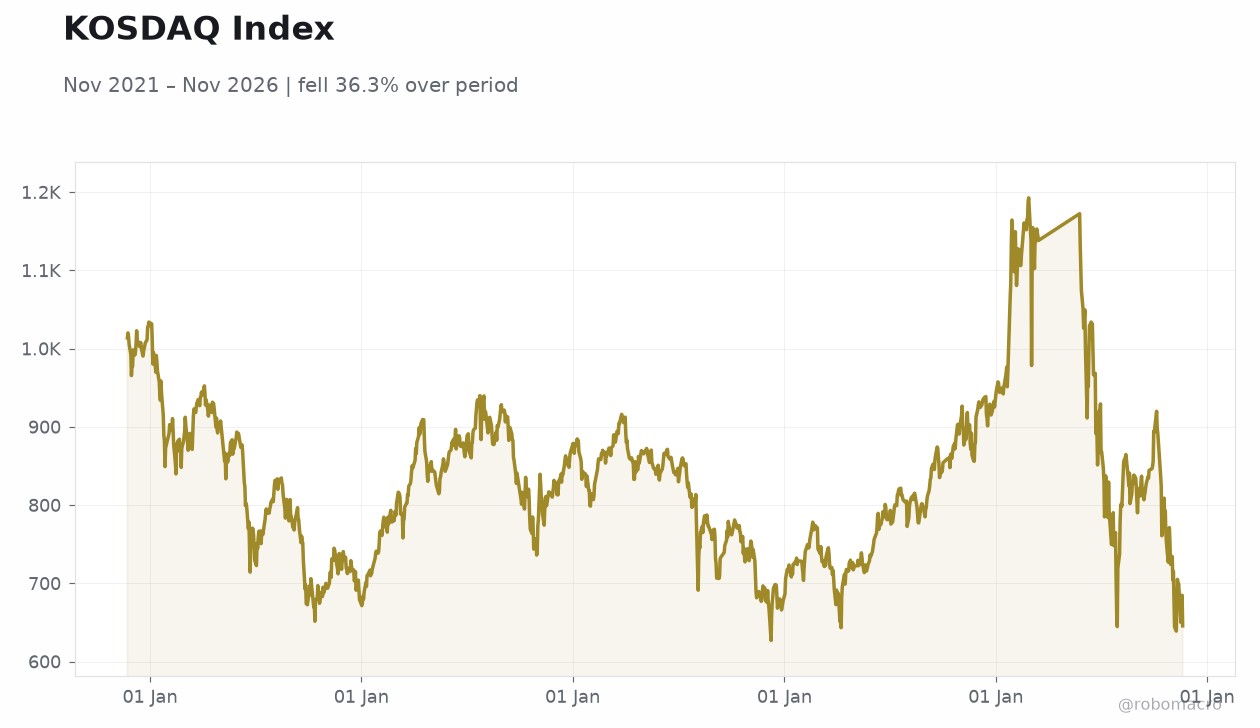 KOSDAQ Index | Type: macro_line | KOSDAQ Index: 645.7 (2026-11-20) | Range: 627–1193 | Trend(5pt): 1014,766.8,852.4,782.2,645.7
Today's Economic Events
| Data | Prior | Cons | Time |
|---|---|---|---|
| No events available | |||
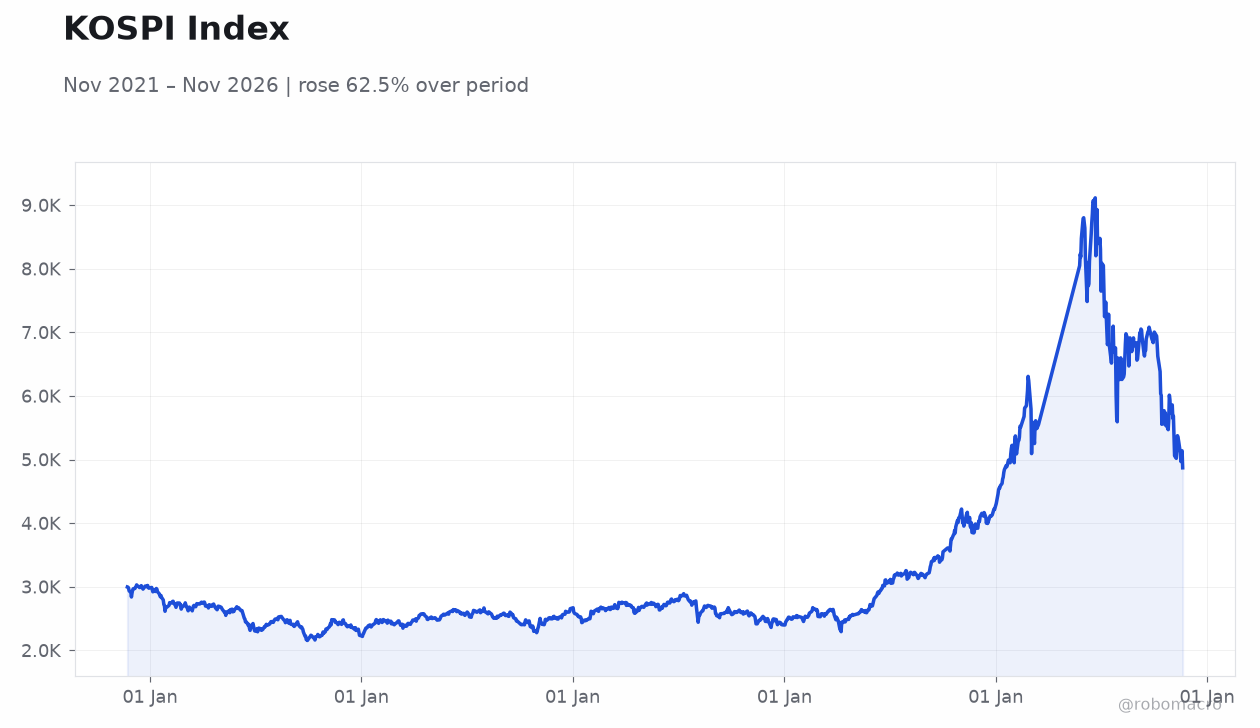
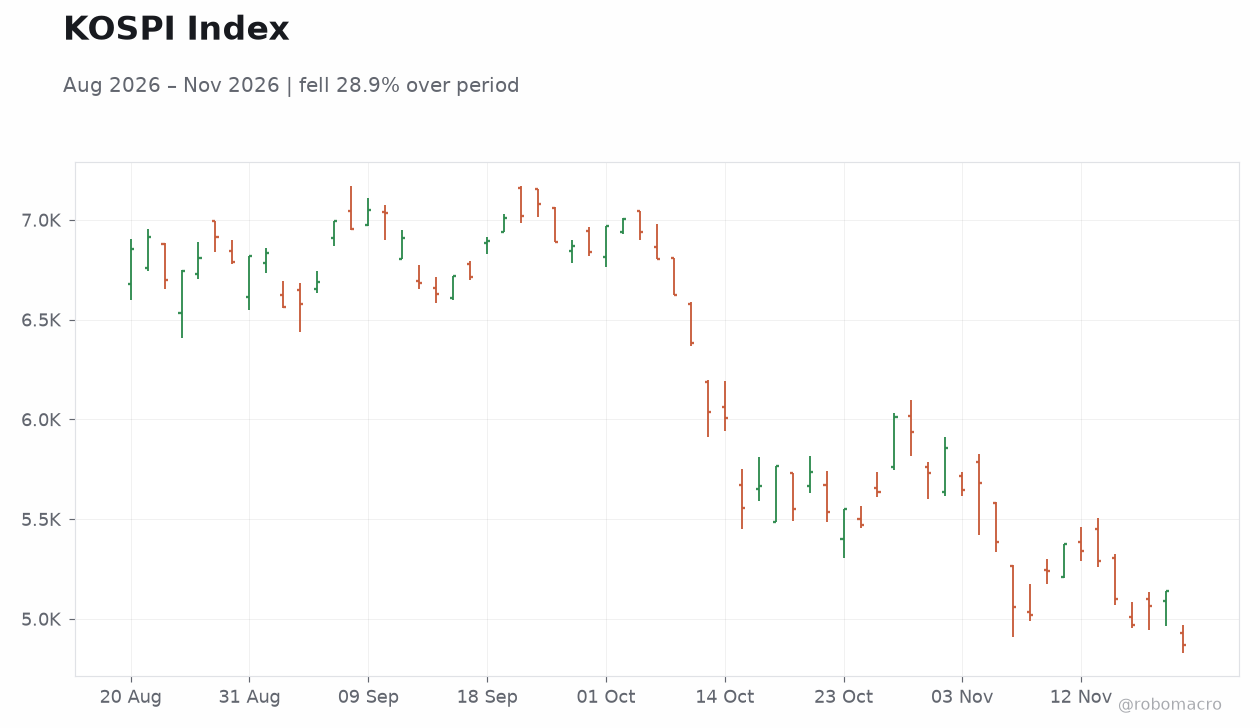
- KOSPI plunges 5.21% to 4,869.96, a 10-month low, as Samsung (-7.01%) and SK Hynix (-5.92%) lead losses; authorities prepare market stabilization funds.
- Korea 3Y and 10Y yields both ease 8 bp to 3.64% and 3.86% respectively, a flight-to-quality bid despite equity stress.
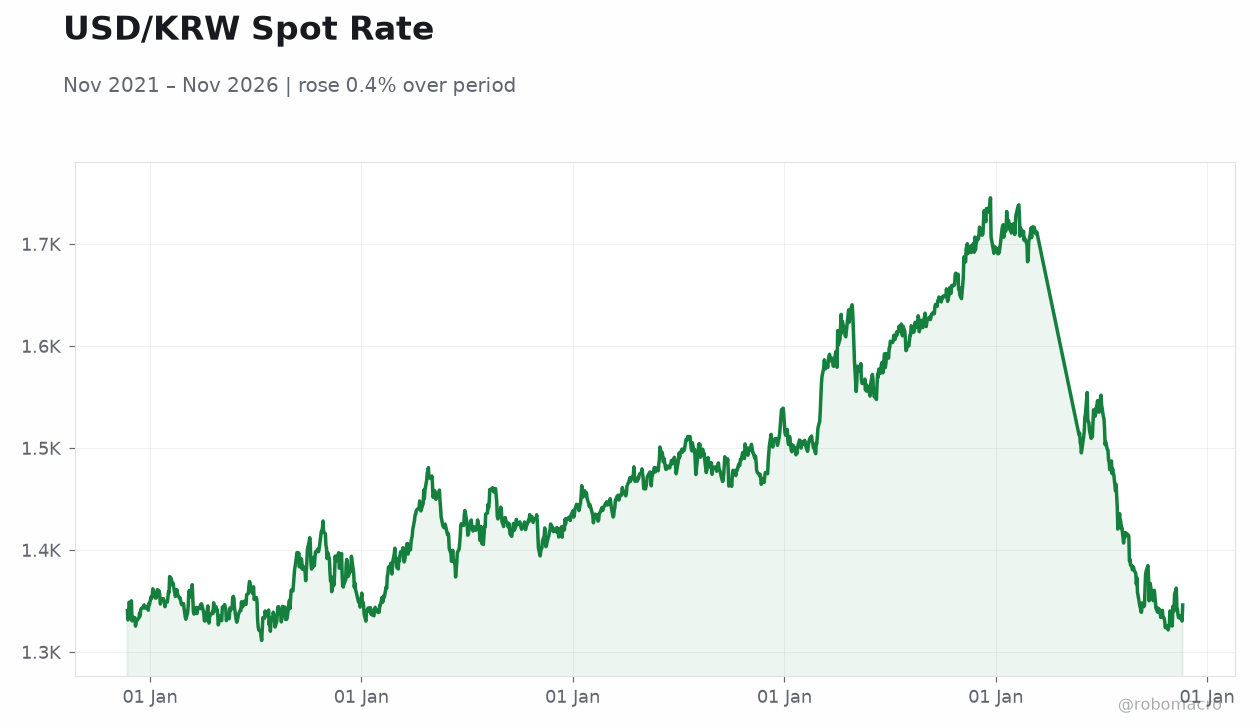
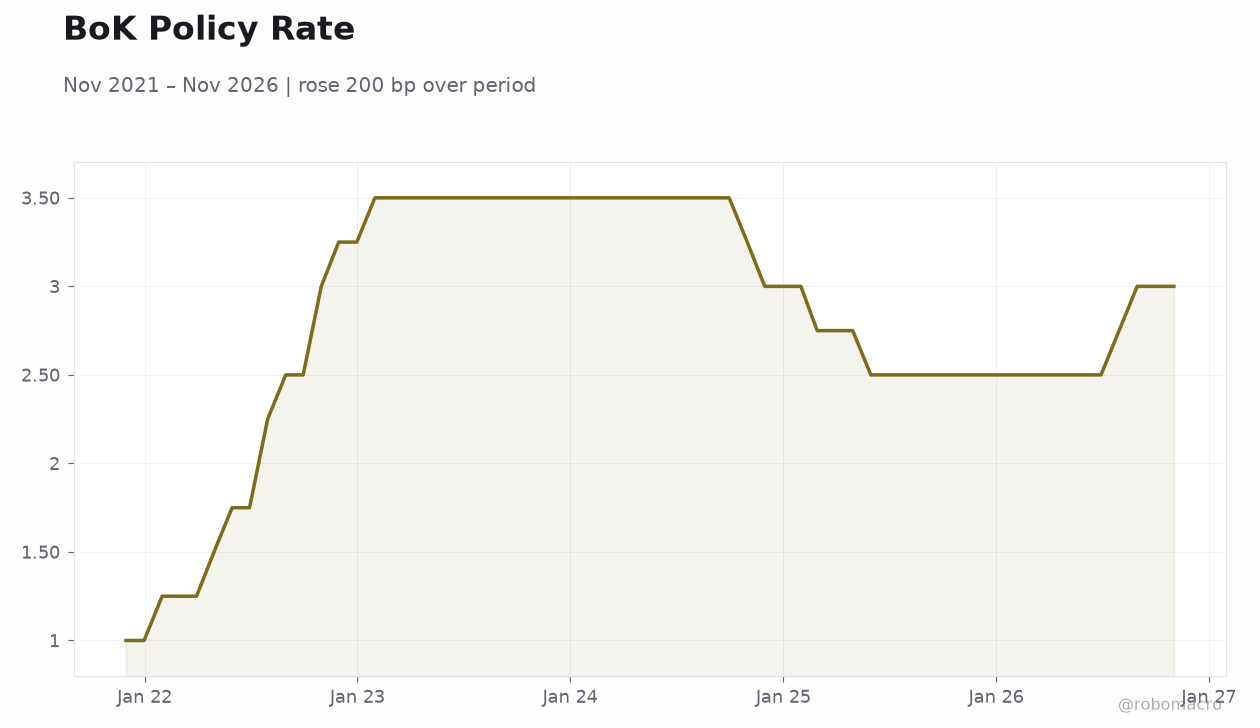
- USD/KRW rises 0.84% to 1,346.04; BoK meets Nov. 26 with growth forecast revisions and rate guidance in focus.
Yesterday's Recap
Korean equities suffered a severe risk-off session, with the KOSPI collapsing 5.21% to 4,869.96 — its lowest level in ten months — and the KOSDAQ falling 5.71% to 645.68. The selloff was concentrated in mega-cap technology: Samsung Electronics dropped 7.01% to 183,100 won and SK Hynix fell 5.92% to 1,113,000 won, tracking global semiconductor weakness and broader de-risking. Household equity losses have become a macro issue, with reports citing roughly 563 trillion won wiped from retail portfolios as the index retreated from prior highs.
In fixed income, the flight to safety was evident: the Korea 3-year government yield eased 8 bp to 3.64% and the 10-year fell 8 bp to 3.86%, both as of the Nov 20 observation. The won weakened, with USD/KRW up 0.84% to 1,346.04, reflecting equity outflows and dollar demand. Policymakers responded swiftly, with reports indicating South Korea is preparing market stabilization funds and backstops after the KOSPI hit a 10-month low.
Commodities offered little comfort, with Brent crude down 2.21% to $89.95 and gold off 4.62% at $3,515.40, while Bitcoin gained 1.23% to $60,832.58.
The Day Ahead
The calendar is light for Nov 22, with no scheduled Korean data releases, leaving markets to digest the prior session's rout and position ahead of the Bank of Korea's Nov 26 meeting. Traders will watch for follow-through in equity markets and any official commentary on the stabilization fund mechanism, which could be detailed in the coming sessions. The won will remain a key tell, with USD/KRW at 1,346.04 and semiconductor export conversion flows cited as a potential medium-term support.
Attention is already rotating toward the Nov 26 BoK outlook, where growth forecast revisions are expected, per reports. With no domestic prints to anchor sentiment, global risk appetite and US data will likely drive Korean asset direction into the meeting.
Other Economic Notes
Household leverage remains a structural vulnerability: Q3 mortgage loans averaged 21.45 million won per borrower, up 6.22 million won in a single quarter, per reports. ↓ p.2