Mexico Macro Daily(Beta Mode)
IPC Slips as Long-Term Yields Spike
Market Snapshot
| Asset | Level | Change |
|---|---|---|
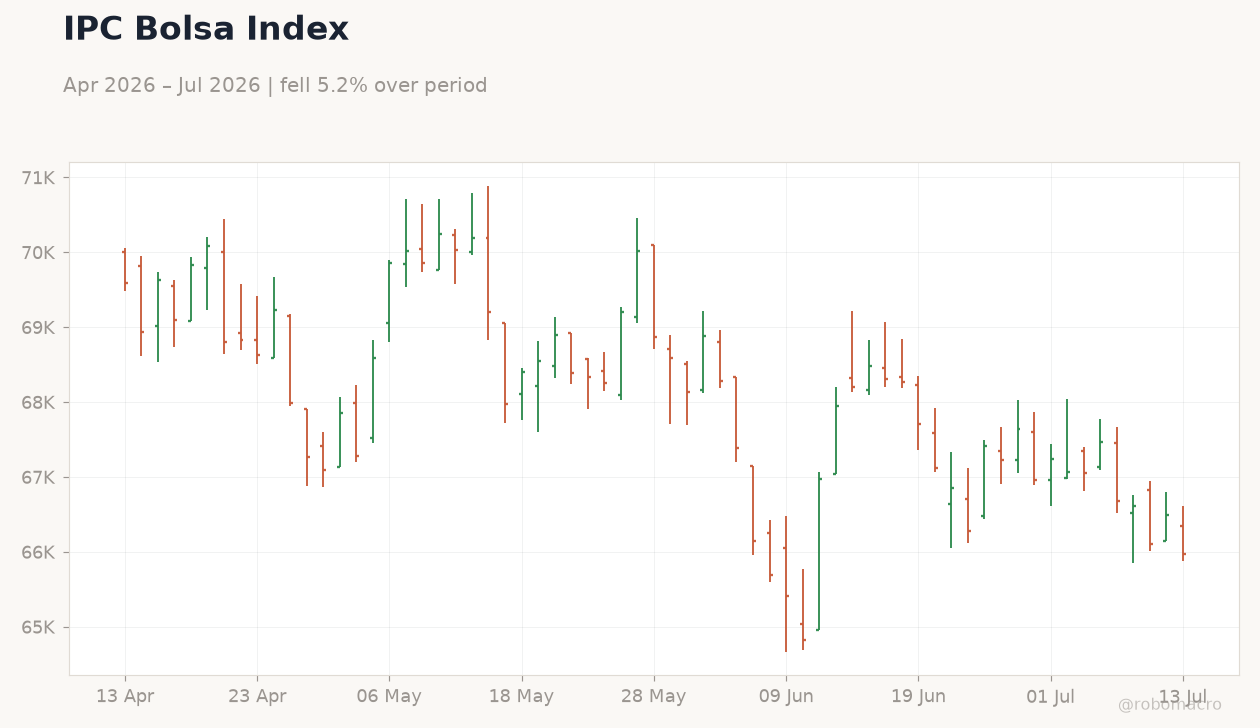
| IPC Bolsa | 65,973.08 | -0.79% |
| USD/MXN | 17.50 | +0.01% |
| EUR/MXN | 19.96 | +0.03% |
| WTI Crude | 79.76 | +2.07% |
| Silver | 58.38 | +1.29% |
| Gold | 4,034.50 | +0.94% |
| Brent Crude | 86.27 | +3.57% |
| Bitcoin | 62,780.80 | +0.87% |
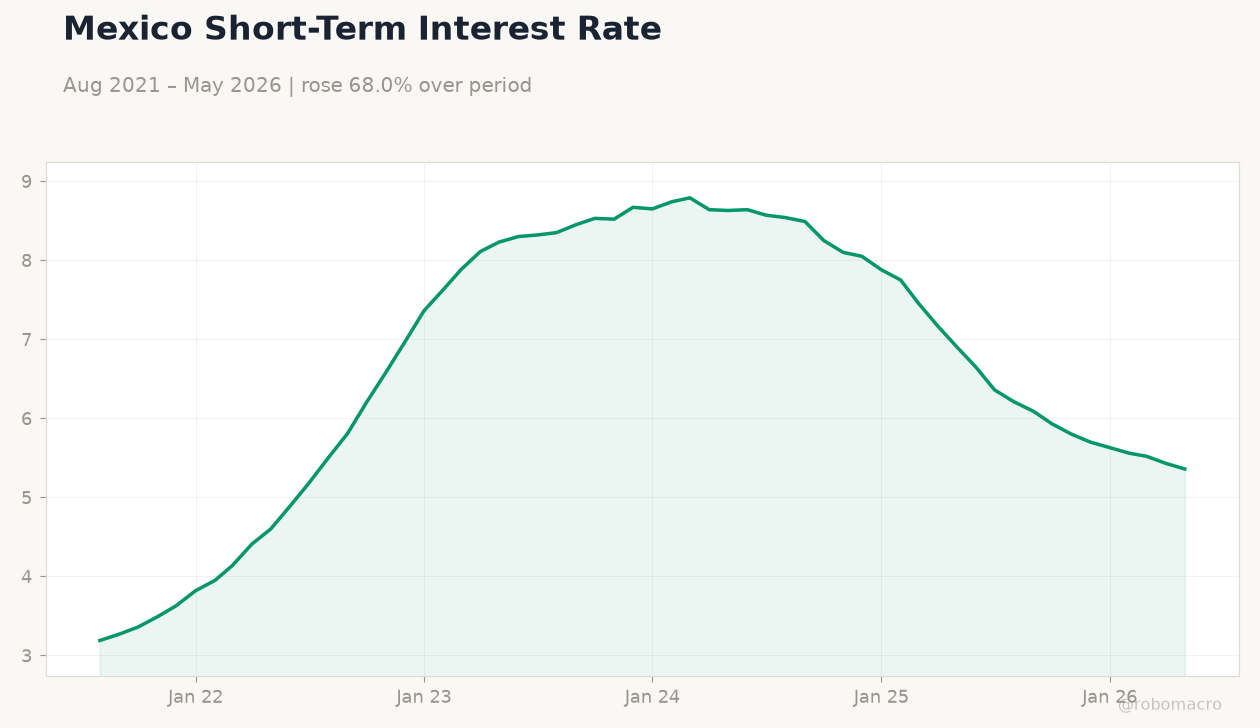
| Mexico Short-term Rate | 5.36% | -1.29% |
| Mexico Long-term Rate | 9.45% | +6.42% |
Prior Economic Events
| Data | Prior | Cons | Actual |
|---|---|---|---|
| No events available | |||
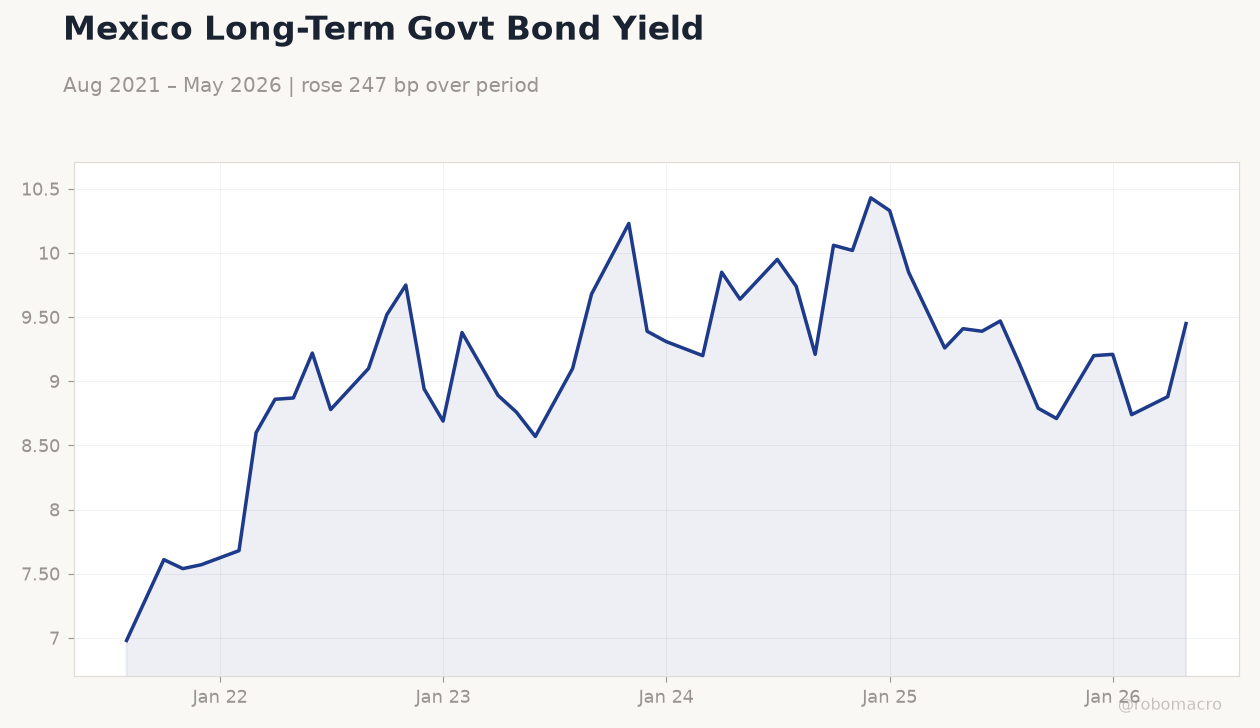 Mexico Long-Term Govt Bond Yield | Type: macro_line | Yield %: 9.45 (2026-05-01) | Range: 6.98–10.43 | Trend(5pt): 6.98,9.75,9.2,9.41,9.45
Today's Economic Events
| Data | Prior | Cons | Time |
|---|---|---|---|
| No events available | |||
- IPC Bolsa declined 0.79% to 65,973.08 as long-term rates jumped.
- USD/MXN edged up 0.01% to 17.50 while short-term rate fell to 5.36%.
- Long-term yields rose 6.42% to 9.45%, steepening the curve sharply.
Yesterday's Recap
Mexican markets closed mixed on July 13 with equities under pressure from the sharp rise in long-term yields. The IPC Bolsa posted a 0.79% decline to 65,973.08 while the short-term rate eased 1.29% to 5.36%. USD/MXN remained nearly flat at 17.50, supported by steady commodity prices including WTI crude up 2.07% at 79.76 and silver gaining 1.29% to 58.38.
The long-term rate surged 6.42% to 9.45%, reflecting investor repositioning ahead of any potential policy signals. Remittance inflows continued to underpin peso resilience, with Mexico’s annual total reaching $64.7 billion. Nearshoring-related industrial names weighed on the equity index despite broader gains in gold and Brent crude.
No domestic data prints occurred, leaving market moves driven by yield dynamics and external flows. USMCA auto-rules consultations remain on track with no new disputes, while Pemex reported a 3% sequential rise in crude output that eased immediate energy-reform concerns.
The Day Ahead
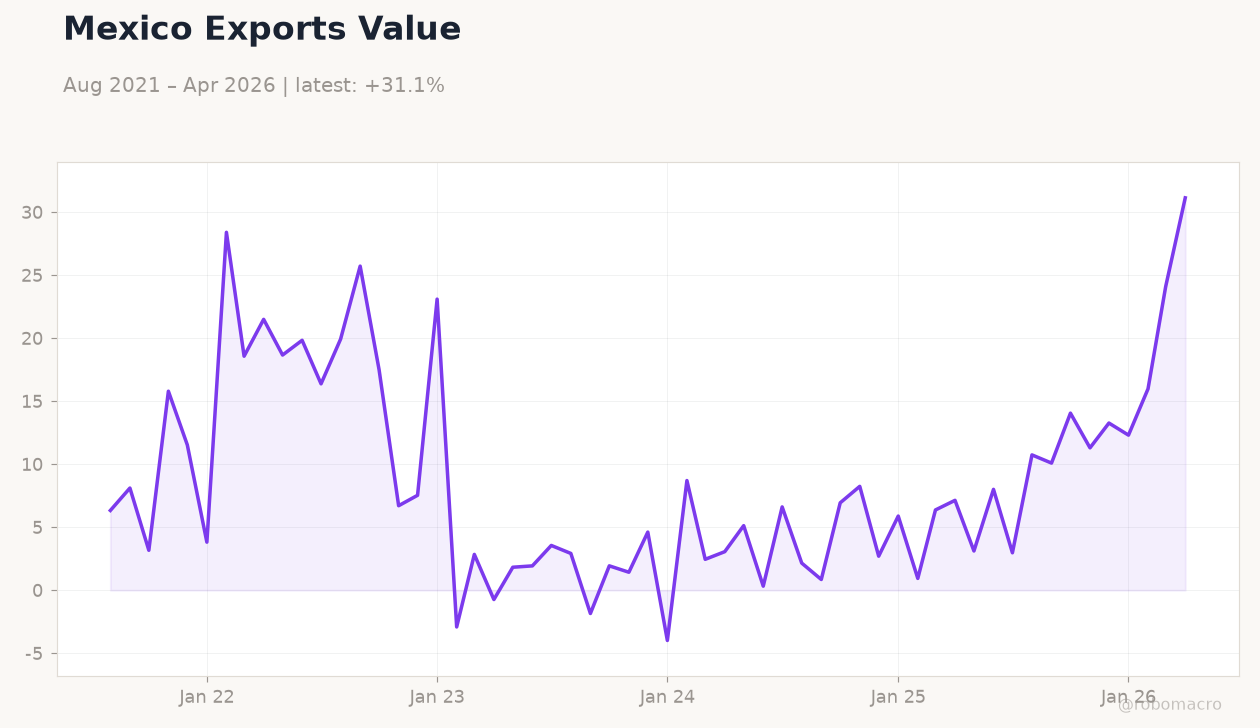
No scheduled releases appear on the calendar for July 14, leaving markets to digest recent yield volatility and external drivers. Traders will monitor USMCA-related developments and any updates on northern Mexico FDI trends that rose 18% y/y in Q1. Commodity price action in oil and precious metals is expected to influence peso and equity sentiment.
Attention may turn to corporate earnings from nearshoring-exposed firms for additional color on growth momentum. The absence of Banxico speakers keeps focus on existing forward guidance and incoming global data. Retail sales and the Banxico June Survey of Economists are absent, so positioning will hinge on commodity momentum and diplomatic updates.
Other Economic Notes
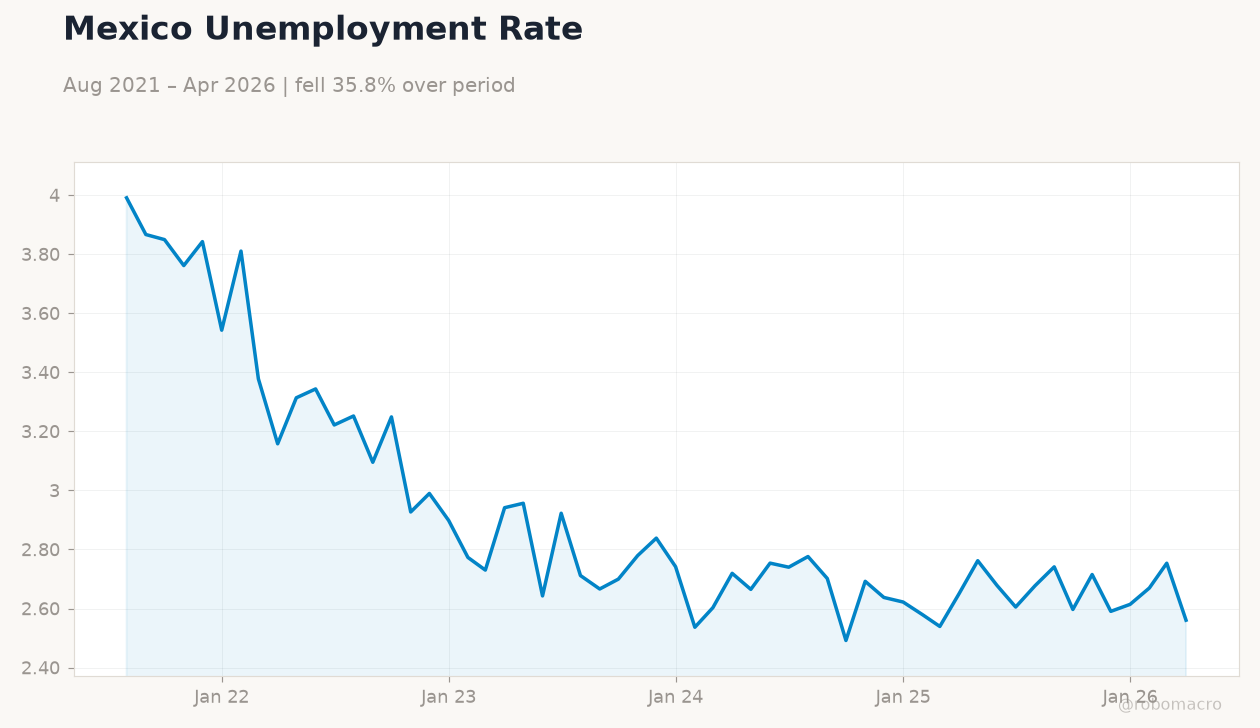
Mexico’s CPI YoY stands at 3.37%, providing room for measured policy responses amid stable growth. Remittances remain a key support for consumption and the external balance, reinforcing peso stability even as long-term yields adjust. Nearshoring continues to attract FDI into northern states, sustaining industrial output and USMCA trade linkages.
The steepening yield curve signals differentiation between short-term easing expectations and longer-term inflation or fiscal concerns. <i>↓ p.2</i>