Mexico Macro Daily(Beta Mode)
Peso Steady as IPC Climbs on Trade Hopes
Market Snapshot
| Asset | Level | Change |
|---|---|---|
| IPC Bolsa | 67,303.83 | +0.88% |
| USD/MXN | 17.40 | -0.07% |
| EUR/MXN | 19.88 | +0.19% |
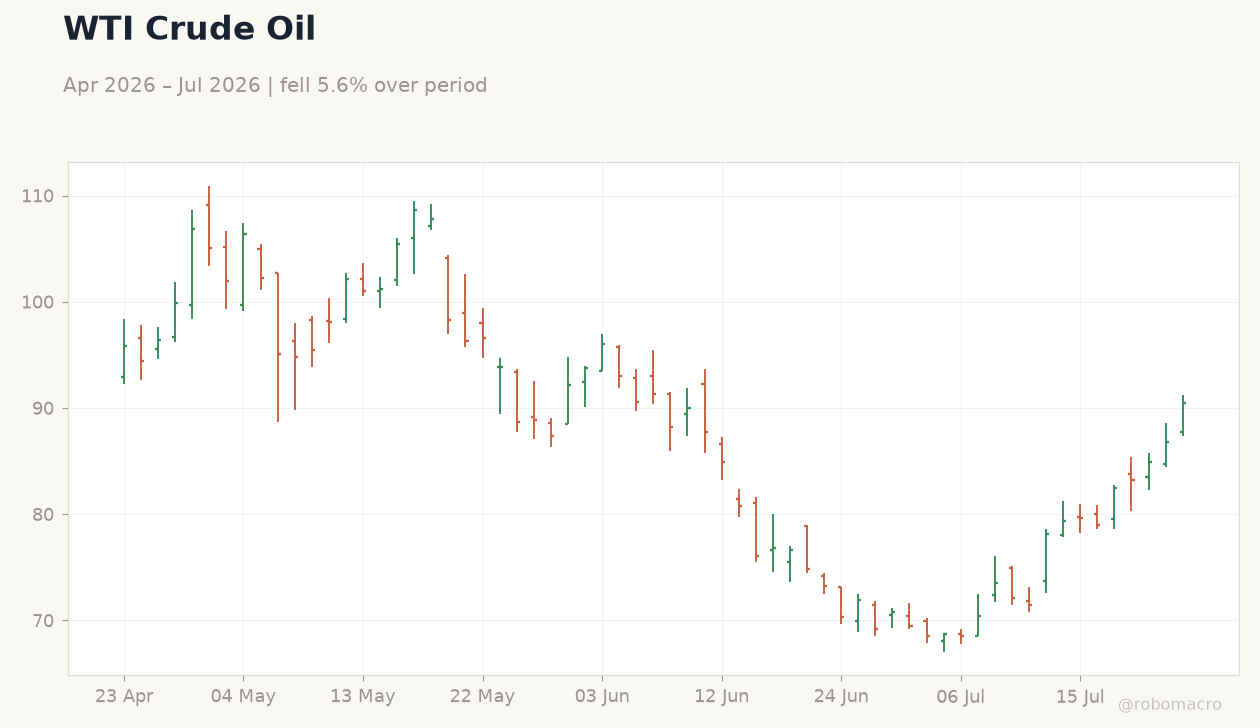
| WTI Crude | 90.41 | +4.12% |
| Silver | 58.75 | -2.11% |
| Gold | 4,086.70 | -1.45% |
| Brent Crude | 92.80 | -1.35% |
| Bitcoin | 65,481.97 | -0.94% |
| Mexico Short-term Rate | 5.19% | -3.17% |
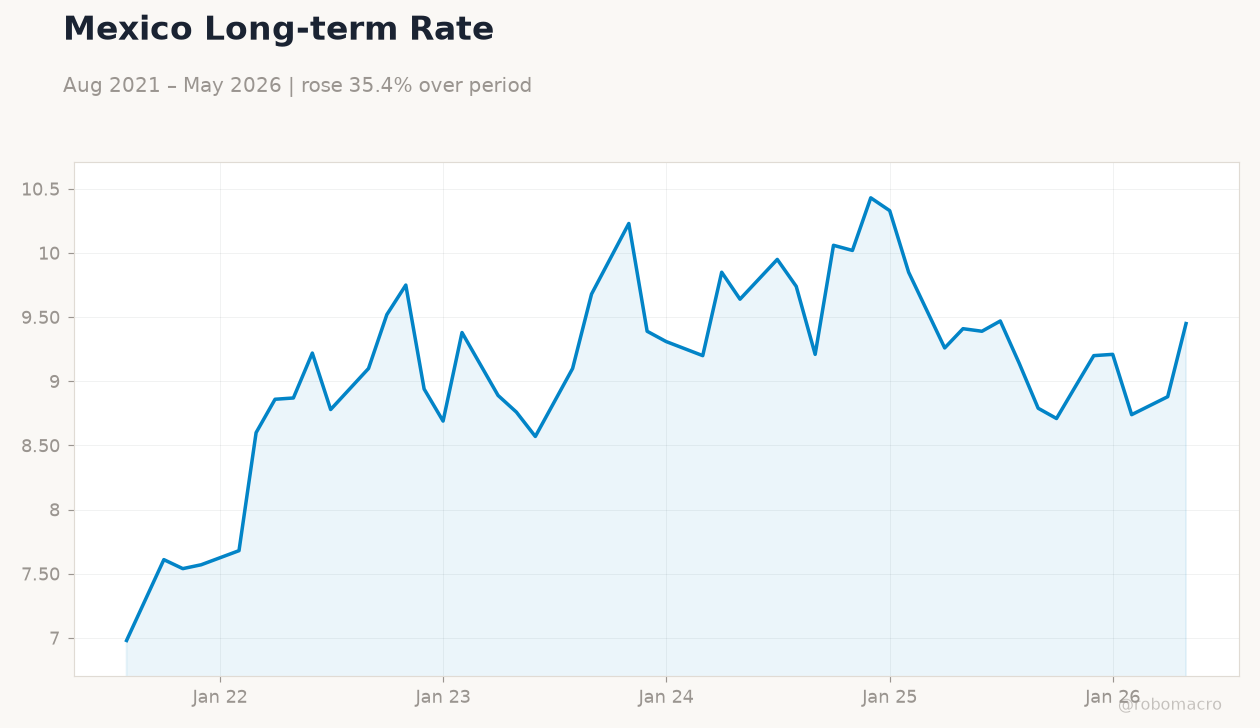
| Mexico Long-term Rate | 9.45% | +6.42% |
Prior Economic Events
| Data | Prior | Cons | Actual |
|---|---|---|---|
| No events available | |||
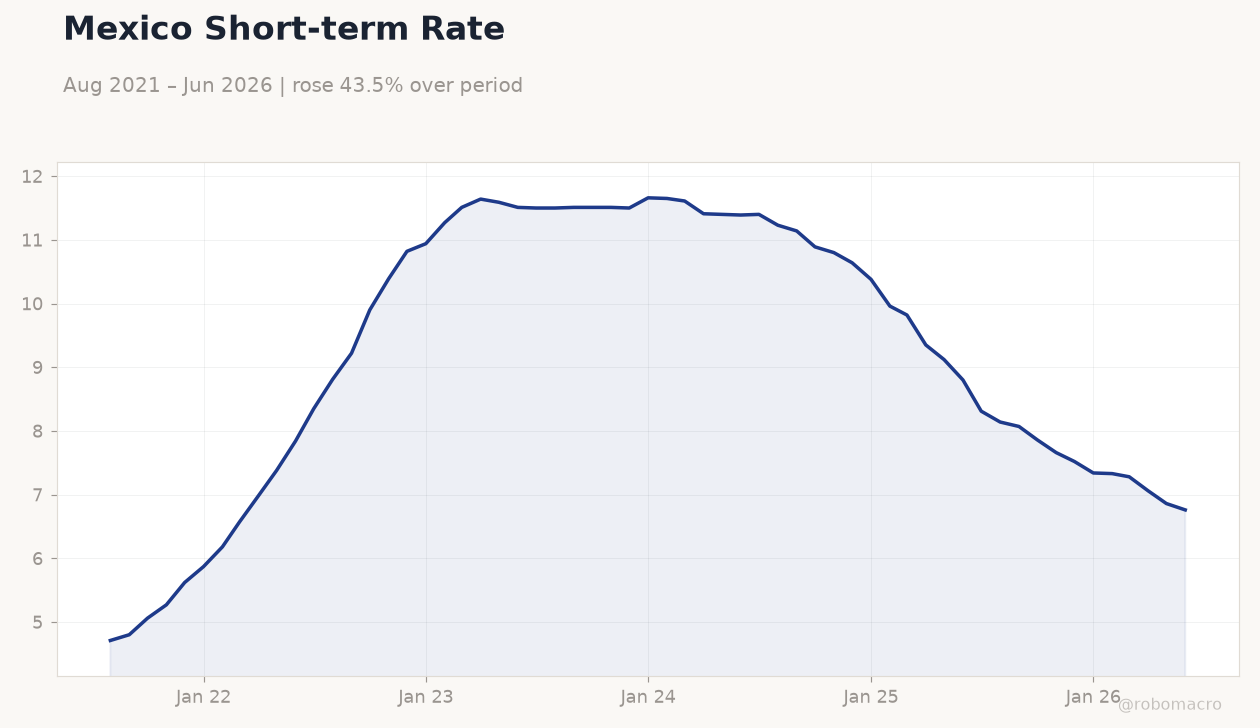 Mexico Short-term Rate | Type: macro_line | %: 6.76 (2026-06-01) | Range: 4.71–11.66 | Trend(6pt): 4.71,9.9,11.5,9.96,7.06,6.76
Today's Economic Events
| Data | Prior | Cons | Time |
|---|---|---|---|
| No events available | |||
- IPC Bolsa rose 0.88% to 67,303.83 while USD/MXN eased 0.07% to 17.40 amid thin trading.
- No Mexican data releases occurred yesterday, leaving markets to focus on US-Mexico trade signals.
- Mexico short-term rate stood at 5.19% with CPI YoY at 3.37%, keeping Banxico on hold.
Yesterday's Recap
Mexican markets operated in a data vacuum as no economic releases were scheduled. The IPC Bolsa advanced 0.88% to close at 67,303.83, supported by selective buying in nearshoring-exposed sectors. USD/MXN declined 0.07% to 17.40, reflecting modest peso strength against a softer dollar.
The Mexico short-term rate remained at 5.19% while the long-term rate climbed 6.42% to 9.45%, widening the curve. WTI crude surged 4.12% to 90.41, providing a tailwind for energy-linked peso flows. EUR/MXN rose 0.19% to 19.88 as cross flows stayed light.
Overall activity stayed subdued with no fresh domestic catalysts to shift positioning.
The Day Ahead
No Mexican economic indicators or central bank events are slated for release. Traders will monitor USMCA-related statements from Washington for any updates on interim trade arrangements. Global oil price moves and US equity futures will likely set the tone for IPC and peso flows.
Attention remains on any follow-through from recent US comments about potential deals with Mexico by year-end. Thin liquidity could amplify moves in USD/MXN if external headlines emerge. Market participants expect continued range-bound trading until the next data cluster appears.
Other Economic Notes
Nearshoring momentum continues to underpin Mexico’s medium-term growth outlook despite the absence of fresh monthly indicators. Supply-chain shifts from Asia have sustained foreign direct investment inflows into manufacturing hubs in northern states. The wide short-to-long rate differential at 5.19% versus 9.45% signals persistent inflation expectations anchored above Banxico’s target band.
USMCA compliance remains central to export stability, with any interim tariff relief likely to support auto and electronics sectors. Domestic demand indicators have shown resilience, though the lack of near-term releases leaves analysts reliant on quarterly aggregates for trend confirmation.