Mexico Macro Daily(Beta Mode)
Mexico's Trade Surplus Surges, IPC Advances
Market Snapshot
| Asset | Level | Change |
|---|---|---|
| IPC Bolsa | 67,157.91 | +1.17% |
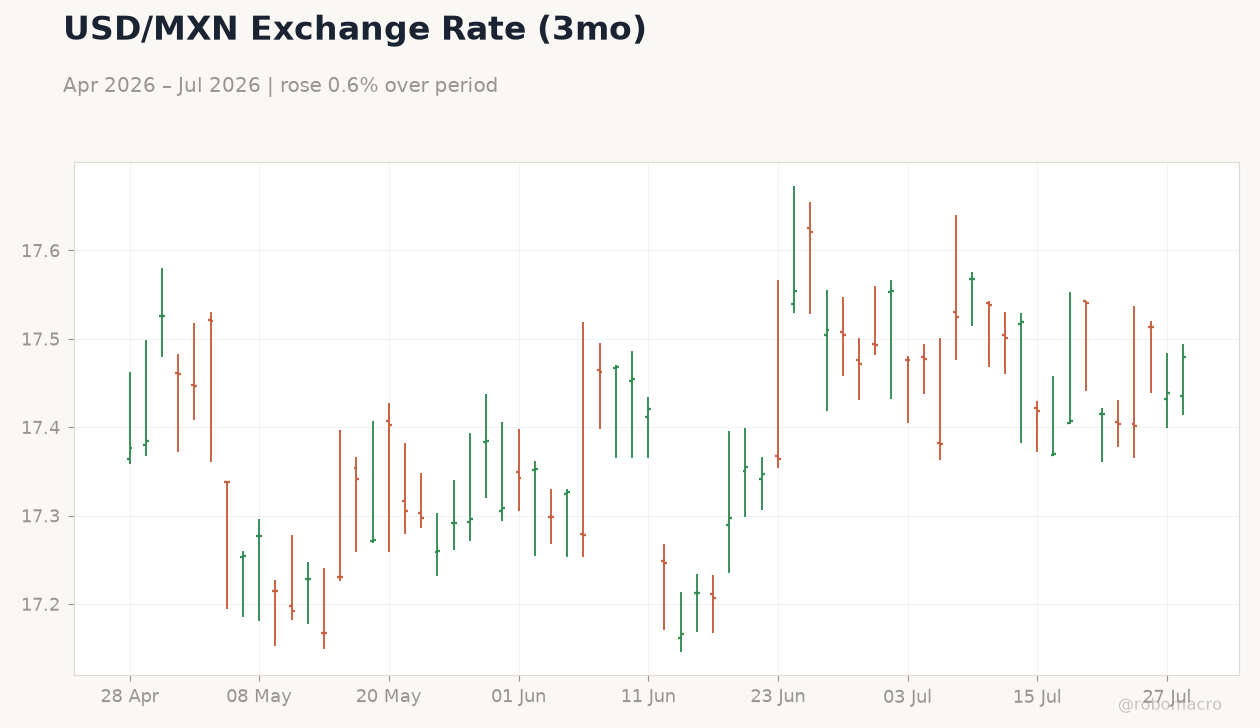
| USD/MXN | 17.47 | +0.20% |
| EUR/MXN | 19.86 | -0.04% |
| WTI Crude | 81.80 | -0.98% |
| Silver | 57.47 | -1.71% |
| Gold | 4,023.80 | -1.24% |
| Brent Crude | 87.24 | -1.27% |
| Bitcoin | 63,384.00 | -0.53% |
| Mexico Short-term Rate | 5.19% | -3.17% |
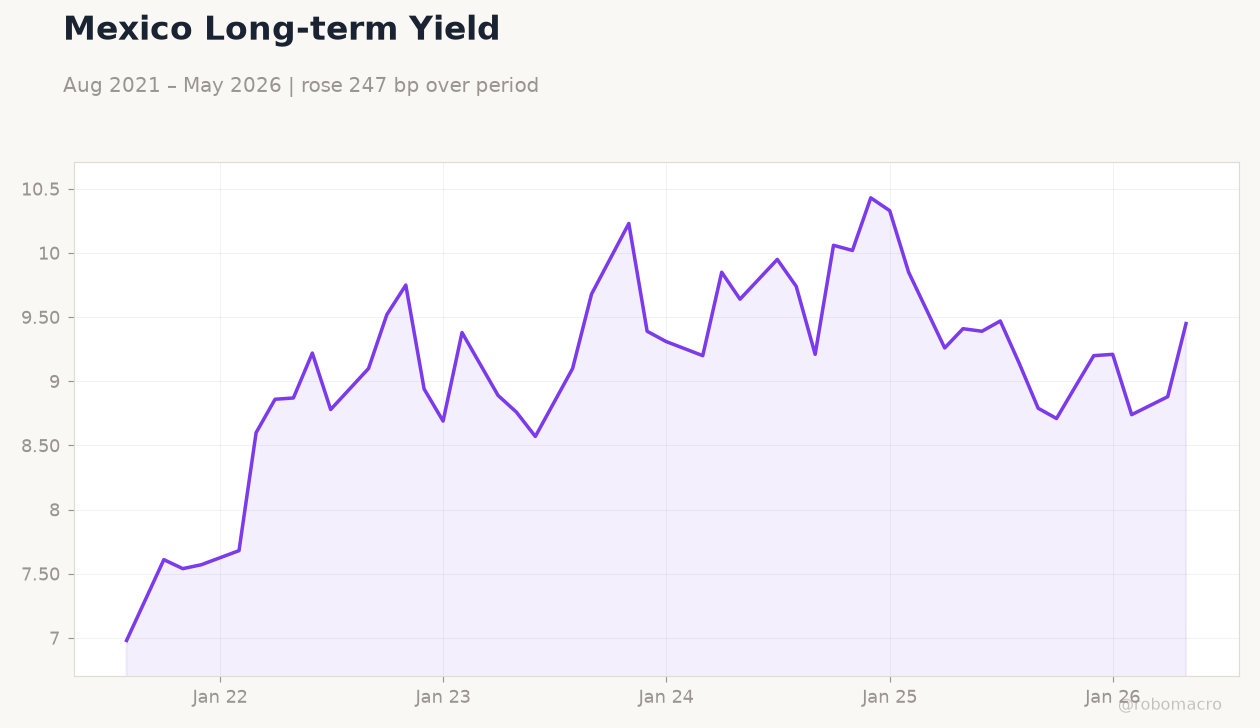
| Mexico Long-term Rate | 9.45% | +6.42% |
Prior Economic Events
| Data | Prior | Cons | Actual |
|---|---|---|---|
| Trade Balance | 2,259m | 2,280m | 4,090m |
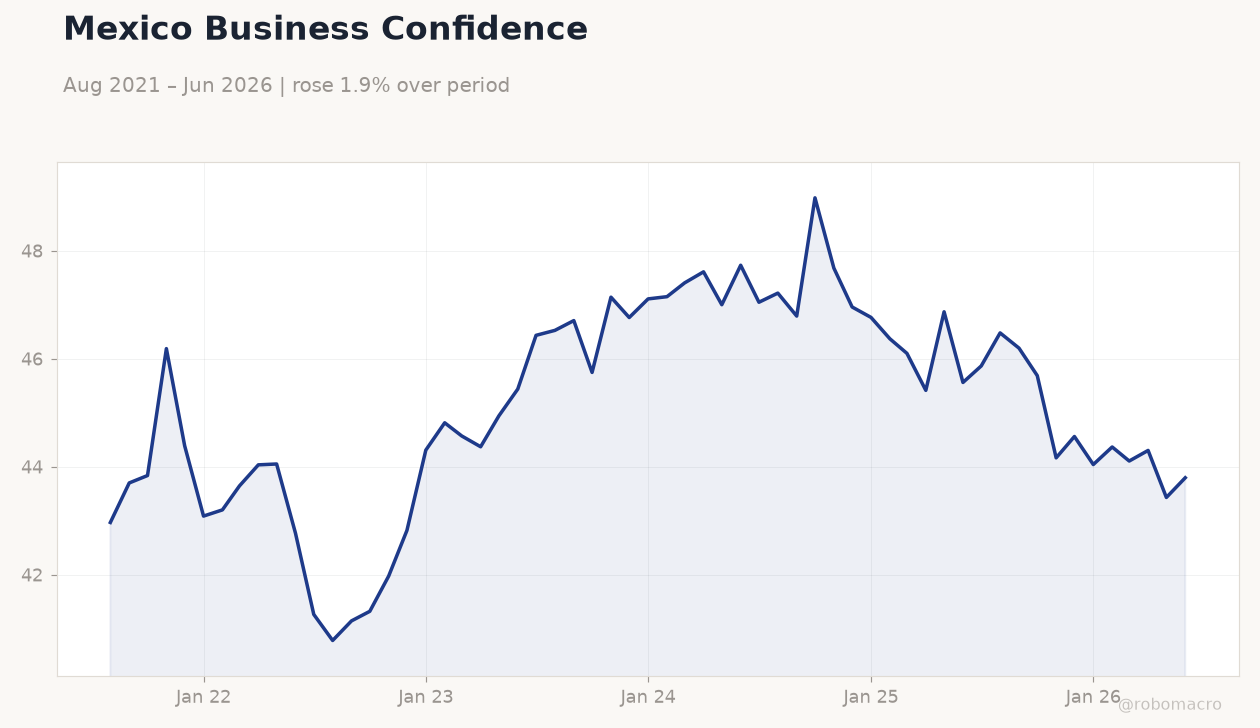 Mexico Business Confidence | Type: macro_line | Business Confidence Index: 43.8 (2026-06-01) | Range: 40.78–48.98 | Trend(6pt): 42.97,41.32,46.76,46.37,44.3,43.8
Today's Economic Events
| Data | Prior | Cons | Time |
|---|---|---|---|
| Thursday (2026-07-30) | |||
| GDP Growth Quarter-over-Quarter Preliminary | -0.60 | 1.30 | 04:00 |
| GDP Growth Year-over-Year Preliminary | 0.20 | 1.50 | 04:00 |
- Mexico June trade balance hit $4.09 billion surplus, beating consensus by wide margin.
- IPC Bolsa climbed 1.17 percent while USD/MXN rose 0.20 percent to 17.47.
- Short-term rate held at 5.19 percent with June CPI at 3.37 percent year-over-year.
Yesterday's Recap
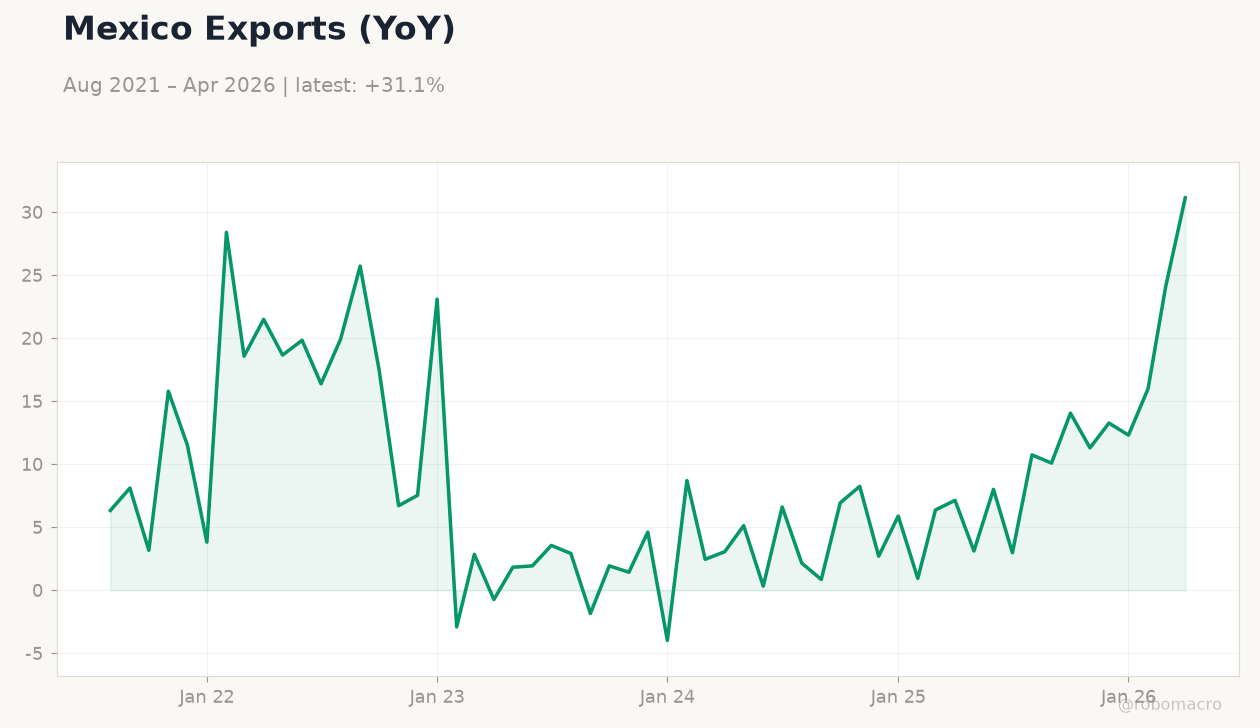
Mexico's June trade balance delivered a $4.09 billion surplus, well above the $2.28 billion consensus and prior $2.26 billion reading. The outperformance reflected stronger exports amid ongoing nearshoring activity. IPC Bolsa advanced 1.17 percent to close at 67,157.91 on foreign buying.
USD/MXN edged 0.20 percent higher to 17.47 while EUR/MXN slipped 0.04 percent. Mexico short-term rate stood at 5.19 percent after a 3.17 percent daily decline, and the long-term rate rose 6.42 percent to 9.45 percent. WTI crude fell 0.98 percent to $81.80 per barrel, pressuring energy-linked assets.
Silver and gold also declined, reducing safe-haven flows into Mexican markets. The data reinforced consumption resilience shown in remittances and supported peso stability despite softer industrial production prints elsewhere.
The Day Ahead
Attention turns to July 30 preliminary GDP prints. Quarter-over-quarter growth is expected at 1.3 percent after the prior -0.6 percent contraction. Year-over-year expansion is forecast at 1.5 percent versus the previous 0.2 percent.
Markets will assess whether the rebound confirms consumption resilience shown in remittances and trade data. No major releases are scheduled for July 28 or 29. Traders will monitor any follow-through from the U.S.
tariff pressure on Chinese steel imports through Mexico. The minutes from Banxico's last meeting, due at 16:00 on July 28, represent the highest-impact release and will be scrutinized for any shift in forward guidance on the restrictive stance.
Other Economic Notes
Nearshoring continues to support manufacturing exports and peso inflows despite softer industrial production elsewhere. USMCA auto-rules review discussions remain on schedule for 2026 with limited new friction reported. U.S.
officials are pressing Mexico to align with proposed steel tariffs on Chinese imports, raising potential supply-chain costs for local producers. <i>↓ p.2</i>