Mexico Macro Daily(Beta Mode)
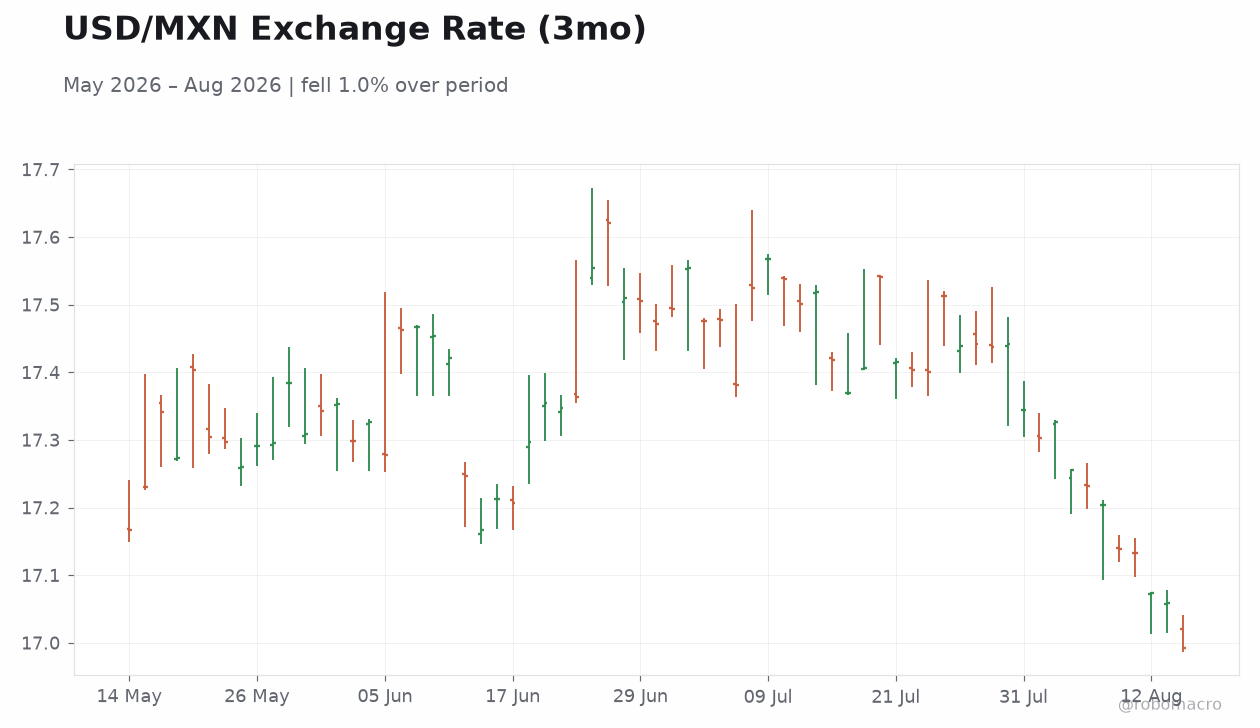
Peso Hits Two-Year High as USD/MXN Hits 17.00
Market Snapshot
| Asset | Level | Change |
|---|---|---|
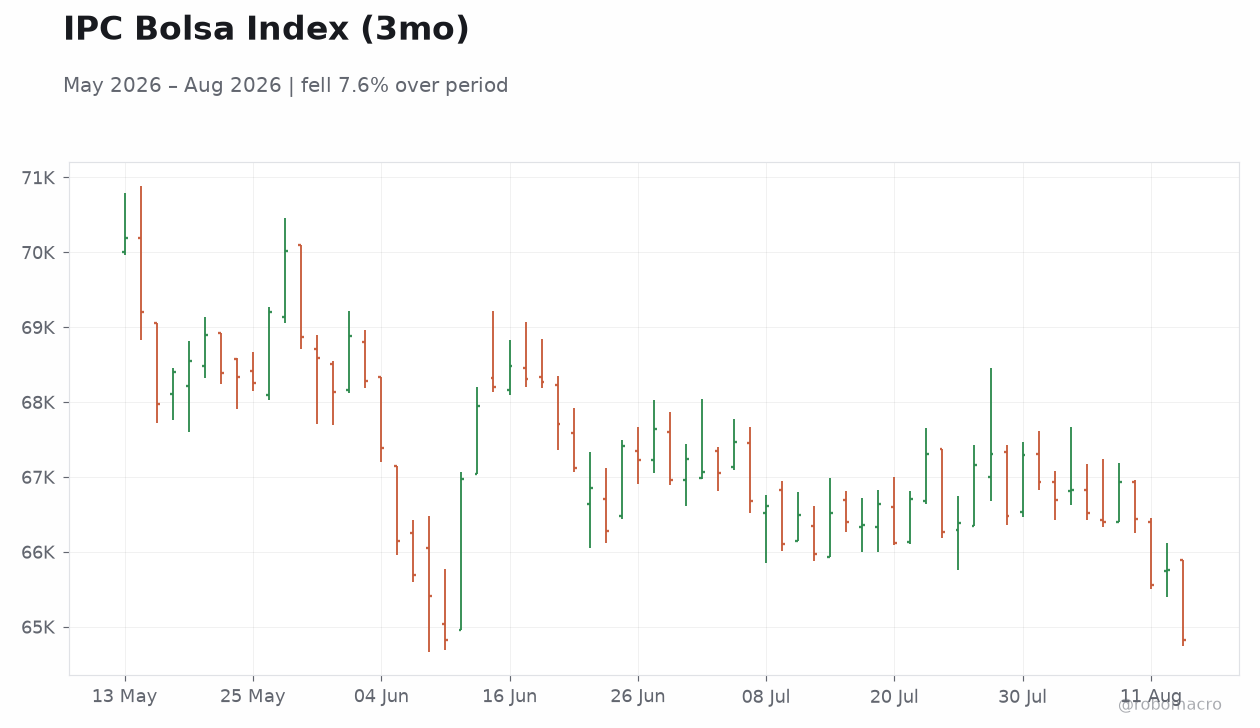
| IPC Bolsa | 64,826.39 | -1.41% |
| USD/MXN | 17.00 | -0.37% |
| EUR/MXN | 19.66 | -0.02% |
| WTI Crude | 81.46 | +0.26% |
| Silver | 65.12 | +0.38% |
| Gold | 4,421.60 | +1.33% |
| Brent Crude | 87.07 | +0.00% |
| Bitcoin | 62,822.81 | -0.91% |
| Mexico Short-term Rate | 5.19% | -3.17% |
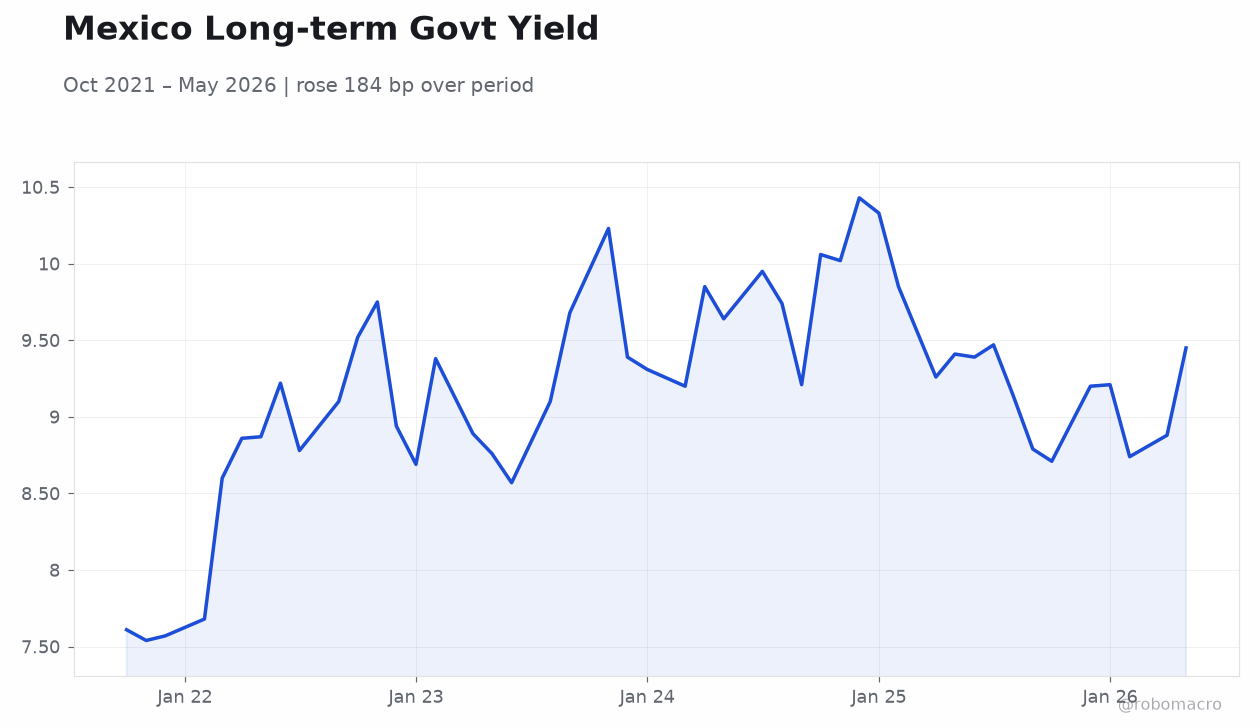
| Mexico Long-term Rate | 9.45% | +6.42% |
Prior Economic Events
| Data | Prior | Cons | Actual |
|---|---|---|---|
| No events available | |||
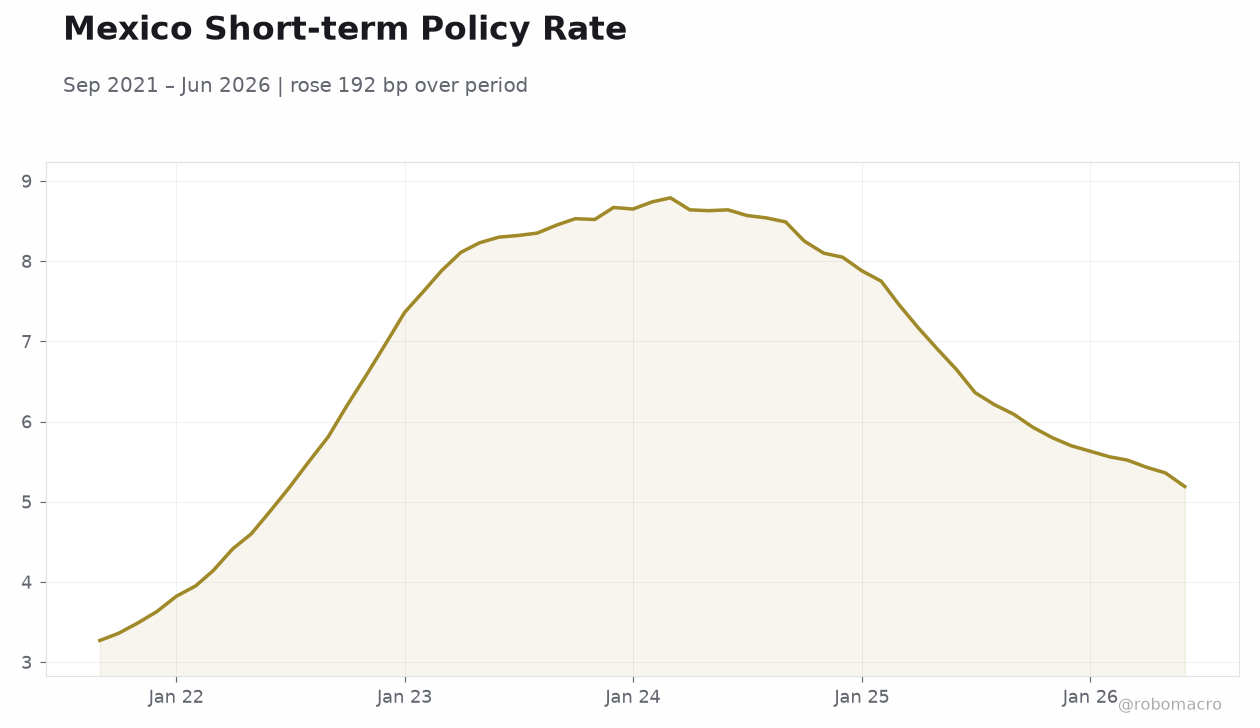 Mexico Short-term Policy Rate | Type: macro_line | Policy Rate %: 5.19 (2026-06-01) | Range: 3.27–8.79 | Trend(6pt): 3.27,6.58,8.65,7.46,5.36,5.19
Today's Economic Events
| Data | Prior | Cons | Time |
|---|---|---|---|
| No events available | |||
- Mexican peso strengthens to 24-month peak with USD/MXN at 17.00 after soft US inflation data.
- IPC Bolsa drops 1.41% to 64,826.39 while short-term rates ease to 5.19%.
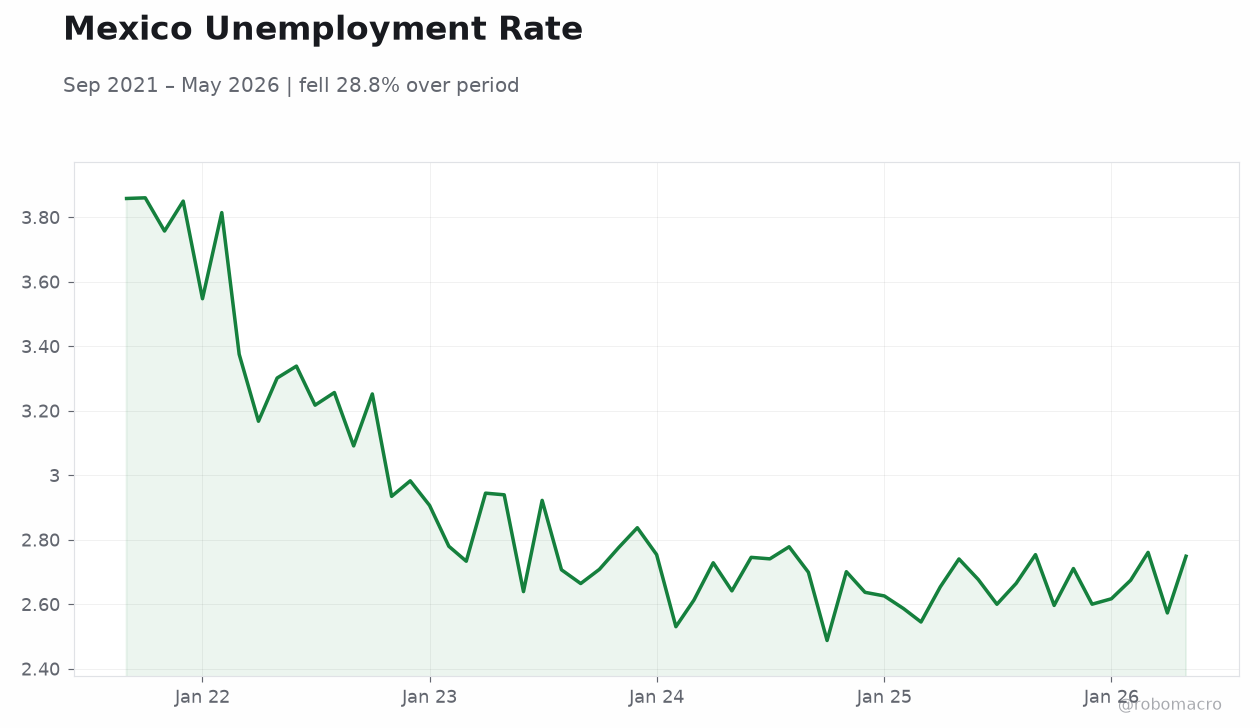
- Banxico holds policy rate at 6.50% with CPI at 3.12% y/y supporting gradual easing path.
Yesterday's Recap
Mexican markets saw the peso extend its downtrend in USD/MXN for a 14th session, closing at 17.00 after a 0.37% decline that marked the currency's strongest level since 2024. The IPC Bolsa fell 1.41% to 64,826.39 amid mild risk-off flows and thin local data. Mexico's short-term rate eased 3.17% to 5.19% while the long-term rate rose 6.42% to 9.45%, steepening the curve as markets adjusted cut expectations.
WTI crude gained 0.26% to 81.46 and gold rose 1.33% to 4,421.60, providing some commodity support for Mexico's terms of trade. EUR/MXN held near 19.66 with minimal movement. News on USMCA-driven export growth reinforced peso resilience despite the equity decline.
No major domestic releases occurred, leaving the peso move driven by external US inflation softness that reduced near-term Fed hike odds. Nearshoring momentum continued with new auto-parts plants announced in Nuevo León while remittances hit a record $6.1 bn in July.
The Day Ahead
Markets face a data-light session with no scheduled Mexican releases or Banxico speeches. Focus remains on follow-through from the peso's recent strength and any USMCA-related trade commentary that could influence nearshoring flows. Traders will monitor global equity sentiment for spillovers into the IPC Bolsa and watch oil prices given Mexico's energy exposure.
The absence of local prints keeps attention on external drivers such as US inflation revisions and potential shifts in North American supply chains. Positioning in USD/MXN stays sensitive to any fresh signals on USMCA auto rules or regional investment announcements. Broader trade dynamics continue to favor Mexico as firms consolidate sourcing away from China.
Other Economic Notes
Nearshoring momentum persists with new auto-parts facilities announced in northern states, boosting export capacity under USMCA preferences. Record remittances of $6.1 billion in July underscore household resilience and support for consumption. Energy-reform discussions in Congress remain stalled, limiting PEMEX's ability to expand output despite narrower quarterly losses.
<i>↓ p.2</i>