Mexico Macro Daily(Beta Mode)
Banxico Signals Extended Rate Holds as Peso Strengthens
Market Snapshot
| Asset | Level | Change |
|---|---|---|
| IPC Bolsa | 64,349.80 | +0.55% |
| USD/MXN | 16.90 | -0.32% |
| EUR/MXN | 19.77 | -0.09% |
| WTI Crude | 86.74 | -1.24% |
| Silver | 69.93 | +2.79% |
| Gold | 4,654.80 | +3.07% |
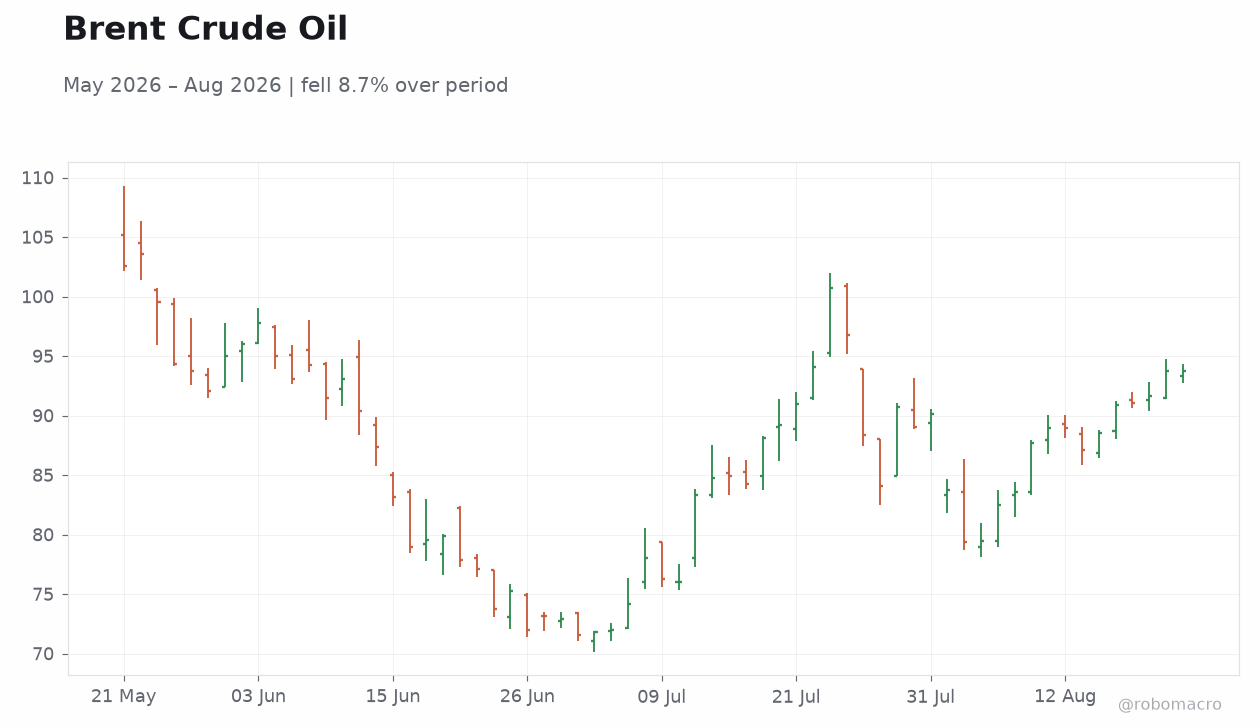
| Brent Crude | 93.68 | -0.11% |
| Bitcoin | 76,648.63 | +4.95% |
| Mexico Short-term Rate | 5.19% | -3.17% |
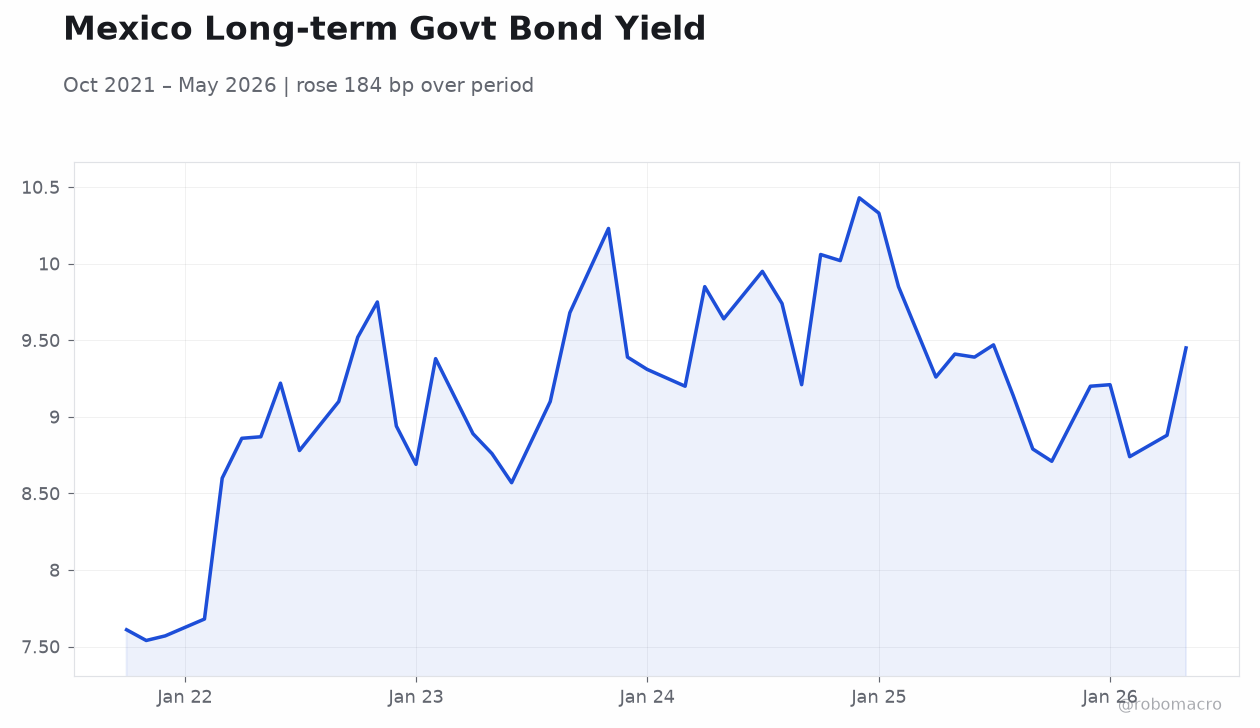
| Mexico Long-term Rate | 9.45% | +6.42% |
Prior Economic Events
| Data | Prior | Cons | Actual |
|---|---|---|---|
| No events available | |||
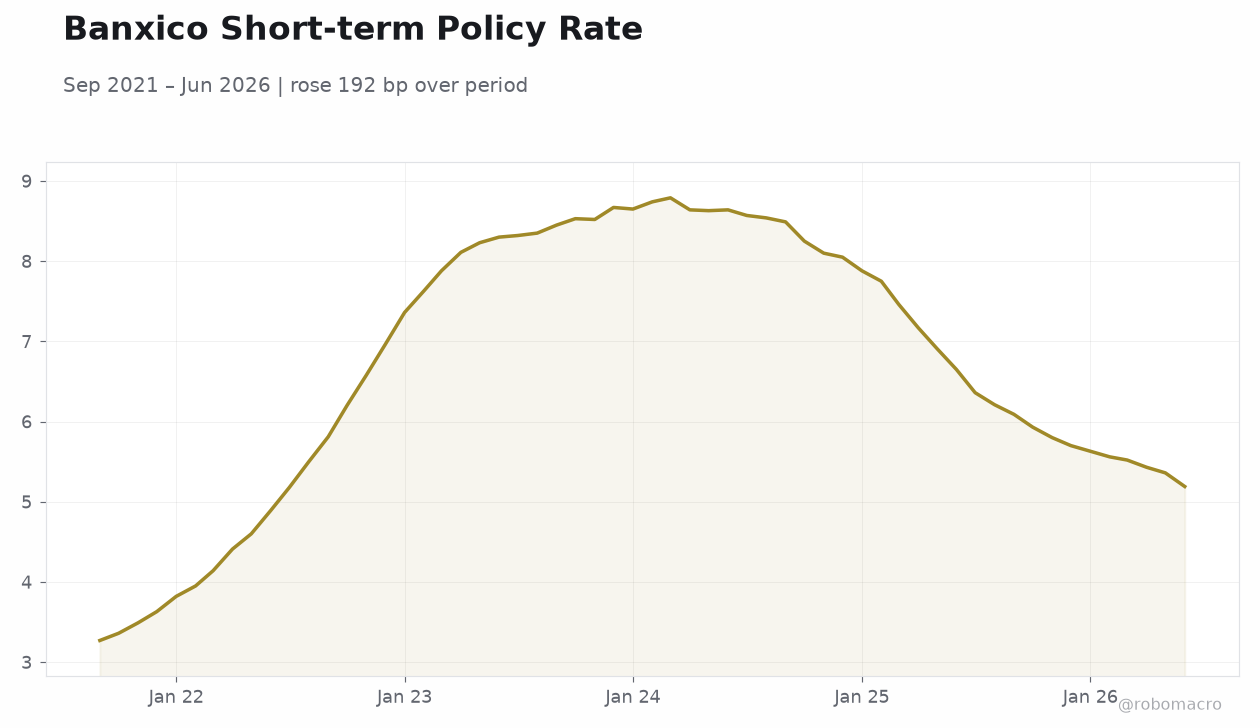 Banxico Short-term Policy Rate | Type: macro_line | Policy Rate %: 5.19 (2026-06-01) | Range: 3.27–8.79 | Trend(6pt): 3.27,6.58,8.65,7.46,5.36,5.19
Today's Economic Events
| Data | Prior | Cons | Time |
|---|---|---|---|
| No events available | |||
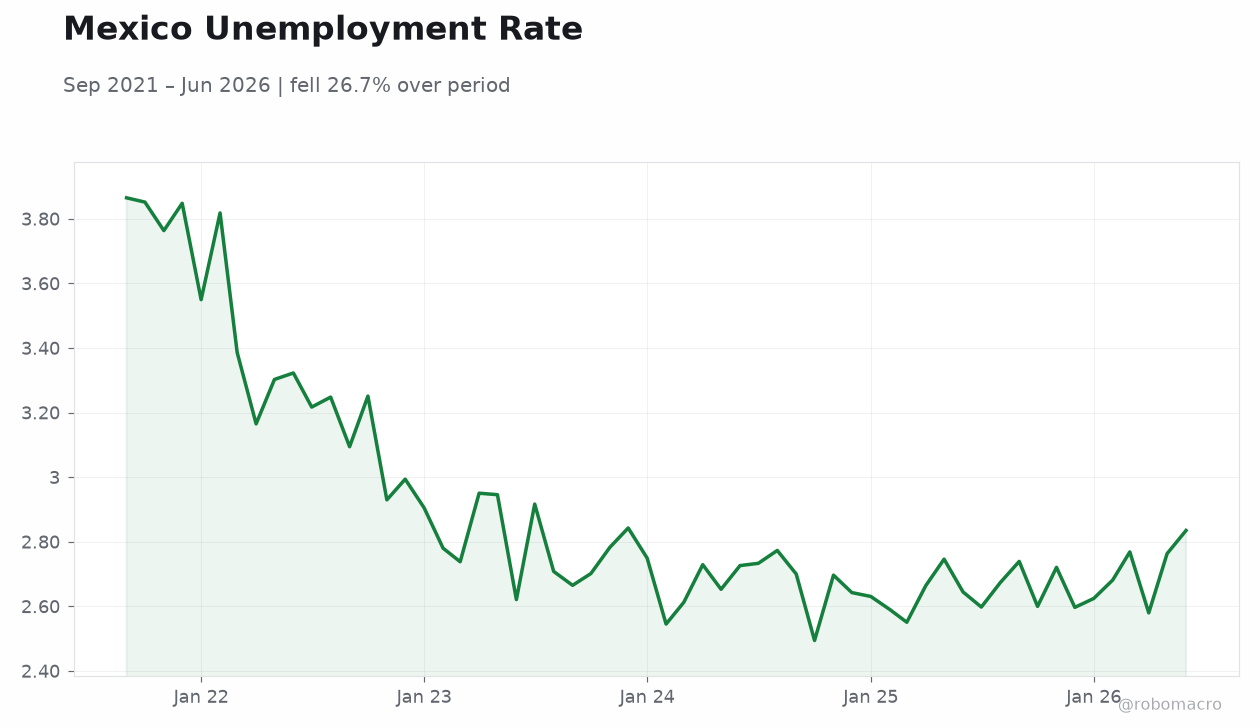
- Banxico signals extended rate holds amid stable inflation at 3.12% y/y.
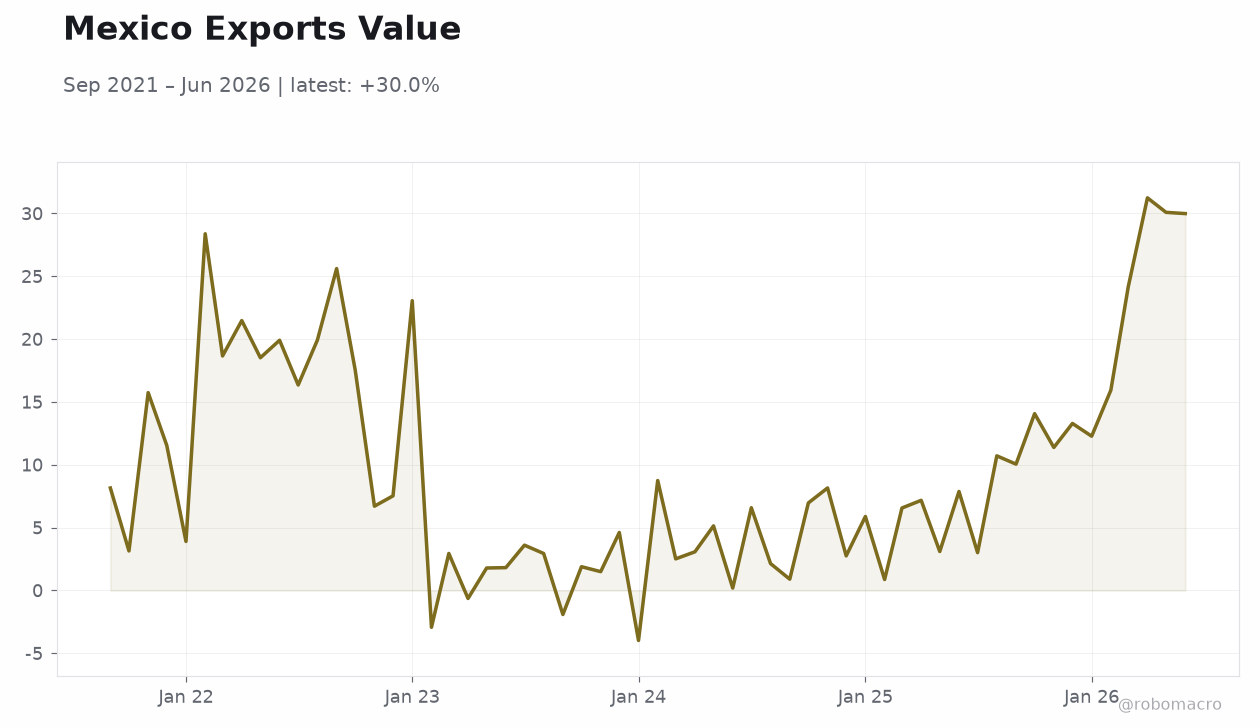
- IPC Bolsa rises 0.55% while USD/MXN falls 0.32% on trade flow data.
- Nearshoring and China trade curbs dominate Mexico-USMCA discussions.
Yesterday's Recap
Mexico markets posted modest gains as the IPC Bolsa closed at 64,349.80, up 0.55%, supported by inflows into nearshoring-exposed equities. The peso strengthened with USD/MXN falling to 16.90, a 0.32% decline, while EUR/MXN eased 0.09% to 19.77. Short-term Mexican rates dropped 3.17% to 5.19% as longer-term yields climbed 6.42% to 9.45%, reflecting curve steepening.
Reuters reported Banxico communications pointing to additional holds at the current 6.50% policy rate. Vietnam’s exports to Mexico doubling raised concerns over tariff circumvention, prompting Mexico to advance new curbs on Chinese goods routed through third countries. Gold and silver posted strong gains of 3.07% and 2.79% respectively, while WTI crude declined 1.24% to 86.74.
No domestic data prints occurred, leaving market focus on external trade signals and Banxico guidance. Brent crude eased 0.11% to 93.68 and Bitcoin rose 4.95% to 76,648.63, adding to risk-on sentiment that aided Mexican assets.
The Day Ahead
Markets enter a data-light session with no scheduled Mexican releases or Banxico speakers. Attention centers on ongoing USMCA consultations regarding energy rules and potential follow-through on Mexico’s planned China trade restrictions. Participants will monitor global commodity moves, particularly Brent crude at 93.68 and Bitcoin at 76,648.63, for risk sentiment spillovers into the peso.
Any escalation in US tariff rhetoric could pressure USD/MXN and front-end yields. Equity flows may remain supported by nearshoring momentum absent negative surprises from Beijing or Washington. The absence of inflation or activity data keeps the focus squarely on policy signals already priced into the 6.50% Banxico rate.
Silver at 69.93 and gold at 4,654.80 will also draw attention for safe-haven flows.
Other Economic Notes
Nearshoring continues to anchor capital inflows, with automotive and electronics sectors driving recent foreign direct investment trends. Mexico’s decision to tighten oversight on Chinese exports via Vietnam and other hubs aligns with USMCA commitments while protecting domestic manufacturing. Remittance inflows remain robust, providing a steady consumption buffer that supports peso stability at current levels.
<i>↓ p.2</i>