Mexico Macro Daily(Beta Mode)
IPC Surges as Peso Firms on Thin Data
Market Snapshot
| Asset | Level | Change |
|---|---|---|
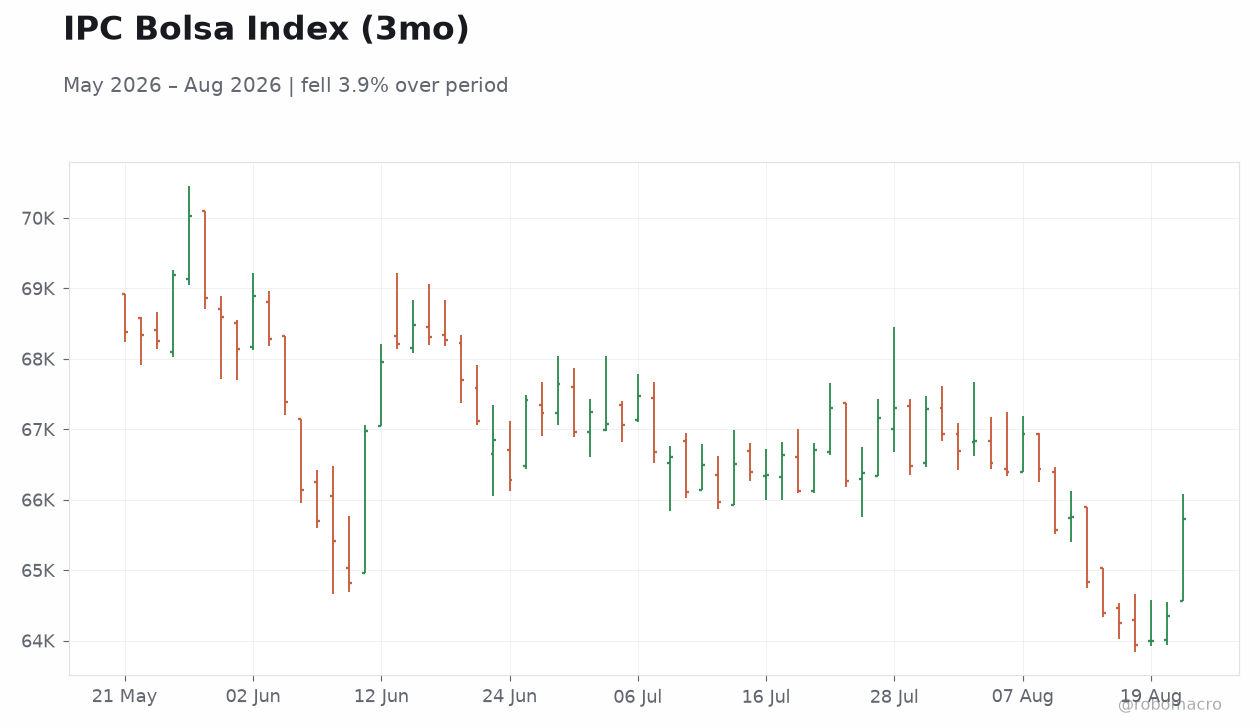
| IPC Bolsa | 65,729.18 | +2.14% |
| USD/MXN | 16.93 | -0.12% |
| EUR/MXN | 19.75 | -0.30% |
| WTI Crude | 85.35 | -1.96% |
| Silver | 69.10 | -0.53% |
| Gold | 4,708.00 | +1.81% |
| Brent Crude | 92.90 | -1.58% |
| Bitcoin | 78,340.08 | +0.75% |
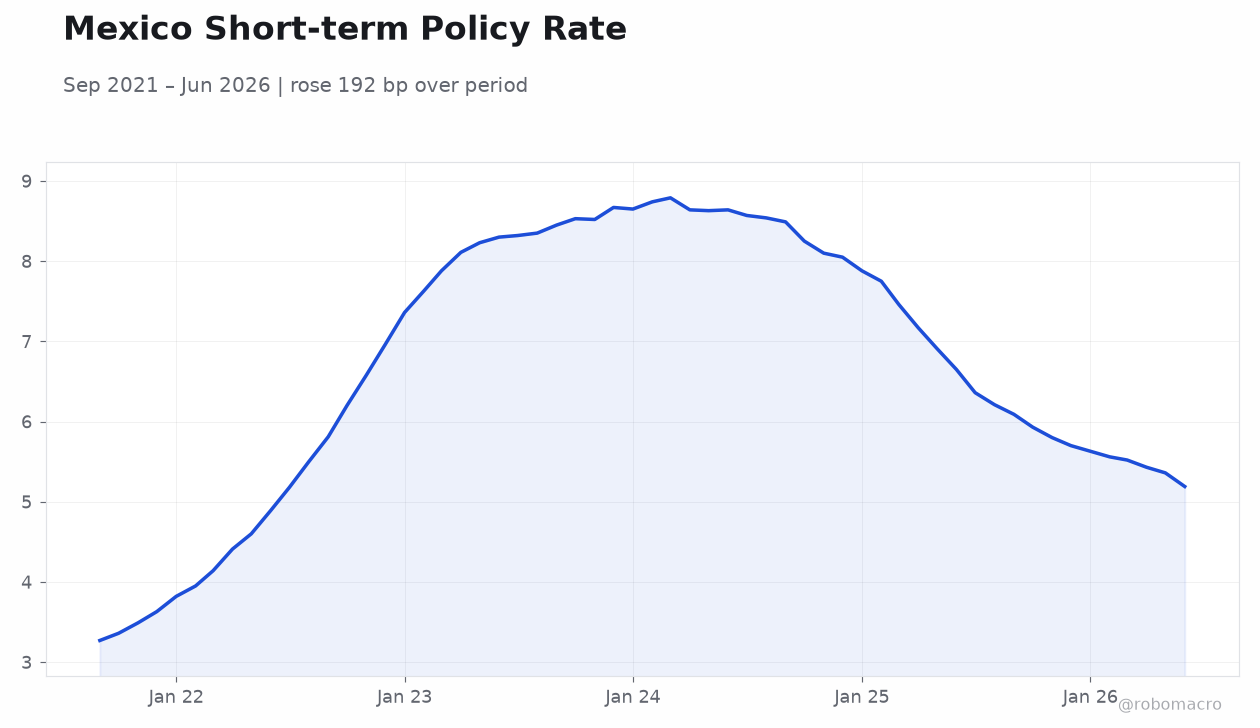
| Mexico Short-term Rate | 5.19% | -3.17% |
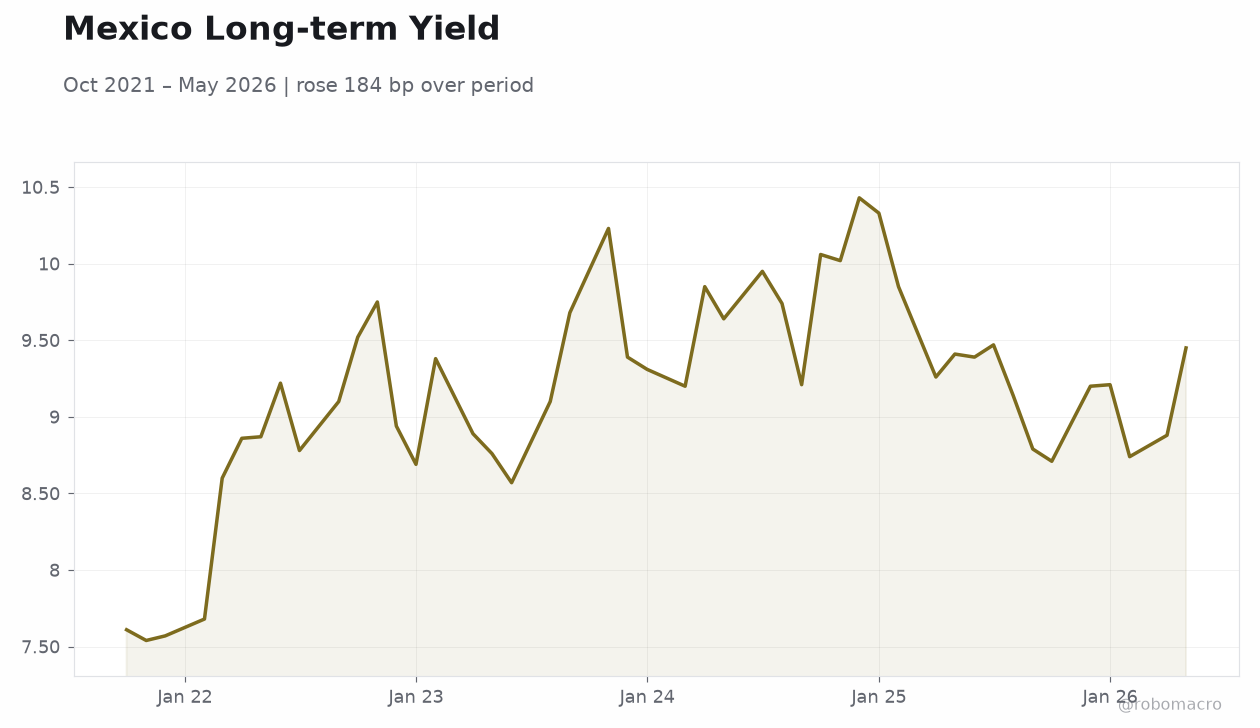
| Mexico Long-term Rate | 9.45% | +6.42% |
Prior Economic Events
| Data | Prior | Cons | Actual |
|---|---|---|---|
| No events available | |||
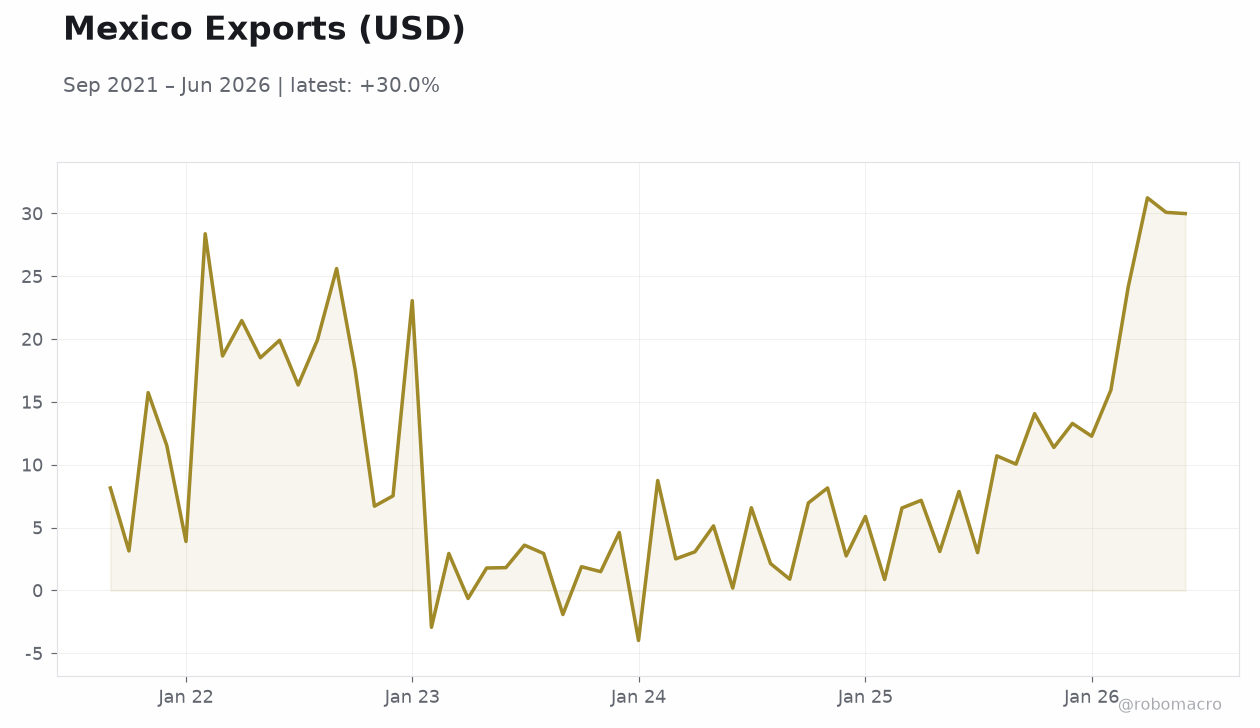 Mexico Exports (USD) | Type: macro_line | USD mn: 29.99 (2026-06-01) | Range: -3.983–31.24 | Trend(6pt): 8.153,6.704,-3.983,6.56,30.09,29.99
Today's Economic Events
| Data | Prior | Cons | Time |
|---|---|---|---|
| Thursday (2026-08-27) | |||
| Trade Balance | 4,090m | - | 08:00 |
- IPC Bolsa rose 2.14% to 65,729.18 while USD/MXN fell 0.12% to 16.93
- Mexico short-term rate eased to 5.19% as long-term yields climbed to 9.45%
- Trade Balance release scheduled for 27 August carries medium impact
Yesterday's Recap
Mexican markets posted gains with limited economic releases. The IPC Bolsa climbed 2.14 percent to close at 65,729.18, supported by equity inflows. USD/MXN declined 0.12 percent to 16.93, reflecting modest peso strength against the dollar.
EUR/MXN fell 0.30 percent to 19.75. WTI Crude dropped 1.96 percent to 85.35 while Brent Crude eased 1.58 percent to 92.90. Gold advanced 1.81 percent to 4,708.00 and silver declined 0.53 percent to 69.10.
Bitcoin rose 0.75 percent to 78,340.08 amid broader risk appetite. Mexico short-term rates fell 3.17 percent to 5.19 percent while long-term rates jumped 6.42 percent to 9.45 percent.
The Day Ahead
Attention turns to the 27 August Trade Balance print due at 08:00 ET. The release follows a prior surplus of 4.09 billion USD and will update views on export momentum under USMCA. No major data prints are scheduled for 24-25 August.
Market participants will monitor peso flows ahead of the print. Equity and fixed-income desks are expected to stay light until the trade figures appear. Nearshoring-related supply-chain updates may also surface in corporate commentary.
Other Economic Notes
Mexico continues to lag in the shifting global oil landscape as new production maps favor faster-growing basins elsewhere. Policymakers are weighing curbs on Chinese goods to address US concerns over tariff evasion through Mexican territory. Remittance inflows and nearshoring investment remain key supports for the external accounts.
Broader USMCA compliance discussions continue to shape trade policy expectations. These themes underpin medium-term growth forecasts despite the absence of fresh domestic indicators this week.
Global Macro News
US-Canada tariff talks collapsed, raising fresh trade-war risks that could spill into Mexican supply chains. China rejected US claims of tariff evasion while Mexico evaluates new restrictions on Chinese imports. Bank of England officials warned that AI-driven demand could lift global interest rates, adding pressure on emerging-market currencies including the peso.
<i>↓ p.2</i>