Mexico Macro Daily(Beta Mode)
Mexico Q2 GDP Rebounds 1.4% Amid Trade Strain
Market Snapshot
| Asset | Level | Change |
|---|---|---|
| IPC Bolsa | 65,770.85 | +0.06% |
| USD/MXN | 16.94 | +0.15% |
| EUR/MXN | 19.76 | +0.00% |
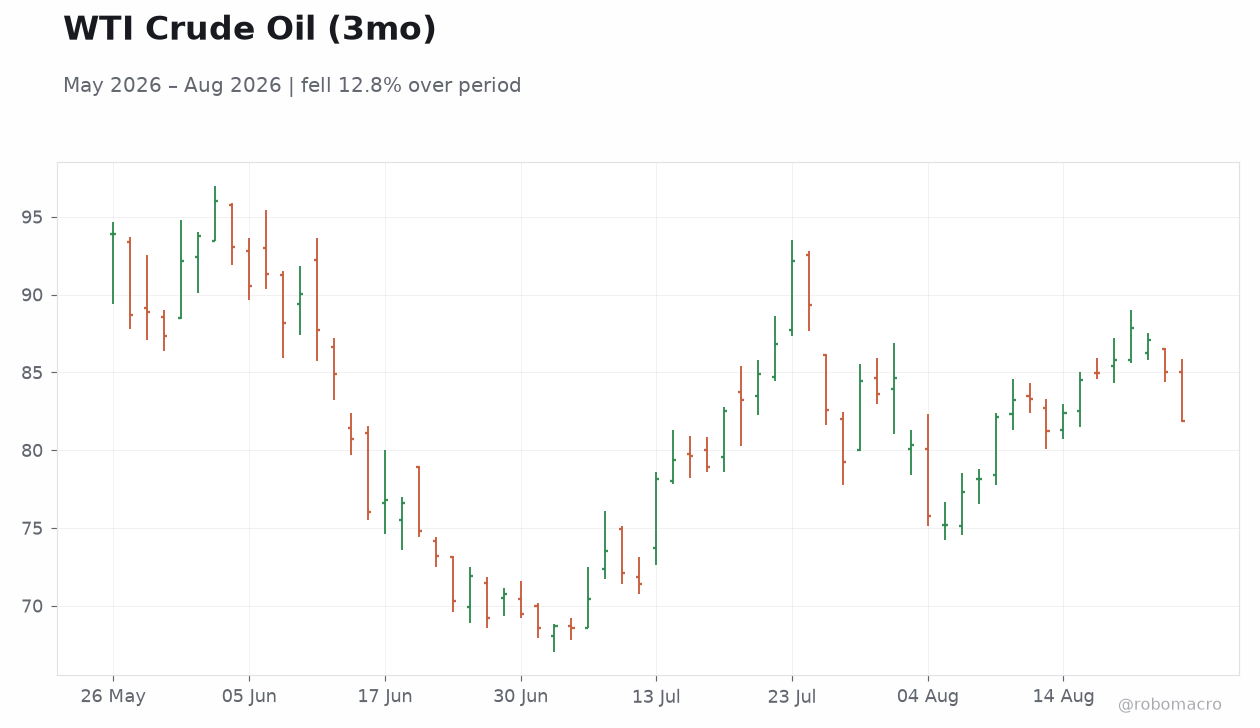
| WTI Crude | 81.85 | -3.72% |
| Silver | 68.19 | -0.51% |
| Gold | 4,702.30 | +1.33% |
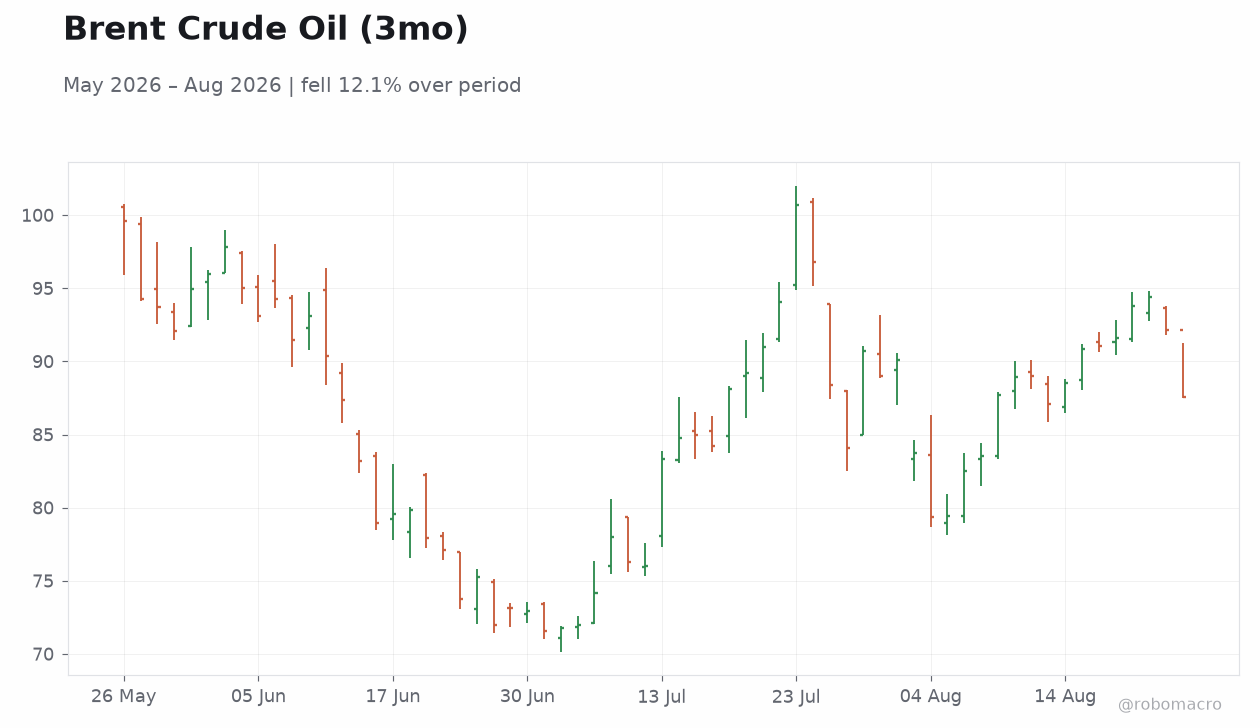
| Brent Crude | 87.56 | -5.00% |
| Bitcoin | 79,118.08 | +0.19% |
| Mexico Short-term Rate | 5.19% | -3.17% |
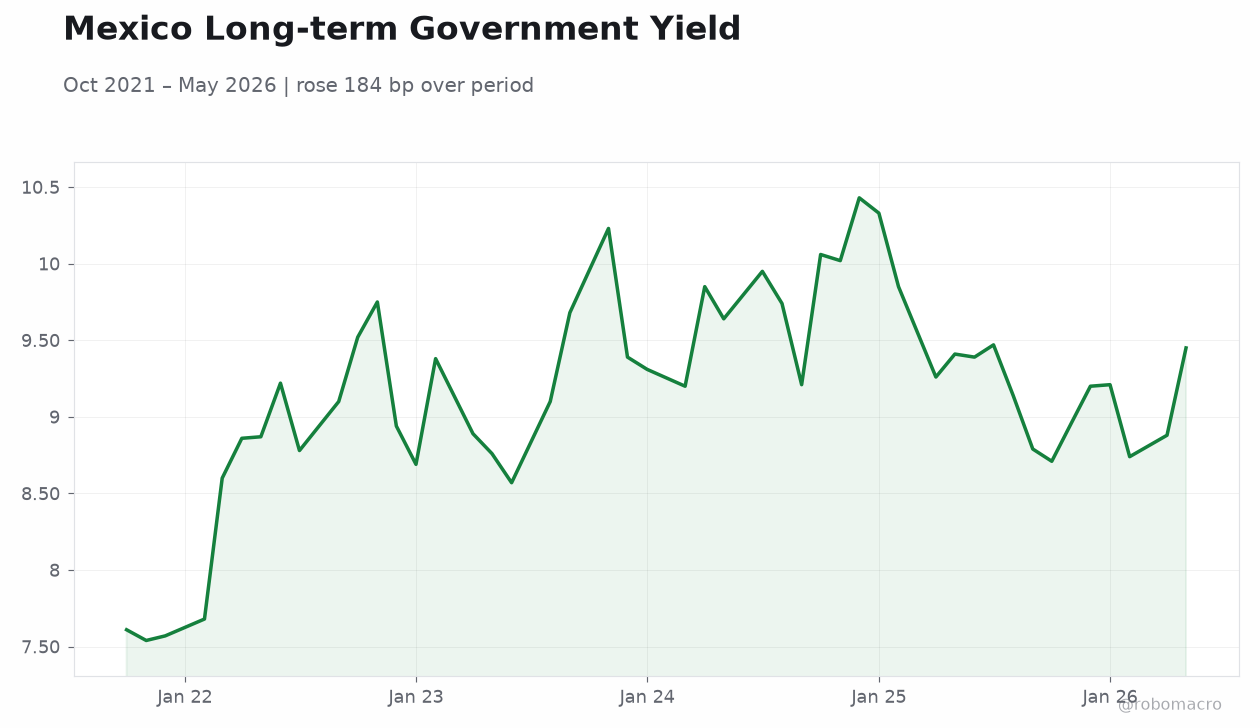
| Mexico Long-term Rate | 9.45% | +6.42% |
Prior Economic Events
| Data | Prior | Cons | Actual |
|---|---|---|---|
| No events available | |||
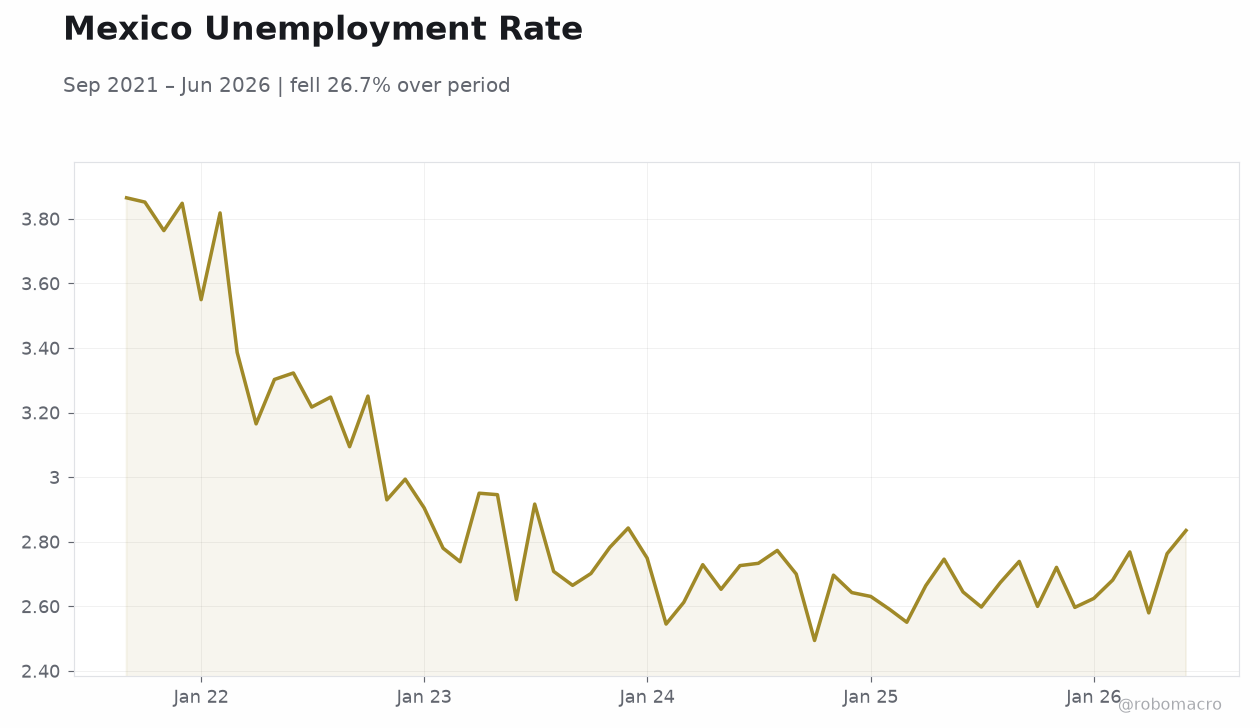 Mexico Unemployment Rate | Type: macro_line | Unemployment Rate %: 2.835 (2026-06-01) | Range: 2.495–3.865 | Trend(6pt): 3.865,2.93,2.75,2.551,2.763,2.835
Today's Economic Events
| Data | Prior | Cons | Time |
|---|---|---|---|
| Thursday (2026-08-27) | |||
| Trade Balance | 4,090m | - | 08:00 |
| Tuesday (2026-09-01) | |||
| Business Confidence | 48 | - | 08:00 |
- Mexico’s economy expanded 1.4% quarter-on-quarter in Q2, led by services and construction.
- IPC Bolsa rose 0.06% while USD/MXN climbed 0.15% to 16.94 on the session.
- WTI crude fell 3.72% and Mexico’s long-term rate jumped 6.42% to 9.45%.
Yesterday's Recap
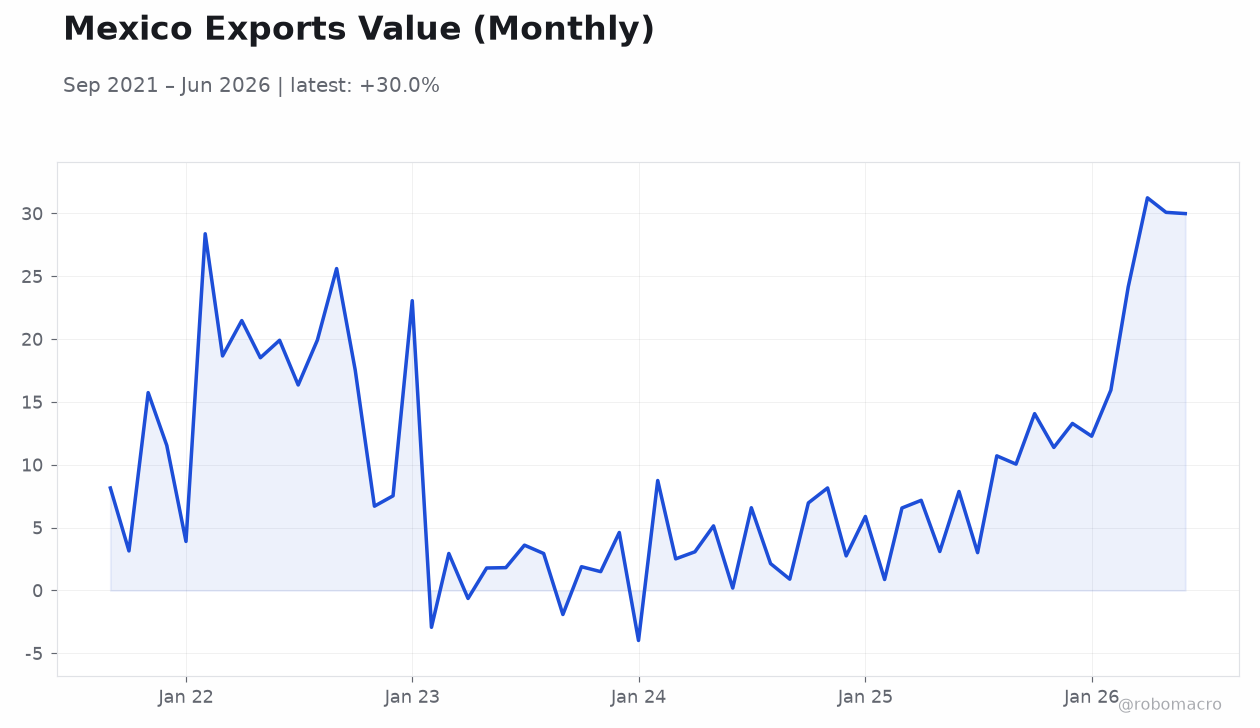
Mexico’s statistics agency reported 1.4% quarter-on-quarter GDP growth for the second quarter, reversing the prior period’s contraction and exceeding expectations. Services and construction drove the rebound while exports held steady despite ongoing USMCA frictions. The IPC Bolsa index edged 0.06% higher to close at 65,770.85.
USD/MXN rose 0.15% to 16.94, reflecting modest peso softening. WTI crude dropped 3.72% to 81.85 and Brent fell 5.00% to 87.56, pressuring Mexico’s fiscal outlook. The long-term government bond yield surged 6.42% to 9.45% while the short-term rate eased 3.17% to 5.19%.
Gold advanced 1.33% to 4,702.30, offering a partial hedge for Mexican portfolios.
The Day Ahead
Markets will focus on the August 27 Trade Balance release, which carries medium impact and follows a 4.09 billion USD surplus. The September 1 Business Confidence print is also due, with the prior reading at 48. No major data are scheduled for August 26.
Traders will monitor peso flows ahead of these prints and any fresh USMCA tariff signals from Washington. Oil price volatility remains a key variable for the external accounts. Banxico officials are not scheduled to speak, leaving the focus on incoming activity indicators.
Other Economic Notes
Nearshoring continues to support manufacturing investment, with construction activity accelerating in northern industrial corridors. Services expansion in Q2 offset weaker agricultural output and highlighted domestic demand resilience. Persistent USMCA disputes over autos and agriculture keep export risks elevated, though solid Q2 shipments limited downside.
Mexico’s external accounts remain anchored by remittances and energy exports, yet lower oil prices could widen the current-account gap later this year. Inflation at 3.12% year-on-year leaves limited room for aggressive easing while growth remains above trend.
Global Macro News
The Bank of Canada is set to announce its policy rate and updated Monetary Policy Report, with markets pricing a hold. <i>↓ p.2</i>