Mexico Macro Daily(Beta Mode)
IPC Climbs as Peso Steadies on Trade Outlook
Market Snapshot
| Asset | Level | Change |
|---|---|---|
| IPC Bolsa | 66,293.07 | +0.79% |
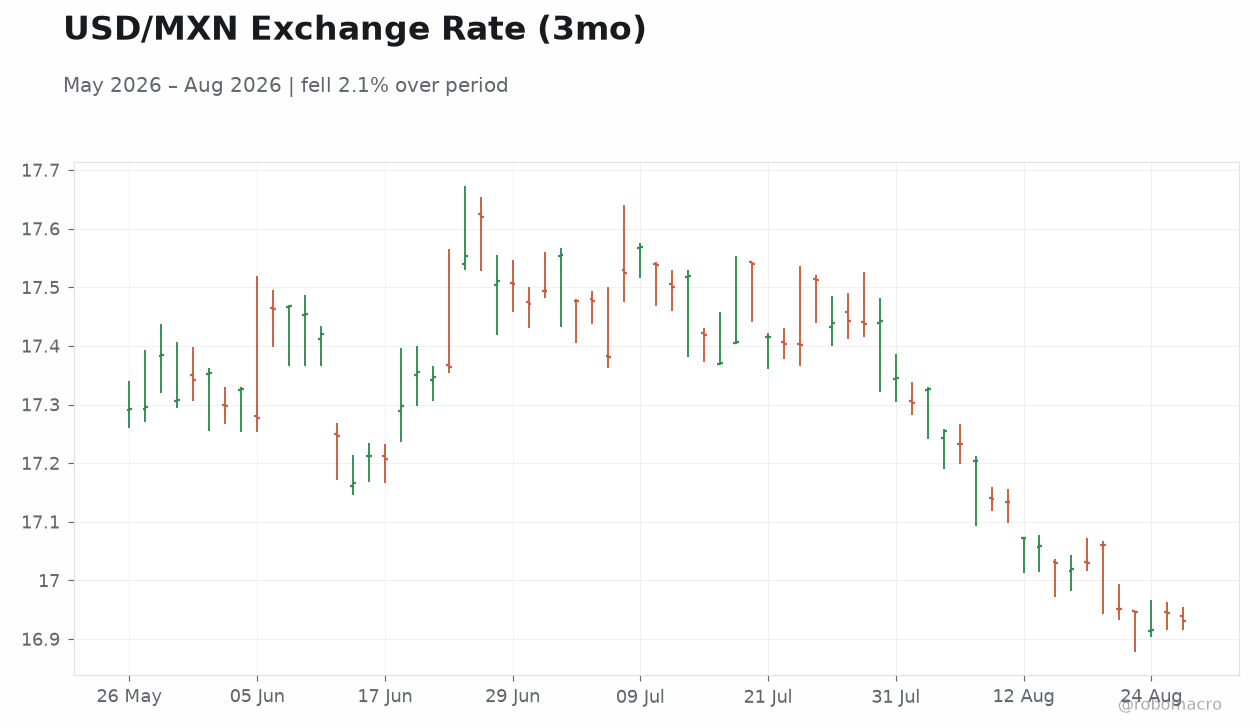
| USD/MXN | 16.92 | -0.11% |
| EUR/MXN | 19.76 | -0.07% |
| WTI Crude | 80.50 | -2.26% |
| Silver | 68.49 | -0.21% |
| Gold | 4,674.70 | +0.79% |
| Brent Crude | 85.48 | -3.50% |
| Bitcoin | 78,506.06 | -0.07% |
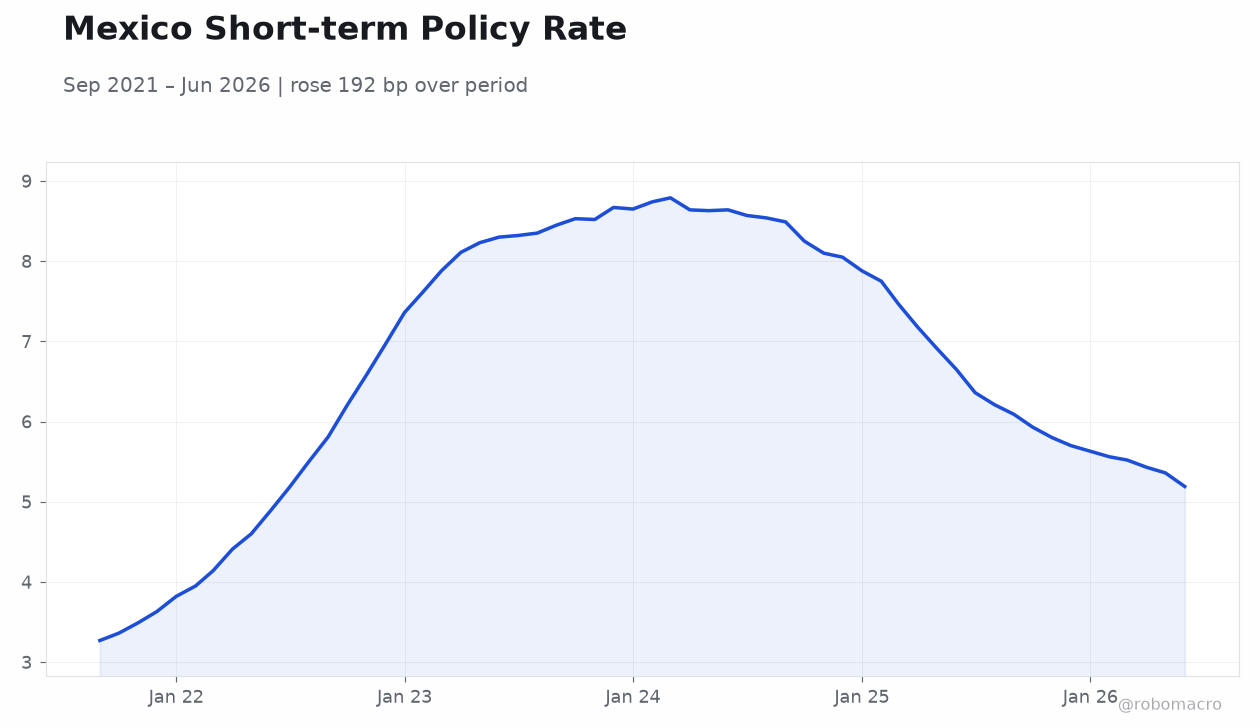
| Mexico Short-term Rate | 5.19% | -3.17% |
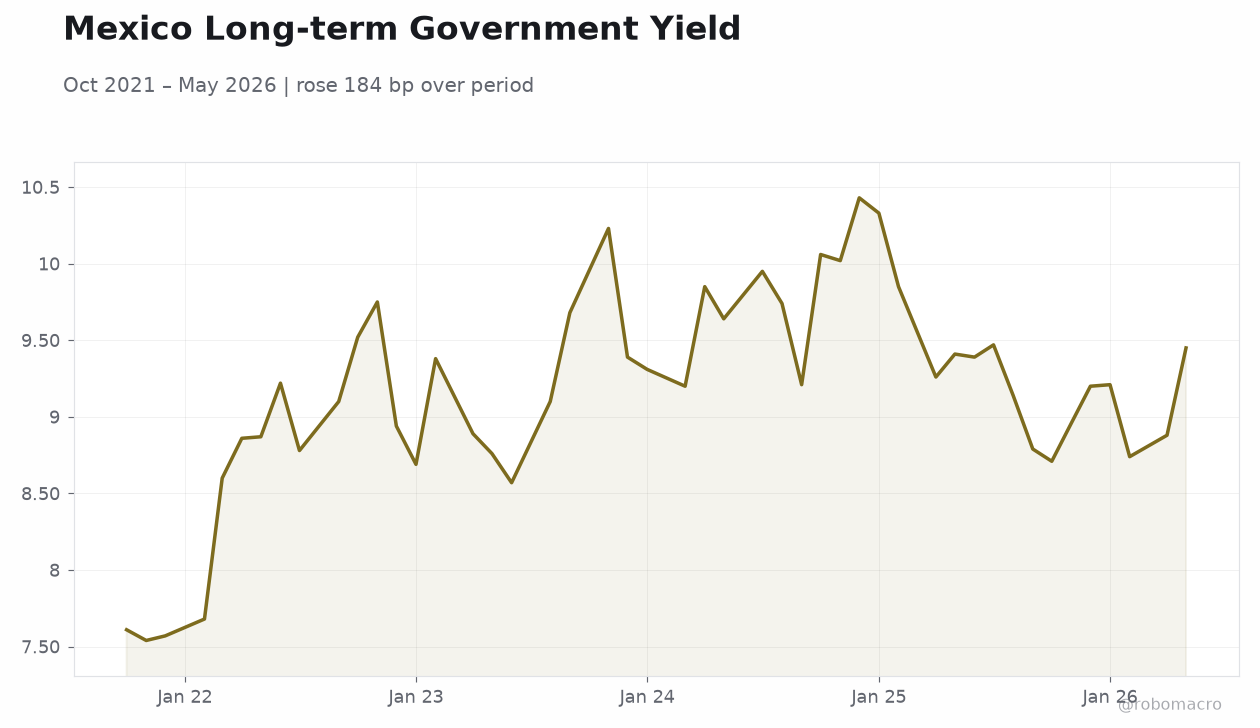
| Mexico Long-term Rate | 9.45% | +6.42% |
Prior Economic Events
| Data | Prior | Cons | Actual |
|---|---|---|---|
| No events available | |||
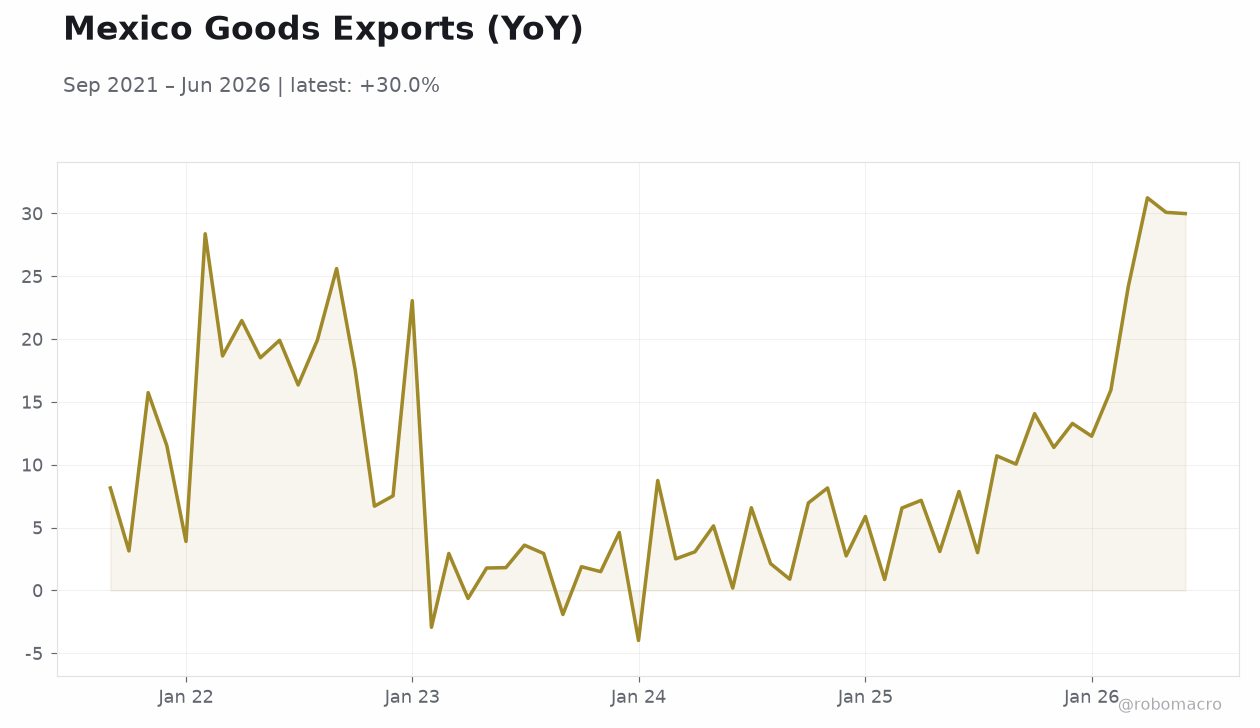 Mexico Goods Exports (YoY) | Type: macro_line | Exports (YoY %): 29.99 (2026-06-01) | Range: -3.983–31.24 | Trend(6pt): 8.153,6.704,-3.983,6.56,30.09,29.99
Today's Economic Events
| Data | Prior | Cons | Time |
|---|---|---|---|
| Thursday (2026-08-27) | |||
| Trade Balance | 4,090m | - | 08:00 |
| Tuesday (2026-09-01) | |||
| Business Confidence | 48 | - | 08:00 |
- IPC Bolsa advanced 0.79% to 66,293 amid stable peso trading.
- USD/MXN eased 0.11% to 16.92 as inflation data supported Banxico.
- Trade Balance release tomorrow offers fresh insight into export momentum.
Yesterday's Recap
Mexico equity and currency markets posted modest gains on August 25 with the IPC Bolsa climbing 0.79 percent to close at 66,293.07. The peso strengthened slightly against the dollar as USD/MXN fell 0.11 percent to 16.92, reflecting reduced risk aversion after recent inflation prints. No major economic data releases occurred yesterday, leaving market focus on the 1.4 percent GDP expansion recorded in the second quarter.
Cooling price pressures at 3.12 percent year-over-year kept Banxico’s 6.50 percent policy rate in focus without immediate pressure for adjustment. Short-term Mexican rates declined 3.17 percent while long-term yields rose 6.42 percent, signaling a modest steepening in the curve. Nearshoring-related export strength continued to underpin peso resilience despite softer global commodity prices, with WTI crude dropping 2.26 percent.
Overall, the session reflected steady positioning ahead of the upcoming Trade Balance print.
The Day Ahead
Mexico’s Trade Balance for July is scheduled for release at 8:00 a.m. ET tomorrow and will provide the latest reading on goods exports and imports. Analysts will watch for continued strength in manufacturing shipments tied to USMCA supply chains.
Business Confidence data due September 1 will offer an early gauge of third-quarter sentiment among Mexican firms. Market participants also monitor any follow-up comments from Banxico officials on the inflation trajectory that printed at 3.12 percent. Global oil price movements remain relevant given Mexico’s energy export exposure, with Brent crude already down 3.50 percent in recent sessions.
Investors will assess whether peso stability persists into the data release or shifts on external risk factors.
Other Economic Notes
Mexico’s economy expanded 1.4 percent in the second quarter, supported by resilient manufacturing and services activity under the USMCA framework. Inflation at 3.12 percent year-over-year remains inside Banxico’s target range, though services prices continue to warrant monitoring. Nearshoring trends have sustained export growth and foreign direct investment inflows, reinforcing the peso’s structural support.
<i>↓ p.2</i>