Mexico Macro Daily(Beta Mode)
Trade Deficit Widens Sharply, IPC Slips
Market Snapshot
| Asset | Level | Change |
|---|---|---|
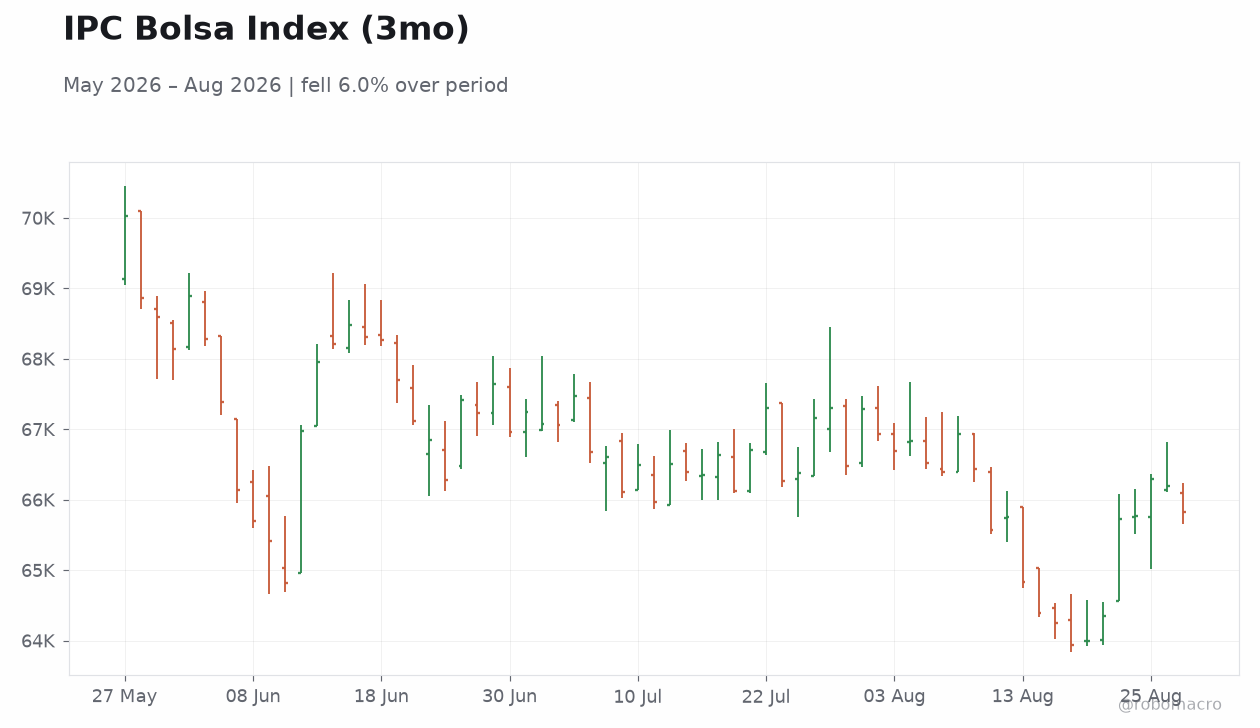
| IPC Bolsa | 65,829.98 | -0.55% |
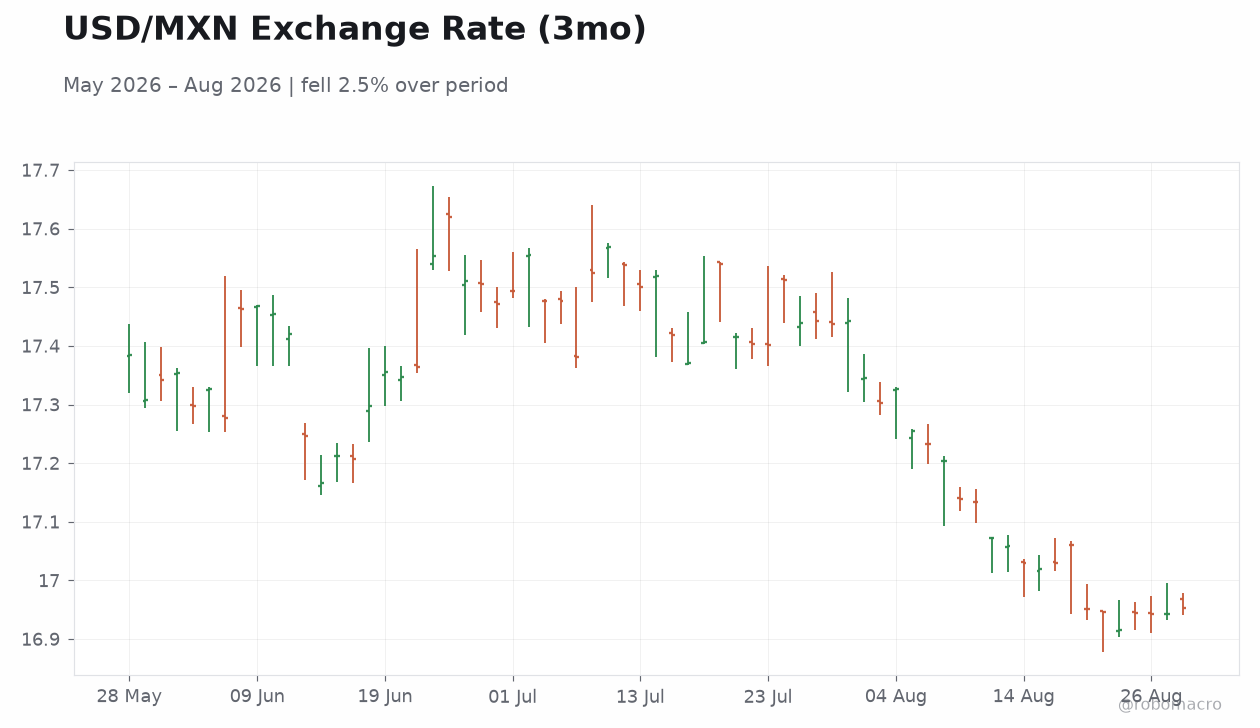
| USD/MXN | 16.95 | +0.07% |
| EUR/MXN | 19.74 | -0.02% |
| WTI Crude | 83.00 | -0.63% |
| Silver | 71.15 | +2.49% |
| Gold | 4,647.10 | +0.81% |
| Brent Crude | 88.06 | -1.83% |
| Bitcoin | 79,590.10 | -0.83% |
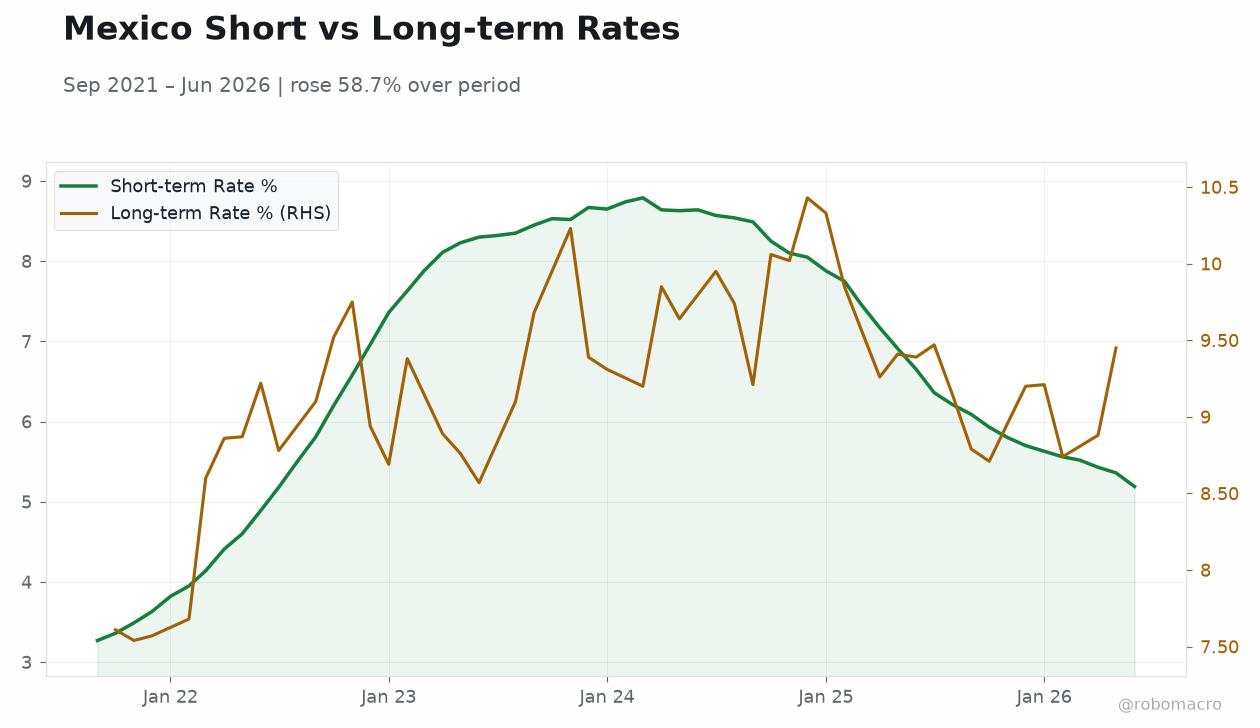
| Mexico Short-term Rate | 5.19% | -3.17% |
| Mexico Long-term Rate | 9.45% | +6.42% |
Prior Economic Events
| Data | Prior | Cons | Actual |
|---|---|---|---|
| Trade Balance | 4,090m | - | -848m |
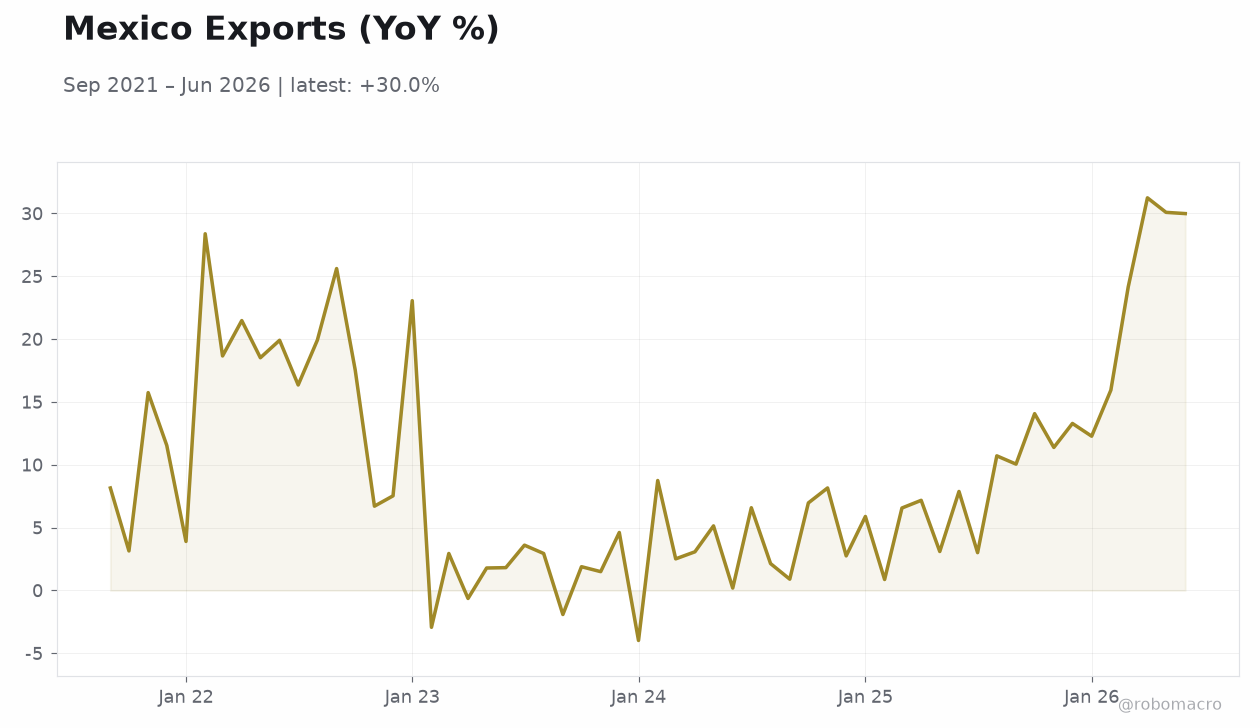 Mexico Exports (YoY %) | Type: macro_line | Exports YoY %: 29.99 (2026-06-01) | Range: -3.983–31.24 | Trend(6pt): 8.153,6.704,-3.983,6.56,30.09,29.99
Today's Economic Events
| Data | Prior | Cons | Time |
|---|---|---|---|
| No events available | |||
- Trade balance swung to an $848 million deficit in July from a $4.09 billion surplus.
- IPC Bolsa declined 0.55% to 65,829.98 while the long-term rate rose 6.42% to 9.45%.
- USD/MXN edged up 0.07% to 16.95 amid stable peso flows and short-term rate easing.
Yesterday's Recap
Mexico’s July trade balance printed an $848 million deficit, reversing the prior $4.09 billion surplus and highlighting softening external demand. The print arrived alongside a 0.55% drop in the IPC Bolsa to 65,829.98, driven by profit-taking in nearshoring-exposed names. Short-term rates fell 3.17% to 5.19% while long-term yields climbed 6.42% to 9.45%, steepening the curve as investors priced slower policy easing.
USD/MXN rose modestly to 16.95 and EUR/MXN eased to 19.74, reflecting contained peso volatility. WTI crude settled at $83.00 after a 0.63% decline, trimming energy-linked revenues. Silver gained 2.49% to $71.15, providing some offset through mining equities.
Overall market moves remained orderly despite the trade surprise and mixed rate signals. Banxico maintains its policy rate at 6.50% with inflation at 3.12% year-over-year, keeping real rates comfortably positive.
The Day Ahead
With no scheduled releases today or tomorrow, attention shifts to USMCA auto consultations and potential tariff developments that could affect manufacturing exports. Traders will monitor peso flows for signs of positioning ahead of next week’s data slate. Equity desks may focus on follow-through from yesterday’s IPC decline and any updates on Volkswagen’s announced layoffs in Puebla.
Fixed-income investors are likely to watch long-term yields for further steepening after the 6.42% move. Cross-border remittances data due later in the week could offer additional support for the currency if inflows remain robust. Markets are expected to stay range-bound absent fresh catalysts.
Other Economic Notes
US tariff threats continue to weigh on Mexico’s automotive sector, with Volkswagen layoffs underscoring downside risks to nearshoring momentum. Private consumption remains resilient, supported by record remittances that reached elevated levels in recent months. Energy reform discussions in the Senate have preserved private participation caps, limiting upside to hydrocarbons investment.
Broader fiscal-monetary coordination remains intact, with authorities emphasizing data dependence over preemptive easing. <i>↓ p.2</i>