Mexico Macro Daily(Beta Mode)
Business Confidence Rises as IPC Declines
Market Snapshot
| Asset | Level | Change |
|---|---|---|
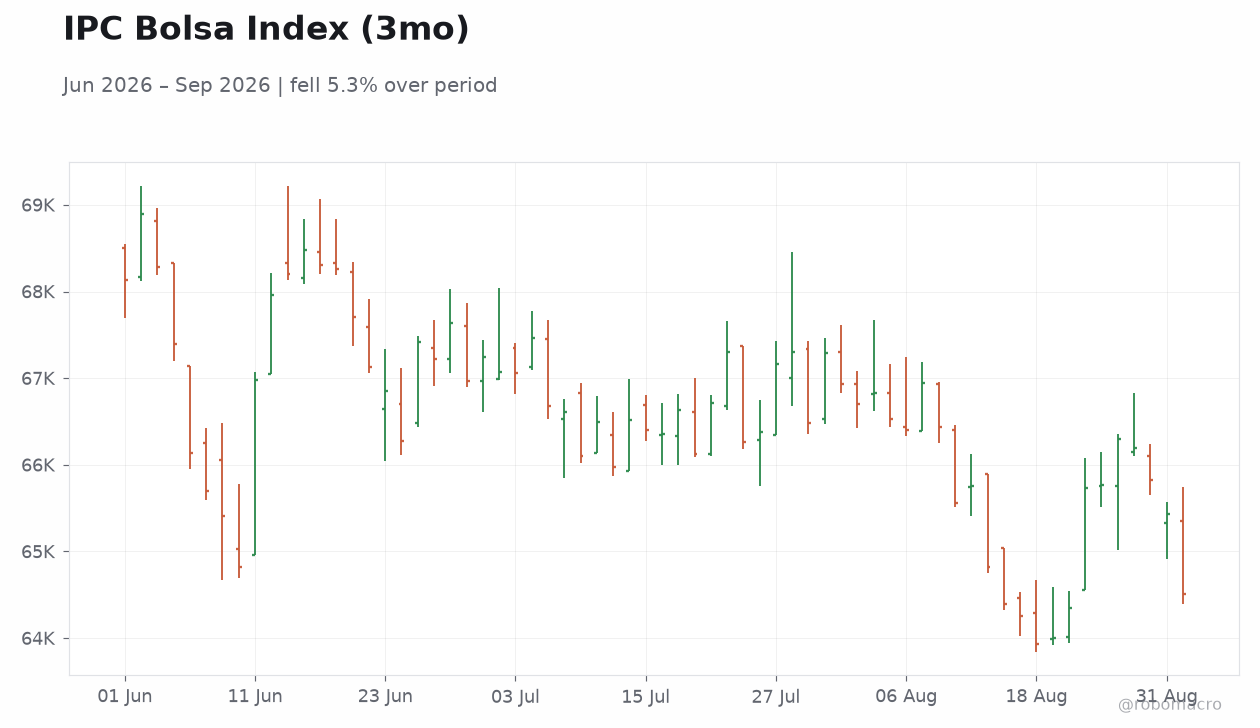
| IPC Bolsa | 64,514.25 | -1.40% |
| USD/MXN | 17.00 | -0.19% |
| EUR/MXN | 19.67 | -0.36% |
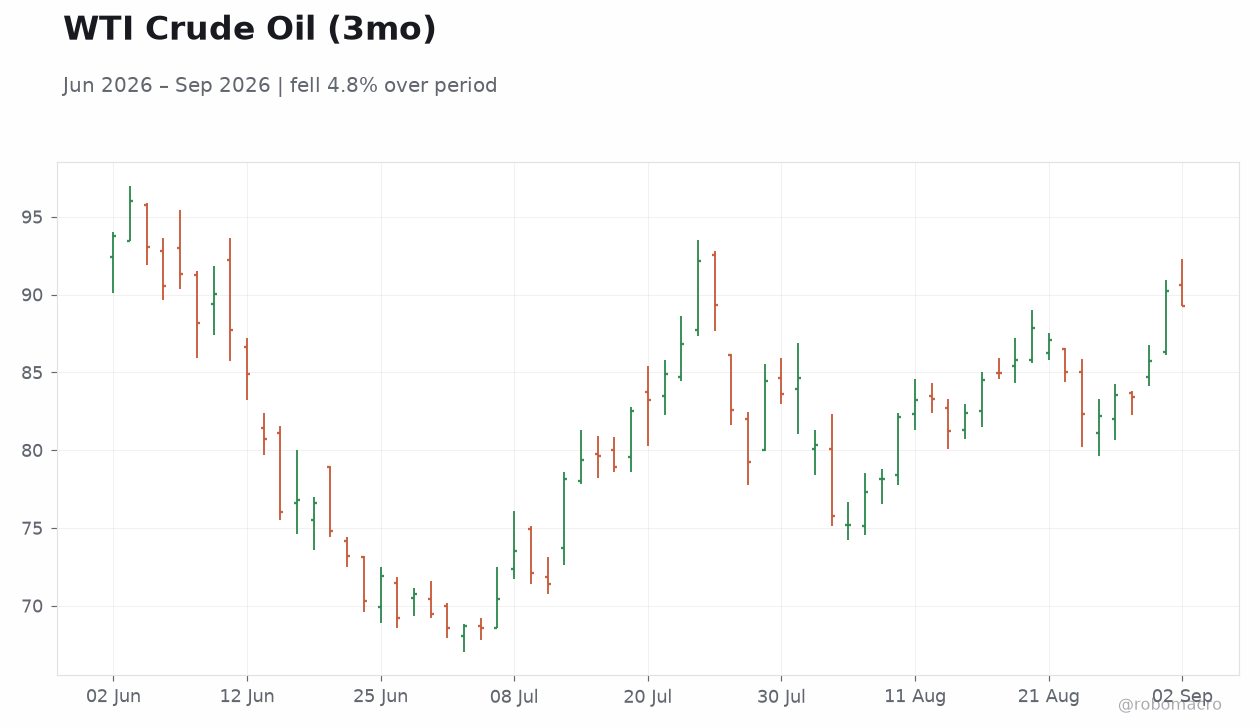
| WTI Crude | 89.39 | -0.92% |
| Silver | 64.86 | +0.38% |
| Gold | 4,370.60 | +0.52% |
| Brent Crude | 94.05 | -0.63% |
| Bitcoin | 76,728.72 | -0.87% |
| Mexico Short-term Rate | - | - |
| Mexico Long-term Rate | - | - |
Prior Economic Events
| Data | Prior | Cons | Actual |
|---|---|---|---|
| Business Confidence | 48 | - | 48.10 |
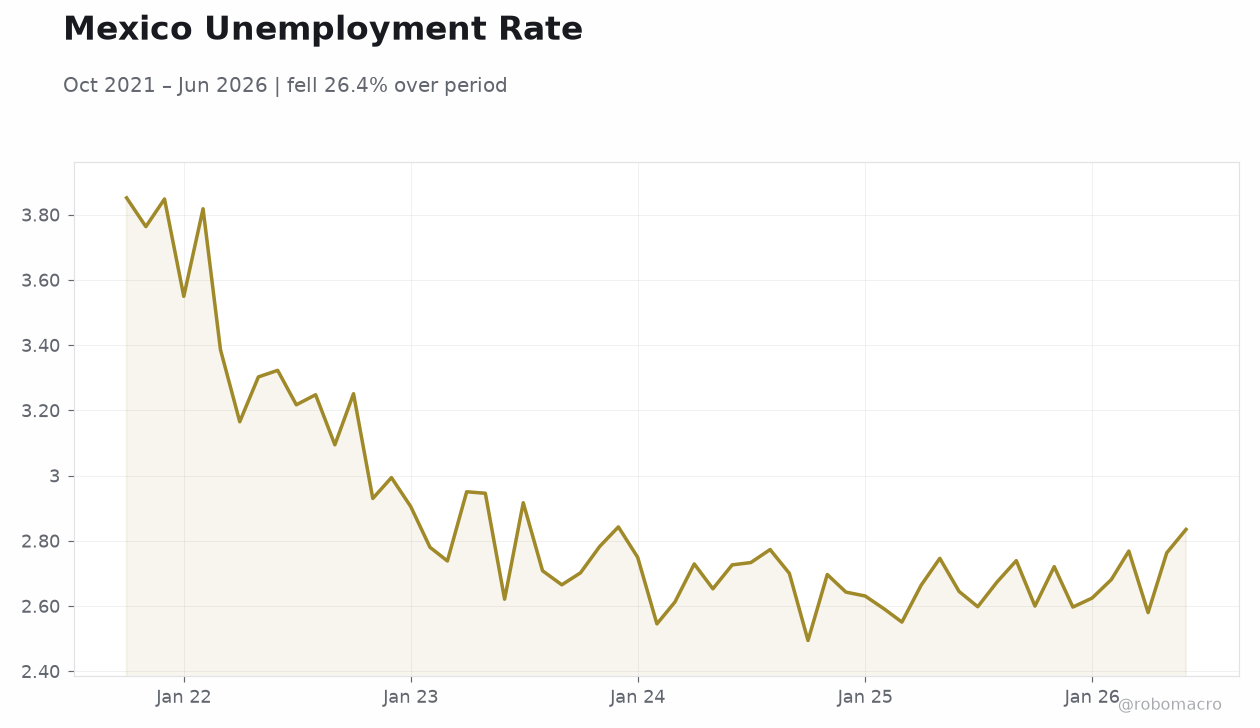 Mexico Unemployment Rate | Type: macro_line | Unemployment %: 2.835 (2026-06-01) | Range: 2.495–3.852 | Trend(5pt): 3.852,2.994,2.545,2.664,2.835
Today's Economic Events
| Data | Prior | Cons | Time |
|---|---|---|---|
| Thursday (2026-09-03) | |||
| Consumer Confidence Index | 45 | - | 04:00 |
- Mexico Business Confidence rose to 48.1 in August.
- IPC Bolsa fell 1.40% while USD/MXN eased to 17.00.
- Mexico long-term rate were unavailable from the daily warehouse.
Yesterday's Recap
Mexico’s Business Confidence index advanced to 48.1 from 48 in the prior reading, showing modest stabilization in corporate sentiment. IPC Bolsa declined 1.40% to close at 64,514.25 as investors rotated out of equities. USD/MXN slipped 0.19% to 17.00, allowing the peso to hold gains against the dollar.
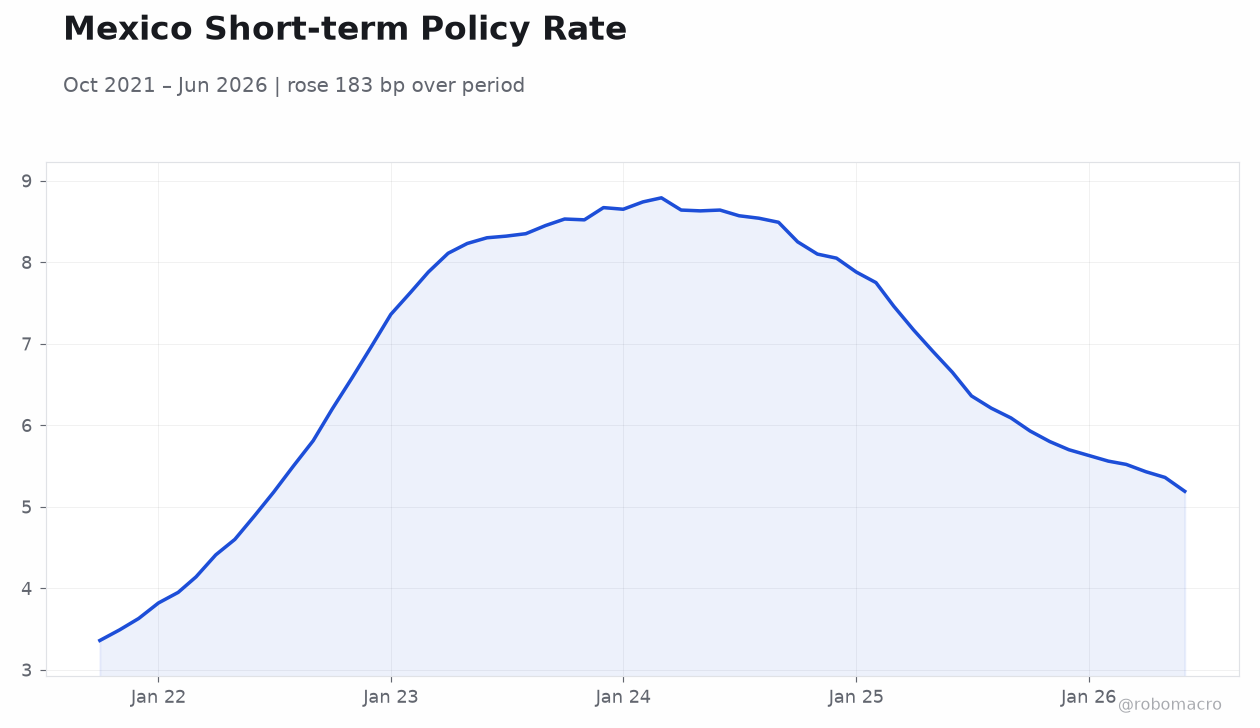
WTI Crude fell 0.92% to 89.39, weighing on energy-linked Mexican assets. Mexico’s long-term rate were unavailable from the daily warehouse, reflecting higher term premium, while the short-term rate dropped 3.17% to 5.19%. Gold rose 0.52% to 4,370.60 and silver gained 0.38%, providing limited offset.
Bitcoin declined 0.87% to 76,728.72 amid risk-off flows. Nearshoring momentum continued with new automotive supplier investments in northern states, while remittances hit a record $6.1bn in July.
The Day Ahead
Mexico’s Consumer Confidence Index is scheduled for release on September 3 at 04:00 ET, with the prior print at 45. Markets will watch for any improvement that could support near-term consumption forecasts. No other high-impact Mexican data are due today.
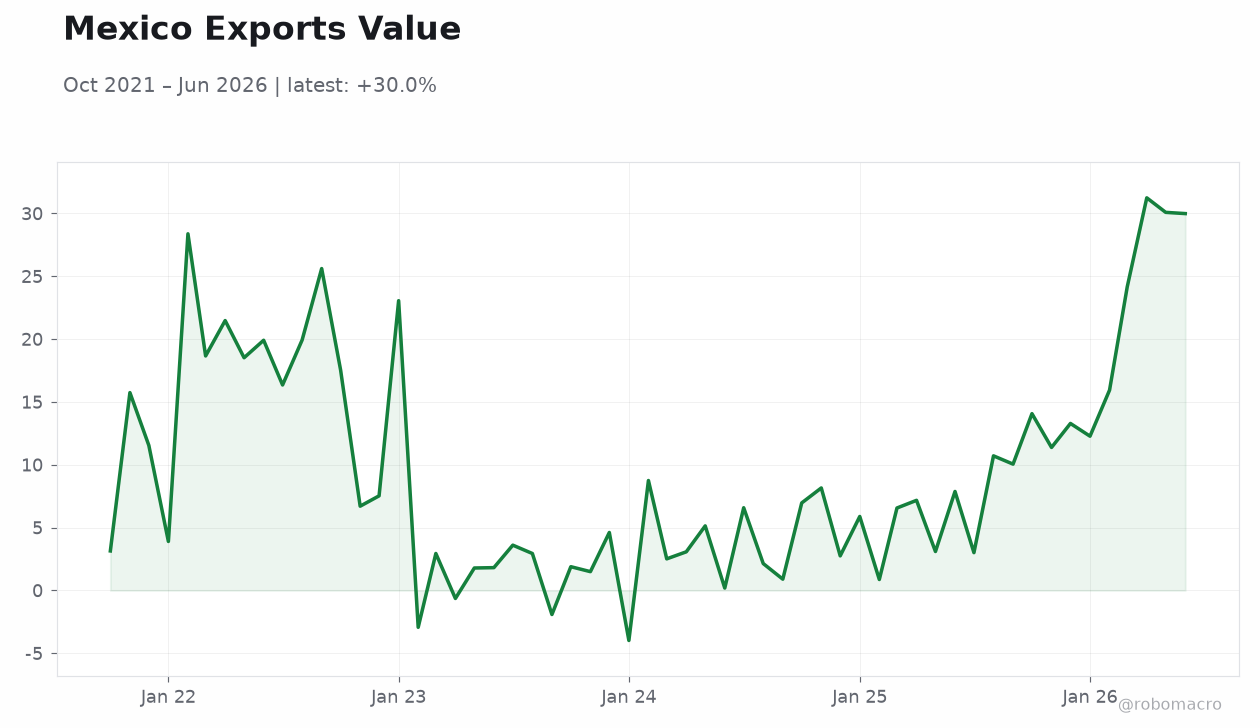
Global equity and commodity moves will continue to influence local flows, especially oil prices given Mexico’s export exposure. Participants will also monitor USMCA-related headlines for any fresh trade signals. Energy reform talks in Congress remain a focus, with proposed changes to private participation in power generation expected to reach a vote soon.
Other Economic Notes
Nearshoring remains a core driver of Mexican industrial investment, with automotive suppliers expanding capacity in northern states. Remittance inflows continue to underpin household spending and the current account. Energy reform discussions in Congress could alter private-sector participation in power generation and affect long-term infrastructure costs.
USMCA labor provisions stay in focus, though no new disputes have surfaced recently. These structural factors support peso resilience even as global rates stay elevated. Two new suppliers announced $420m investments in Nuevo León, reinforcing the trend.