Mexico Macro Daily(Beta Mode)
IPC Slides as Oil Weakens, Peso Holds Steady
Market Snapshot
| Asset | Level | Change |
|---|---|---|
| IPC Bolsa | 63,507.11 | -1.11% |
| USD/MXN | 17.14 | +0.10% |
| EUR/MXN | 19.77 | -0.08% |
| WTI Crude | 103.44 | -2.26% |
| Silver | 65.43 | +3.46% |
| Gold | 4,387.70 | +1.27% |
| Brent Crude | 107.24 | -1.39% |
| Bitcoin | 76,142.46 | +0.70% |
| Mexico 5Y Govt Yield | - | - |
| Mexico 10Y Govt Yield | - | - |
Prior Economic Events
| Data | Prior | Cons | Actual |
|---|---|---|---|
| No events available | |||
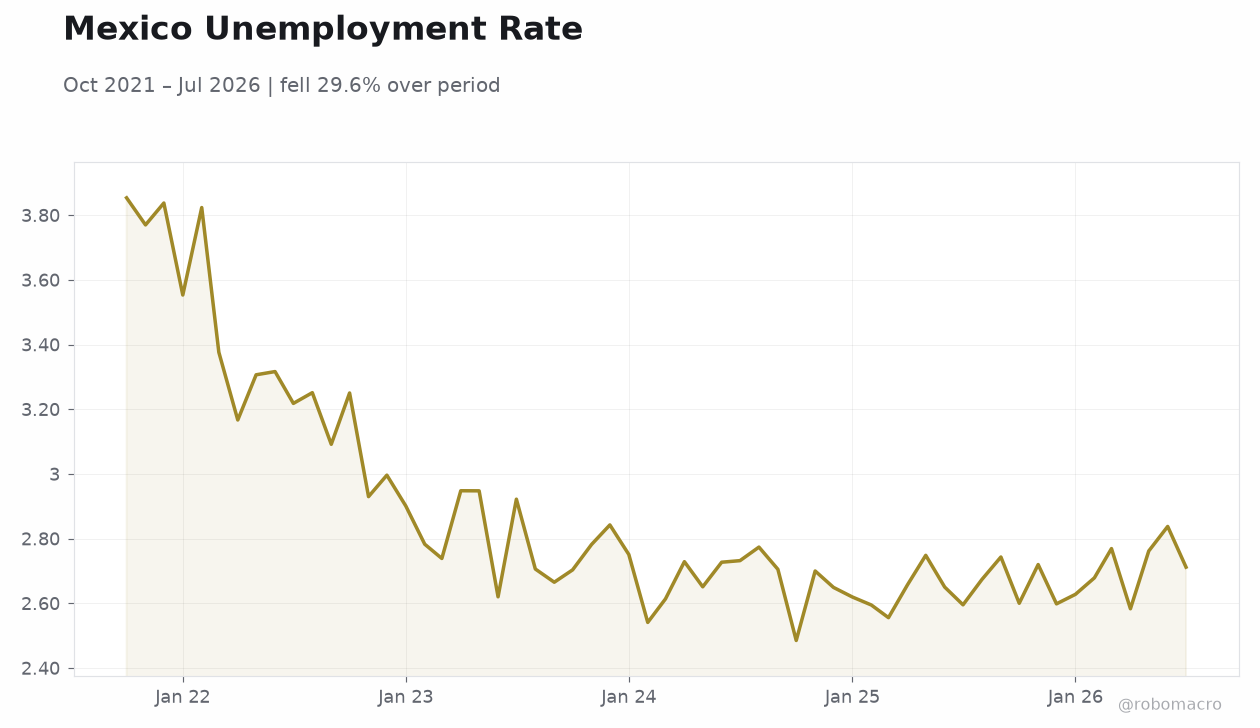 Mexico Unemployment Rate | Type: macro_line | Unemployment %: 2.712 (2026-07-01) | Range: 2.485–3.854 | Trend(6pt): 3.854,2.996,2.541,2.657,2.838,2.712
Today's Economic Events
| Data | Prior | Cons | Time |
|---|---|---|---|
| No events available | |||
- IPC Bolsa fell 1.11% to 63,507.11 while WTI crude dropped 2.26% to 103.44
- USD/MXN edged 0.10% higher to 17.14 with no fresh economic data released
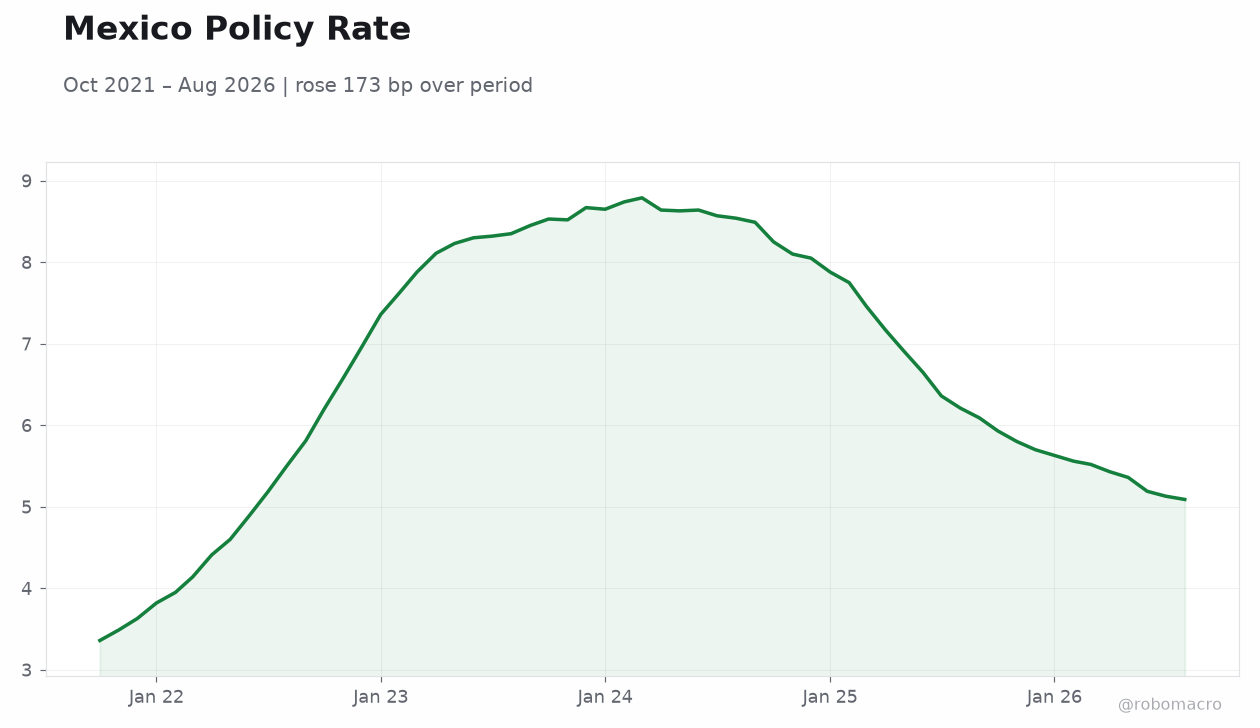
- Banxico policy rate remains at 6.50% as of early September with no new communications
Yesterday's Recap
Mexico equity and commodity markets moved lower on September 15 with the IPC Bolsa declining 1.11% to close at 63,507.11. WTI crude fell 2.26% to 103.44 and Brent crude eased 1.39% to 107.24, weighing on energy-linked sentiment. Silver advanced 3.46% to 65.43 and gold rose 1.27% to 4,387.70, providing some offset in precious metals.
The peso showed modest softening as USD/MXN climbed 0.10% to 17.14 while EUR/MXN slipped 0.08% to 19.77. No economic data releases occurred on the calendar and no Banxico speakers appeared, leaving market participants without fresh domestic anchors. Bitcoin gained 0.70% to 76,142.46 amid broader risk appetite.
The absence of prints kept focus on external drivers and positioning ahead of the next policy window.
The Day Ahead
September 16 carries no scheduled Mexican data releases or Banxico events according to the FinanceFlow calendar. Markets will therefore track external signals including U.S. rate expectations and global oil price movements for direction.
The peso is likely to remain sensitive to any shifts in Fed pricing or U.S.-Mexico trade commentary. Equity flows may stay light given the empty domestic docket and recent IPC underperformance. Participants will continue to monitor nearshoring announcements and USMCA-related developments for longer-term peso and growth implications.
No Banxico minutes or speeches are listed, so attention stays on global macro prints that could influence emerging-market flows into Mexico.
Other Economic Notes
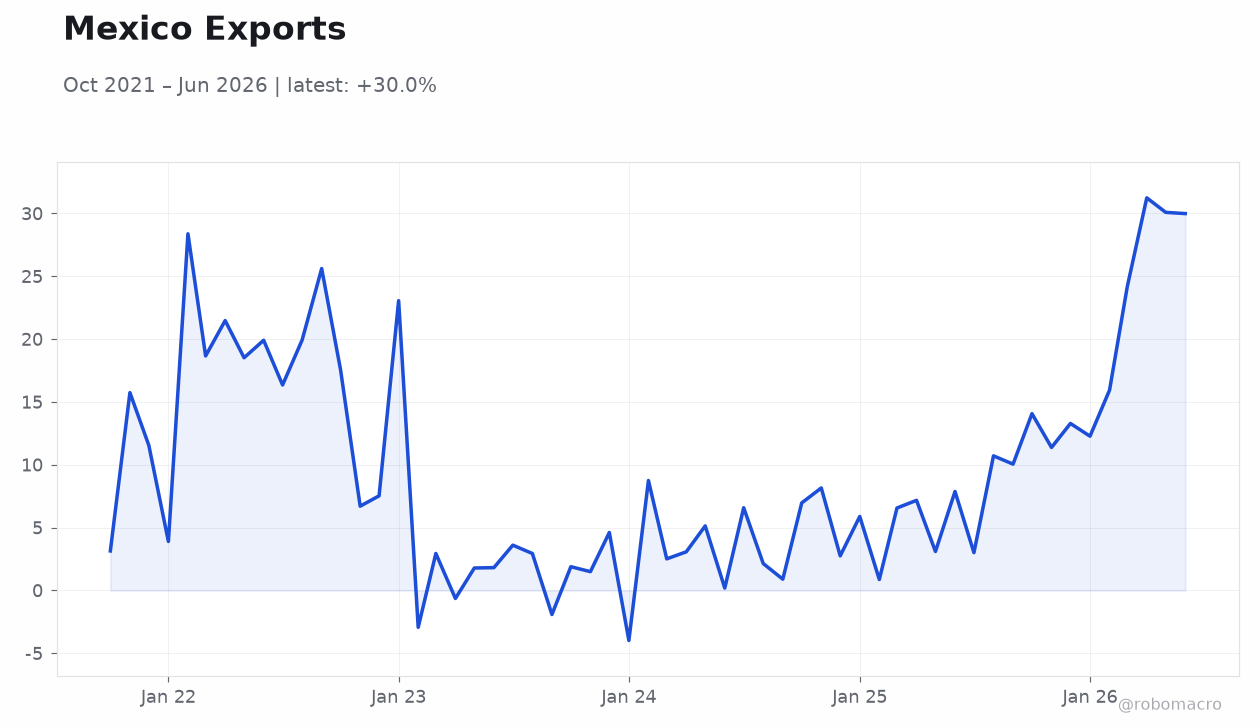
Mexico’s external accounts continue to benefit from sustained nearshoring momentum despite the quiet data calendar. Remittance inflows and manufacturing exports remain key supports for the current account and peso stability. USMCA trade dynamics stay central to growth forecasts, with any tariff or rule-of-origin changes capable of shifting investment flows quickly.
Energy price volatility, visible in yesterday’s crude decline, directly affects fiscal revenues and inflation paths. Broader regional supply-chain reconfiguration continues to underpin medium-term GDP expectations even as short-term indicators remain sparse.