Mexico Macro Daily(Beta Mode)
Peso Rises as 5Y Yield Climbs 35 bp
Market Snapshot
| Asset | Level | Change |
|---|---|---|
| IPC Bolsa | 63,873.32 | +0.58% |
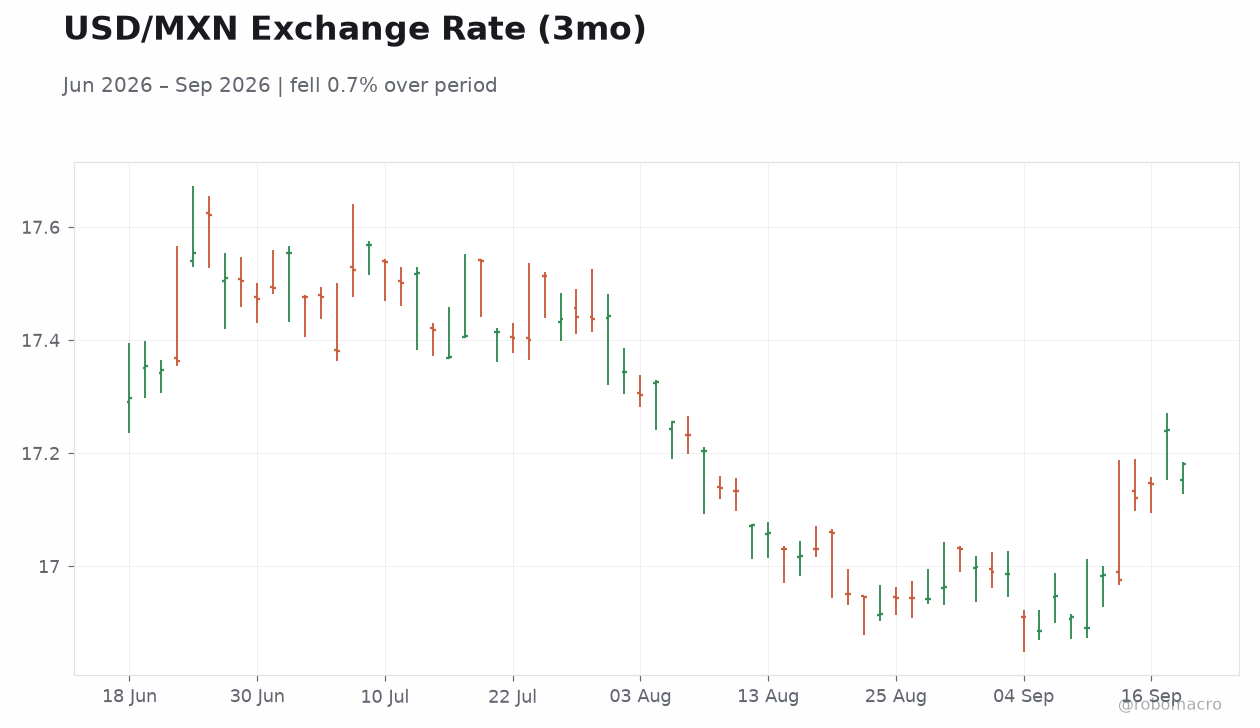
| USD/MXN | 17.18 | -0.37% |
| EUR/MXN | 19.69 | -0.44% |
| WTI Crude | 96.23 | -5.57% |
| Silver | 67.39 | +2.94% |
| Gold | 4,420.10 | +0.46% |
| Brent Crude | 98.60 | -5.93% |
| Bitcoin | 77,955.08 | +2.03% |
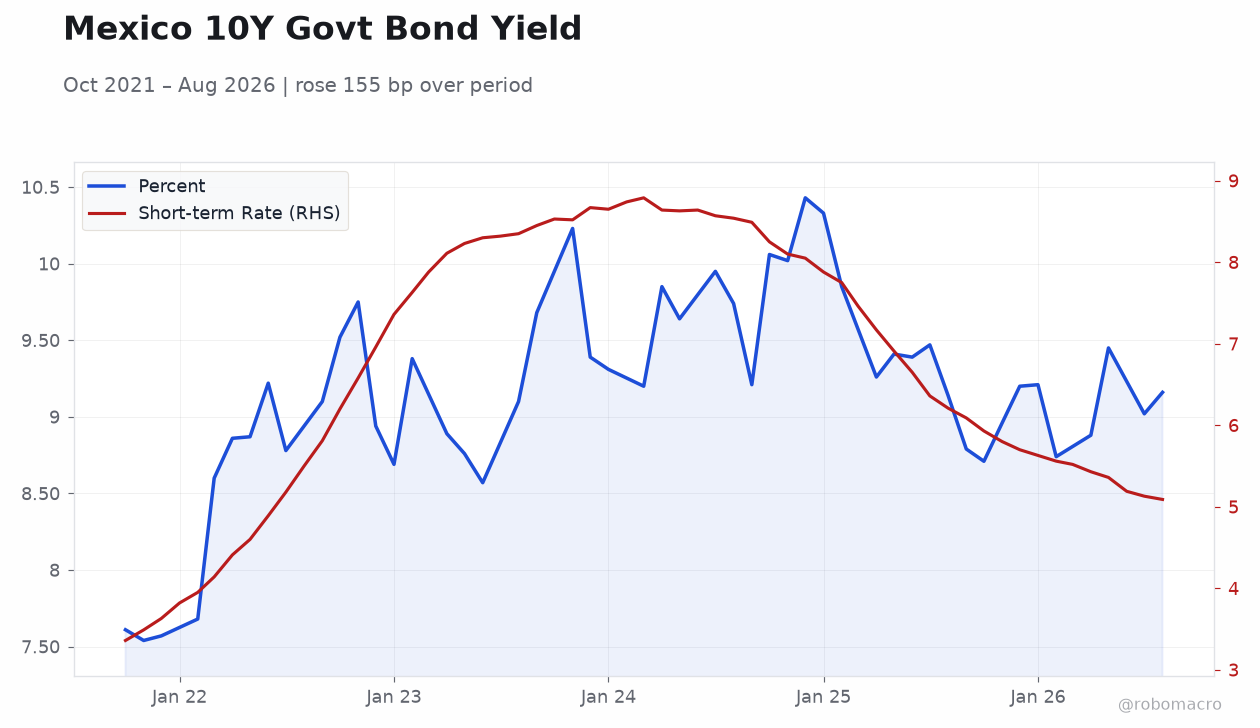
| Mexico 5Y Govt Yield | 9.00% | +35 bp |
| Mexico 10Y Govt Yield | - | - |
Prior Economic Events
| Data | Prior | Cons | Actual |
|---|---|---|---|
| No events available | |||
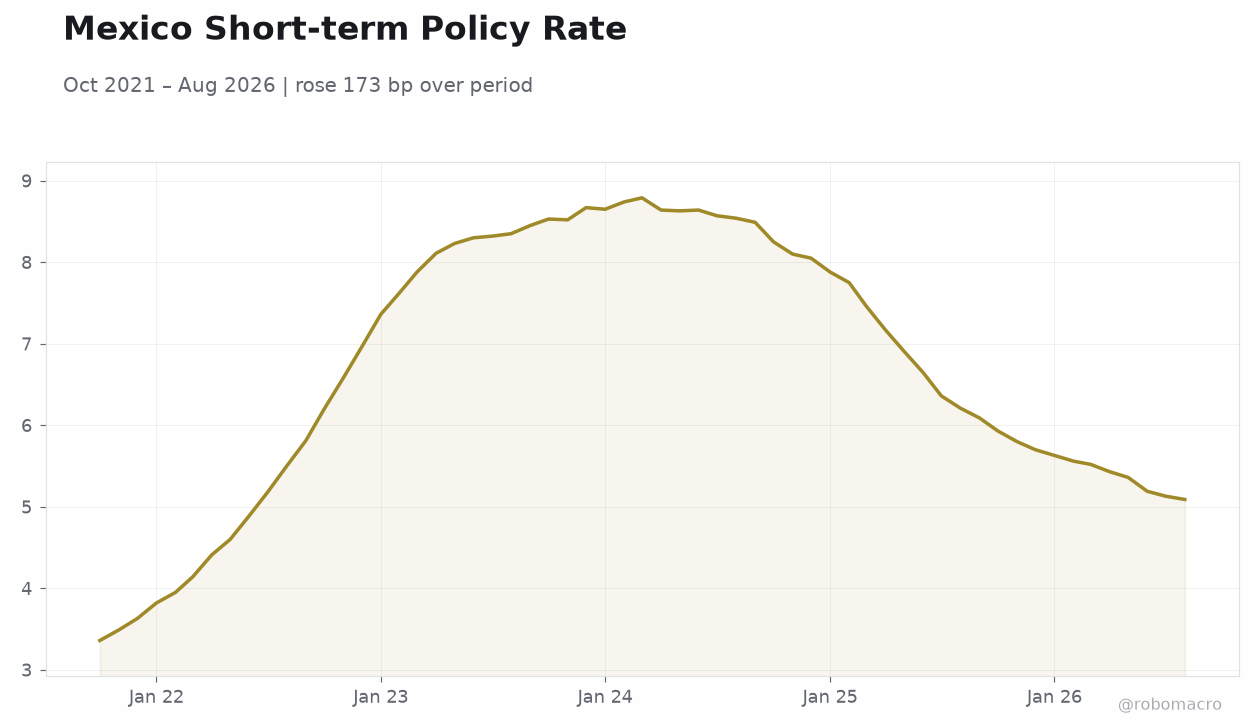 Mexico Short-term Policy Rate | Type: macro_line | Percent: 5.09 (2026-08-01) | Range: 3.36–8.79 | Trend(6pt): 3.36,6.96,8.74,7.17,5.19,5.09
Today's Economic Events
| Data | Prior | Cons | Time |
|---|---|---|---|
| No events available | |||
- IPC Bolsa rose 0.58% to 63,873.32 while USD/MXN fell 0.37% to 17.18 on September 17.
- Mexico 5Y government yield climbed 35 bp to 9.00% as global central banks tightened policy.
- No economic data releases occurred, leaving markets to react to external rate signals and commodity swings.
Yesterday's Recap
Mexican markets moved on external drivers after a data-empty session. The IPC Bolsa advanced 0.58% to close at 63,873.32, supported by gains in silver and bitcoin that offset sharp drops in crude oil. USD/MXN declined 0.37% to 17.18 and EUR/MXN fell 0.44% to 19.69, reflecting peso strength against both the dollar and euro.
The Mexico 5Y government yield rose 35 bp to 9.00%, the largest daily increase in recent weeks, while the 10Y tenor went unreported. WTI crude fell 5.57% to 96.23 and Brent dropped 5.93% to 98.60, weighing on energy-related equities. Gold edged up 0.46% to 4,420.10 and silver jumped 2.94% to 67.39, providing some offset in commodity exposure.
Bitcoin rose 2.03% to 77,955.08, adding to risk-on sentiment in local assets. The absence of any domestic releases meant price action tracked global policy shifts and commodity volatility rather than local indicators.
The Day Ahead
September 18 brings no scheduled Mexican data releases or Banxico speeches. Traders will monitor global equity and commodity flows for direction in the absence of local catalysts. The quiet calendar leaves peso and yield movements exposed to external policy signals and U.S.
data surprises. Market participants are expected to focus on follow-through from the prior day’s 35 bp yield spike and peso appreciation. Positioning ahead of the weekend may keep volumes light and volatility contained unless new global headlines emerge.
Attention will likely stay on how the stronger peso interacts with lower oil prices and whether the 5Y yield move sustains or reverses.
Other Economic Notes
The 35 bp jump in the 5Y yield to 9.00% signals tighter financial conditions even as Banxico holds its policy rate at 6.50%. Peso strength against the dollar and euro occurred alongside falling oil prices, highlighting the currency’s sensitivity to global risk sentiment rather than domestic growth data. Nearshoring-related capital flows remain a structural support for Mexican assets, yet the lack of fresh USMCA or remittance figures leaves that channel untested this week.
↓ p.2