Mexico Macro Daily(Beta Mode)
Hurricane Polo Looms as Trade Optimism Persists
Market Snapshot
| Asset | Level | Change |
|---|---|---|
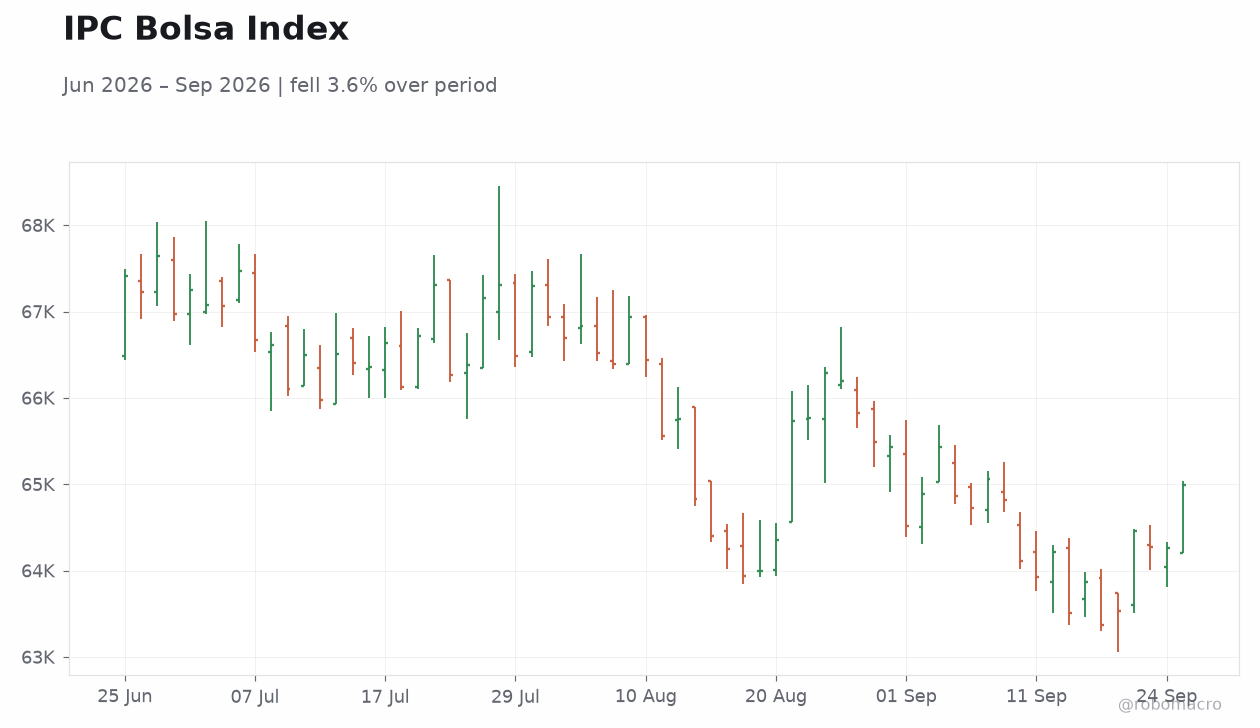
| IPC Bolsa | 64,992.23 | +1.13% |
| USD/MXN | 17.78 | +0.22% |
| EUR/MXN | 20.22 | +0.22% |
| WTI Crude | 95.66 | +3.52% |
| Silver | 61.63 | -4.06% |
| Gold | 4,182.70 | -3.21% |
| Brent Crude | 100.43 | -3.73% |
| Bitcoin | 83,034.89 | -1.69% |
| Mexico 5Y Govt Yield | - | - |
| Mexico 10Y Govt Yield | 9.35% | +19 bp |
Prior Economic Events
| Data | Prior | Cons | Actual |
|---|---|---|---|
| Trade Balance | -848m | 1,400m | - |
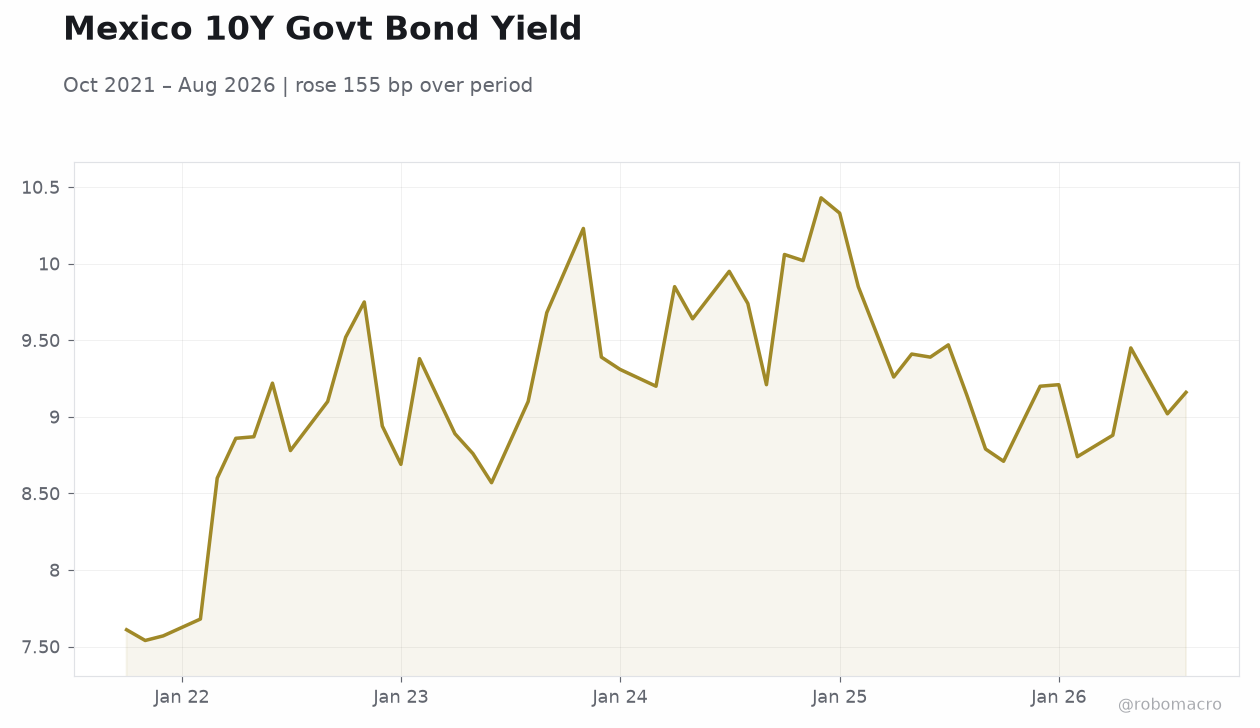 Mexico 10Y Govt Bond Yield | Type: macro_line | Percent: 9.16 (2026-08-01) | Range: 7.54–10.43 | Trend(5pt): 7.61,8.94,9.85,9.39,9.16
Today's Economic Events
| Data | Prior | Cons | Time |
|---|---|---|---|
| Thursday (2026-10-01) | |||
| Business Confidence Index | 48.10 | - | 04:00 |
- IPC Bolsa climbed 1.13% to 64,992.23 while the 10-year government yield rose 19 bp to 9.35%.
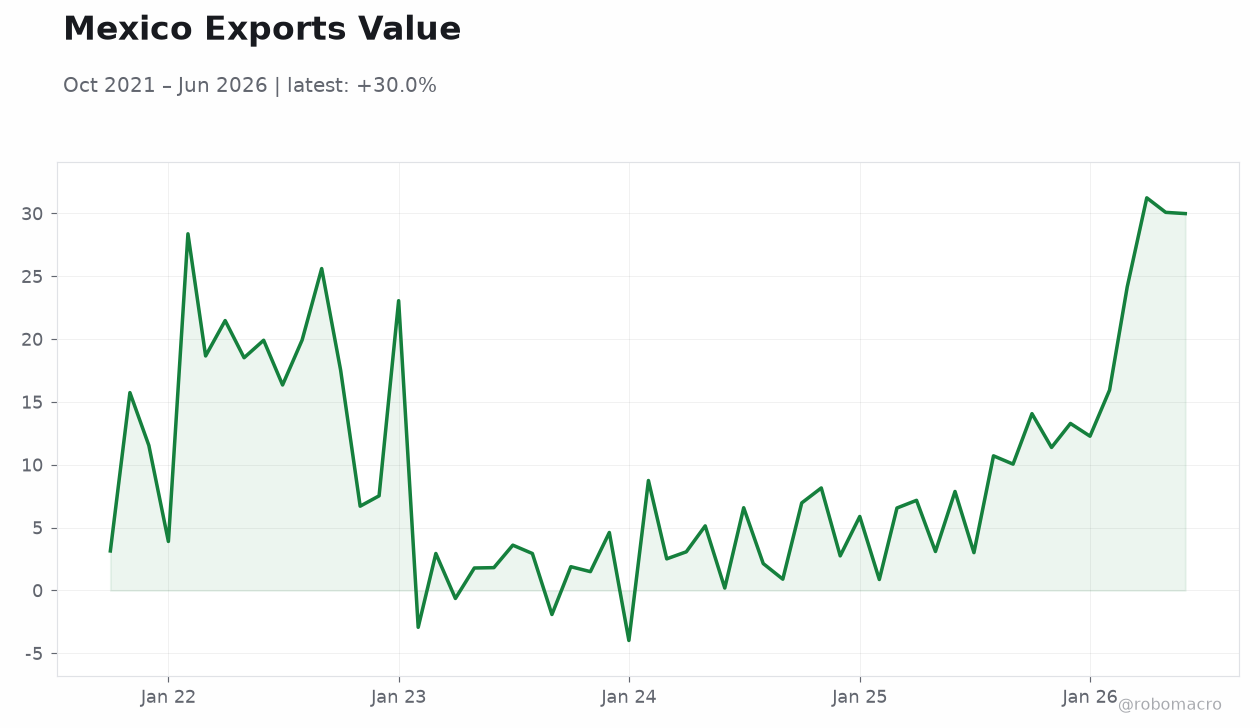
- Trade Balance print failed to appear, leaving external demand signals absent ahead of the weekend.
- Hurricane Polo, a Category 4 storm, approached Baja California Sur, threatening infrastructure and tourism.
Yesterday's Recap
Mexican equities advanced as the IPC Bolsa gained 1.13% to close at 64,992.23. The peso weakened modestly with USD/MXN rising 0.22% to 17.78. The scheduled Trade Balance release produced no figure, depriving markets of fresh data on the external sector after the prior month’s MXN 848 million deficit.
The Mexico 10-year government bond yield increased 19 bp to 9.35%, reflecting higher term premia. Hurricane Polo, now a Category 4 system, tracked toward Baja California Sur and raised risks to regional supply chains and tourism receipts. Government officials reiterated cautious optimism on concluding a bilateral trade arrangement with the United States despite the postponement of a negotiating round.
No Banxico communications altered market expectations for the October policy meeting.
The Day Ahead
The Business Confidence Index for September is due on 1 October with the prior reading at 48.1. No consensus estimate has been published and the release is unlikely to shift pricing materially before the weekend. No Banxico speeches, minutes, or data prints are scheduled through Monday.
Market participants will continue to monitor USMCA-related tariff developments and the track of Hurricane Polo for any early damage assessments. Attention will also turn to global risk sentiment and its transmission through the peso and local yields.
Other Economic Notes
Nearshoring investment continues to support manufacturing capacity despite external policy uncertainty. US-Mexico tariff negotiations remain central to export forecasts and supply-chain relocation decisions. The absence of a Trade Balance print leaves analysts reliant on PMI and survey indicators for demand signals.
Regional infrastructure exposure to Hurricane Polo could temporarily weigh on services output and fiscal outlays in Baja California Sur. Broader USMCA durability under shifting US trade priorities will shape medium-term capital expenditure plans.