Mexico Macro Daily(Beta Mode)
Trade Surplus Narrows, Peso Weakens
Market Snapshot
| Asset | Level | Change |
|---|---|---|
| IPC Bolsa | 64,944.41 | -0.07% |
| USD/MXN | 17.90 | +0.83% |
| EUR/MXN | 20.19 | +0.07% |
| WTI Crude | 91.13 | -1.59% |
| Silver | 61.37 | +0.25% |
| Gold | 4,189.40 | +0.50% |
| Brent Crude | 96.45 | -8.39% |
| Bitcoin | 84,339.59 | +1.00% |
| Mexico 5Y Govt Yield | - | - |
| Mexico 10Y Govt Yield | 9.35% | +19 bp |
Prior Economic Events
| Data | Prior | Cons | Actual |
|---|---|---|---|
| Trade Balance | -848m | 1,400m | 605m |
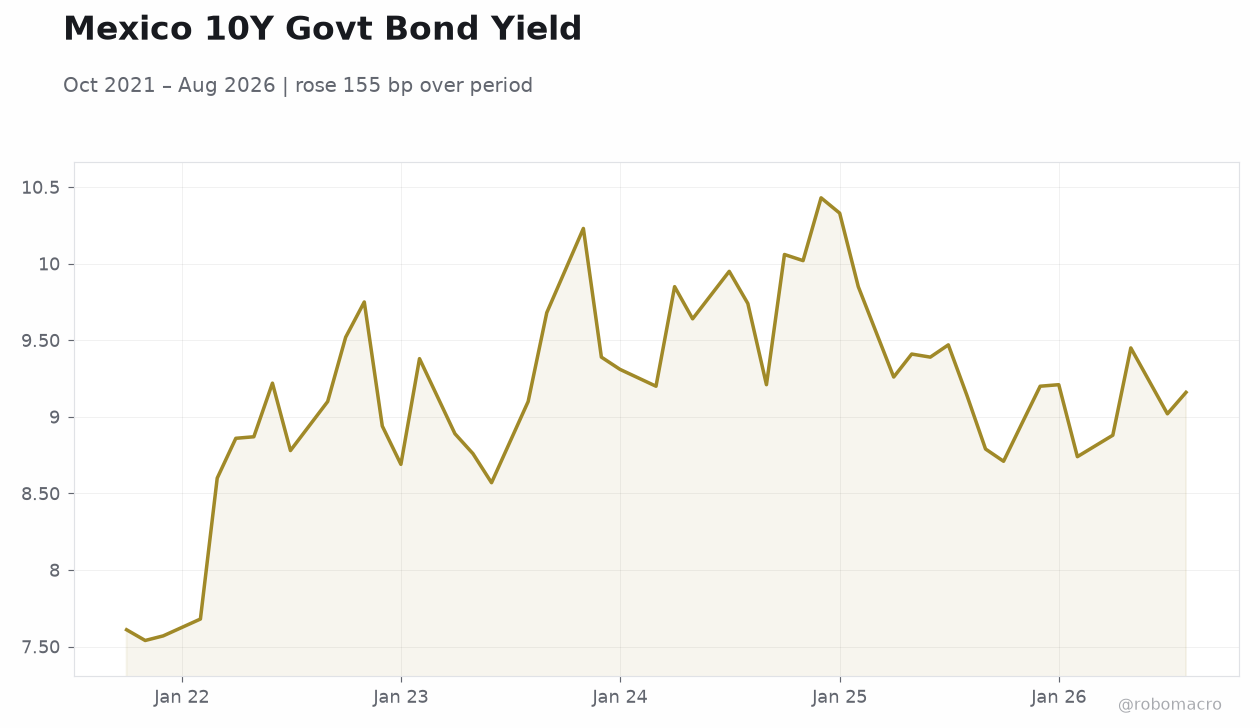 Mexico 10Y Govt Bond Yield | Type: macro_line | Yield (%): 9.16 (2026-08-01) | Range: 7.54–10.43 | Trend(5pt): 7.61,8.94,9.85,9.39,9.16
Today's Economic Events
| Data | Prior | Cons | Time |
|---|---|---|---|
| Thursday (2026-10-01) | |||
| Business Confidence Index | 48.10 | - | 04:00 |
- Mexico posted a USD 605 million trade surplus, missing the USD 1.4 billion consensus.
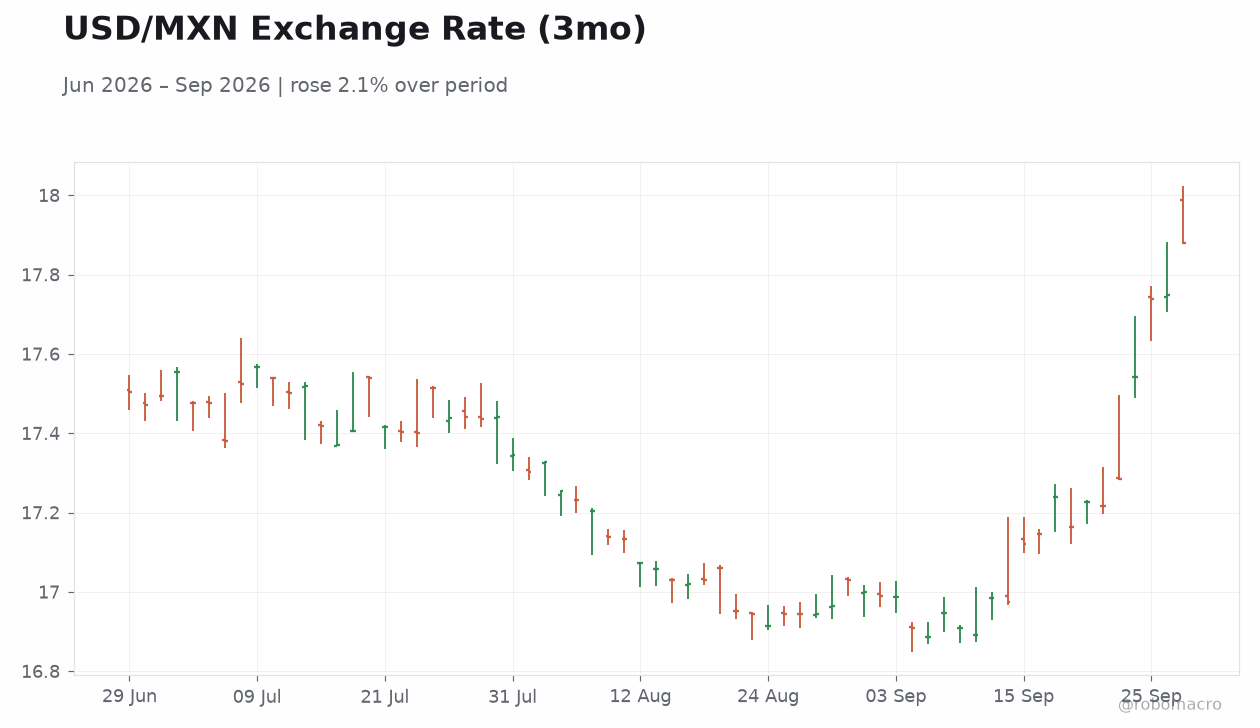
- USD/MXN climbed 0.83% to 17.90 as the 10-year yield rose 19 bp to 9.35%.
- Hurricane Polo made landfall on the Baja California peninsula with limited market impact.
Yesterday's Recap
Mexico’s trade balance swung to a USD 605 million surplus, improving from the prior USD 848 million deficit yet falling short of the USD 1.4 billion consensus. The medium-impact print reflected narrower goods imbalances but offered no immediate boost to peso sentiment. The IPC Bolsa closed 0.07% lower at 64,944.41 while USD/MXN advanced 0.83% to 17.90.
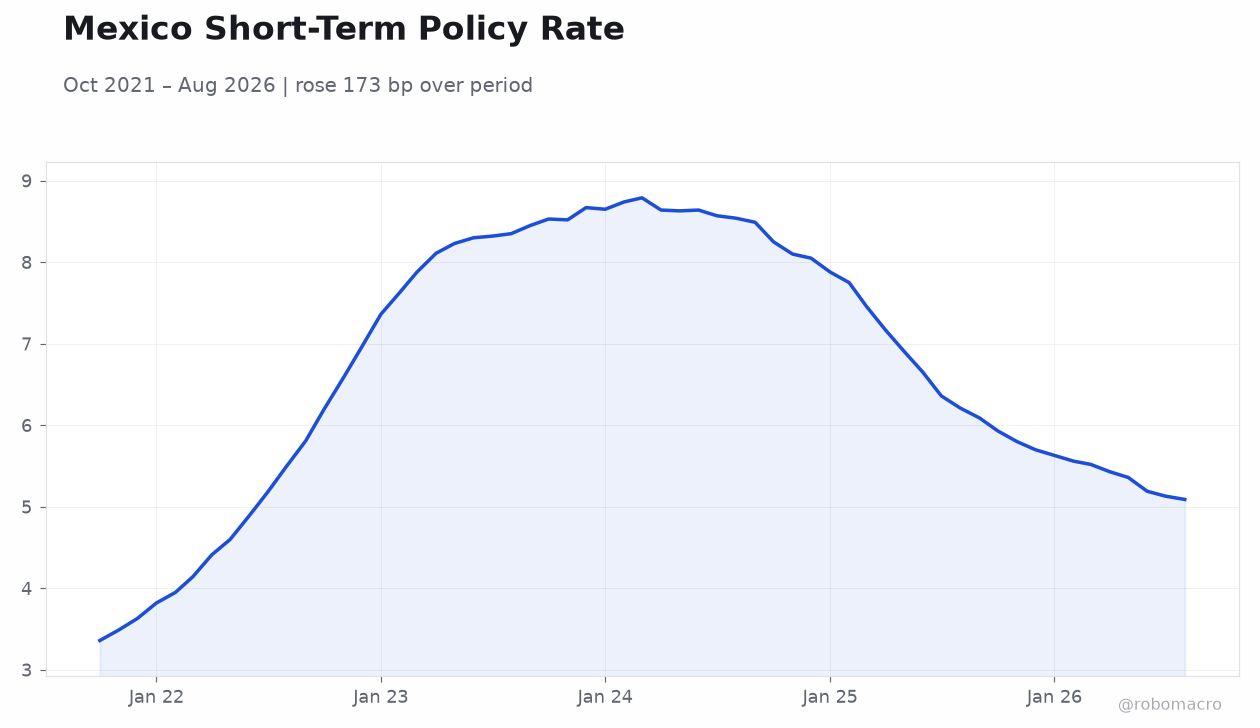
EUR/MXN edged 0.07% higher to 20.19. The Mexico 10-year government yield jumped 19 bp to 9.35%, steepening the curve against the 6.50% Banxico policy rate. WTI crude fell 1.59% to 91.13 and Brent dropped 8.39% to 96.45, weighing on energy-related peso flows.
Hurricane Polo’s landfall in Baja California Sur produced no visible disruption to financial markets. Silver rose 0.25% to 61.37 and gold gained 0.50% to 4,189.40, while bitcoin advanced 1.00% to 84,339.59.
The Day Ahead
Attention turns to the Business Confidence Index due 1 October at 04:00 ET, with the prior reading at 48.1. The medium-impact release will provide an early gauge of Q4 private-sector sentiment ahead of October inflation and activity data. No Banxico speeches or minutes are scheduled.
Traders will monitor peso positioning ahead of the weekend and any updates on USMCA-related trade flows. Global risk sentiment, particularly moves in oil and the dollar, will continue to shape MXN intraday swings. The calendar shows no further Mexican releases until early October, leaving markets to digest the trade data and external drivers.
Other Economic Notes
Mexico’s August CPI at 3.26% keeps Banxico’s 3% target within reach yet leaves little room for near-term easing. Nearshoring inflows remain a structural support for the peso and industrial production, though fresh data on foreign direct investment have yet to appear. The 10-year yield at 9.35% signals persistent term-premium concerns amid fiscal and inflation uncertainty.
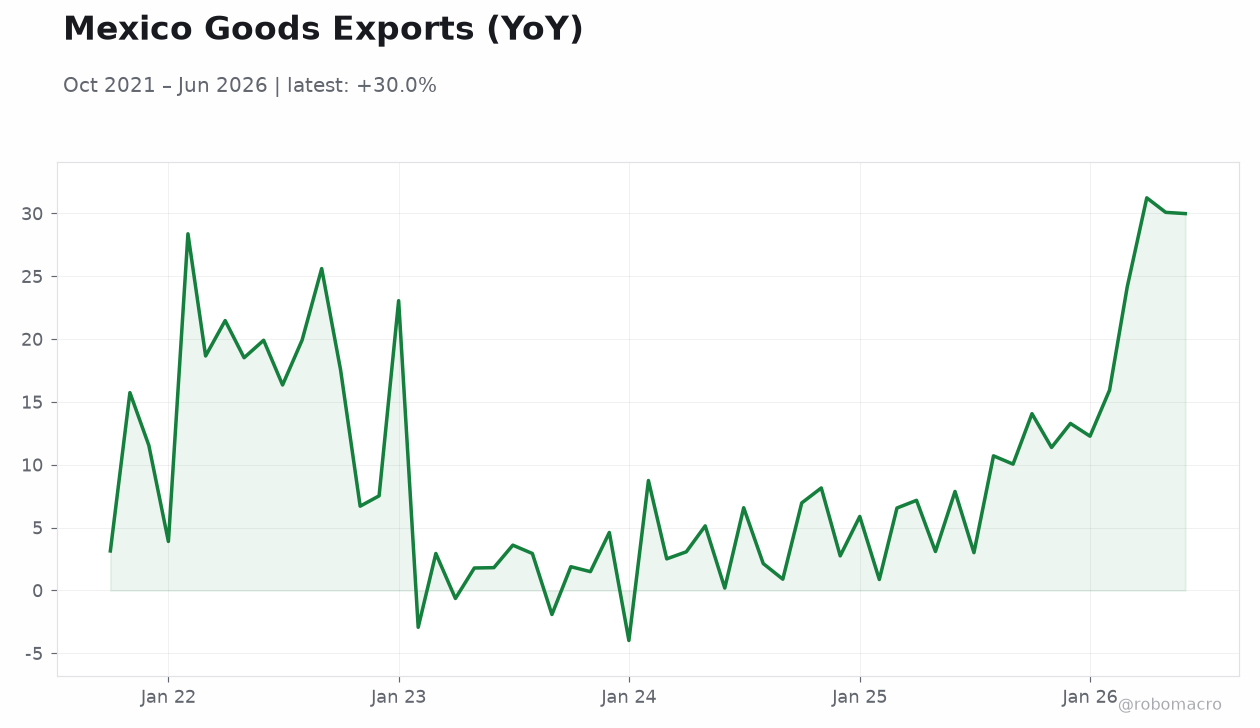
Broader US-Mexico trade relations under USMCA continue to underpin export resilience despite global growth concerns. La Paz in Baja California Sur is expanding its hotel portfolio with the upcoming Perla La Paz opening and added golf and gastronomy options, supporting tourism recovery after the hurricane.