Mexico Macro Daily(Beta Mode)
Peso Weakens as Trade Tensions Mount
Market Snapshot
| Asset | Level | Change |
|---|---|---|
| IPC Bolsa | 69,889.73 | -0.51% |
| USD/MXN | 18.80 | +0.62% |
| EUR/MXN | 21.04 | +0.18% |
| WTI Crude | 100.74 | +1.28% |
| Silver | 54.06 | -1.29% |
| Gold | 4,041.10 | -0.48% |
| Brent Crude | 109.80 | -2.98% |
| Bitcoin | 81,554.59 | +0.30% |
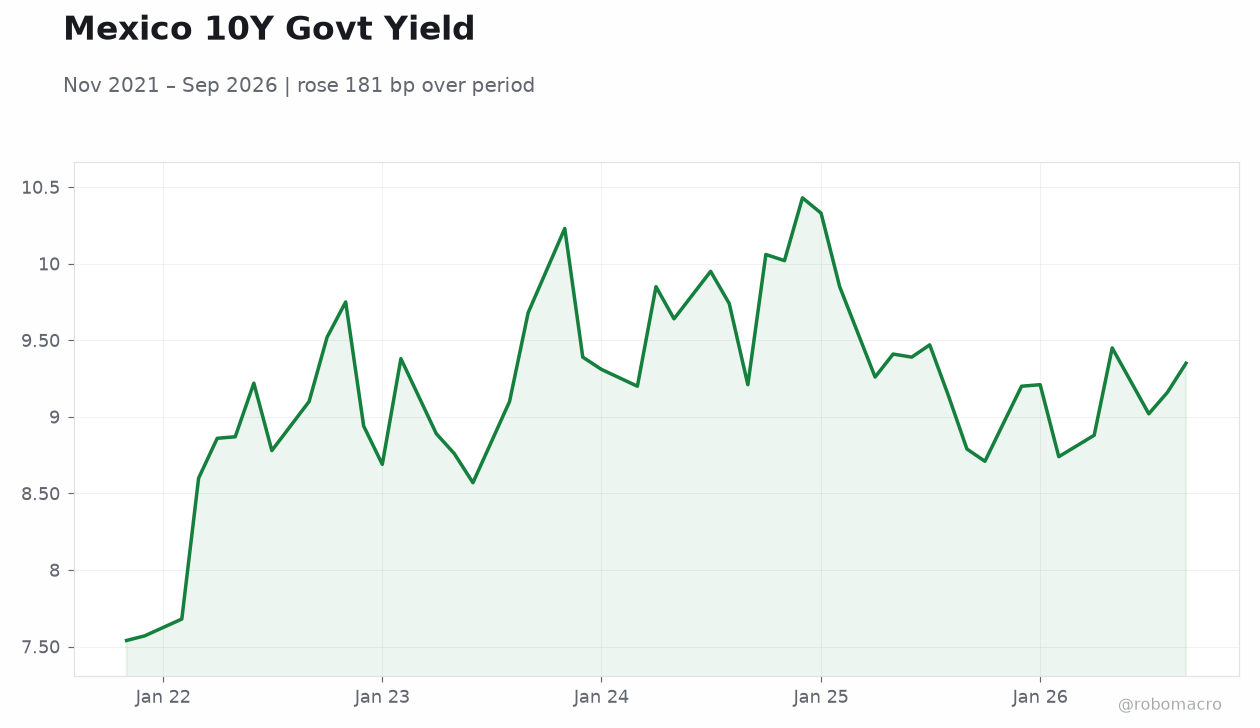
| Mexico 10Y Govt Yield | 9.25% | -10 bp |
Prior Economic Events
| Data | Prior | Cons | Actual |
|---|---|---|---|
| No events available | |||
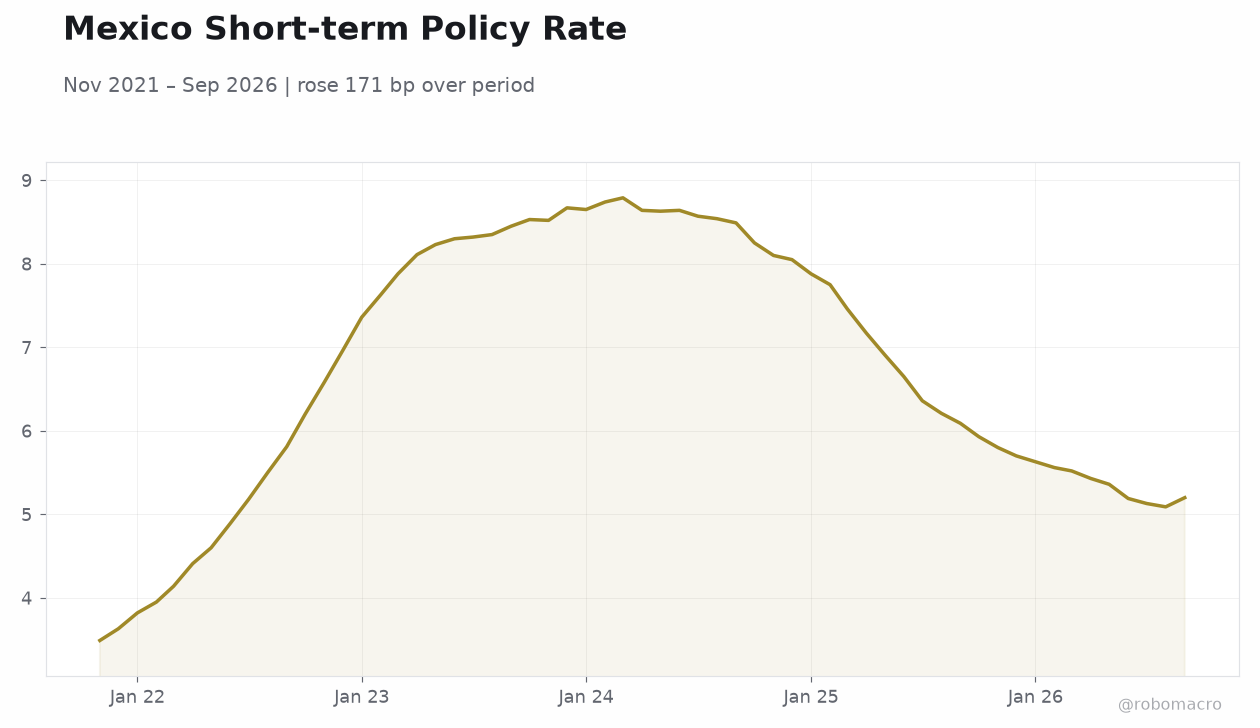 Mexico Short-term Policy Rate | Type: macro_line | %: 5.2 (2026-09-01) | Range: 3.49–8.79 | Trend(6pt): 3.49,7.36,8.79,6.91,5.13,5.2
Today's Economic Events
| Data | Prior | Cons | Time |
|---|---|---|---|
| No events available | |||
- IPC Bolsa fell 0.51% while USD/MXN rose 0.62% to 18.80 amid renewed US trade pressure.
- Mexico 10-year government yield eased 10 basis points to 9.25% as Banxico held the policy rate at 6.50%.
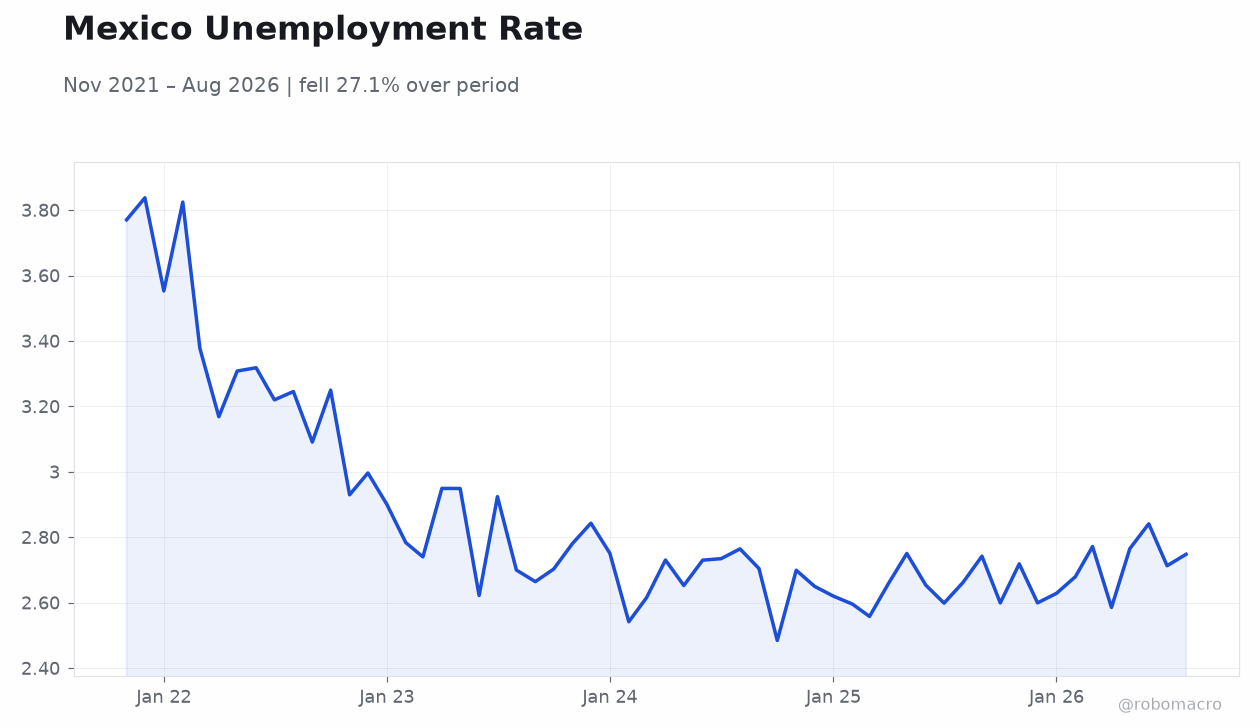
- CPI at 3.45% remains inside the target band, supporting steady monetary policy amid nearshoring resilience.
Yesterday's Recap
Mexican markets reflected external pressures rather than domestic data, as no releases occurred on October 22. The IPC Bolsa declined 0.51% to 69,889.73 while the peso weakened, with USD/MXN climbing 0.62% to 18.80. The 10-year government yield fell 10 basis points to 9.25%, signaling modest demand for duration.
Oil prices showed mixed moves, with WTI crude rising 1.28% to 100.74 but Brent crude dropping 2.98% to 109.80. Silver and gold both declined, trimming 1.29% and 0.48% respectively. Bitcoin edged higher by 0.30%.
Overall, peso softness aligned with broader risk-off sentiment tied to US trade policy signals rather than local fundamentals. Nearshoring supply-chain adjustments continued to support manufacturing sentiment even as global risk appetite waned.
The Day Ahead
No Mexican economic releases are scheduled for October 23 or 24. Attention will center on US data prints and any fresh statements on tariffs that could affect USMCA flows. Traders will monitor peso volatility against the 18.80 level in USD/MXN.
Nearshoring-related equity flows may respond to corporate earnings from export-oriented manufacturers. Market participants expect limited domestic catalysts until the next inflation update. External headlines on US-China trade friction remain the dominant driver for local asset prices in the absence of Banxico or INEGI prints.
Other Economic Notes
Mexico’s inflation at 3.45% continues to anchor expectations inside Banxico’s 2-4% band. Nearshoring investment remains a structural positive for manufacturing and employment, offsetting softer global demand. Fiscal accounts show steady revenue collection that supports debt sustainability at current yield levels.
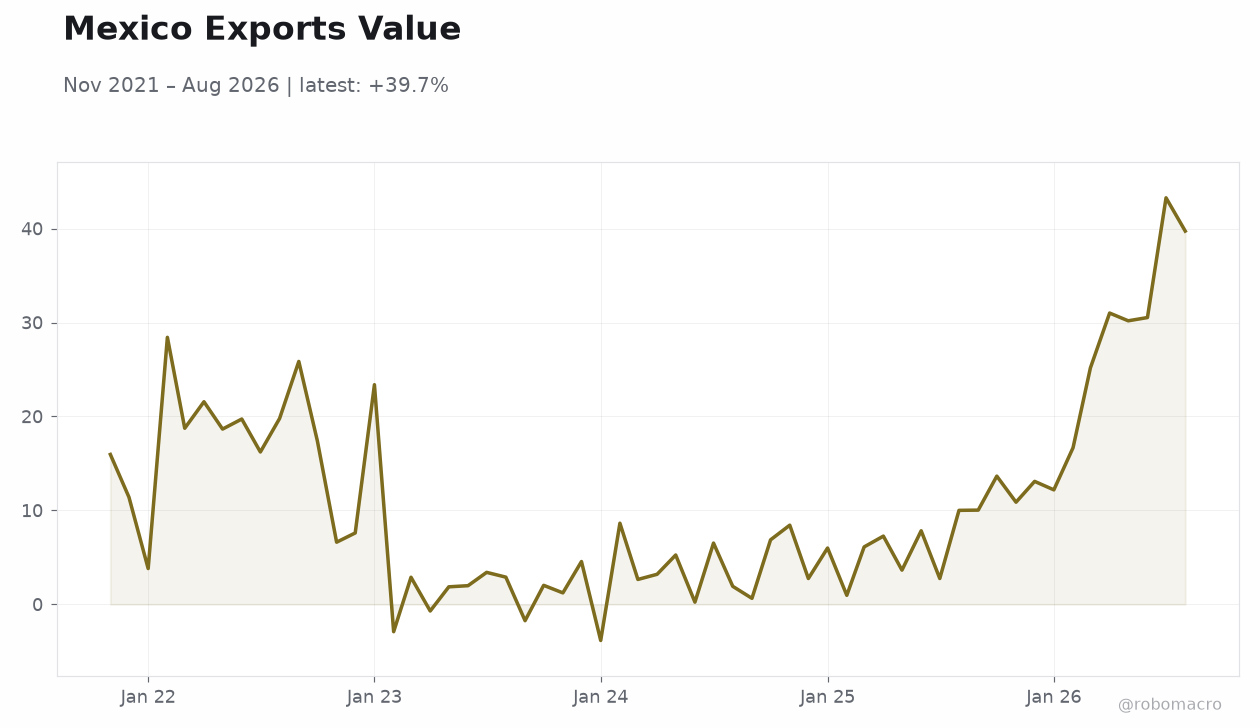
Trade diversification efforts are accelerating as firms adjust supply chains away from single-country exposure. These dynamics keep the peso sensitive to external policy shifts rather than purely domestic cycles. Export-oriented sectors continue to benefit from integrated North American production networks despite tariff uncertainty.