Mexico Macro Daily(Beta Mode)
Inflation Overshoots as Trump Tariff Threat Returns
Market Snapshot
| Asset | Level | Change |
|---|---|---|
| IPC Bolsa | 71,811.20 | -0.27% |
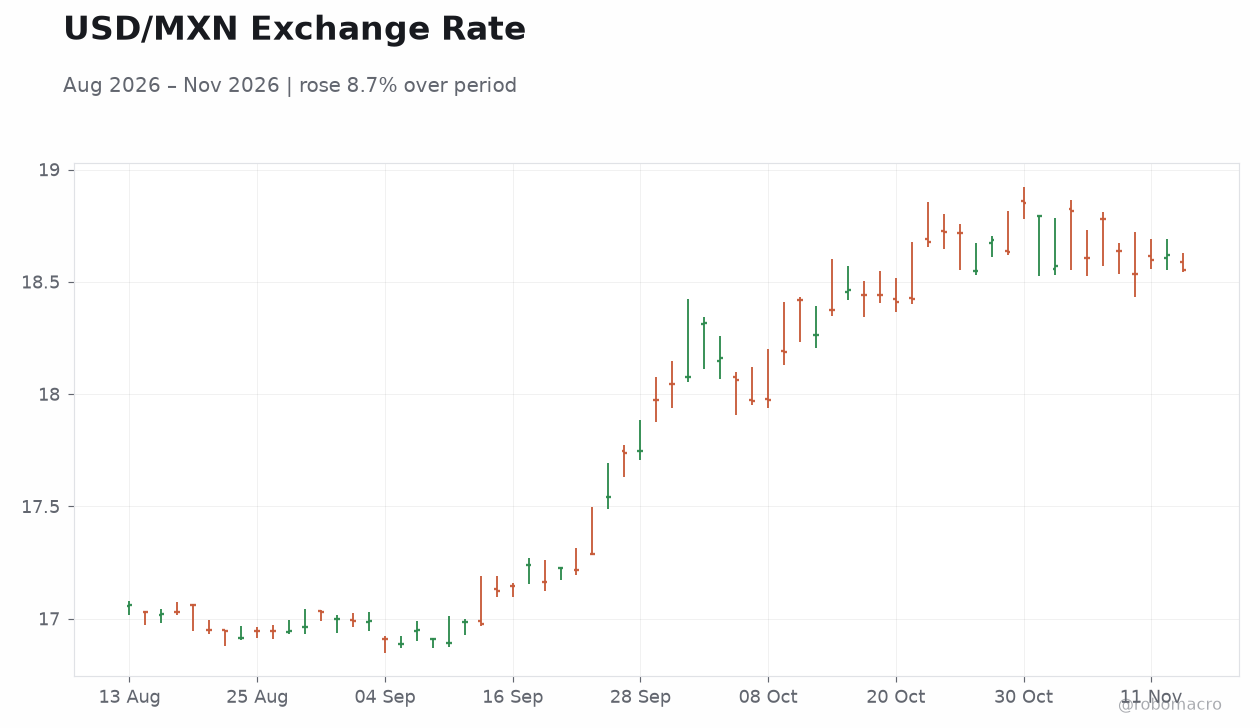
| USD/MXN | 18.55 | -0.37% |
| EUR/MXN | 20.51 | -0.73% |
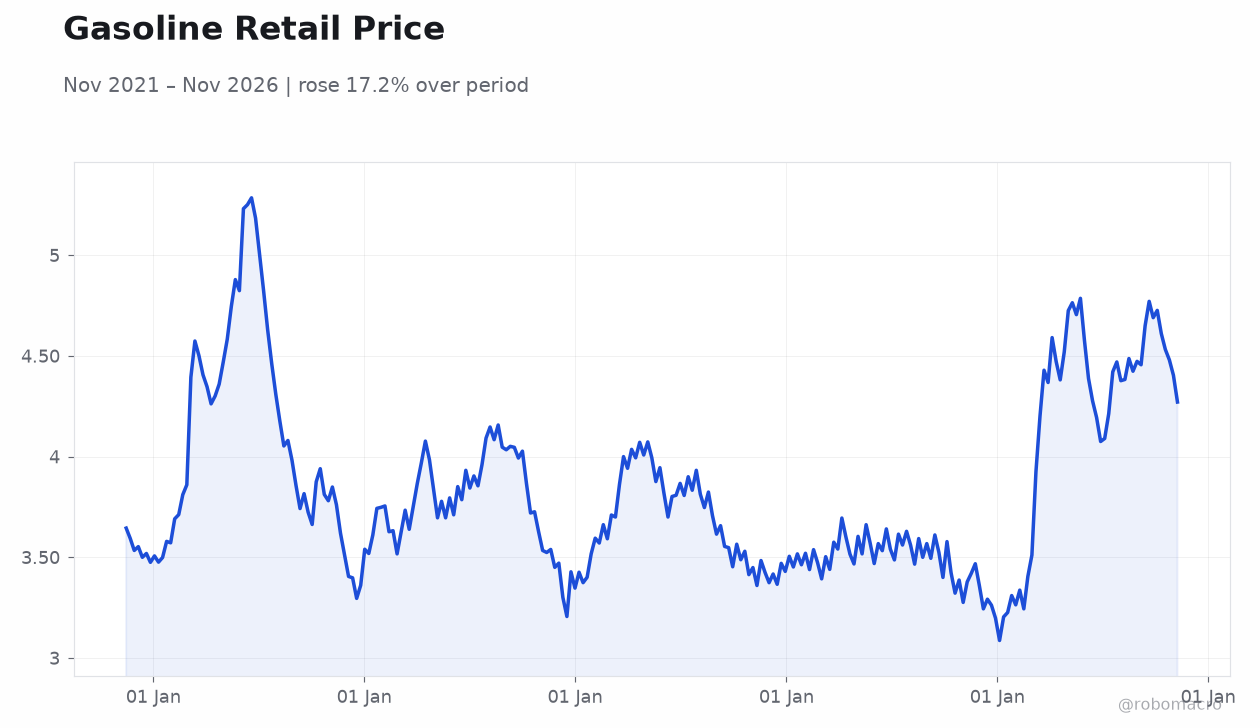
| WTI Crude | 88.42 | -0.36% |
| Silver | 49.95 | -0.04% |
| Gold | 3,895.80 | +0.27% |
| Brent Crude | 95.90 | +0.08% |
| Bitcoin | 69,330.88 | -2.82% |
| Mexico 10Y Govt Yield | - | - |
Prior Economic Events
| Data | Prior | Cons | Actual |
|---|---|---|---|
| Inflation Rate Month-over-Month | 0.42 | 0.55 | 0.65 |
| Inflation Rate Year-over-Year | 3.45 | 3.65 | 3.75 |
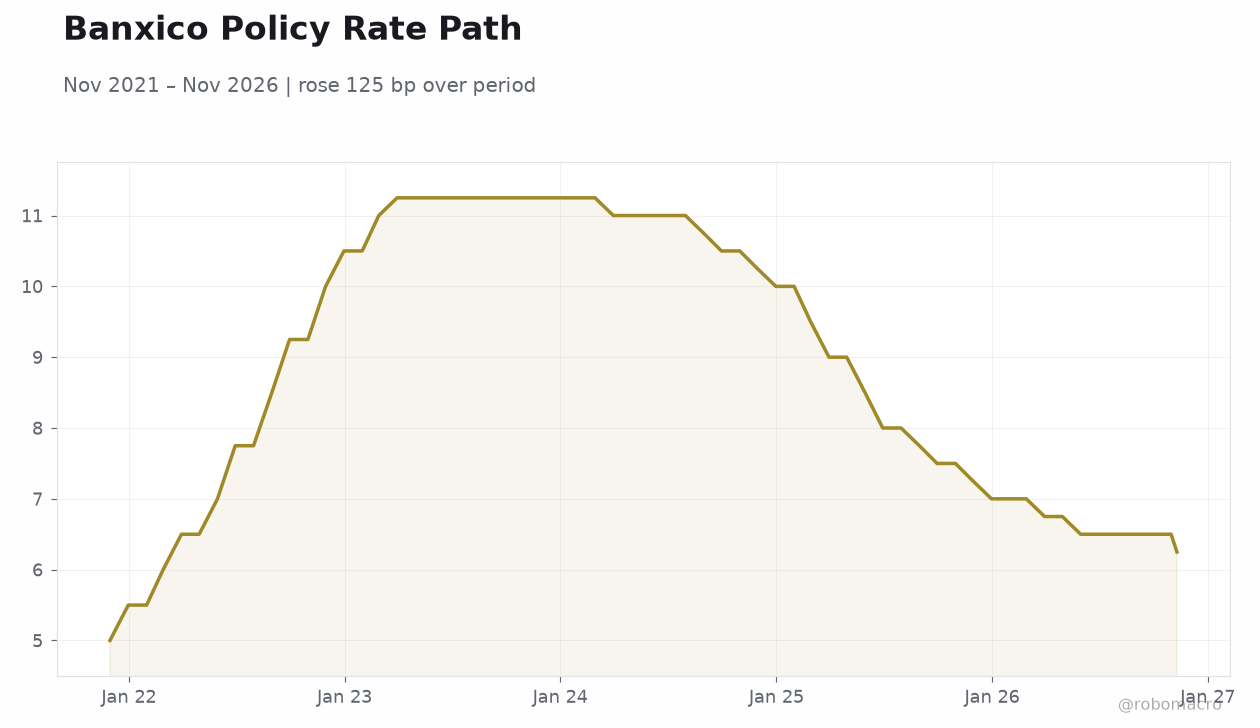 Banxico Policy Rate Path | Type: macro_line | Policy Rate (%): 6.25 (2026-11-10) | Range: 5–11.25 | Trend(5pt): 5,11,11,7.75,6.25
Today's Economic Events
| Data | Prior | Cons | Time |
|---|---|---|---|
| No events available | |||
- Mexico October CPI rose 0.65% m/m and 3.75% y/y, both above consensus, keeping Banxico's easing path in question.
- USD/MXN slipped 0.37% to 18.55 despite the inflation overshoot, as carry appeal offset sticky prices.
- Trump's renewed threat to double tariffs on Mexico over migration reintroduces USMCA trade risk into the outlook.
Yesterday's Recap
Mexico's October inflation prints came in hot, with month-over-month CPI at 0.65% versus a 0.55% consensus and the year-over-year rate at 3.75% against expectations of 3.65%, up from 3.45% previously. The overshoot signals persistent services and food price pressure that complicates Banxico's recent easing trajectory. Markets absorbed the data without a peso selloff: USD/MXN actually fell 0.37% to 18.55, and EUR/MXN dropped 0.73% to 20.51, suggesting carry demand and broad dollar softness dominated.
The IPC Bolsa slipped 0.27% to 71,811.20, a muted reaction consistent with rate-sensitive equities weighing the inflation surprise. Gold firmed 0.27% to $3,895.80 while silver was essentially flat at $49.95. WTI crude eased 0.36% to $88.42, with Brent up 0.08% at $95.90.
Bitcoin fell 2.82% to $69,330.88, reflecting risk-off sentiment in speculative assets rather than Mexico-specific flows.
The Day Ahead
The Mexico calendar is empty for November 13, with no scheduled data releases and no events queued for November 14, leaving markets to trade off the inflation surprise and external headlines. Attention shifts to the Banxico December 17 decision as the next policy catalyst, with the October CPI print now the freshest input into that debate. Peso traders will watch whether the 18.55 level holds given the inflation overshoot, and whether carry flows continue to offset tariff headline risk.
Local rates markets will parse whether the 3.75% y/y print shifts the expected pace of further easing. With no domestic data, US session sentiment and tariff rhetoric will likely drive intraday direction.
Other Economic Notes
The October inflation overshoot is a meaningful signal that disinflation in Mexico has stalled, with the y/y rate moving up from 3.45% to 3.75% rather than continuing toward target. That matters for the real policy rate, which narrows as inflation rises while the nominal rate sits at 6.25% following the November 5 cut. Services and food components likely drove the upside, and the m/m print of 0.65% is well above the seasonal norm.
↓ p.2