Mexico Macro Daily(Beta Mode)
Peso Slips as Banxico Cut Stirs FX Debate
Market Snapshot
| Asset | Level | Change |
|---|---|---|
| IPC Bolsa | 71,204.98 | -0.84% |
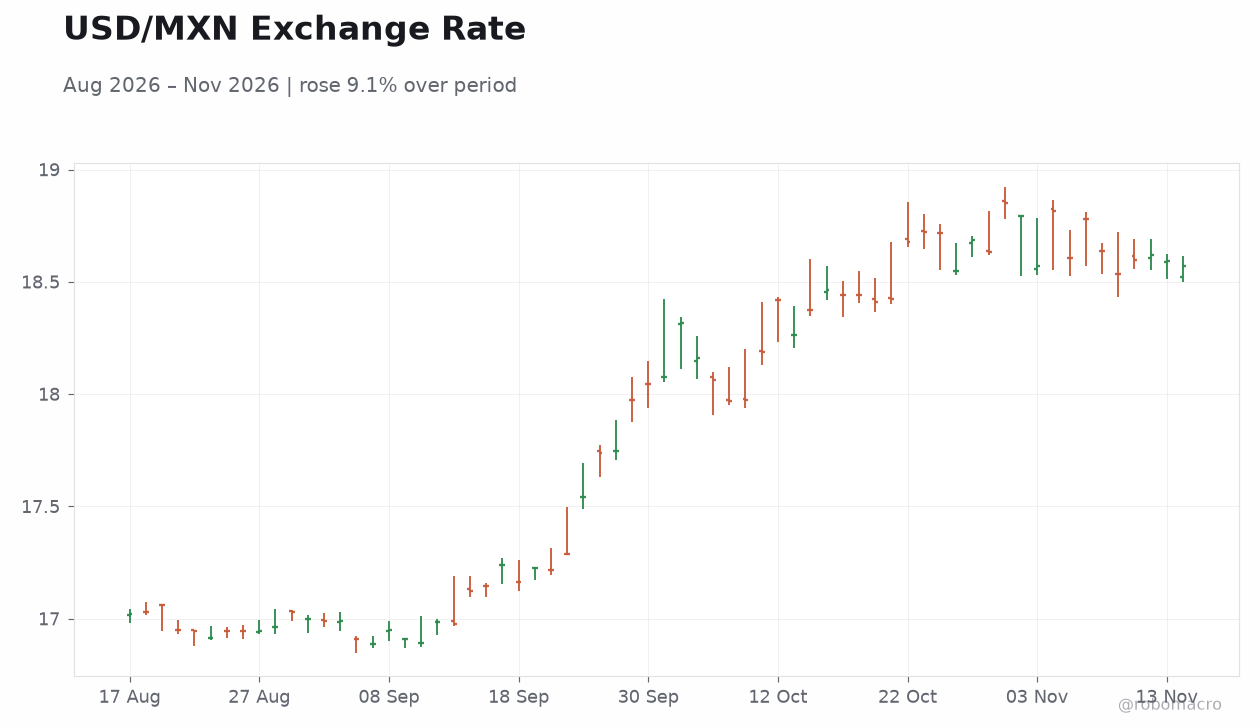
| USD/MXN | 18.57 | -0.12% |
| EUR/MXN | 20.44 | -0.49% |
| WTI Crude | 87.83 | -0.82% |
| Silver | 47.72 | -2.67% |
| Gold | 3,879.00 | -0.19% |
| Brent Crude | 94.85 | -1.03% |
| Bitcoin | 64,200.99 | -1.69% |
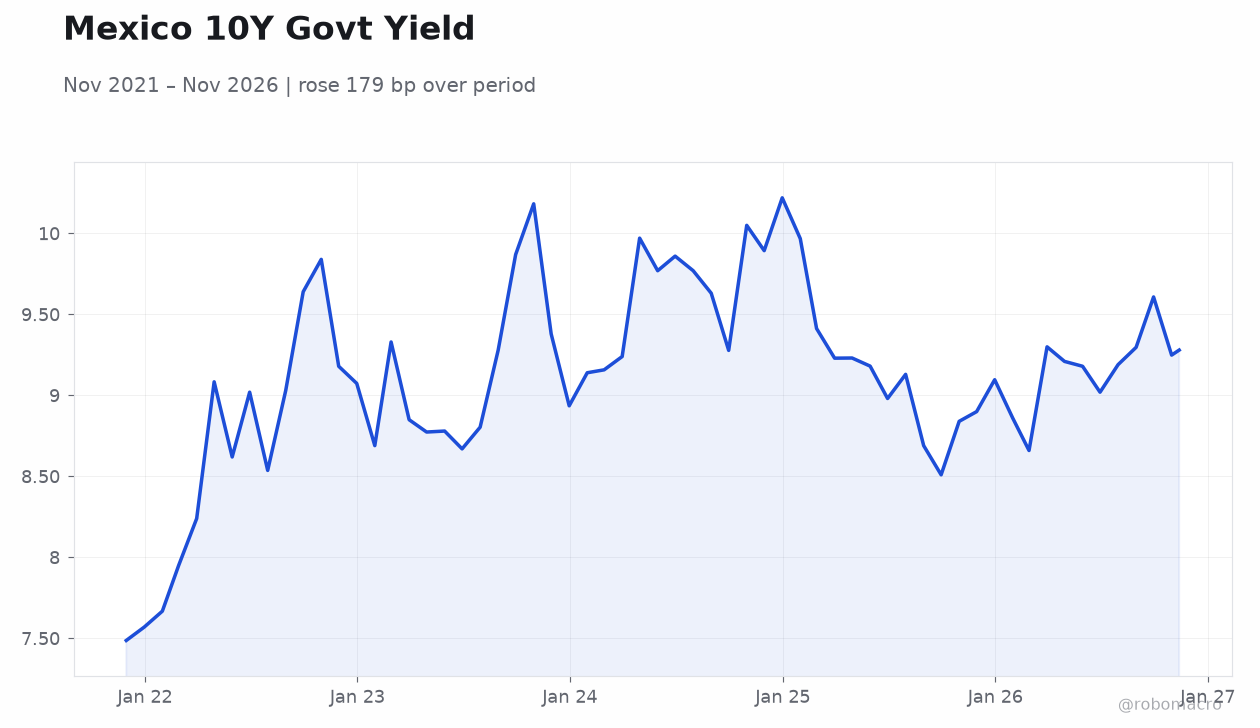
| Mexico 10Y Govt Yield | 9.28% | -1 bp |
Prior Economic Events
| Data | Prior | Cons | Actual |
|---|---|---|---|
| No events available | |||
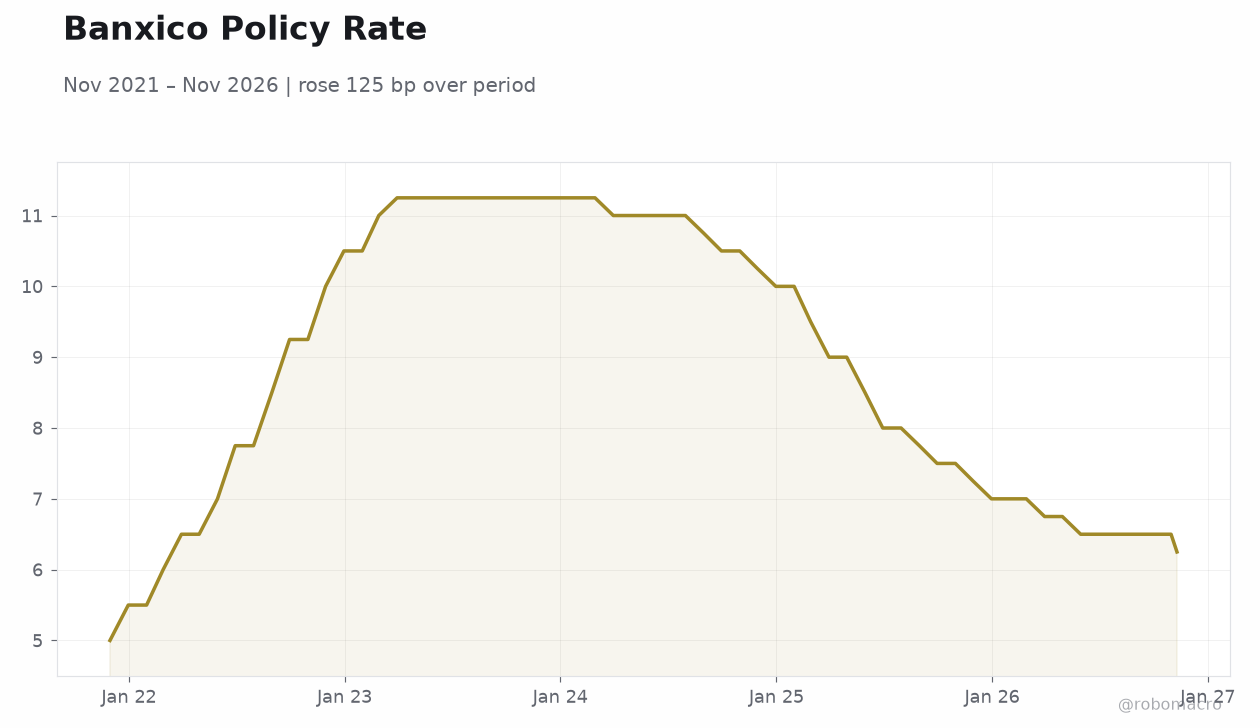 Banxico Policy Rate | Type: macro_line | Policy Rate (%): 6.25 (2026-11-10) | Range: 5–11.25 | Trend(5pt): 5,11,11,7.75,6.25
Today's Economic Events
| Data | Prior | Cons | Time |
|---|---|---|---|
| No events available | |||
- Banxico's 25bp cut to 6.25% on Nov 5 has traders speculating officials want a weaker peso to support exports and tourism.
- IPC Bolsa fell 0.84% to 71,204.98; USD/MXN at 18.57 (-0.12%); 10Y yield eased 1bp to 9.28%.
- US-Mexico trade talks face new friction as Miller's White House ascent rattles negotiators.
Yesterday's Recap
Mexican assets were broadly softer in the Nov 15 session, with the IPC Bolsa declining 0.84% to 71,204.98 as equity investors digested the implications of Banxico's recent easing cycle. The peso firmed modestly, with USD/MXN at 18.57 (-0.12%) and EUR/MXN at 20.44 (-0.49%), suggesting some dollar weakness rather than peso-specific strength. The 10-year government yield eased 1bp to 9.28%, a marginal move reflecting stable rate expectations.
Commodities tied to Mexico's export profile were weak: WTI fell 0.82% to $87.83, Brent dropped 1.03% to $94.85, and silver plunged 2.67% to $47.72, weighing on mining-sector sentiment. Gold slipped 0.19% to $3,879.00 while Bitcoin fell 1.69% to $64,200.99, signaling a broader risk-off tone. No scheduled Mexican data releases printed yesterday, leaving markets driven by positioning and external cues.
The Day Ahead
The Mexican calendar is empty for Nov 16, with no tier-one data releases scheduled, so trading will hinge on external drivers and positioning ahead of the Dec 17 Banxico decision. Investors will watch USD/MXN for signals on whether the recent rate cut is translating into sustained currency weakness, a theme gaining traction in trader chatter. With CPI running at 3.45% year-on-year as of September, the disinflation trajectory remains intact but the pace of further easing will be scrutinized.
US-Mexico trade negotiations remain a background risk, particularly with Miller's elevated White House role raising questions about the tone of upcoming talks. Absent domestic catalysts, the IPC Bolsa will likely track US equity sentiment and commodity prices, especially industrial metals.
Other Economic Notes
Mexico's nearshoring narrative remains a structural tailwind for industrial real estate and manufacturing FDI, though the pace of relocation decisions has moderated as firms weigh US political uncertainty. The peso's relative strength earlier in the cycle drew concern from export-oriented sectors, and Banxico's easing bias may partly reflect a desire to prevent excessive FX appreciation from eroding competitiveness. Inflation at 3.45% sits within Banxico's tolerance band, giving the central bank room to continue normalizing policy, but the committee must balance this against peso stability.
↓ p.2