Mexico Macro Daily(Beta Mode)
Peso Holds Firm as Banxico Flags Inflation Risks
Market Snapshot
| Asset | Level | Change |
|---|---|---|
| IPC Bolsa | 70,388.96 | -1.15% |
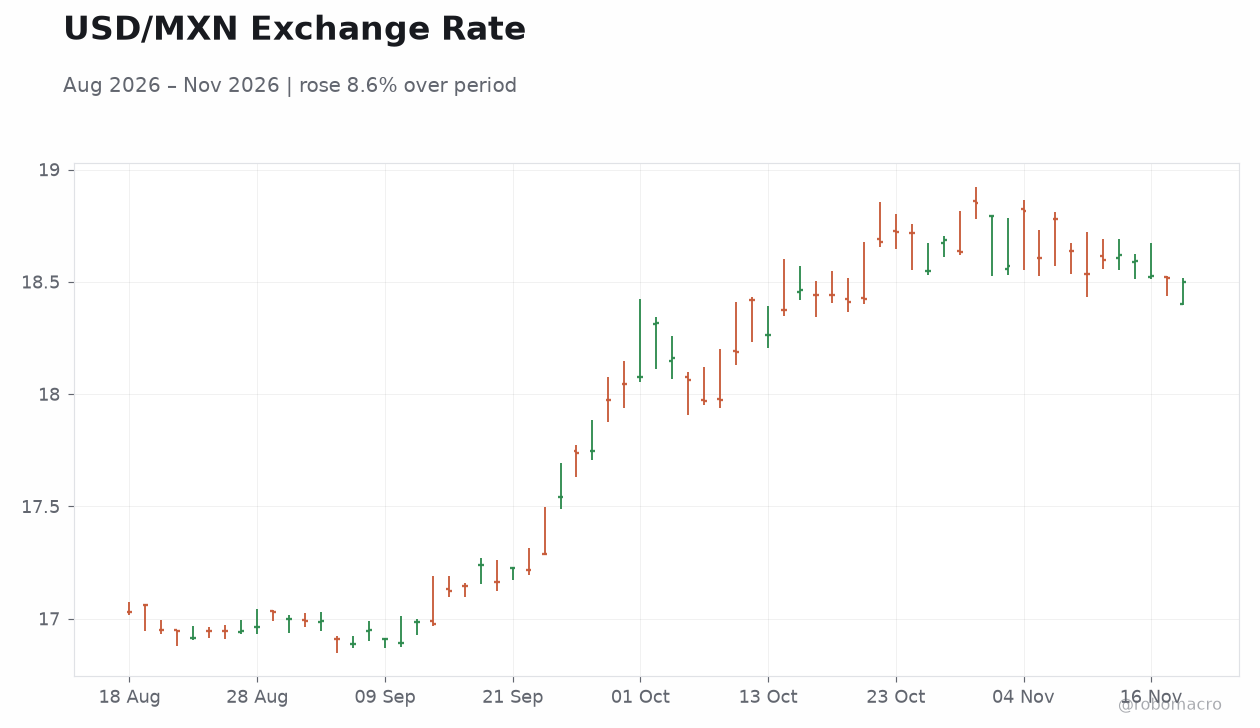
| USD/MXN | 18.50 | -0.10% |
| EUR/MXN | 20.30 | -0.33% |
| WTI Crude | 83.23 | -3.23% |
| Silver | 45.67 | -3.43% |
| Gold | 3,772.50 | -2.37% |
| Brent Crude | 89.32 | -4.10% |
| Bitcoin | 64,160.42 | -1.13% |
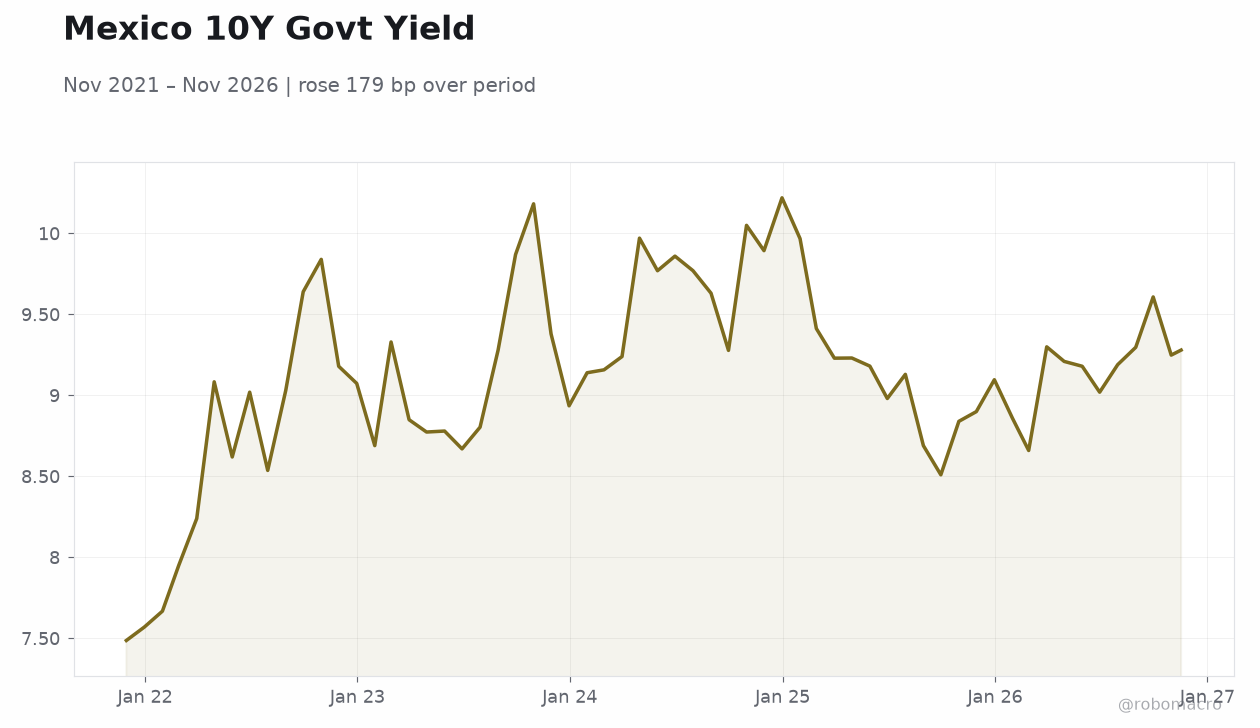
| Mexico 10Y Govt Yield | 9.28% | 0 bp |
Prior Economic Events
| Data | Prior | Cons | Actual |
|---|---|---|---|
| No events available | |||
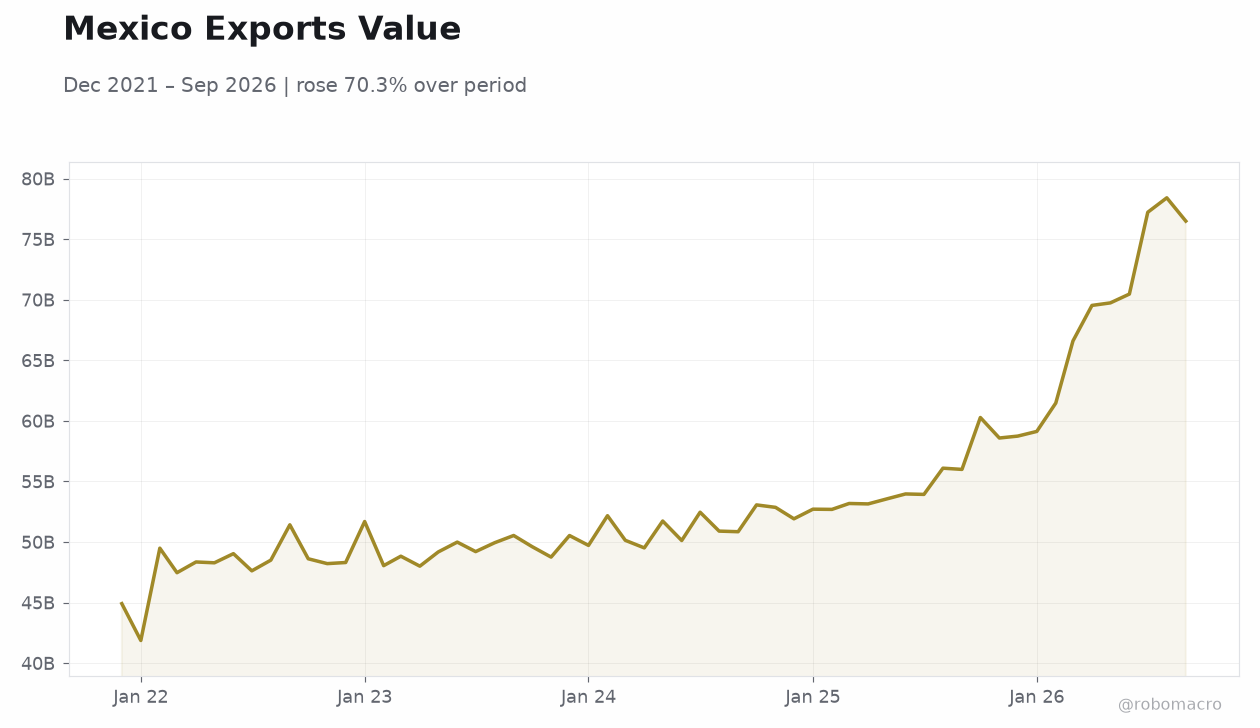 Mexico Exports Value | Type: macro_line | Exports (USD): 7.65e+10 (2026-09-01) | Range: 4.188e+10–7.842e+10 | Trend(6pt): 4.492e+10,4.805e+10,4.952e+10,5.397e+10,7.842e+10,7.65e+10
Today's Economic Events
| Data | Prior | Cons | Time |
|---|---|---|---|
| No events available | |||
- IPC Bolsa fell 1.15% to 70,388.96 as global risk-off deepened, with precious metals and crude selling off sharply
- USD/MXN held near 18.50 (-0.10%), showing resilience despite broad EM pressure and a 3%+ drop in WTI
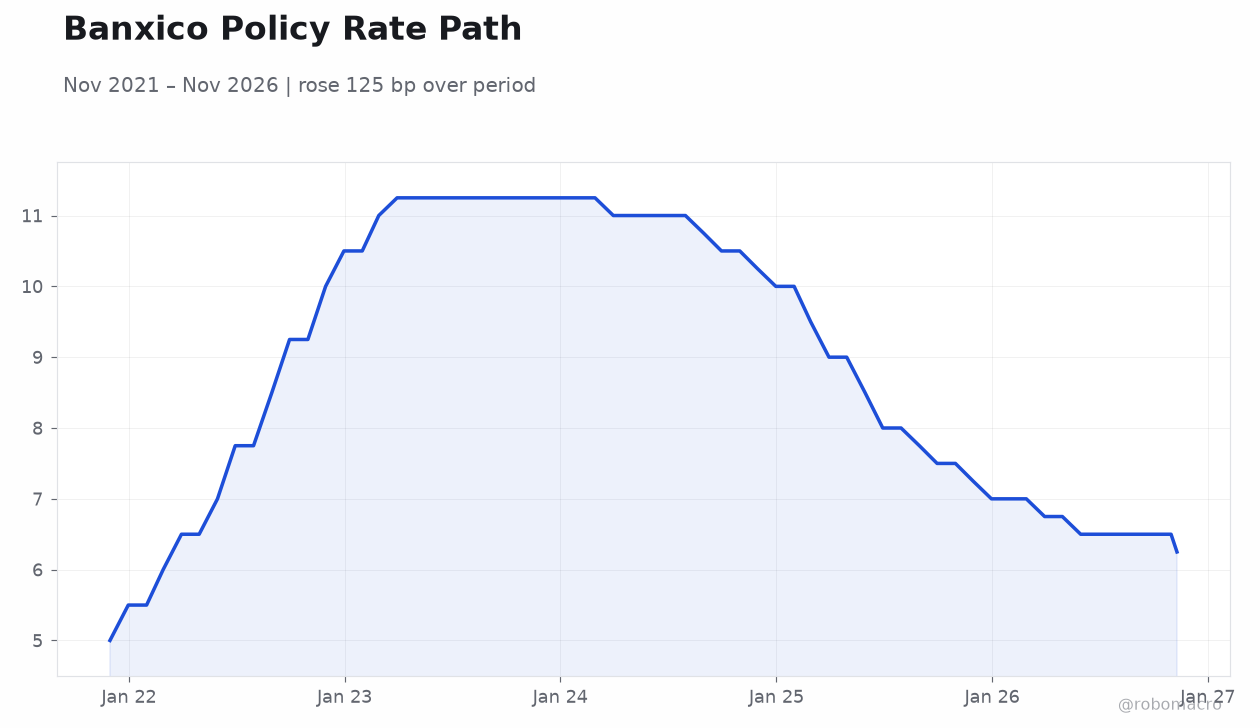
- Banxico's Borja flagged inflation risks and an uncertain pause duration, reinforcing a cautious stance after the November 5 cut to 6.25%
Yesterday's Recap
Mexican equities bore the brunt of a global risk-off session, with the IPC Bolsa dropping 1.15% to 70,388.96 as investors rotated out of cyclical and commodity-linked names. The peso was a rare bright spot, with USD/MXN easing 0.10% to 18.50 and EUR/MXN falling 0.33% to 20.30, suggesting some defensive demand for Mexican assets amid the selloff. The 10-year government yield held steady at 9.28%, unchanged on the day, indicating that the bond market largely looked through the equity weakness.
Commodities were the epicenter of the move: WTI fell 3.23% to $83.23, Brent dropped 4.10% to $89.32, silver plunged 3.43% to $45.67, and gold slid 2.37% to $3,772.50. Bitcoin also weakened 1.13% to $64,160.42, underscoring the broad de-risking tone. No scheduled Mexican data releases printed yesterday, so price action was driven entirely by external sentiment and positioning.
The Day Ahead
The Mexican calendar is empty again today, leaving markets to trade off global cues and positioning ahead of the December 17 Banxico decision. Traders will focus on whether the peso's relative resilience can persist if commodity weakness continues, particularly given Mexico's sensitivity to crude and industrial metals. Attention also turns to any Banxico commentary following Borja's remarks on the uncertain length of the rate pause.
With no domestic catalysts, the IPC Bolsa and USD/MXN will likely take their direction from US session risk appetite and broader EM flows. Liquidity may thin as investors begin positioning for year-end.
Other Economic Notes
Mexico's inflation backdrop remains the key constraint on policy easing, with CPI at 3.45% year-over-year as of September 30, still above the central bank's target range midpoint. The 10-year yield anchored at 9.28% reflects a market that expects only gradual further easing given sticky services inflation and fiscal pressures. Nearshoring remains a structural tailwind, but the pace of investment is sensitive to US demand and the broader tariff environment.
The loss of measles-free status alongside the US and Bolivia is a reminder of public-health spillovers, though macro relevance is limited. ↓ p.2