Mexico Macro Daily(Beta Mode)
Peso Slides as Risk-Off Grips Markets
Market Snapshot
| Asset | Level | Change |
|---|---|---|
| IPC Bolsa | 68,713.60 | -0.64% |
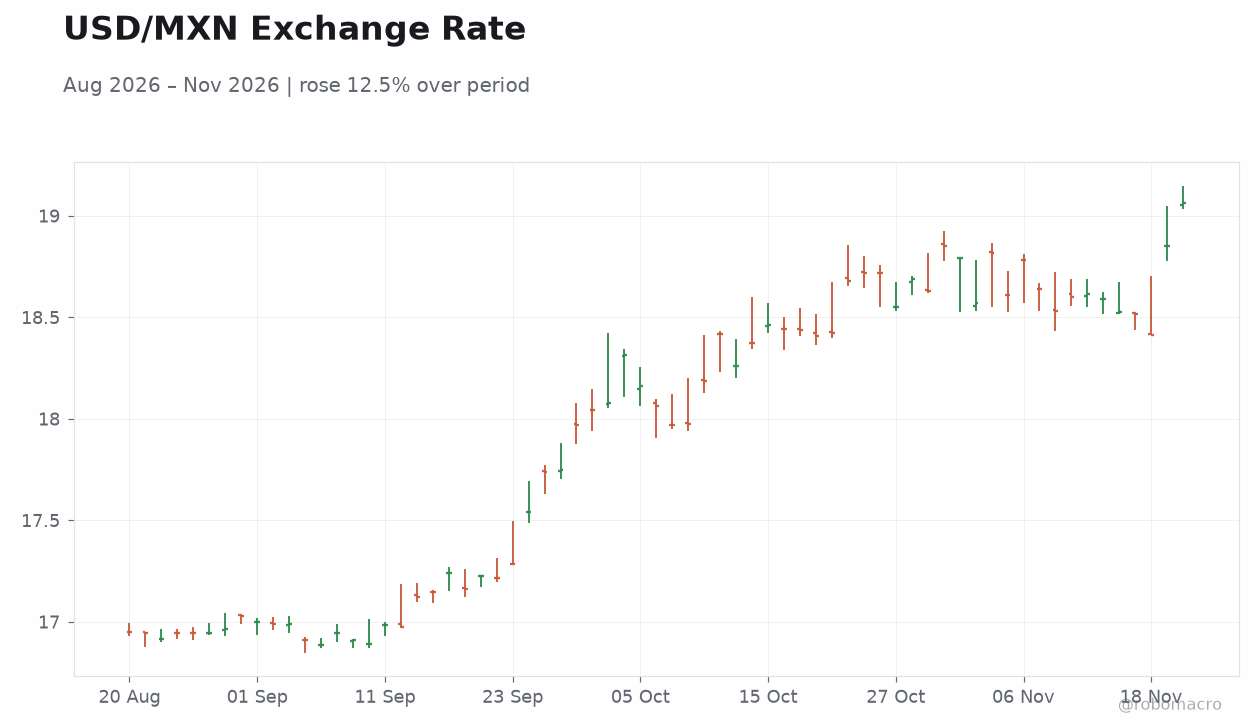
| USD/MXN | 19.06 | +1.12% |
| EUR/MXN | 20.89 | +1.01% |
| WTI Crude | 82.34 | -1.05% |
| Silver | 42.38 | -4.38% |
| Gold | 3,585.40 | -2.72% |
| Brent Crude | 89.25 | -2.97% |
| Bitcoin | 61,761.13 | -0.23% |
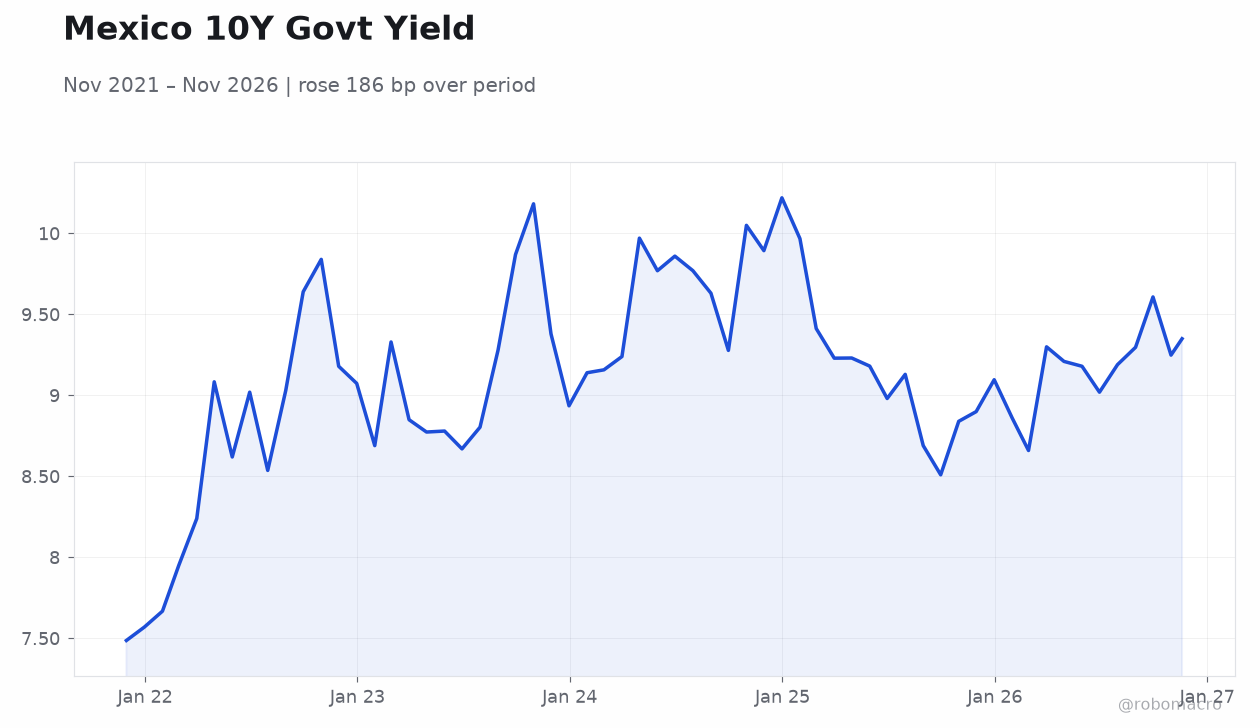
| Mexico 10Y Govt Yield | 9.35% | +7 bp |
Prior Economic Events
| Data | Prior | Cons | Actual |
|---|---|---|---|
| No events available | |||
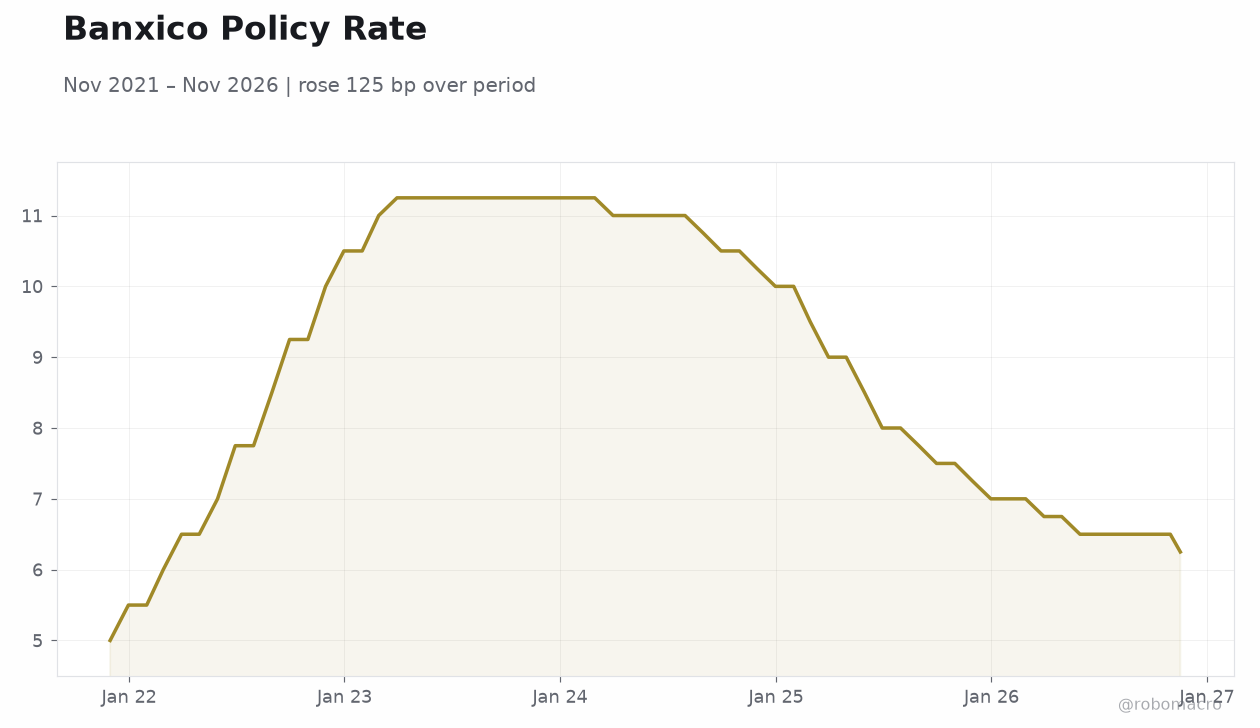 Banxico Policy Rate | Type: macro_line | Policy Rate %: 6.25 (2026-11-17) | Range: 5–11.25 | Trend(5pt): 5,11,11,7.75,6.25
Today's Economic Events
| Data | Prior | Cons | Time |
|---|---|---|---|
| No events available | |||
- USD/MXN jumps 1.12% to 19.06 as broad risk-off sentiment pressures the peso
- Mexico 10Y yield rises 7 bp to 9.35% amid global bond selloff
- IPC Bolsa falls 0.64% to 68,713.60 while commodities tumble
Yesterday's Recap
Mexican markets experienced a pronounced risk-off session on November 19, with the peso bearing the brunt of selling pressure as USD/MXN surged 1.12% to close at 19.06. The IPC Bolsa declined 0.64% to 68,713.60, reflecting broad-based equity weakness that tracked global risk aversion. The Mexico 10Y government yield climbed 7 basis points to 9.35%, mirroring upward pressure across emerging market fixed income as investors reassessed duration exposure.
Commodity-linked sentiment weighed heavily, with WTI crude falling 1.05% to $82.34 and Brent dropping nearly 3% to $89.25, while precious metals suffered sharper declines — silver plunged 4.38% to $42.38 and gold retreated 2.72% to $3,585.40. EUR/MXN advanced 1.01% to 20.89, confirming broad dollar strength rather than Mexico-specific weakness. Bitcoin edged lower by 0.23% to $61,761, offering little refuge from the prevailing defensive posture.
The Day Ahead
The Mexican economic calendar is devoid of scheduled data releases for November 20, leaving market participants to focus on external catalysts and positioning ahead of month-end. Traders will monitor US session developments for directional cues, particularly any shifts in Treasury yields that could transmit to Mexican fixed income. Peso dynamics will remain tethered to broader dollar sentiment and commodity price action, with oil's trajectory particularly relevant given Mexico's fiscal sensitivity to crude revenues.
With no domestic prints to digest, attention turns toward Banxico communication channels and any commentary that might clarify the December 17 policy meeting trajectory. Liquidity conditions may thin as the week progresses, potentially amplifying moves on modest flows.
Other Economic Notes
The divergence in regional growth trajectories has prompted a notable rotation in equity allocations, with banks shifting preference toward Mexico and away from Brazil according to recent Bloomberg reporting. This repositioning reflects Mexico's comparatively stable macro framework and nearshoring-linked investment thesis, though execution risks around USMCA renewal continue to cloud the medium-term outlook. The unresolved nature of the trade agreement's extension introduces uncertainty for cross-border supply chains and capital expenditure planning, particularly in manufacturing corridors.
↓ p.2