Mexico Macro Daily(Beta Mode)
Peso Slips as Gold, Silver Surge
Market Snapshot
| Asset | Level | Change |
|---|---|---|
| IPC Bolsa | 68,629.46 | -0.12% |
| USD/MXN | 19.09 | +1.27% |
| EUR/MXN | 21.01 | +0.36% |
| WTI Crude | 82.19 | -2.13% |
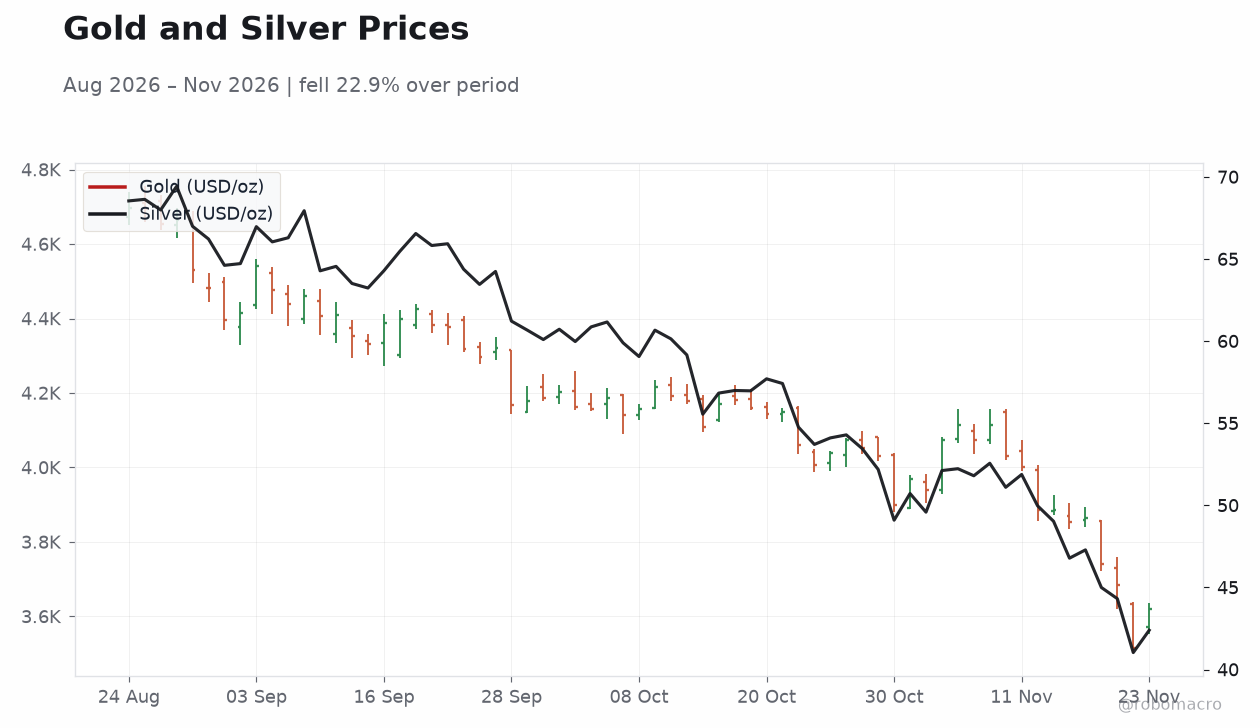
| Silver | 42.41 | +3.35% |
| Gold | 3,621.30 | +3.01% |
| Brent Crude | 88.54 | -4.35% |
| Bitcoin | 61,279.68 | +0.19% |
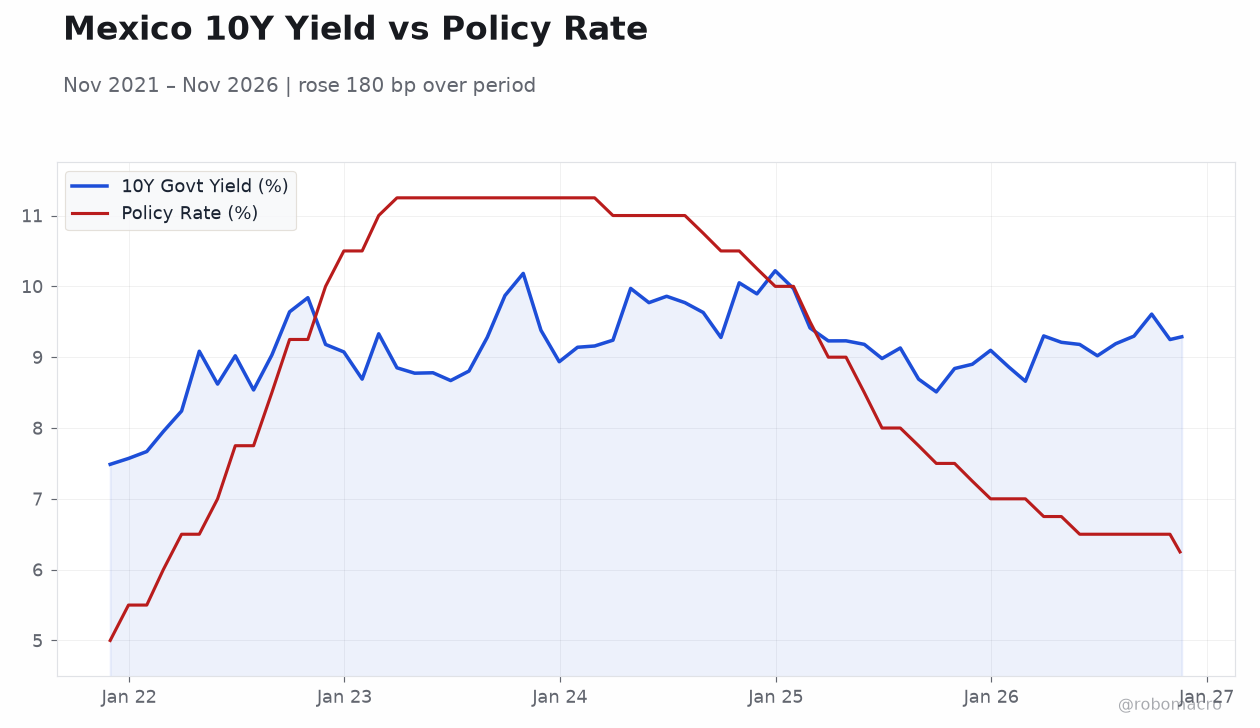
| Mexico 10Y Govt Yield | 9.29% | -6 bp |
Prior Economic Events
| Data | Prior | Cons | Actual |
|---|---|---|---|
| No events available | |||
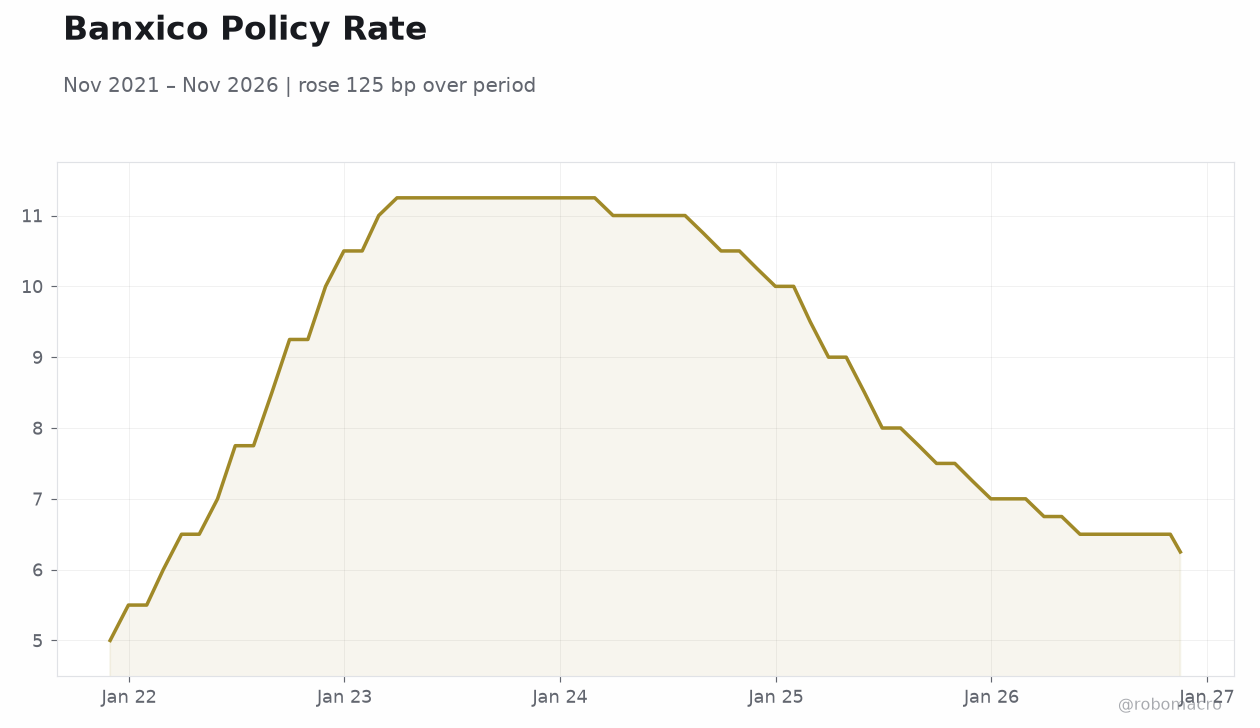 Banxico Policy Rate | Type: macro_line | Policy Rate (%): 6.25 (2026-11-17) | Range: 5–11.25 | Trend(5pt): 5,11,11,7.75,6.25
Today's Economic Events
| Data | Prior | Cons | Time |
|---|---|---|---|
| No events available | |||
- USD/MXN jumped 1.27% to 19.09 as risk-off sentiment gripped Mexican markets, with the IPC Bolsa edging down 0.12% to 68,629.46.
- Mexico's 10-year government yield eased 6 bp to 9.29%, signaling bond investors are pricing slower growth even as the currency weakens.
- Precious metals rallied sharply — gold up 3.01% to $3,621.30/oz and silver up 3.35% to $42.41/oz — while WTI crude fell 2.13% to $82.19/bbl and Brent dropped 4.35% to $88.54/bbl.
Yesterday's Recap
Mexican markets closed Friday with a clear risk-off tone as the peso bore the brunt of broad emerging-market selling pressure. USD/MXN rose 1.27% to 19.09, the sharpest single-day depreciation in recent sessions, while the IPC Bolsa slipped 0.12% to 68,629.46 — a relatively modest equity decline given the currency move. The Mexico 10-year government yield eased 6 bp to 9.29%, suggesting fixed-income investors are leaning toward slower growth and possible additional Banxico easing rather than inflation fears.
Commodity markets diverged sharply: WTI crude fell 2.13% to $82.19/bbl and Brent dropped 4.35% to $88.54/bbl on demand concerns, while gold surged 3.01% to $3,621.30/oz and silver jumped 3.35% to $42.41/oz as safe-haven demand intensified. Bitcoin was essentially flat at $61,279.68, up 0.19%. No scheduled Mexican data releases appeared on the calendar for the session, leaving market participants to trade off external risk sentiment and positioning flows.
The Day Ahead
The Mexican calendar is empty for Monday, November 23, with no tier-one data releases scheduled. Market participants will therefore focus on external drivers — particularly US session risk sentiment and any shifts in the dollar complex — as the primary catalysts for peso and IPC Bolsa direction. With no domestic prints to anchor expectations, USD/MXN will likely take its cue from broader EM currency performance and commodity price action, especially the oil complex given Mexico's fiscal sensitivity to crude.
Bond investors will watch whether the 10-year yield's 6 bp decline extends, which would reinforce the market's view that Banxico retains room to ease further. Attention also begins shifting toward the December 17 Banxico decision, the final rate call of the year.
Other Economic Notes
Mexico's inflation backdrop remains the central variable for the rate outlook, with CPI running at 3.45% year-on-year as of the September 30 reading — comfortably within Banxico's target range and well below the levels that plagued the economy in prior cycles. The combination of contained inflation and a softening growth trajectory gives Banxico latitude to consider further easing, though the recent peso weakness adds a complicating layer by raising imported-cost pressures. ↓ p.2