Mexico Macro Daily(Beta Mode)
Peso Slides as China Trade Talks Advance
Market Snapshot
| Asset | Level | Change |
|---|---|---|
| IPC Bolsa | 69,355.62 | +1.06% |
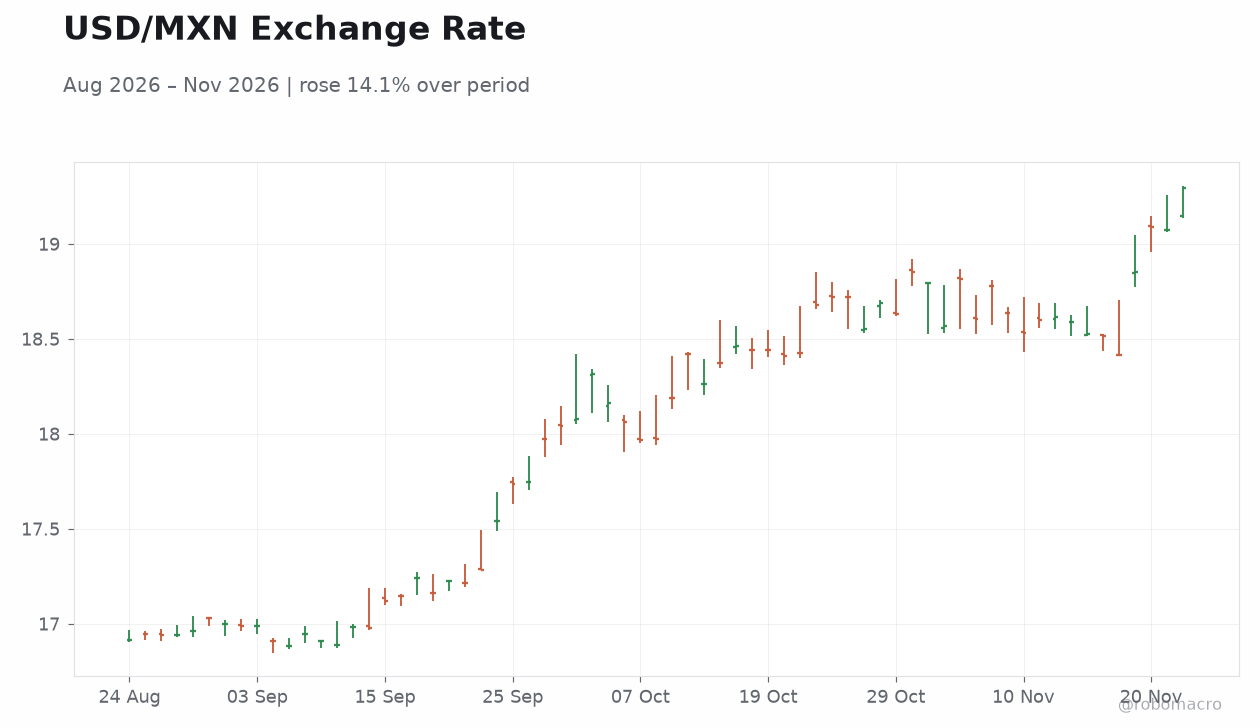
| USD/MXN | 19.30 | +1.20% |
| EUR/MXN | 21.15 | +1.05% |
| WTI Crude | 80.23 | +0.07% |
| Silver | 42.19 | -2.21% |
| Gold | 3,633.60 | -0.49% |
| Brent Crude | 87.02 | -2.63% |
| Bitcoin | 60,299.33 | -1.49% |
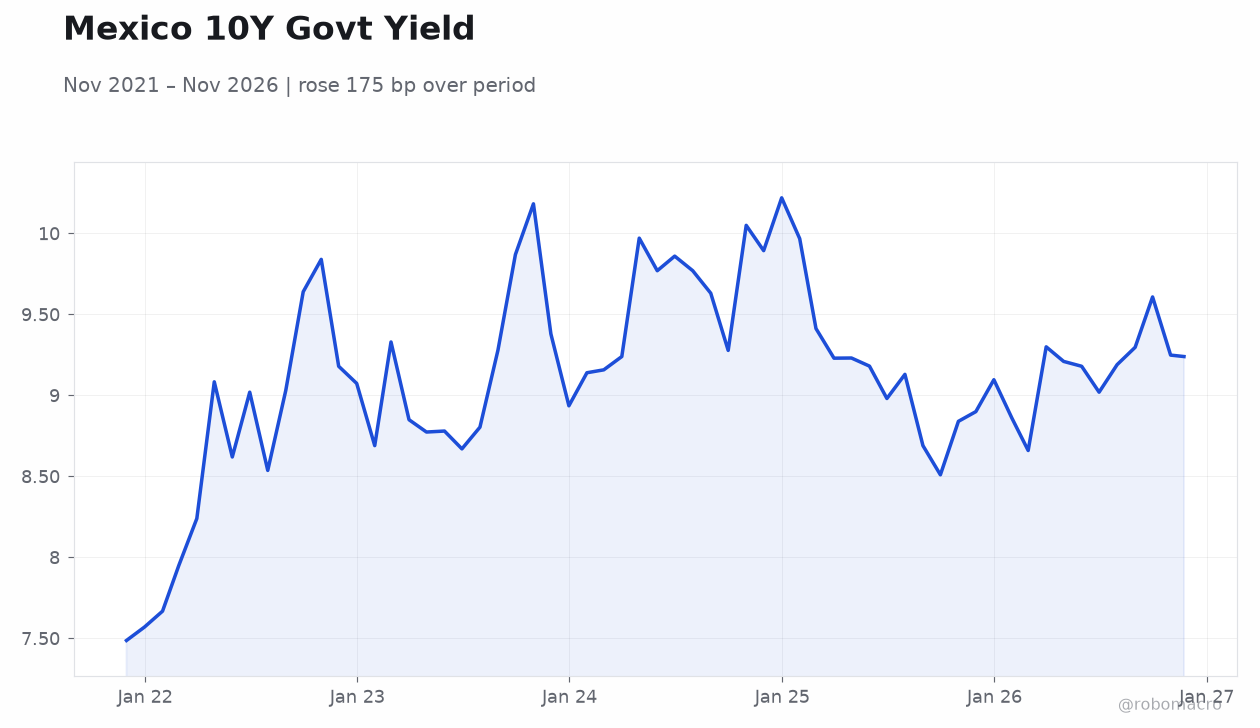
| Mexico 10Y Govt Yield | 9.24% | -5 bp |
Prior Economic Events
| Data | Prior | Cons | Actual |
|---|---|---|---|
| No events available | |||
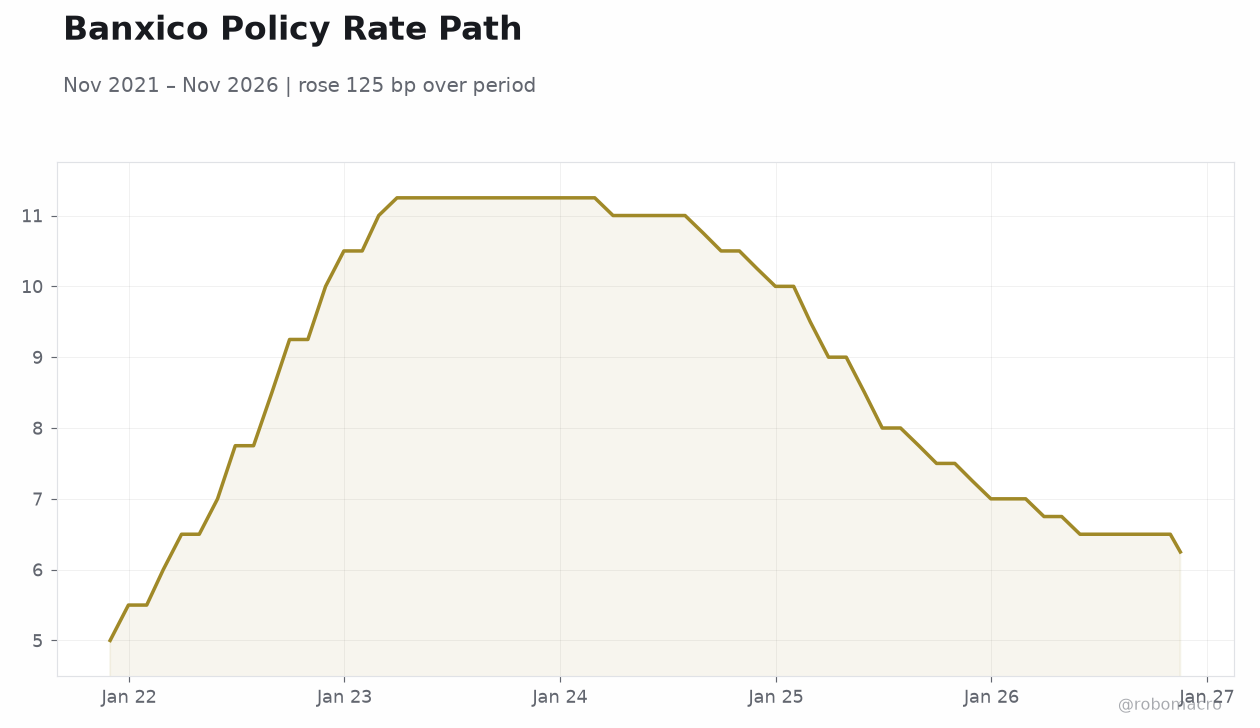 Banxico Policy Rate Path | Type: macro_line | Policy Rate %: 6.25 (2026-11-17) | Range: 5–11.25 | Trend(5pt): 5,11,11,7.75,6.25
Today's Economic Events
| Data | Prior | Cons | Time |
|---|---|---|---|
| No events available | |||
- USD/MXN jumped 1.20% to 19.30 as the peso underperformed across EM currencies
- Mexico 10Y yield eased 5 bp to 9.24% even as the currency sold off
- Mexico and China agreed to establish a bilateral trade working group
Yesterday's Recap
The peso bore the brunt of yesterday's session, with USD/MXN climbing 1.20% to 19.30 and EUR/MXN rising 1.05% to 21.15, a sharp move that outpaced most regional peers. Equities moved the other way: the IPC Bolsa advanced 1.06% to 69,355.62, suggesting domestic buyers leaned into the currency weakness. The Mexico 10Y government yield eased 5 bp to 9.24%, an arithmetic decline that leaves the curve steep but stable.
Precious metals were soft, with silver down 2.21% to 42.19 and gold off 0.49% to 3,633.60, a combination that typically signals firmer risk appetite rather than stress. Energy was mixed: WTI edged up 0.07% to 80.23 while Brent fell 2.63% to 87.02, narrowing the spread. Bitcoin slipped 1.49% to 60,299.33, consistent with a mildly risk-on but dollar-positive tone.
No Mexican data releases were scheduled, so price action drove the narrative.
The Day Ahead
The calendar is empty for Mexico today, leaving the peso and local rates to trade off external cues and positioning ahead of month-end. With no domestic prints to anchor expectations, USD/MXN will likely take its direction from US session flows and broader dollar sentiment. Local rates desks will watch whether the 10Y can hold below 9.25% after yesterday's easing.
The absence of data raises the bar for headline risk, particularly around US-Mexico trade commentary. Expect thinner liquidity and elevated sensitivity to any China-related trade headlines.
Other Economic Notes
The Economy Ministry confirmed Mexico and China will create a working group focused on bilateral economic priorities, a signal that Mexico is hedging its US-centric trade exposure. That matters for nearshoring flows: if Chinese investment into Mexico accelerates, it complicates USMCA rules-of-origin scrutiny but deepens industrial supply chains. Domestic inflation sits at 3.45% year-on-year as of September, comfortably inside Banxico's tolerance band and supportive of the current easing bias.
The peso's 1.20% slide is the key transmission channel — a weaker currency raises imported input costs and could slow the disinflation trajectory into year-end. With the policy rate at 6.25%, real rates remain restrictive, giving Banxico room to maneuver if the currency stabilizes.