Mexico Macro Daily(Beta Mode)
Peso Slides as Banxico Cut Stays in Play
Market Snapshot
| Asset | Level | Change |
|---|---|---|
| IPC Bolsa | 69,301.41 | -0.08% |
| USD/MXN | 19.74 | +2.93% |
| EUR/MXN | 21.59 | +3.25% |
| WTI Crude | 81.62 | -0.52% |
| Silver | 40.17 | -1.46% |
| Gold | 3,543.60 | -0.51% |
| Brent Crude | 88.25 | -3.45% |
| Bitcoin | 58,502.66 | -2.08% |
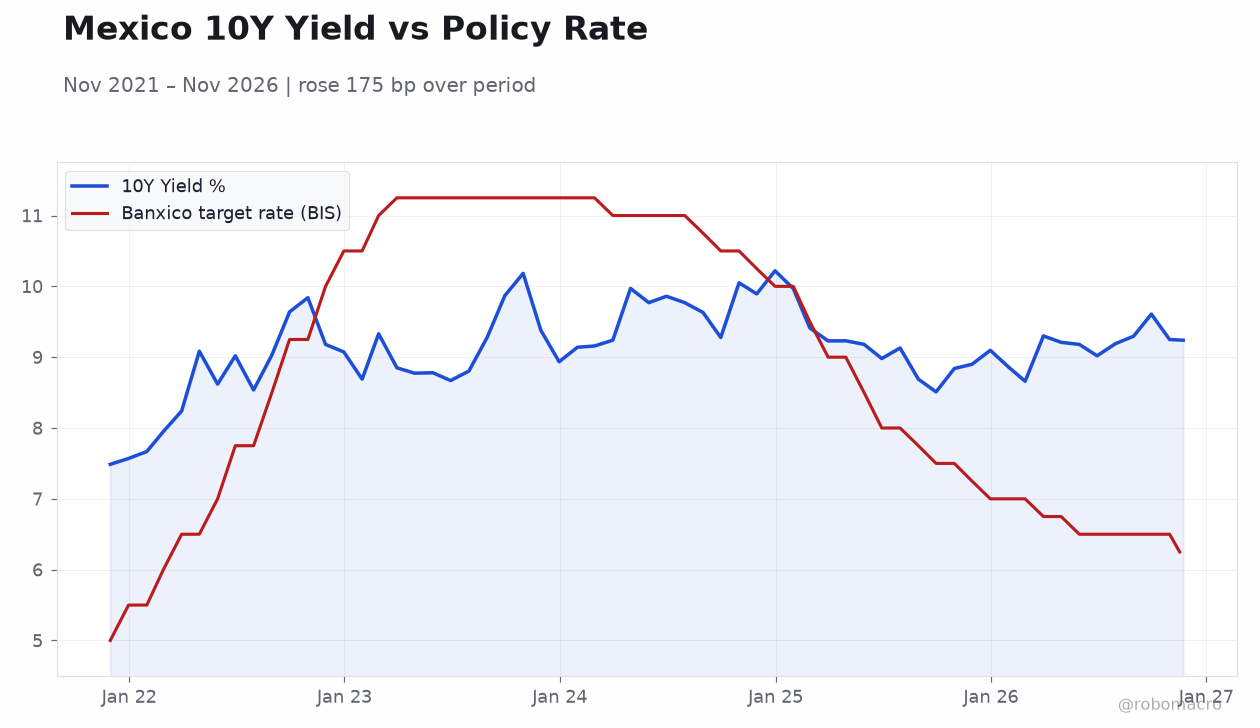
| Mexico 10Y Govt Yield | 9.24% | -5 bp |
Prior Economic Events
| Data | Prior | Cons | Actual |
|---|---|---|---|
| No events available | |||
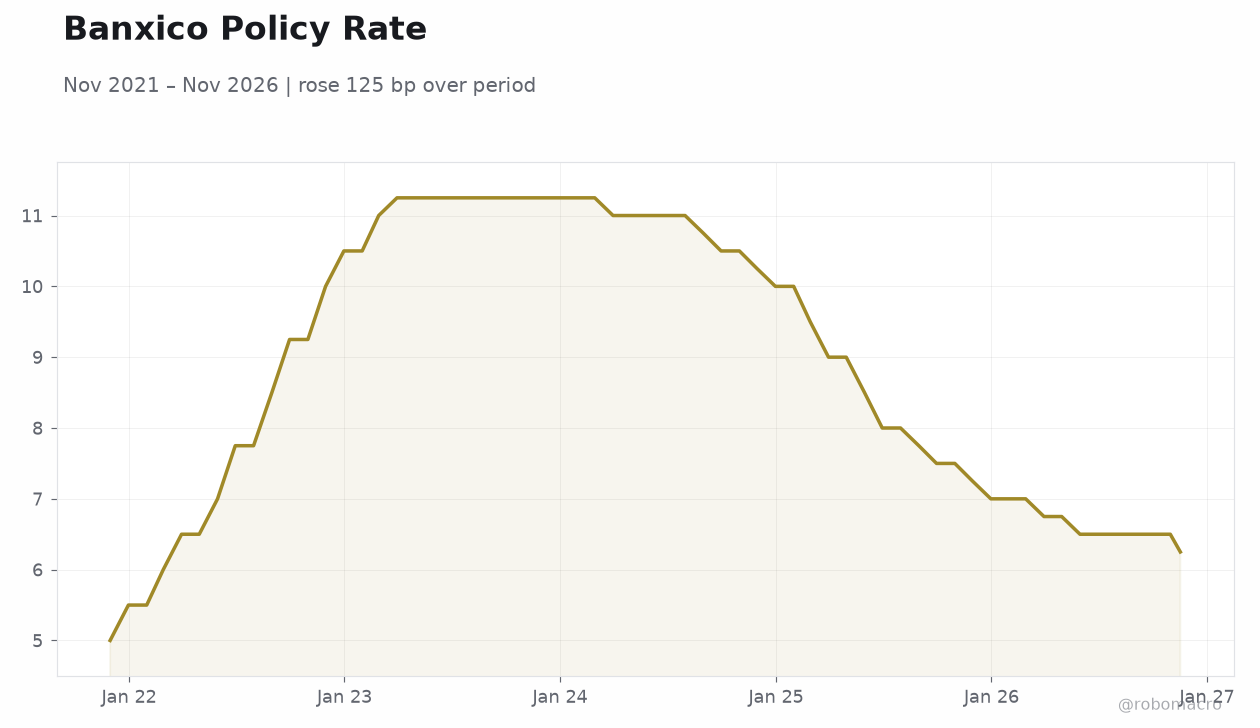 Banxico Policy Rate | Type: macro_line | Policy Rate %: 6.25 (2026-11-17) | Range: 5–11.25 | Trend(5pt): 5,11,11,7.75,6.25
Today's Economic Events
| Data | Prior | Cons | Time |
|---|---|---|---|
| No events available | |||
- USD/MXN jumps 2.93% to 19.74, the sharpest daily peso depreciation in recent memory, with EUR/MXN up 3.25% to 21.59
- Mexico 10Y yield eases 5 bp to 9.24% even as the currency sells off, a divergence worth watching
- IPC Bolsa essentially flat at 69,301 (-0.08%) as global risk appetite sours on renewed AI-trade doubts
Yesterday's Recap
The peso bore the brunt of yesterday's session, with USD/MXN surging 2.93% to 19.74 and EUR/MXN climbing 3.25% to 21.59 — a move large enough to suggest either a broad dollar bid or Mexico-specific stress. Curiously, the Mexico 10Y government yield eased 5 bp to 9.24% (as of the 2026-11-23 observation), meaning local rates rallied even as the currency weakened, a combination that typically signals external rather than domestic drivers. The IPC Bolsa held essentially flat at 69,301.41, down just 0.08%, showing equities were far more resilient than FX.
Commodities offered no support: WTI slipped 0.52% to $81.62, Brent fell 3.45% to $88.25, silver dropped 1.46% to $40.17 and gold lost 0.51% to $3,543.60. Bitcoin's 2.08% decline to $58,502.66 confirmed a broader risk-off tone across speculative assets. No Mexican data releases were scheduled yesterday, so the moves were purely market-driven.
The Day Ahead
The Mexican calendar is empty again today, leaving peso traders to take their cues entirely from external markets and positioning flows. With no domestic prints to anchor expectations, USD/MXN will likely track US session risk sentiment and any further deterioration in AI-related equity narratives. The 19.74 level is the immediate focus — a sustained break higher would put the recent carry-trade appeal of the peso under scrutiny.
Local rates desks will watch whether the 10Y yield's rally continues to diverge from FX, which would reinforce the view that the peso move is externally driven. Absent catalysts, expect thin liquidity and headline-driven volatility into the North American afternoon.
Other Economic Notes
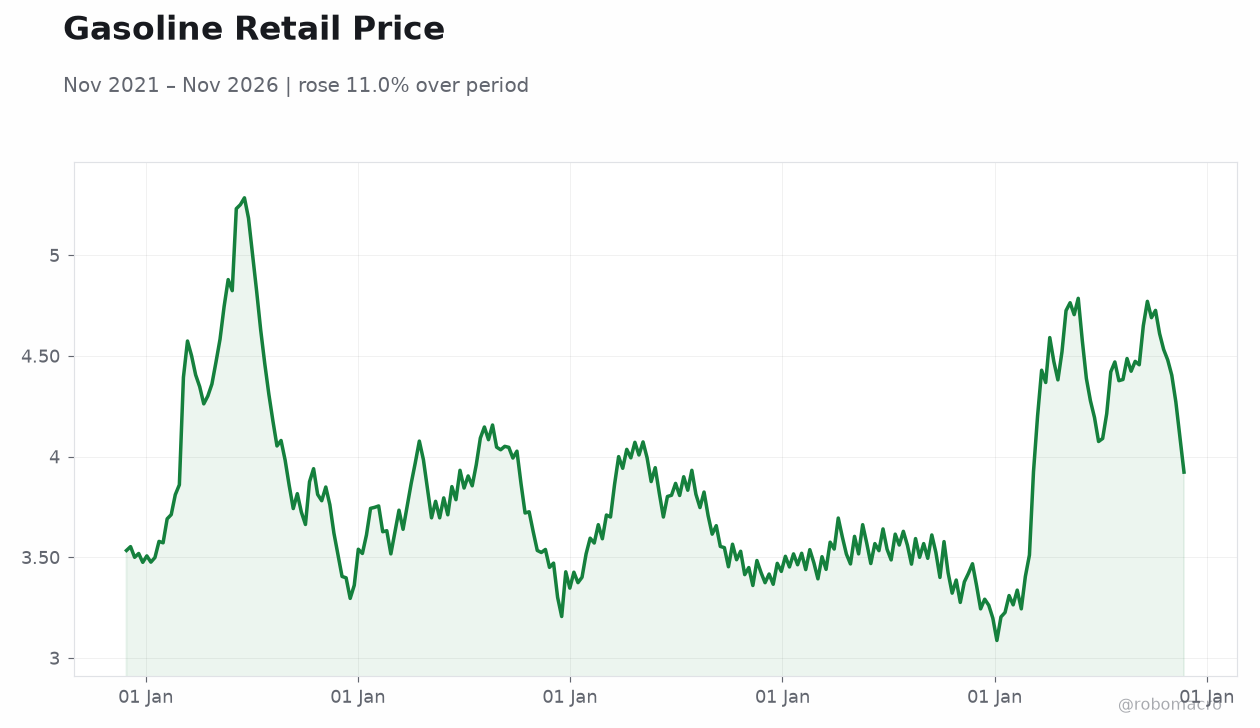
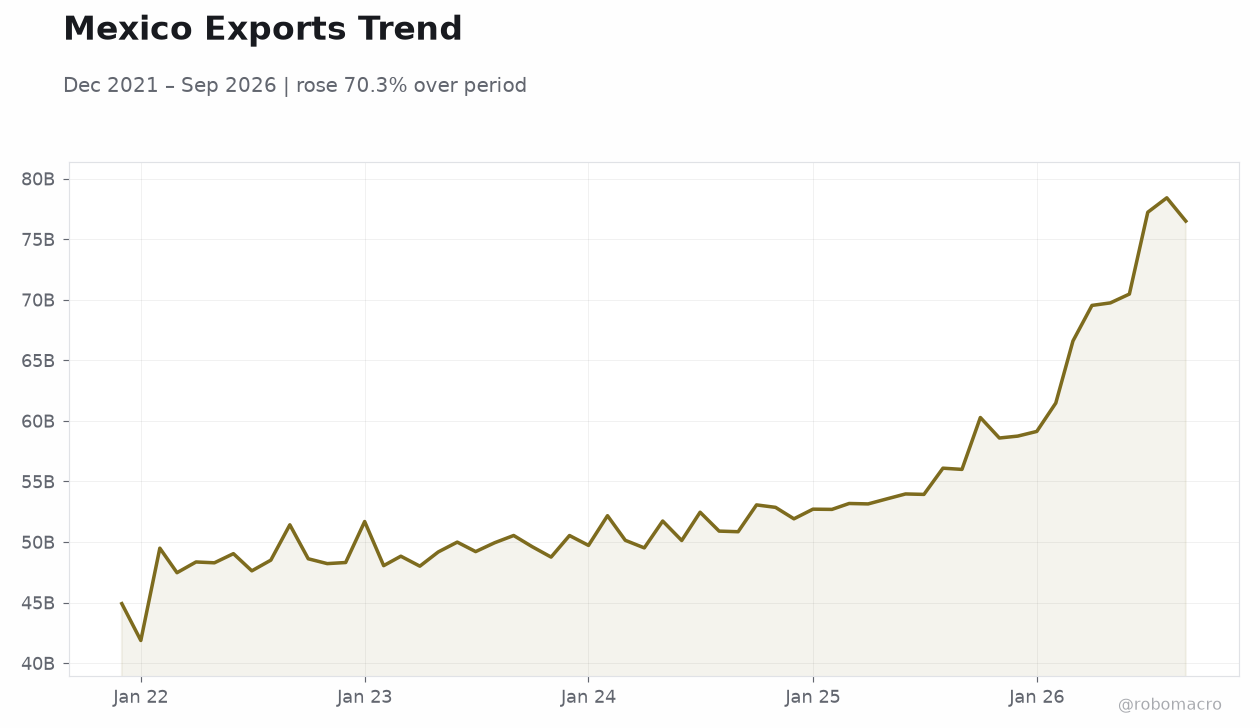
The divergence between a weaker peso and rallying local bonds is the key puzzle for Mexico strategists this week. A currency selloff of nearly 3% in a single session, without a corresponding rate move, usually points to global dollar strength or a shift in risk premia rather than domestic fundamentals. Nearshoring flows remain the structural backdrop, but a persistently weaker peso raises imported-input costs and complicates the disinflation path Banxico has been navigating.
↓ p.2