Mexico Macro Daily(Beta Mode)
Peso Slides as Global Rate Fears Mount
Market Snapshot
| Asset | Level | Change |
|---|---|---|
| IPC Bolsa | 71,372.25 | +2.99% |
| USD/MXN | 19.68 | +1.19% |
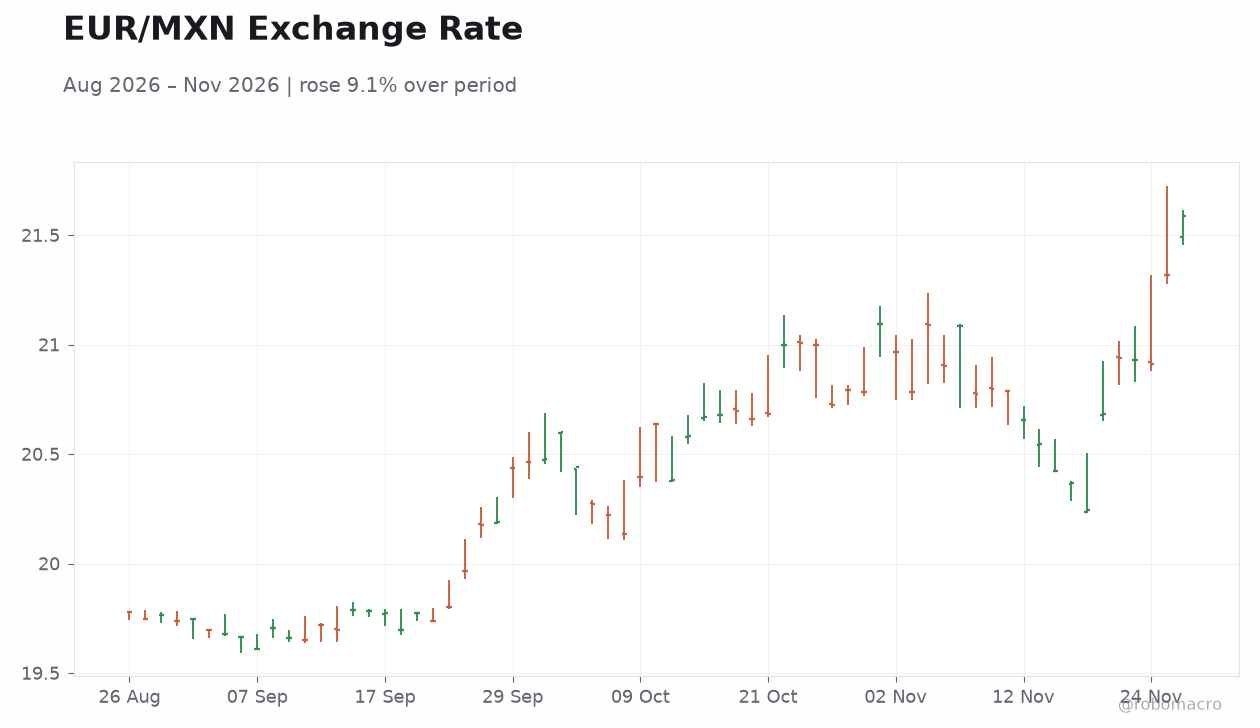
| EUR/MXN | 21.59 | +1.25% |
| WTI Crude | 84.48 | +0.96% |
| Silver | 41.81 | +4.38% |
| Gold | 3,595.00 | +1.67% |
| Brent Crude | 90.95 | -3.87% |
| Bitcoin | 60,689.40 | +0.52% |
| Mexico 10Y Govt Yield | 9.25% | +1 bp |
Prior Economic Events
| Data | Prior | Cons | Actual |
|---|---|---|---|
| No events available | |||
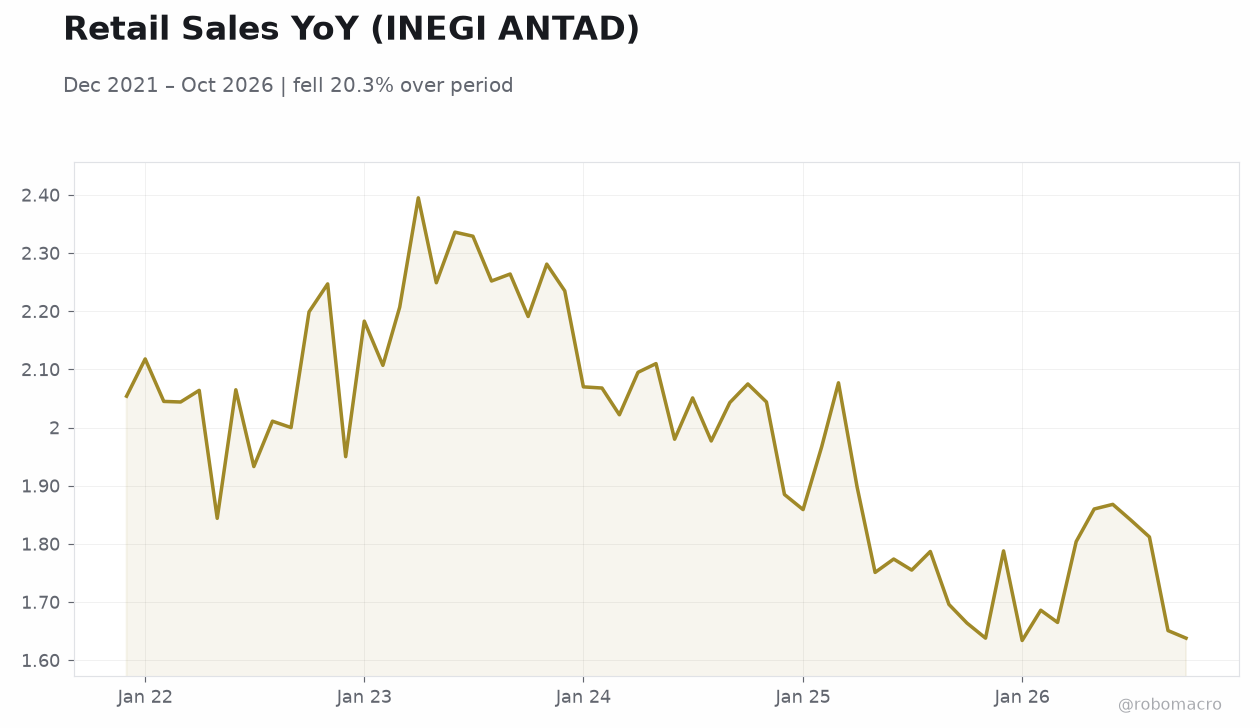 Retail Sales YoY (INEGI ANTAD) | Type: macro_line | Retail Sales YoY (INEGI ANTAD): 1.638 (2026-10-01) | Range: 1.634–2.395 | Trend(6pt): 2.054,2.107,2.095,1.774,1.812,1.638
Today's Economic Events
| Data | Prior | Cons | Time |
|---|---|---|---|
| No events available | |||
- USD/MXN jumps 1.19% to 19.68 as peso weakens amid broad EM selloff
- IPC Bolsa surges 2.99% to 71,372 despite currency pressure
- Mexico 10Y yield edges up 1bp to 9.25% as global rates rise
Yesterday's Recap
Mexican assets diverged sharply on November 25, with the IPC Bolsa rallying 2.99% to 71,372.25 even as the peso weakened 1.19% against the dollar to 19.68. The currency move tracked a broader emerging-market selloff triggered by hawkish signals from major central banks abroad. EUR/MXN rose 1.25% to 21.59, confirming peso weakness was broad-based rather than dollar-specific.
The Mexico 10Y government yield ticked up 1 basis point to 9.25%, a modest move that nonetheless extended the recent upward drift in local rates. Precious metals outperformed, with silver surging 4.38% to $41.81/oz and gold gaining 1.67% to $3,595/oz, reflecting safe-haven demand. WTI crude rose 0.96% to $84.48/bbl while Brent slipped 3.87% to $90.95/bbl, a notable divergence likely tied to contract-specific dynamics.
The Day Ahead
No scheduled Mexican economic releases are on the calendar for November 26, leaving markets to trade on external cues and positioning flows. Attention will center on US data and Federal Reserve communications, given the tight linkage between Mexican assets and US rate expectations. Peso traders will watch whether USD/MXN consolidates above the 19.60 level or extends toward 19.75.
The IPC Bolsa's outsized gain yesterday invites scrutiny of whether the rally has legs or was a one-off technical bounce. With US markets observing the Thanksgiving holiday, liquidity will be thinner, potentially amplifying moves in Mexican proxies.
Other Economic Notes
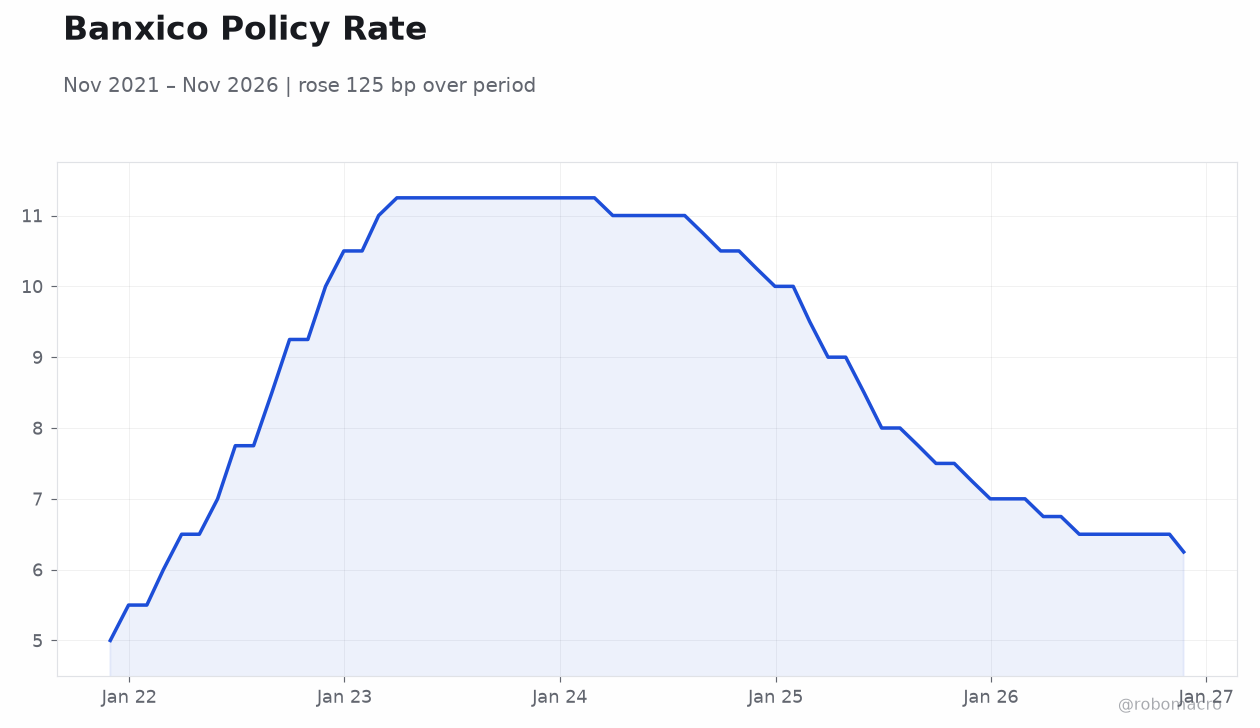
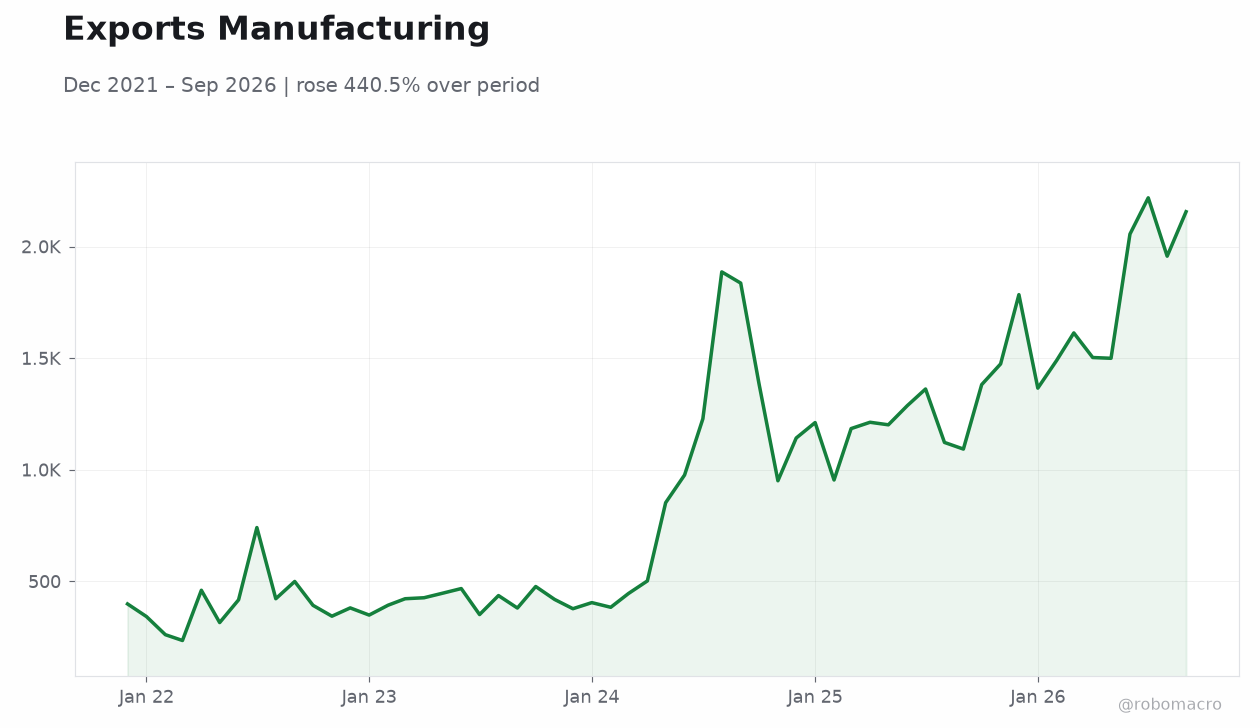
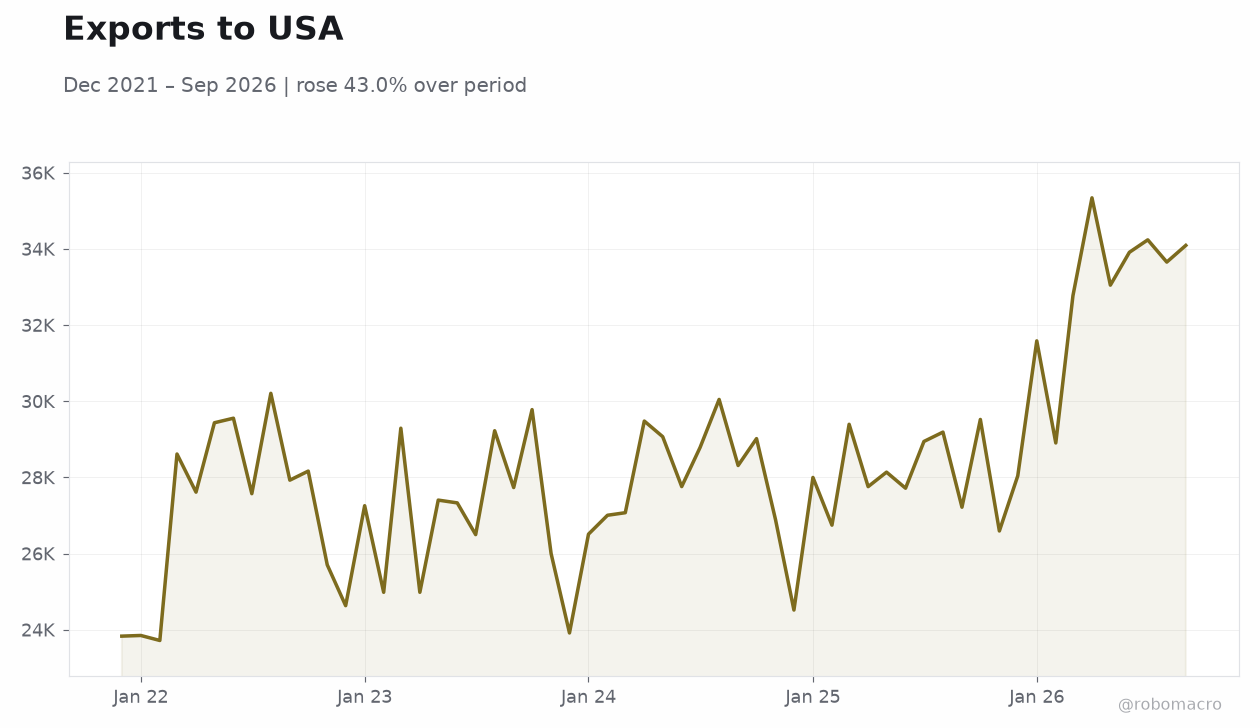
Mexico's inflation backdrop remains a key input for Banxico, with CPI running at 3.45% year-over-year as of September, comfortably within the central bank's target range. The disinflation trend has given Banxico room to ease policy, though global rate pressures complicate the outlook. Nearshoring flows continue to support Mexican manufacturing and investment, but the pace of relocation decisions may slow if US demand weakens.
Fiscal dynamics bear watching as the new administration balances social spending commitments against revenue constraints. The peso's sensitivity to risk sentiment remains elevated, making currency volatility a persistent theme for corporates and investors alike.