Mexico Macro Daily(Beta Mode)
Peso Slide Deepens as Carry Trade Unwinds
Market Snapshot
| Asset | Level | Change |
|---|---|---|
| IPC Bolsa | 70,353.18 | -1.43% |
| USD/MXN | 19.53 | -0.34% |
| EUR/MXN | 21.41 | -0.38% |
| WTI Crude | 85.26 | +1.89% |
| Silver | 44.35 | +10.72% |
| Gold | 3,700.40 | +4.66% |
| Brent Crude | 92.03 | -2.73% |
| Bitcoin | 61,600.79 | +1.83% |
| Mexico 10Y Govt Yield | 9.25% | 0 bp |
Prior Economic Events
| Data | Prior | Cons | Actual |
|---|---|---|---|
| No events available | |||
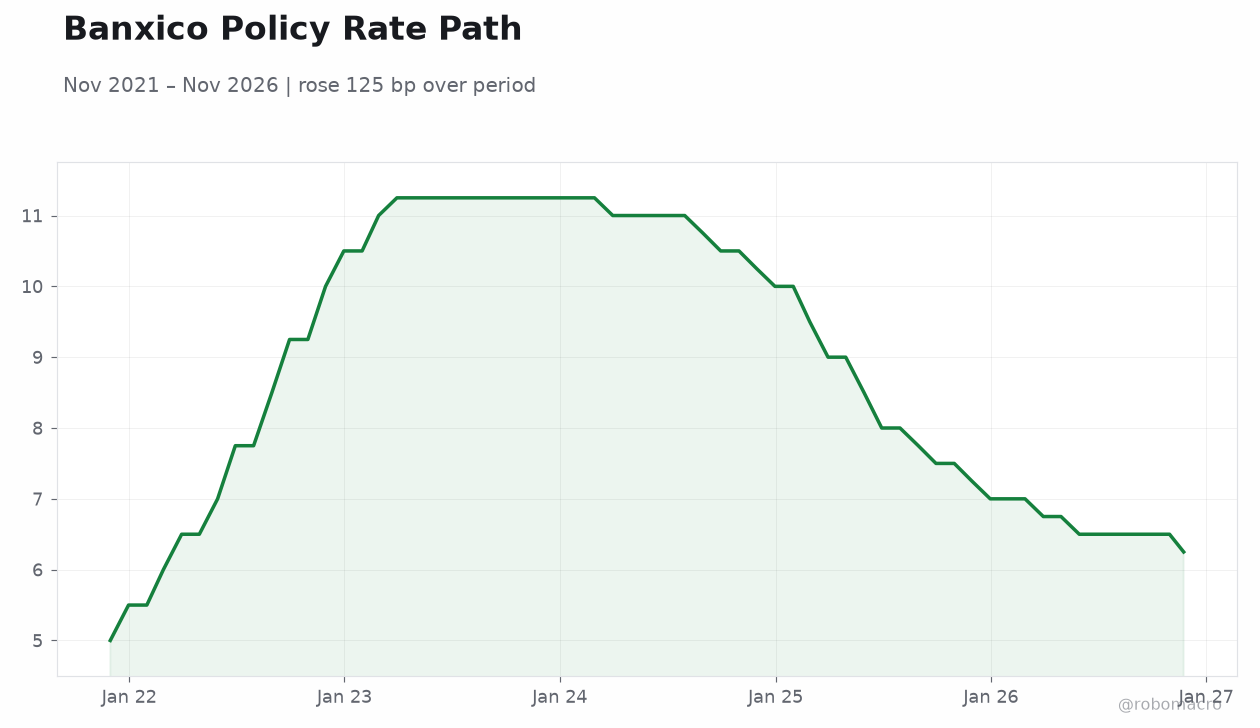
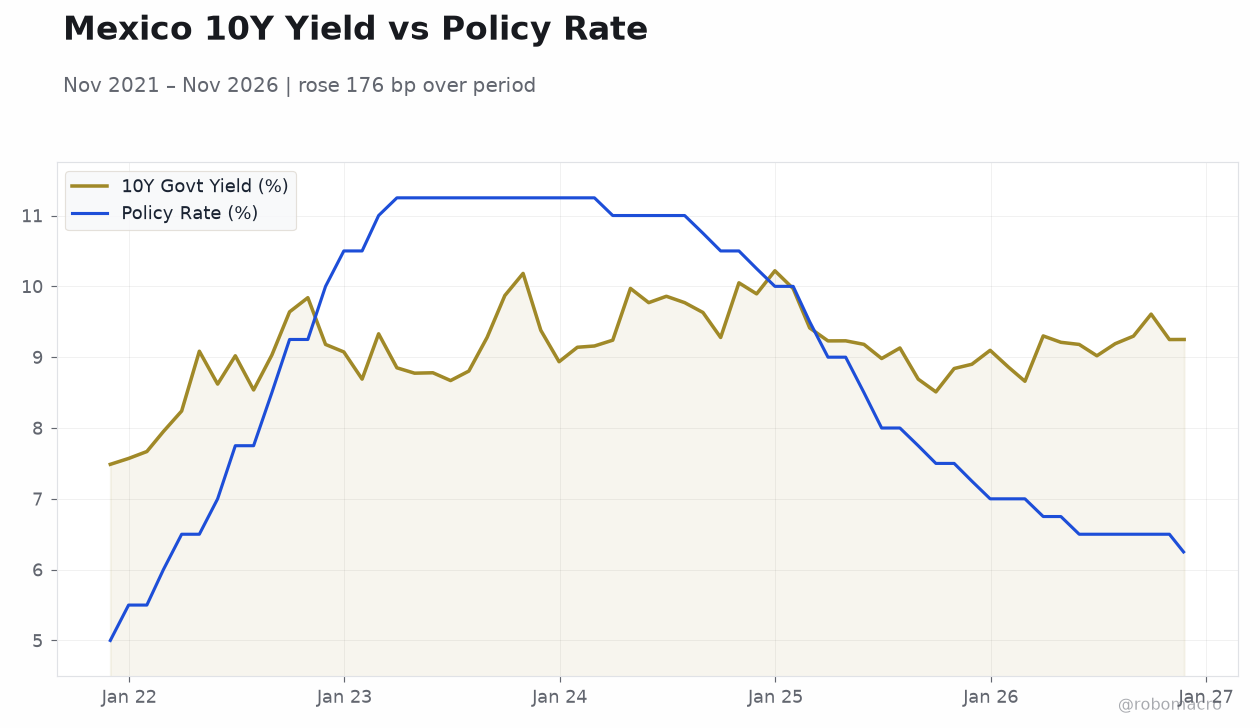 Mexico 10Y Yield vs Policy Rate | Type: macro_line | 10Y Govt Yield (%): 9.25 (2026-11-25) | Range: 7.487–10.22 | Trend(5pt): 7.487,9.33,9.77,8.69,9.25 | Policy Rate (%): 6.25 (2026-11-24) | Range: 5–11.25 | Trend(5pt): 5,11,11,7.75,6.25
Today's Economic Events
| Data | Prior | Cons | Time |
|---|---|---|---|
| No events available | |||
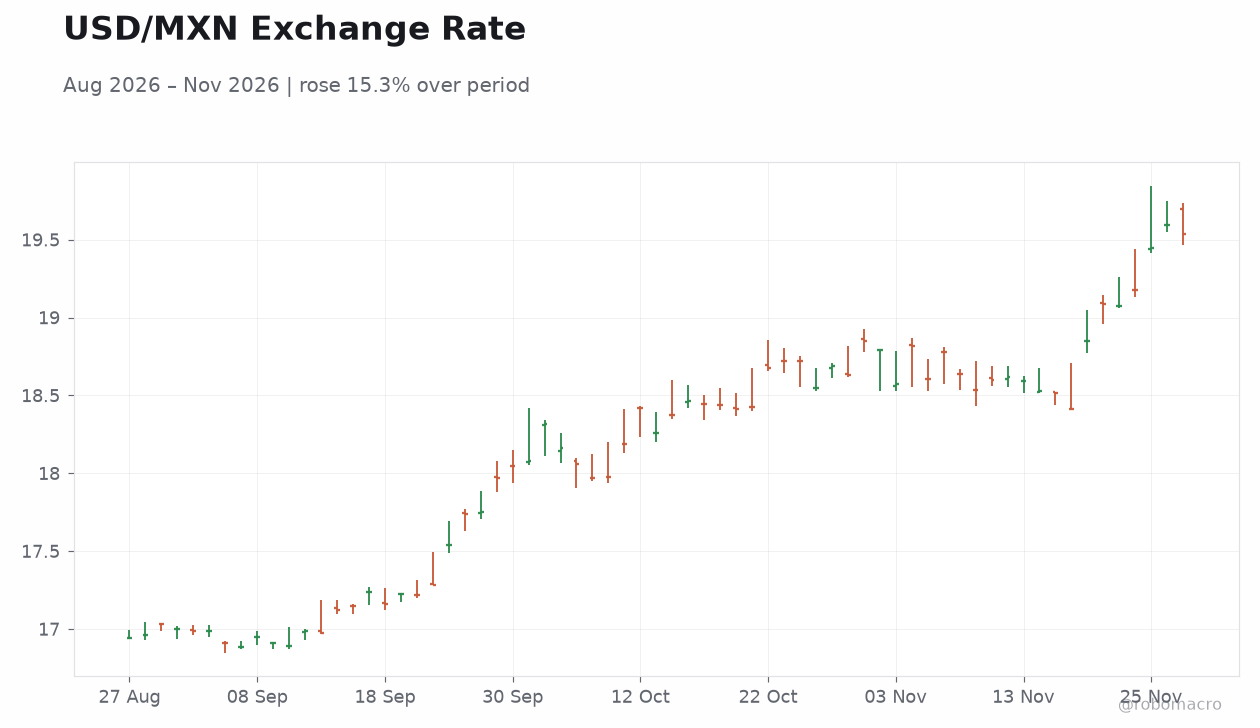
- USD/MXN at 19.53 (-0.34%) masks a brutal three-month slide of over 13%, the worst among 31 major currencies tracked by Bloomberg, as carry-trade appeal erodes.
- IPC Bolsa drops 1.43% to 70,353.18 while Mexico 10Y yield holds at 9.25% (+0 bp), signaling equity risk-off without bond stress.
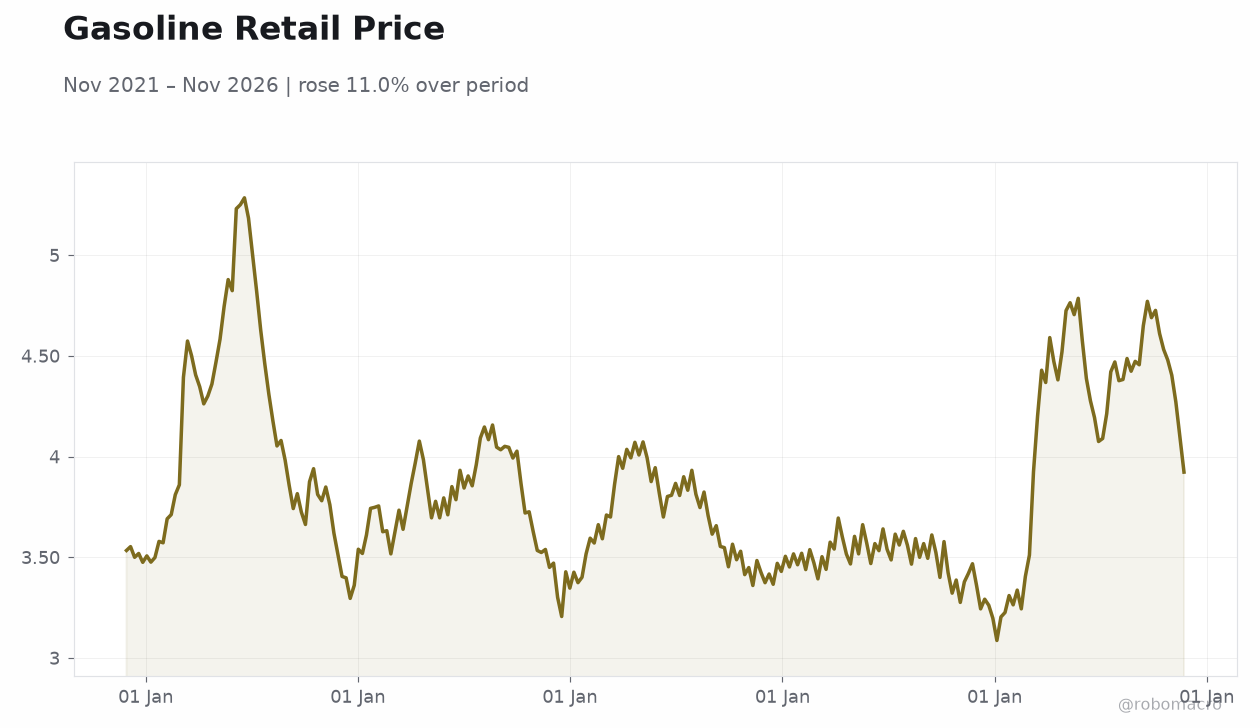
- Precious metals surge — silver +10.72%, gold +4.66% — while WTI gains 1.89% to $85.26, complicating Banxico's inflation outlook after the November 5 cut to 6.25%.
Yesterday's Recap
Mexican markets delivered a split session Thursday, with the IPC Bolsa falling 1.43% to 70,353.18 as equity investors trimmed exposure amid persistent peso weakness. The currency actually firmed modestly on the day, with USD/MXN easing 0.34% to 19.53, though that gain pales against a three-month depreciation exceeding 13% — the steepest decline among 31 major currencies tracked by Bloomberg, per InfoMoney. EUR/MXN slipped 0.38% to 21.41.
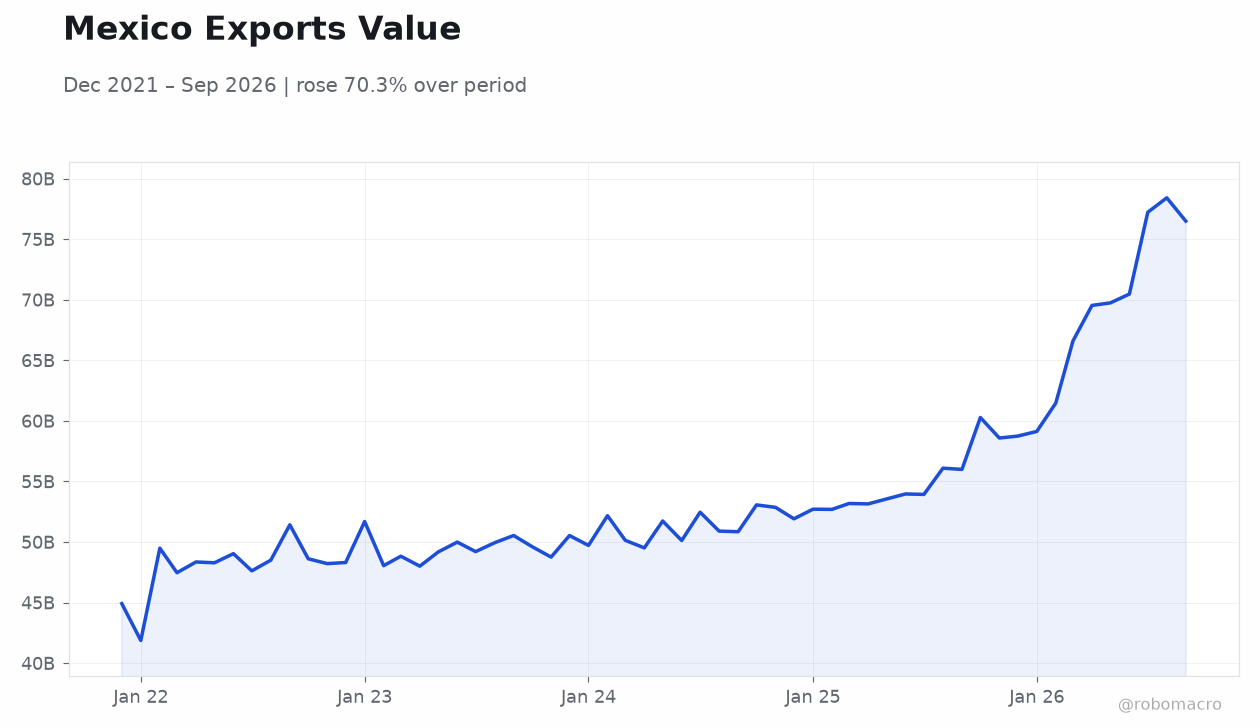
The Mexico 10Y government yield was unchanged at 9.25% (as of November 25), suggesting fixed income is not pricing acute sovereign stress despite the equity selloff. Commodities told a different story: silver spiked 10.72% to $44.35 and gold jumped 4.66% to $3,700.40, classic hedges against currency debasement and inflation risk. WTI rose 1.89% to $85.26, while Brent slipped 2.73% to $92.03 — a divergence worth monitoring for Mexican export revenue assumptions.
No Mexican data releases printed Thursday, leaving markets to trade on positioning and external cues.
The Day Ahead
The Mexican calendar is empty Friday, November 27, with no scheduled data releases, so flows and external sentiment will drive price action into the weekend. Traders will watch USD/MXN for whether the 19.50 handle holds or gives way toward 20.00, a psychological level that would sharpen carry-trade unwind narratives. The IPC Bolsa's ability to stabilize after Thursday's 1.43% drop will be the equity tell.
With US markets digesting Black Friday retail data and tariff headlines, Mexican assets remain hostage to cross-border risk appetite. Positioning ahead of Banxico's December 17 decision will begin in earnest next week, and any peso weakness will revive debate over whether the easing cycle can continue.
Other Economic Notes
The peso's status as Latin America's worst-performing major currency over three months reflects a structural unwind of the carry trade that had long made Mexico a favorite. Higher-for-longer US rates and tariff uncertainty under USMCA review are compressing the rate differential that once lured yield hunters. ↓ p.2