Nordics Macro Daily(Beta Mode)
Swedish Inflation Eases, Oil Plunges
Market Snapshot
| Asset | Level | Change |
|---|---|---|
| OMX Stockholm 30 | 2,965.69 | -1.35% |
| Oslo Bors | nan | +nan% |
| OMX Copenhagen 25 | 1,709.95 | +1.72% |
| OMX Helsinki 25 | 5,980.64 | +0.46% |
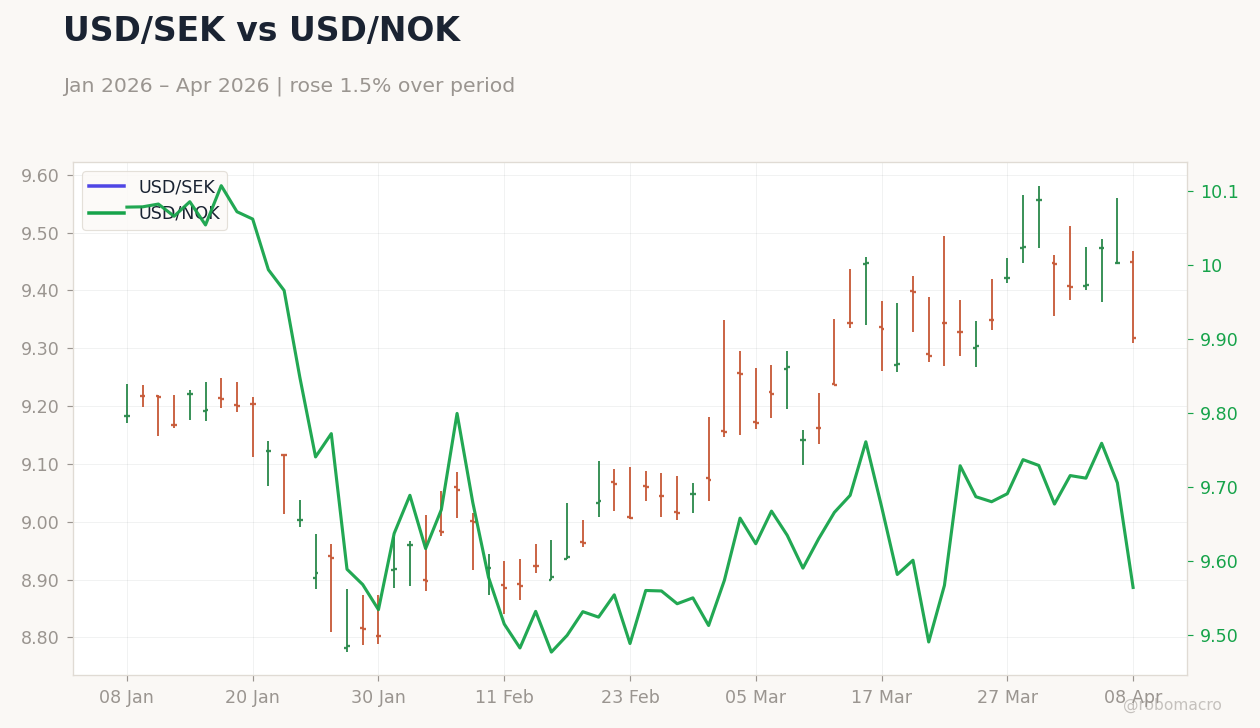
| USD/SEK | 9.45 | -0.28% |
| USD/NOK | 9.71 | -0.55% |
| EUR/SEK | 10.88 | -0.21% |
| EUR/NOK | 11.17 | -0.29% |
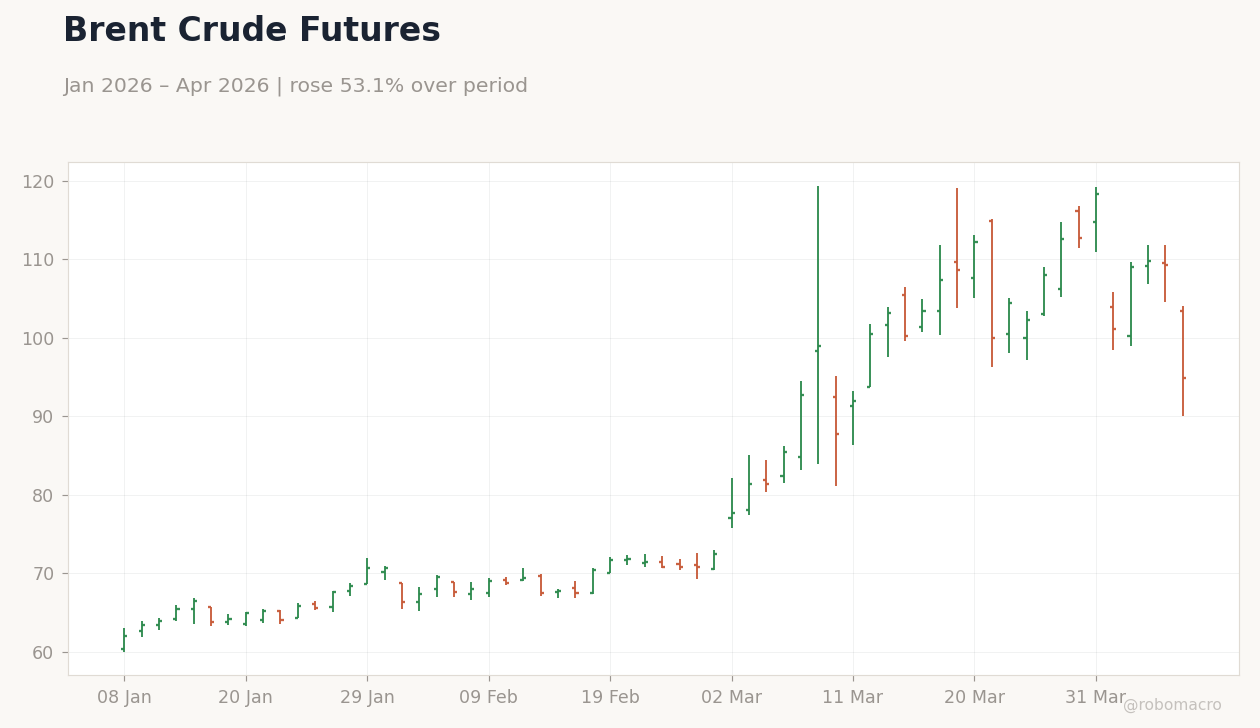
| Brent Crude | 95.17 | -12.90% |
| Gold | 4,828.40 | +3.68% |
| Bitcoin | 71,550.98 | +3.91% |
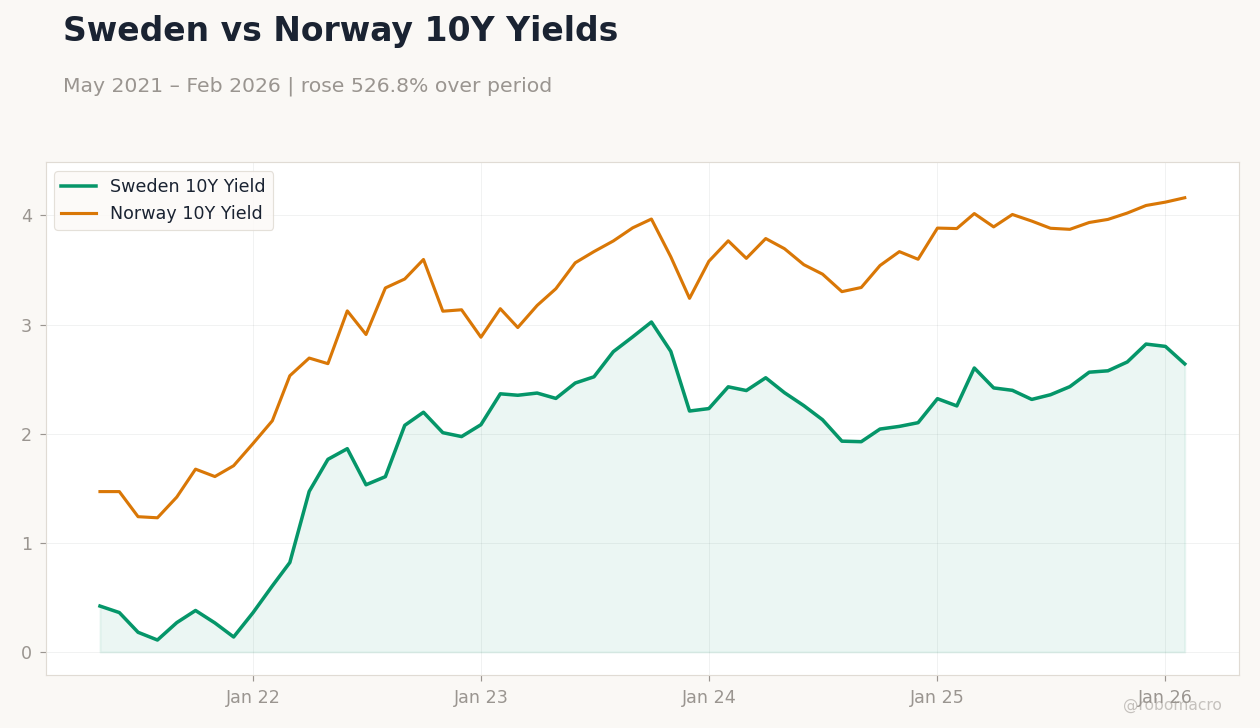
| Sweden 10Y Govt Yield | 2.64% | -5.73% |
| Norway 10Y Govt Yield | 4.16% | +0.98% |
Prior Economic Events
| Data | Prior | Cons | Actual |
|---|---|---|---|
| No events available | |||
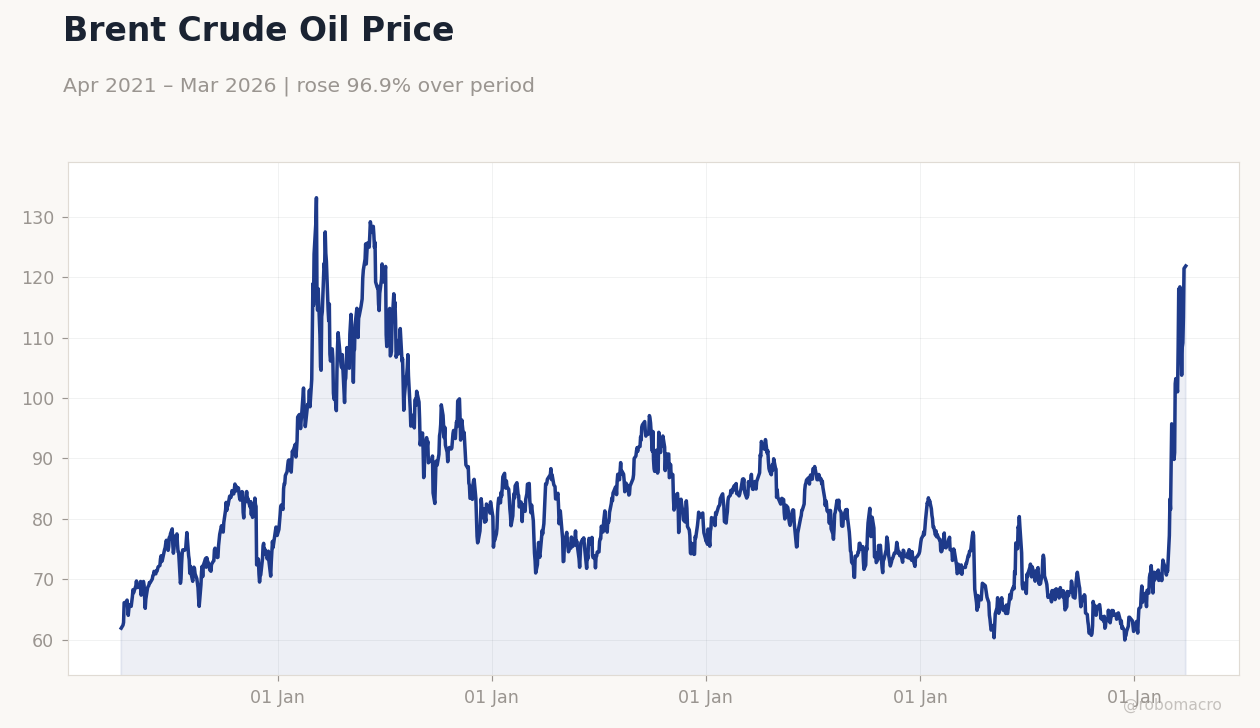 Brent Crude Oil Price | Type: macro_line | Brent Crude Price: 121.9 (2026-03-30) | Range: 59.93–133.2 | Trend(6pt): 61.89,108.5,89.83,74.58,121.5,121.9
Today's Economic Events
| Data | Prior | Cons | Time |
|---|---|---|---|
| No events available | |||
- Sweden's inflation unexpectedly softened, bolstering Riksbank's case for pausing rate hikes amid resilient growth supporting the krona.
- Brent crude tumbled 12.9%, pressuring Norway's oil-reliant economy and krone, with mixed Nordic equity performances.
- Global oil shock from Iran conflict heightens inflation risks, influencing Nordic central bank outlooks despite varying domestic trends.
Yesterday's Recap
Sweden's core inflation unexpectedly slowed to its weakest pace in over four years, strengthening expectations for the Riksbank to hold steady and delay hikes, as highlighted in Bloomberg and Financial Post reports. The OMX Stockholm 30 dropped 1.35% to 2,965.69, reflecting market caution from the global oil decline, while the Swedish 10Y yield fell 5.73% to 2.64%, indicating reduced bond pressures. In Norway, Oslo Bors data was unavailable, but Brent crude's 12.9% plunge to 95.17 weighed on energy sectors, leading to USD/NOK declining 0.55% to 9.71 as the krone softened.
Denmark's OMX Copenhagen 25 climbed 1.72% to 1,709.95, supported by export gains despite the oil shock, while Finland's OMX Helsinki 25 rose 0.46% to 5,980.64 amid eurozone stability. Currencies were mixed: USD/SEK decreased 0.28% to 9.45 and EUR/SEK slipped 0.21% to 10.88, underscoring Sweden's resilience. Sweden's service sector growth slowed with rising inflationary pressures, per Bitget, possibly challenging the krona's outlook.
Nordic markets overall managed the oil drop with minimal broader disruption, though Norway's oil revenues faced strains.
The Day Ahead
No major data releases are scheduled today per the FinanceFlow API calendar, shifting focus to reactions from yesterday's oil volatility and its effects on Nordic trade. Traders may watch for any Riksbank or Norges Bank updates on inflation paths, given Sweden's softer figures. Denmark emphasizes the EUR/DKK peg amid eurozone calm, while Finland tracks ECB cues.
Global developments, like OPEC responses to the oil shock, could affect Nordic assets indirectly. Trading may remain subdued absent new Iran conflict news, allowing consolidation post-recent shifts.
Other Economic Notes
Sweden's export resilience protects the krona from sharp falls, per Societe Generale, despite service sector deceleration. Norway's oil dependence heightens exposure to Brent swings, with the recent drop likely curbing revenues and pressuring the krone. Denmark and Finland, linked to eurozone, encounter indirect oil effects via trade and inflation, highlighting policy differences in the region.