Nordics Macro Daily(Beta Mode)
Nordic Equities Advance as Krona Firms
Market Snapshot
| Asset | Level | Change |
|---|---|---|
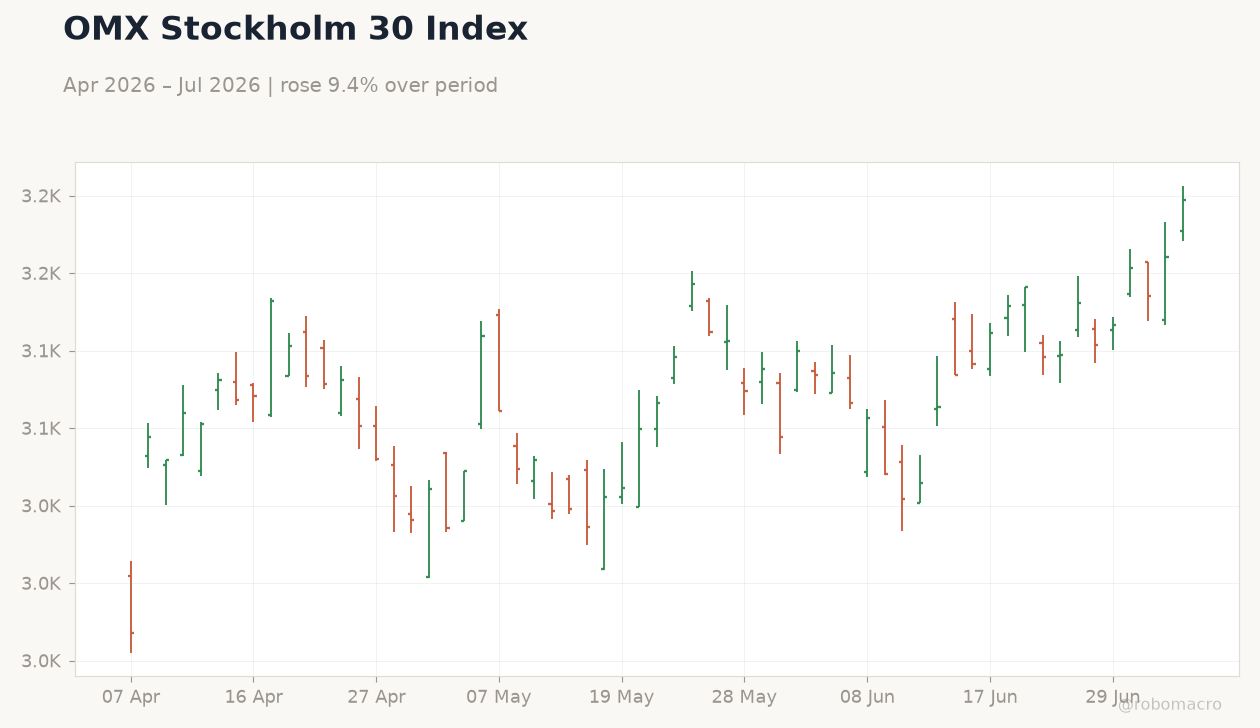
| OMX Stockholm 30 | 3,247.03 | +1.14% |
| Oslo Bors | 1,943.93 | +0.71% |
| OMX Copenhagen 25 | 1,899.12 | +0.17% |
| OMX Helsinki 25 | 6,268.65 | +1.57% |
| USD/SEK | 9.66 | -0.28% |
| USD/NOK | 9.84 | -0.17% |
| EUR/SEK | 11.03 | -0.30% |
| EUR/NOK | 11.23 | -0.19% |
| Brent Crude | 72.03 | +0.32% |
| Gold | 4,167.10 | +1.32% |
| Bitcoin | 62,924.13 | -0.98% |
| Sweden 10Y Govt Yield | 2.74% | -1.45% |
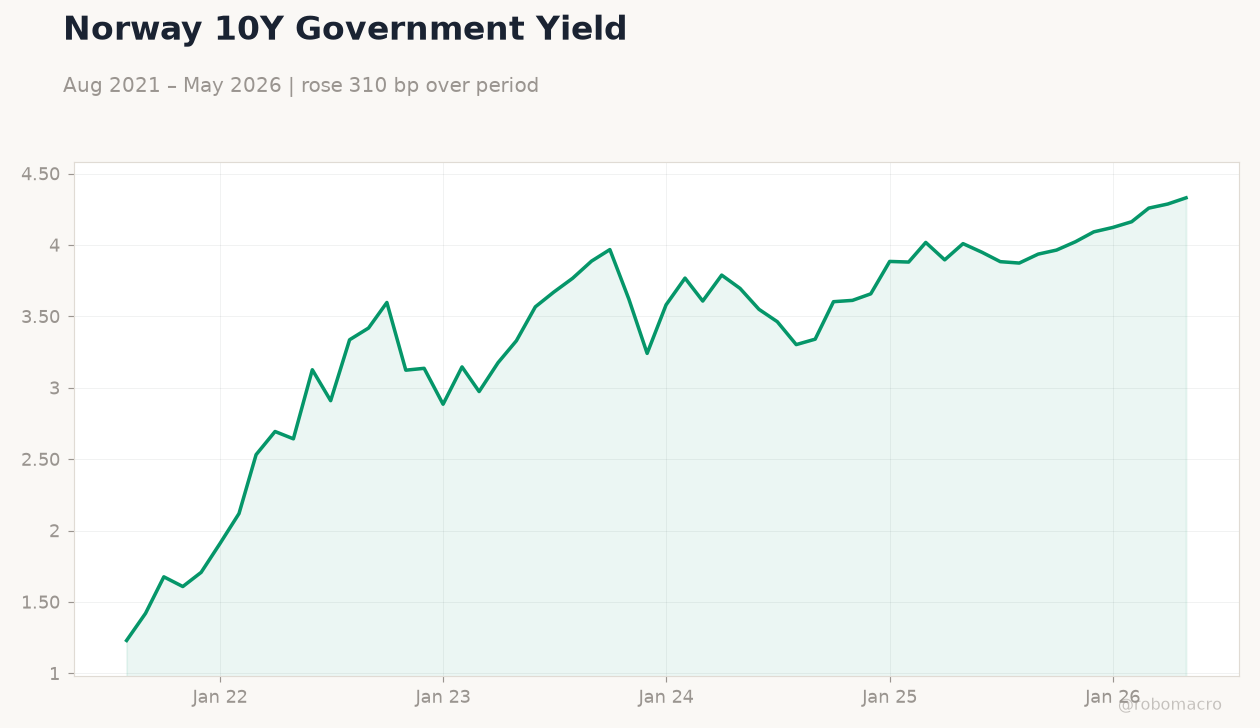
| Norway 10Y Govt Yield | 4.33% | +1.01% |
Prior Economic Events
| Data | Prior | Cons | Actual |
|---|---|---|---|
| No events available | |||
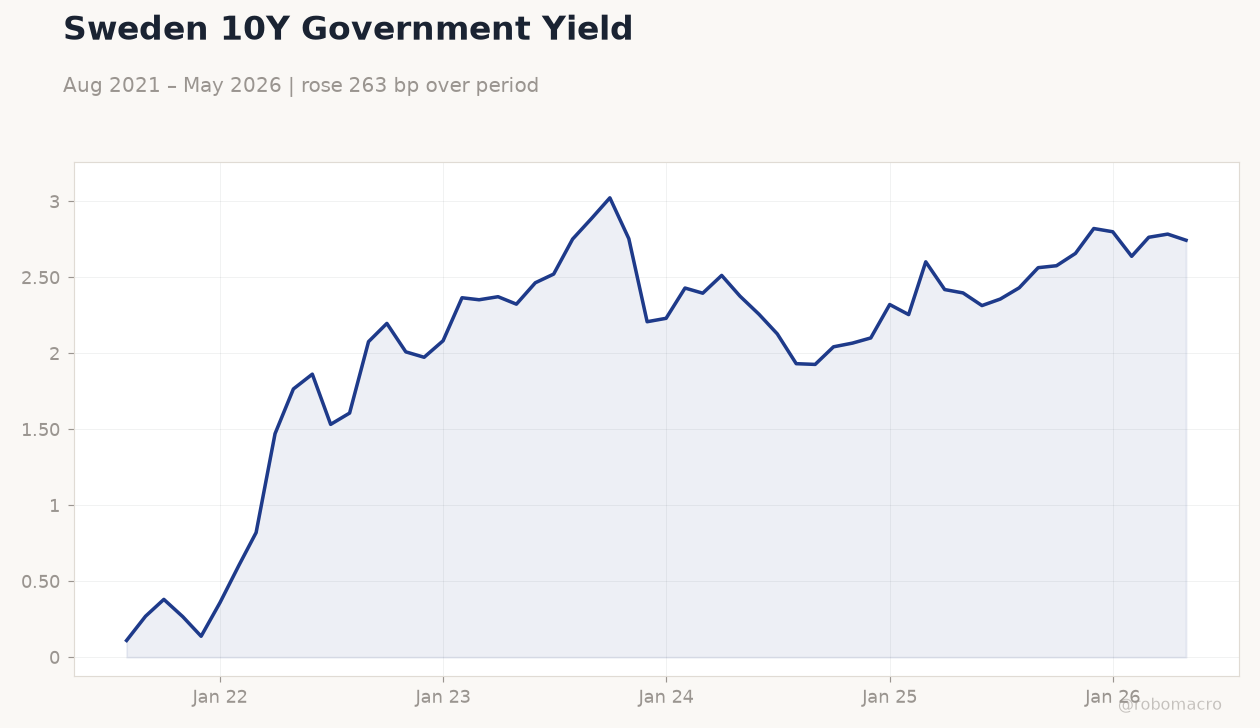 Sweden 10Y Government Yield | Type: macro_line | Percent: 2.745 (2026-05-01) | Range: 0.1101–3.024 | Trend(6pt): 0.1101,2.197,2.208,2.255,2.785,2.745
Today's Economic Events
| Data | Prior | Cons | Time |
|---|---|---|---|
| No events available | |||
- OMX Helsinki 25 led gains with a 1.57% rise while Stockholm and Oslo posted solid advances
- SEK strengthened 0.28% versus USD and NOK gained 0.17% as Nordic yields diverged
- Sweden 10Y yield fell 1.45% to 2.74% while Norway 10Y rose 1.01% to 4.33%
Yesterday's Recap
Nordic equity markets closed higher on July 5 with broad-based gains. OMX Stockholm 30 rose 1.14% to 3,247.03 while Oslo Bors added 0.71% to 1,943.93. OMX Copenhagen 25 edged up 0.17% and OMX Helsinki 25 climbed 1.57% to 6,268.65.
The Swedish krona appreciated against both the dollar and euro, with USD/SEK falling 0.28% to 9.66 and EUR/SEK declining 0.30% to 11.03. The Norwegian krone also firmed modestly. Sweden’s 10-year government yield dropped sharply while Norway’s yield increased.
Brent crude edged 0.32% higher to 72.03, supporting Norwegian energy-related assets. No economic events were recorded in the region.
The Day Ahead
No major Nordic data releases are scheduled for July 6. Markets will monitor ongoing commentary from Swedish officials on labor market trends and any follow-up from the Chinese foreign minister’s visit to Stockholm. Norwegian participants may react to global oil price movements given Brent’s recent stability near 72.
Equity flows could remain influenced by eurozone developments affecting Finland and Denmark. Traders will watch EUR/NOK and EUR/SEK for any shifts tied to ECB signals.
Other Economic Notes
Sweden’s white-collar job outlook improved with fewer layoffs reported and faster re-employment for displaced workers. Housing construction in Norway continued to contract, extending pressure on the sector. Norway’s oil production remains supportive of fiscal balances and the krone.
Danish and Finnish manufacturing exports showed resilience amid steady euro-area demand.
Global Macro News
The Federal Reserve’s review of AI impacts on productivity drew attention from Nordic central banks assessing similar effects. Brent prices near 72 provided modest support to Norway’s external balance. Gold rose 1.32% to 4,167.10, reflecting safe-haven demand that can influence Nordic FX volatility.
Broader euro-area unemployment at 6.7% continues to shape ECB policy expectations relevant for Denmark and Finland. <i>↓ p.2</i>