Nordics Macro Daily(Beta Mode)
Nordic Equities Diverge as SEK Strengthens
Market Snapshot
| Asset | Level | Change |
|---|---|---|
| OMX Stockholm 30 | 3,186.40 | +1.33% |
| Oslo Bors | 1,940.60 | -0.83% |
| OMX Copenhagen 25 | 1,880.08 | +0.76% |
| OMX Helsinki 25 | 6,166.96 | +1.84% |
| USD/SEK | 9.64 | -0.55% |
| USD/NOK | 9.72 | -0.40% |
| EUR/SEK | 11.03 | -0.35% |
| EUR/NOK | 11.13 | -0.18% |
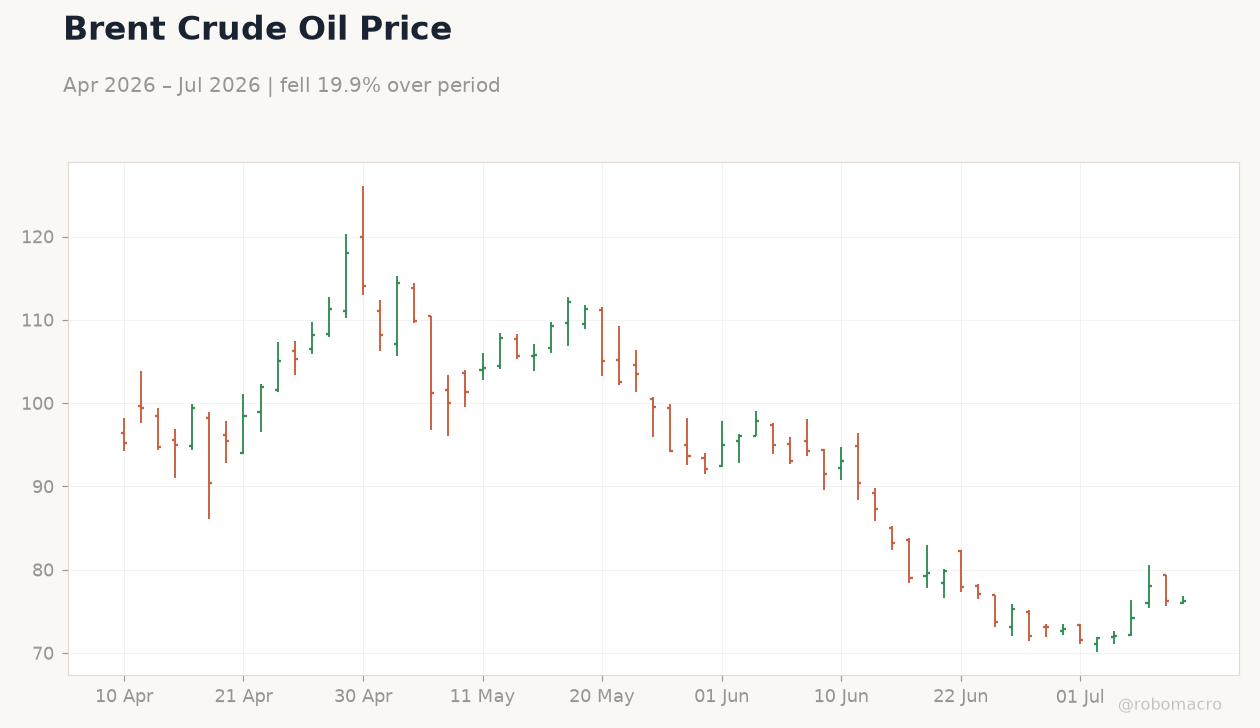
| Brent Crude | 76.21 | -0.12% |
| Gold | 4,126.00 | -0.11% |
| Bitcoin | 63,925.12 | +2.68% |
| Sweden 10Y Govt Yield | 2.74% | -1.45% |
| Norway 10Y Govt Yield | 4.33% | +1.01% |
Prior Economic Events
| Data | Prior | Cons | Actual |
|---|---|---|---|
| No events available | |||
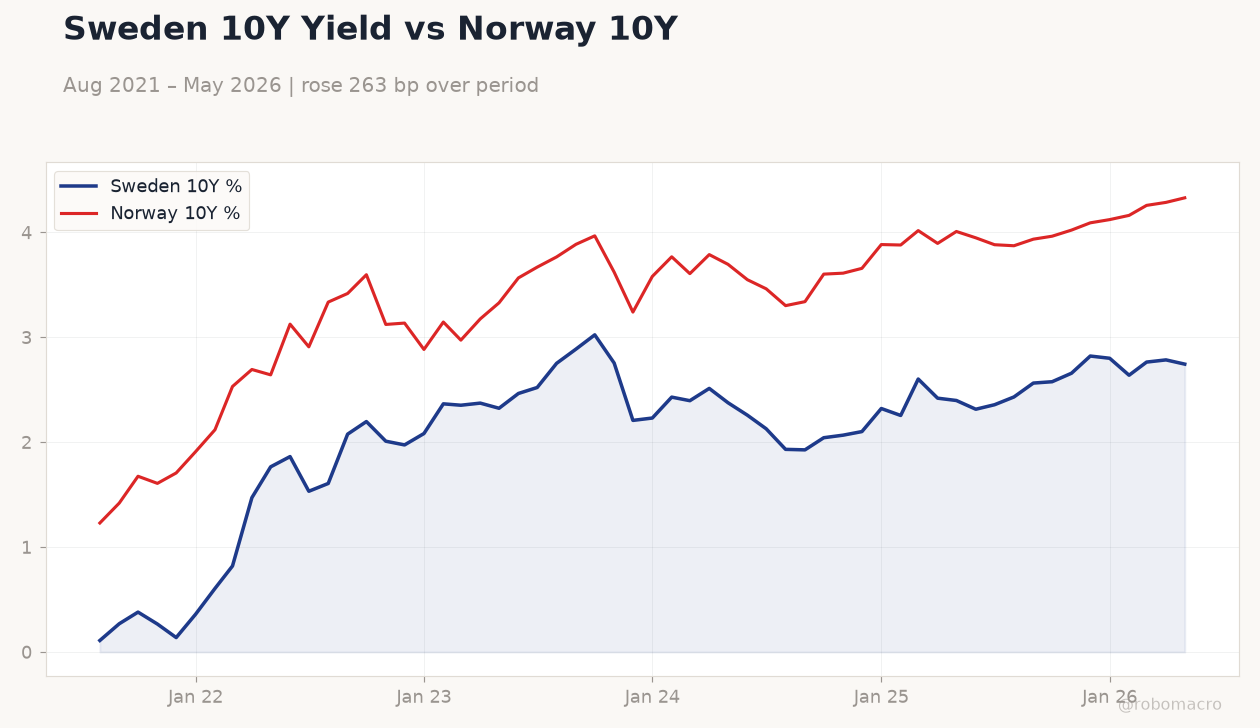 Sweden 10Y Yield vs Norway 10Y | Type: macro_line | Sweden 10Y %: 2.745 (2026-05-01) | Range: 0.1101–3.024 | Trend(6pt): 0.1101,2.197,2.208,2.255,2.785,2.745 | Norway 10Y %: 4.33 (2026-05-01) | Range: 1.23–4.33 | Trend(6pt): 1.23,3.597,3.241,3.88,4.286,4.33
Today's Economic Events
| Data | Prior | Cons | Time |
|---|---|---|---|
| No events available | |||
- OMX Stockholm rose 1.33% while Oslo Bors fell 0.83% on mixed regional flows.
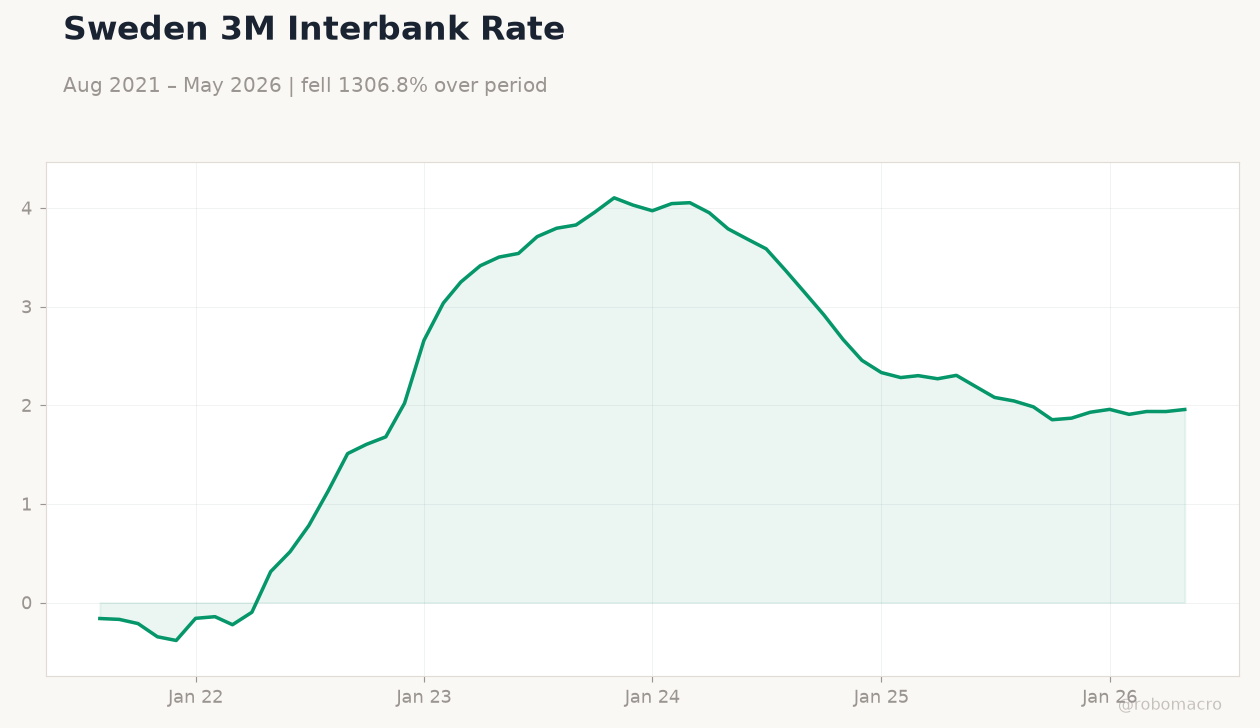
- SEK gained 0.55% versus USD, contrasting with stable Brent crude at $76.21.
- Sweden 10Y yield dropped 1.45% to 2.74% as Norway 10Y rose 1.01%.
Yesterday's Recap
Swedish equities advanced solidly as the krona strengthened against both the dollar and euro, reflecting Societe Generale's noted paradox of resilient domestic growth alongside subdued 0.70% CPI. Norwegian shares declined despite Brent prices near $76, underscoring limited immediate support for the krone from energy markets. Denmark's OMX Copenhagen posted modest gains of 0.76%, while Finnish equities outperformed with a 1.84% advance tied to broader euro-area sentiment.
Currency moves showed USD/SEK easing to 9.64 and USD/NOK to 9.72, consistent with limited Norges Bank portfolio activity reported in filings. Yields diverged sharply, with Swedish government debt attracting inflows amid low inflation prints while Norwegian yields climbed on fiscal considerations linked to oil revenue stability. No major data releases occurred across the bloc, leaving market pricing driven by external flows and positioning.
The Day Ahead
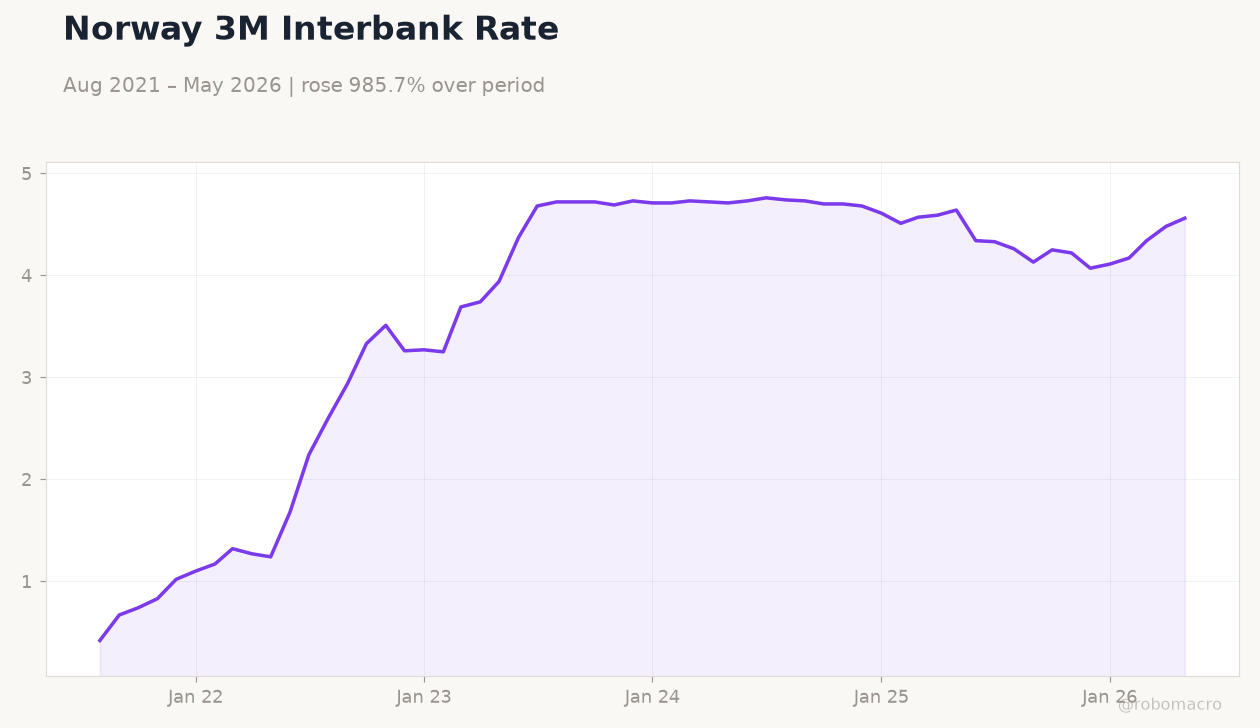
Markets face a quiet calendar with no scheduled releases across Sweden, Norway, Denmark or Finland. Attention will center on any Riksbank or Norges Bank commentary that could clarify policy paths given Sweden's low inflation and Norway's 3.10% CPI. FX traders are likely to monitor EUR/SEK and EUR/NOK for signs of further krona or krone consolidation.
Equity flows may respond to global risk sentiment, particularly Brent crude stability near current levels. Housing and trade data watchers will await any early signals ahead of next week's potential updates.
Other Economic Notes
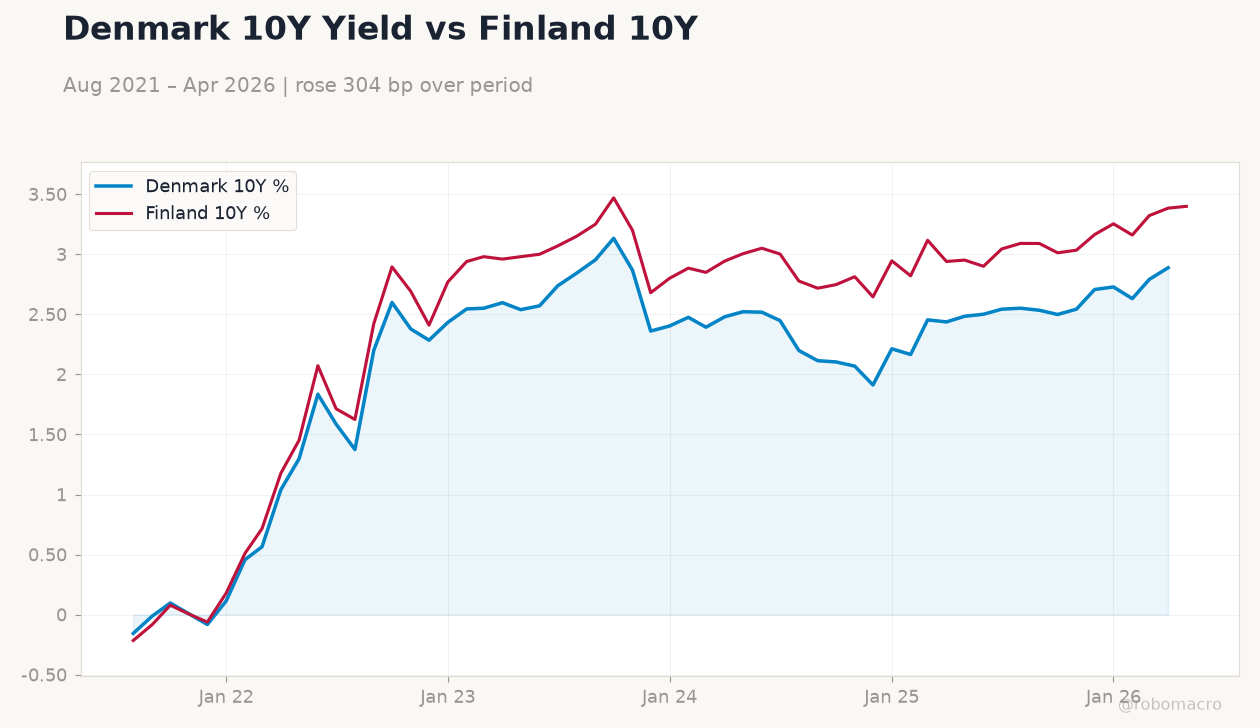
Sweden's export-oriented manufacturing sector continues to benefit from krona levels that support competitiveness despite the inflation paradox flagged by analysts. Norway's oil-linked fiscal outlook remains steady at Brent prices around $76, limiting immediate pressure on the krone. Denmark maintains its EUR/DKK peg without intervention signals, while Finland's eurozone membership keeps its rates aligned with ECB settings.
Regional equity performance highlights differentiation between energy-exposed Norway and the more diversified Swedish and Finnish markets.
Global Macro News
Lower oil prices provided modest relief to import-dependent economies and supported select currency moves observed in the Nordics. <i>↓ p.2</i>