Nordics Macro Daily(Beta Mode)
Nordics Mixed as Brent Climbs, SEK Weakens
Market Snapshot
| Asset | Level | Change |
|---|---|---|
| OMX Stockholm 30 | 3,167.16 | -0.33% |
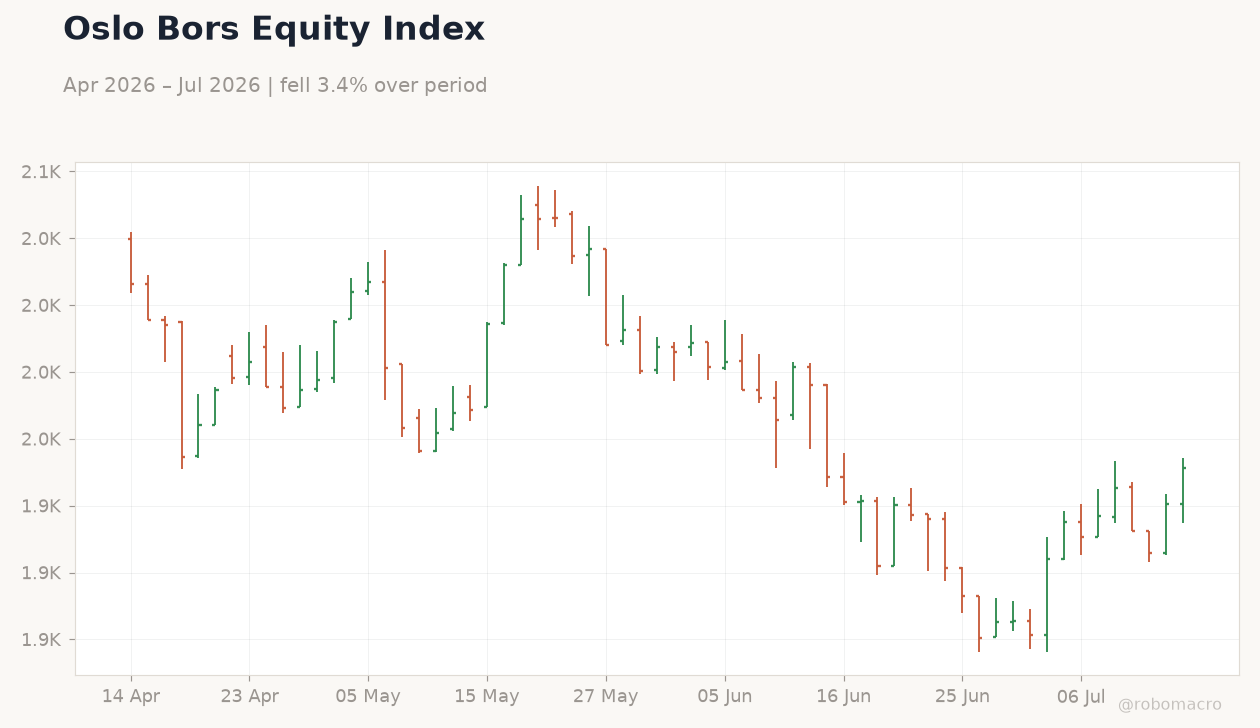
| Oslo Bors | 1,964.13 | +0.69% |
| OMX Copenhagen 25 | 1,892.27 | +0.20% |
| OMX Helsinki 25 | 6,192.48 | +0.14% |
| USD/SEK | 9.71 | +0.37% |
| USD/NOK | 9.68 | -0.96% |
| EUR/SEK | 11.03 | -0.22% |
| EUR/NOK | 11.13 | -0.22% |
| Brent Crude | 85.38 | +0.77% |
| Gold | 4,035.70 | -0.63% |
| Bitcoin | 64,828.77 | +4.16% |
| Sweden 10Y Govt Yield | 2.74% | -1.45% |
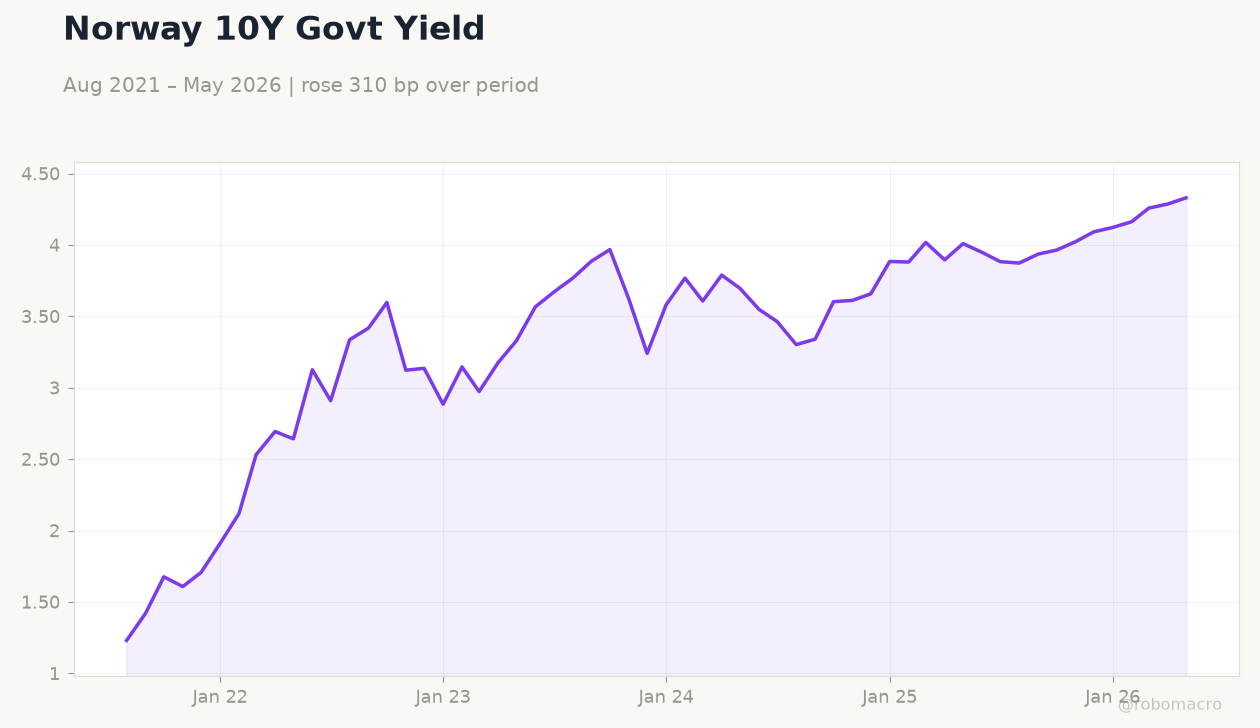
| Norway 10Y Govt Yield | 4.33% | +1.01% |
Prior Economic Events
| Data | Prior | Cons | Actual |
|---|---|---|---|
| No events available | |||
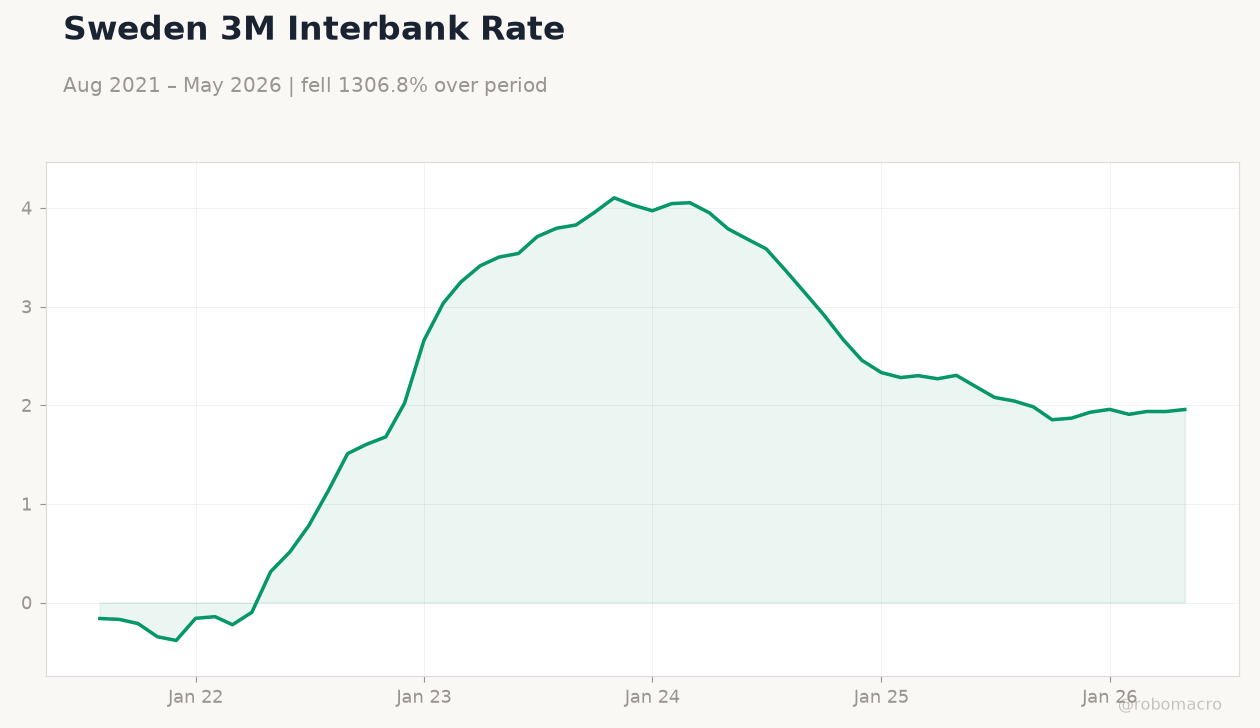
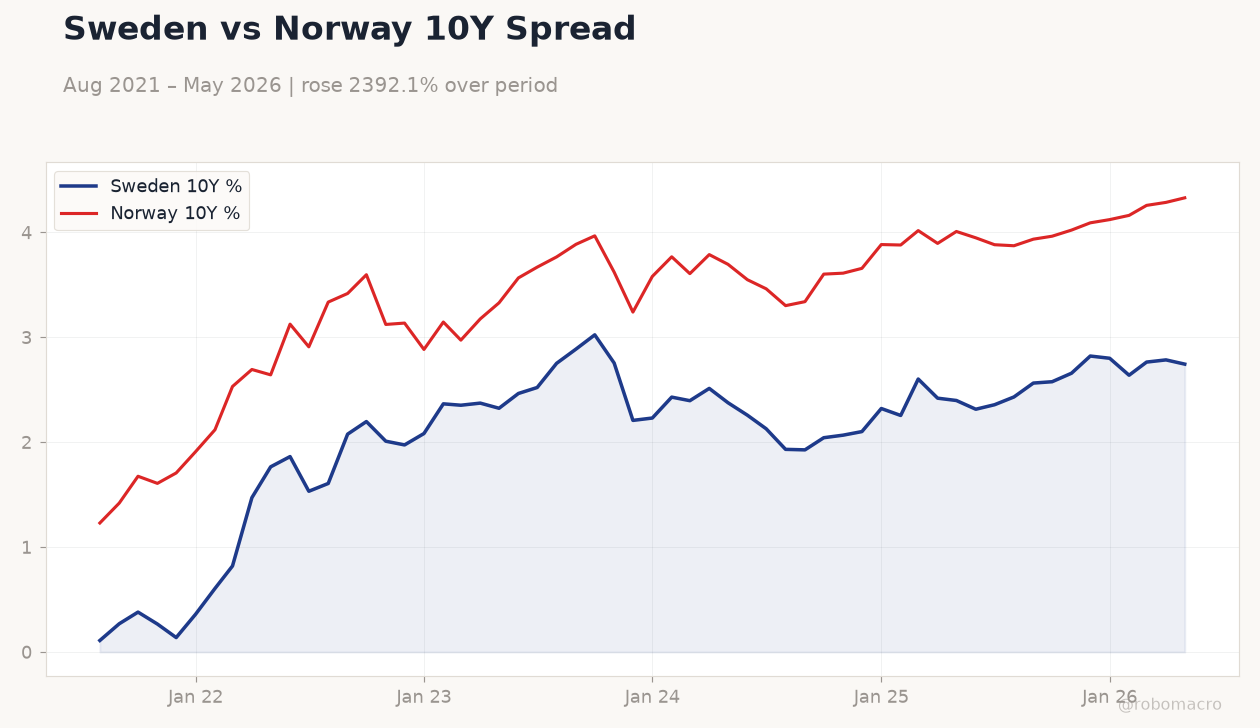 Sweden vs Norway 10Y Spread | Type: macro_line | Sweden 10Y %: 2.745 (2026-05-01) | Range: 0.1101–3.024 | Trend(6pt): 0.1101,2.197,2.208,2.255,2.785,2.745 | Norway 10Y %: 4.33 (2026-05-01) | Range: 1.23–4.33 | Trend(6pt): 1.23,3.597,3.241,3.88,4.286,4.33
Today's Economic Events
| Data | Prior | Cons | Time |
|---|---|---|---|
| No events available | |||
- OMX Stockholm 30 fell 0.33% while Oslo Bors gained 0.69% amid firmer energy names and Brent crude up 0.77% to 85.38.
- USD/SEK rose 0.37% to 9.71 as Sweden 10Y yields declined 1.45% to 2.74%; Norway 10Y yields increased 1.01% to 4.33%.
- Riksbank conducted certificate sales and Norges Bank filed disclosures; no major Nordic data releases occurred on 14 July.
Yesterday's Recap
Nordic equity markets closed mixed on 14 July with limited domestic drivers. The OMX Stockholm 30 declined 0.33% to 3,167.16 while the Oslo Bors advanced 0.69% to 1,964.13, supported by energy exposure as Brent crude climbed 0.77%. OMX Copenhagen 25 rose 0.20% and OMX Helsinki 25 added 0.14%.
In FX, USD/SEK increased 0.37% to 9.71 and USD/NOK fell 0.96% to 9.68, with EUR/SEK and EUR/NOK both easing 0.22%. Sweden 10Y government yields dropped 1.45% to 2.74% while Norway 10Y yields rose 1.01% to 4.33%. Riksbank completed a certificate sale and published sale conditions; Norges Bank submitted a Form 8.3 disclosure on Intertek.
Storebrand reported 1.8 billion kroner in second-quarter earnings. No CPI, GDP or labour-market prints were released in any Nordic country.
The Day Ahead
No scheduled economic releases or central-bank events appear on the Nordic calendar for 15-16 July. Markets will therefore focus on external drivers including any follow-through from the Federal Reserve Chair’s testimony and China’s second-quarter GDP print. Oil-price movements will remain central for Norway’s fiscal outlook and NOK valuation.
Equity and fixed-income desks are expected to monitor positioning ahead of the weekend. Danish and Finnish markets will track euro-area sentiment given the currency peg and ECB membership.
Other Economic Notes
Sweden’s verified June CPI at 0.70% y/y and Norway’s 2.70% y/y indicate contained price pressures that limit near-term policy urgency. Norway’s oil revenue trajectory benefits from Brent above 85, supporting the krone and reducing depreciation pressure on the fiscal balance. Swedish housing-market data remain subdued despite earlier tentative signs of stabilisation.
Export-oriented manufacturing sectors in Sweden and Denmark continue to face soft external demand. Finland’s euro-area membership transmits ECB policy directly, keeping domestic rates aligned with the broader currency bloc.
Global Macro News
China’s second-quarter GDP growth of 4.3% marked the weakest pace since 2022, weighing on export prospects for Swedish and Danish manufacturers. <i>↓ p.2</i>