Nordics Macro Daily(Beta Mode)
Nordic Stocks Mixed as Krona Weakens, Oil Climbs
Market Snapshot
| Asset | Level | Change |
|---|---|---|
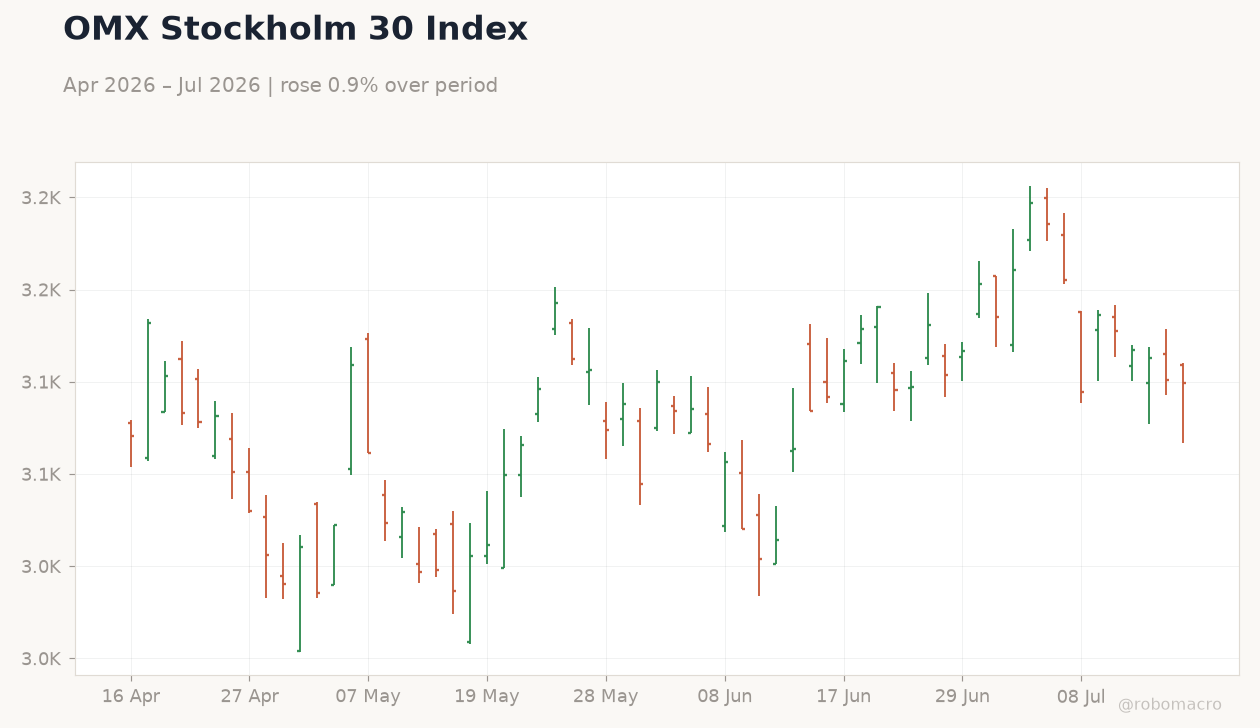
| OMX Stockholm 30 | 3,149.52 | -0.04% |
| Oslo Bors | 1,941.31 | -1.08% |
| OMX Copenhagen 25 | 1,912.84 | +0.36% |
| OMX Helsinki 25 | 6,115.94 | -0.18% |
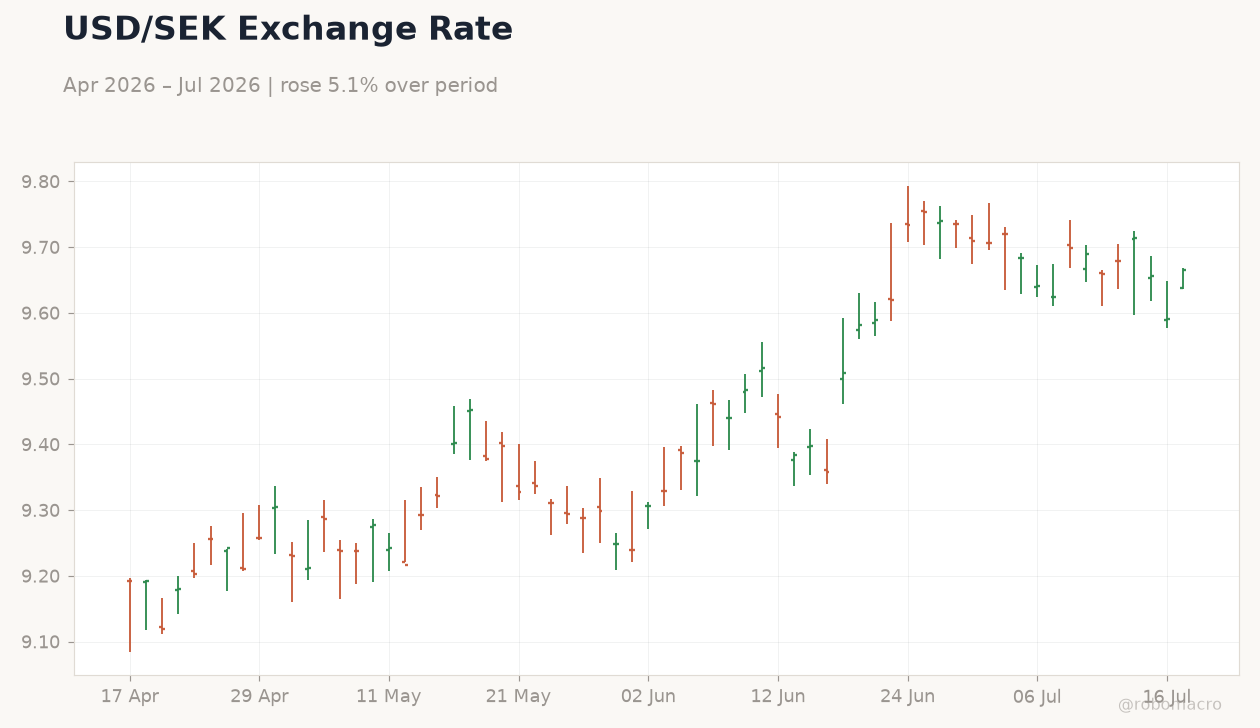
| USD/SEK | 9.66 | +0.77% |
| USD/NOK | 9.69 | +0.38% |
| EUR/SEK | 11.05 | +0.48% |
| EUR/NOK | 11.08 | +0.09% |
| Brent Crude | 85.04 | +0.96% |
| Gold | 3,984.70 | -0.02% |
| Bitcoin | 63,340.18 | -2.12% |
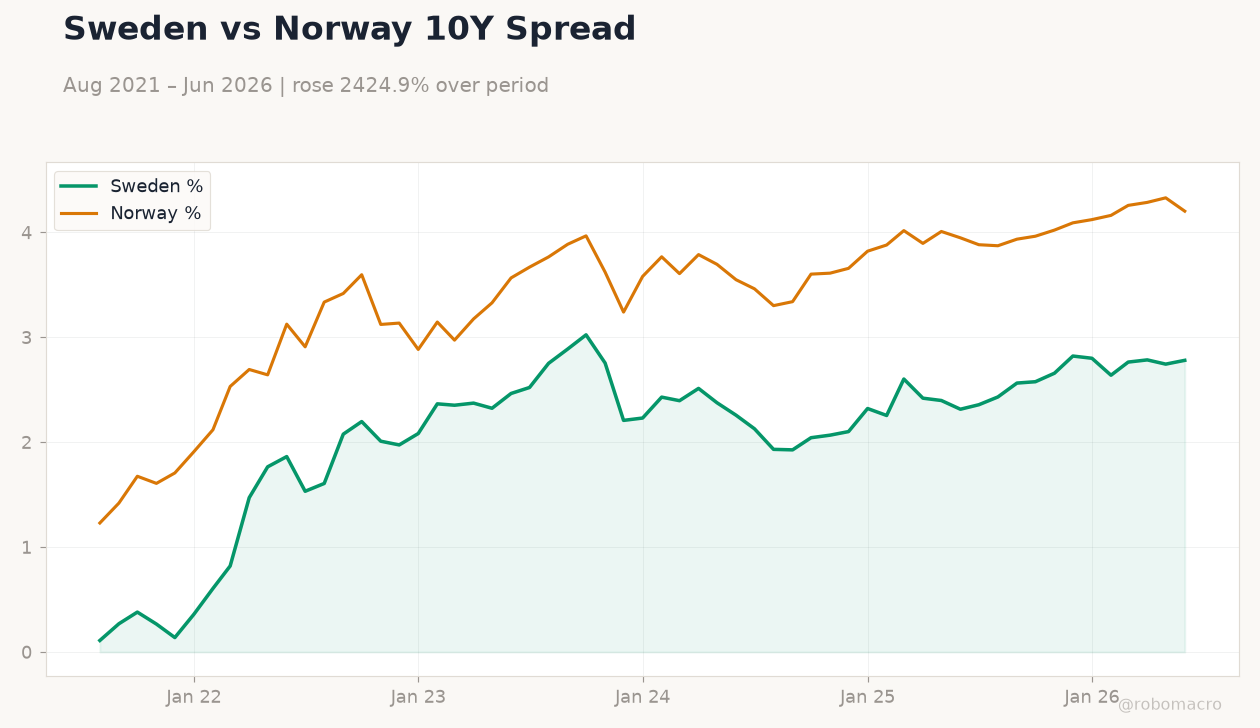
| Sweden 10Y Govt Yield | 2.78% | +1.31% |
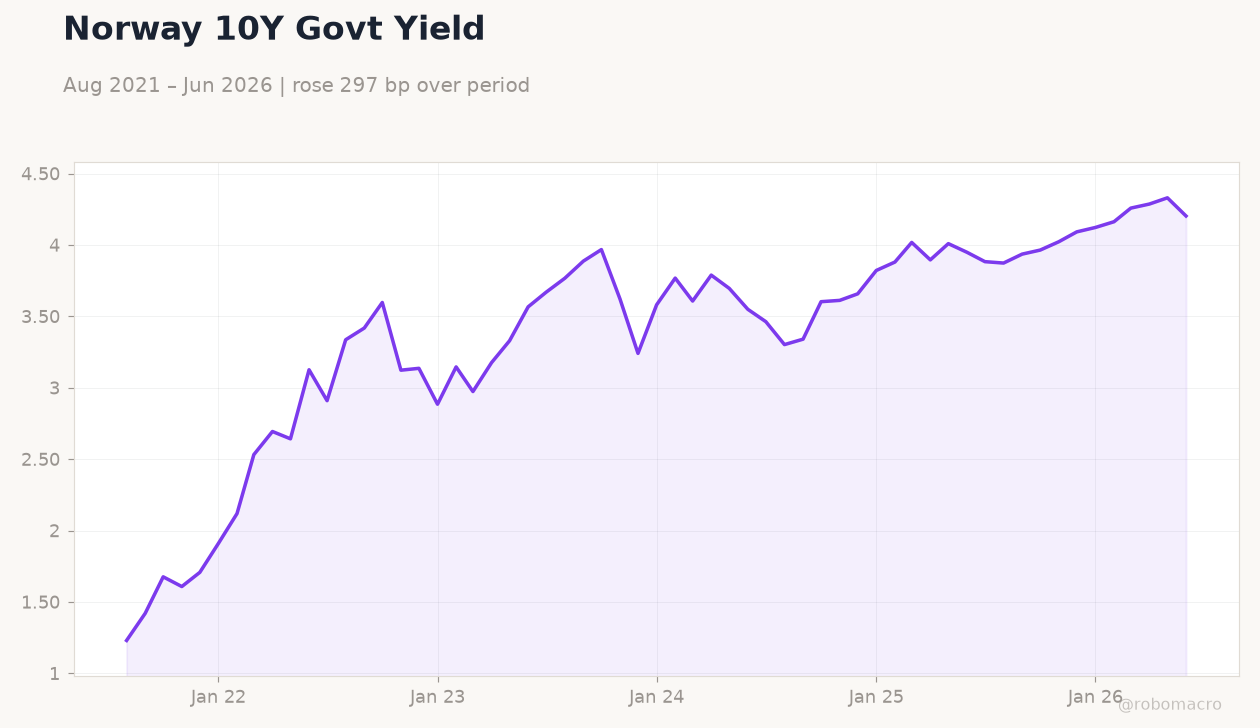
| Norway 10Y Govt Yield | 4.20% | -2.94% |
Prior Economic Events
| Data | Prior | Cons | Actual |
|---|---|---|---|
| No events available | |||
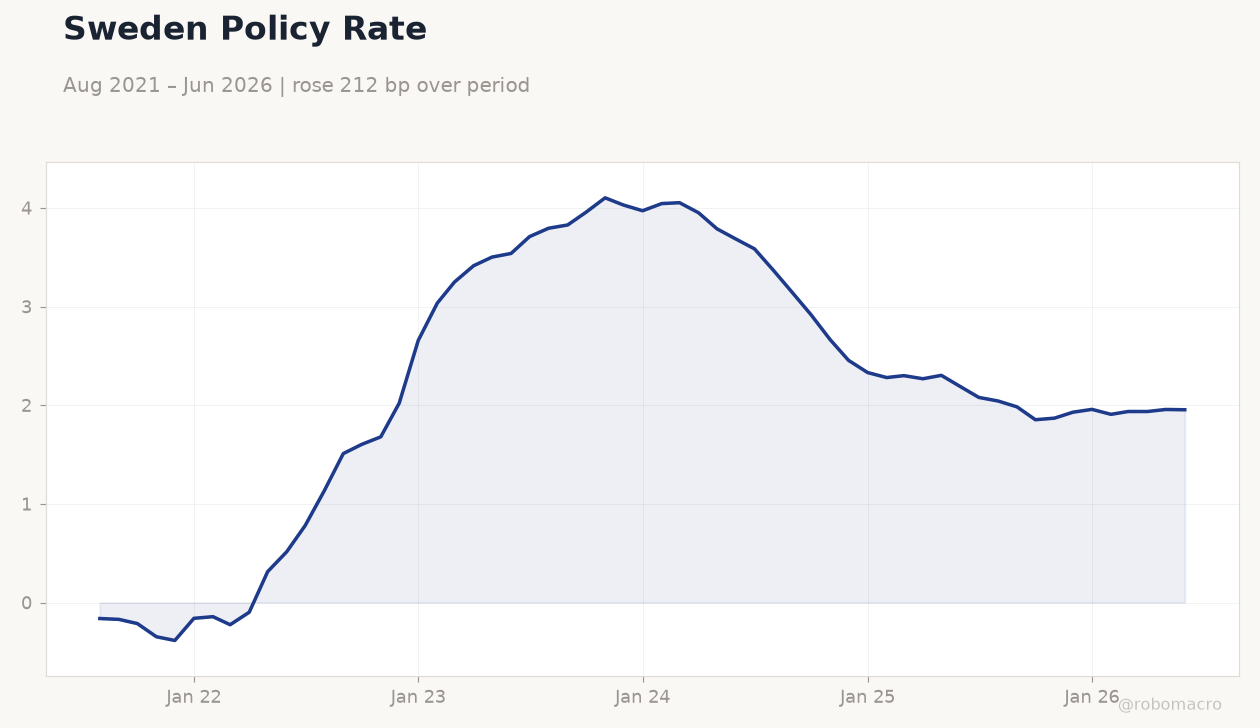 Sweden Policy Rate | Type: macro_line | %: 1.954 (2026-06-01) | Range: -0.3847–4.102 | Trend(6pt): -0.1621,1.603,4.028,2.28,1.936,1.954
Today's Economic Events
| Data | Prior | Cons | Time |
|---|---|---|---|
| No events available | |||
- Nordic equities closed mixed with Oslo Bors falling 1.08% while Copenhagen gained 0.36%.
- SEK depreciated as USD/SEK rose 0.77% to 9.66 and EUR/SEK climbed 0.48%.
- Norway 10Y yields fell 2.94% to 4.20% while Sweden 10Y yields rose 1.31% to 2.78%.
Yesterday's Recap
Nordic equity markets posted mixed results on thin summer volumes with no major data releases across the region. OMX Stockholm 30 edged down 0.04% to 3,149.52 while Oslo Bors declined 1.08% to 1,941.31 amid softer energy names. OMX Copenhagen 25 advanced 0.36% to 1,912.84 and OMX Helsinki 25 slipped 0.18% to 6,115.94.
The Swedish krona weakened as USD/SEK climbed 0.77% to 9.66 and EUR/SEK rose 0.48% to 11.05. USD/NOK increased 0.38% to 9.69 while EUR/NOK gained 0.09% to 11.08. Brent crude rose 0.96% to 85.04 supporting Norway's fiscal outlook as an oil exporter.
Sweden 10Y government yields increased 1.31% to 2.78% while Norway 10Y yields declined 2.94% to 4.20%. Gold held nearly flat at 3,984.70 while Bitcoin fell 2.12% to 63,340.18, reflecting cautious global risk appetite. Currency moves showed broad USD strength against Nordic units, with limited follow-through into equity trading given seasonal liquidity constraints.
Regional credit markets remained stable, showing no immediate signs of stress from the mixed equity close or yield shifts.
The Day Ahead
Markets face a quiet session with no scheduled Nordic data releases or central bank events. Focus will remain on external drivers including Brent crude movements and eurozone developments affecting Finland and Denmark. Swedish and Norwegian FX pairs may continue to track global USD sentiment.
Equity trading volumes are expected to stay subdued ahead of the weekend. Analysts will monitor any follow-through from yesterday's yield shifts in Sweden and Norway. External geopolitical signals around oil supply routes could influence energy-sensitive names in Oslo, while broader euro-area sentiment may set the tone for Copenhagen and Helsinki.
No domestic policy signals are anticipated, leaving currency and commodity flows as the dominant variables for intraday positioning.
Other Economic Notes
Sweden's export-oriented manufacturing sector continues to face headwinds from krona volatility while Norway benefits from elevated Brent levels near 85 dollars. Denmark maintains its EUR/DKK peg through Danmarks Nationalbank interventions with no independent rate path. <i>↓ p.2</i>