Nordics Macro Daily(Beta Mode)
Nordic Markets Mixed as Oil Surges
Market Snapshot
| Asset | Level | Change |
|---|---|---|
| OMX Stockholm 30 | 3,146.94 | -0.08% |
| Oslo Bors | 1,957.31 | +0.82% |
| OMX Copenhagen 25 | 1,901.97 | -0.57% |
| OMX Helsinki 25 | 6,174.83 | +0.96% |
| USD/SEK | 9.64 | +0.51% |
| USD/NOK | 9.63 | -0.36% |
| EUR/SEK | 11.03 | +0.30% |
| EUR/NOK | 11.02 | -0.37% |
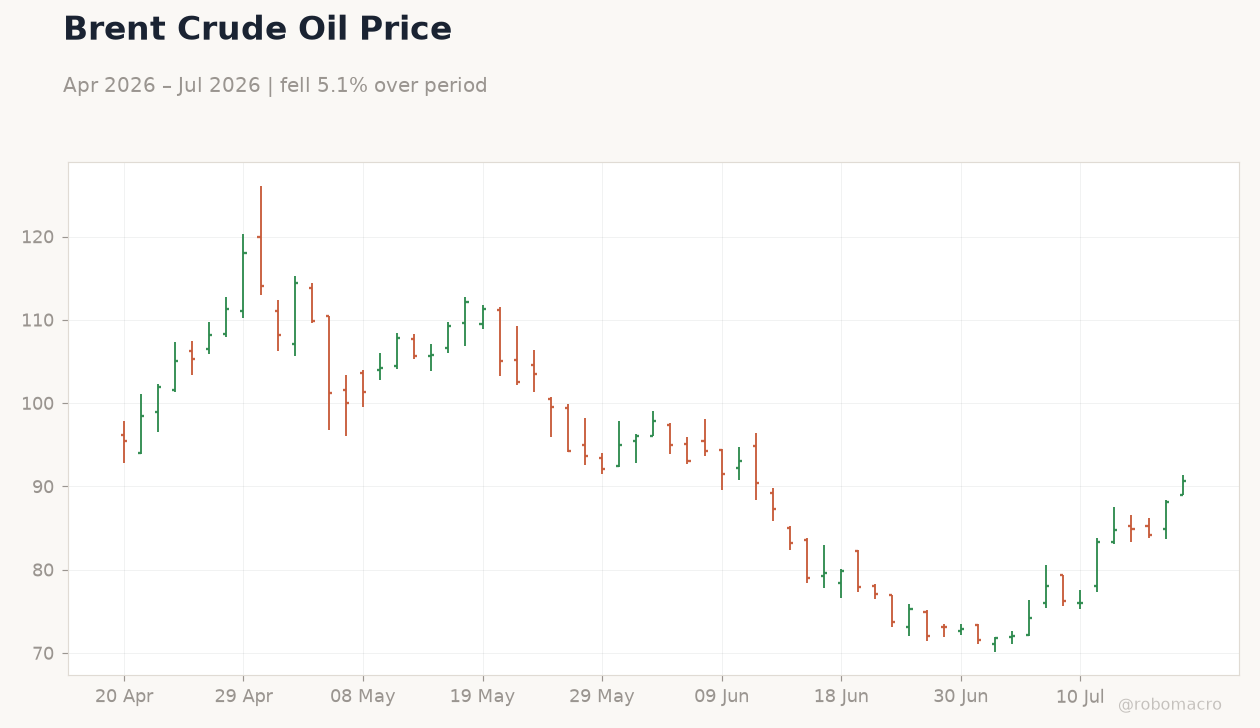
| Brent Crude | 90.48 | +2.70% |
| Gold | 4,011.60 | -0.03% |
| Bitcoin | 64,067.38 | -1.13% |
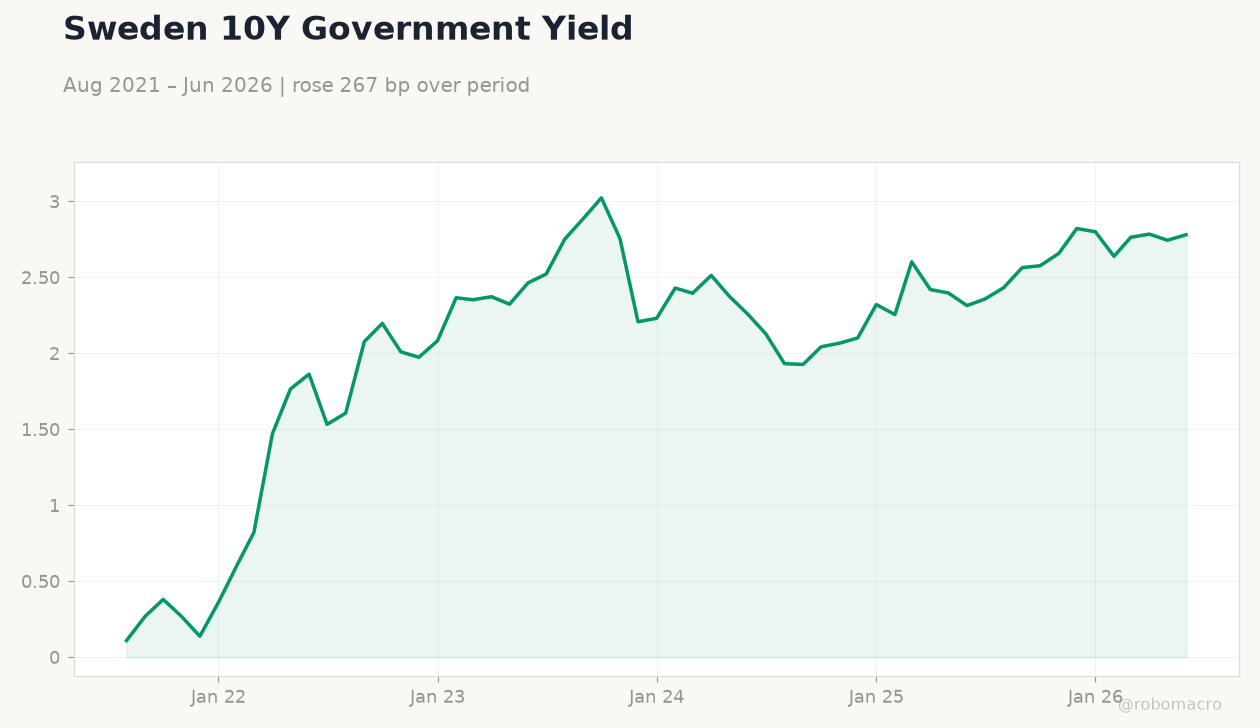
| Sweden 10Y Govt Yield | 2.78% | +1.31% |
| Norway 10Y Govt Yield | 4.20% | -2.94% |
Prior Economic Events
| Data | Prior | Cons | Actual |
|---|---|---|---|
| No events available | |||
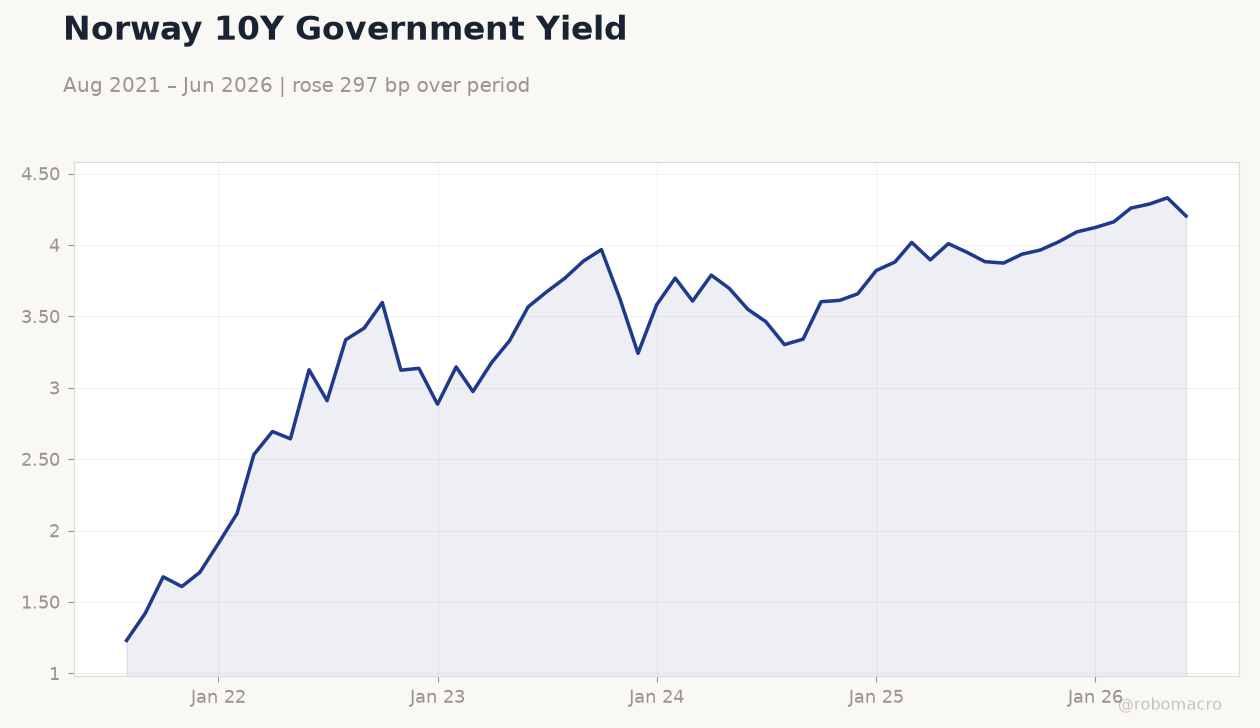 Norway 10Y Government Yield | Type: macro_line | %: 4.203 (2026-06-01) | Range: 1.23–4.33 | Trend(6pt): 1.23,3.597,3.241,3.88,4.286,4.203
Today's Economic Events
| Data | Prior | Cons | Time |
|---|---|---|---|
| No events available | |||
- Oslo Bors rises 0.82% while OMX Copenhagen 25 falls 0.57%
- Brent crude jumps 2.70% to 90.48, lifting NOK
- Sweden 10Y yield climbs 1.31% to 2.78% as OMX Helsinki gains 0.96%
Yesterday's Recap
Nordic equity markets closed mixed on July 19 with no major data releases across Sweden, Norway, Denmark or Finland. Oslo Bors advanced 0.82% to 1,957.31 as energy-related names benefited from Brent crude climbing 2.70% to 90.48. OMX Helsinki 25 rose 0.96% to 6,174.83 while OMX Stockholm 30 edged down 0.08% to 3,146.94.
OMX Copenhagen 25 declined 0.57% to 1,901.97. USD/SEK rose 0.51% to 9.64 and EUR/SEK gained 0.30% to 11.03, whereas USD/NOK fell 0.36% to 9.63. Sweden’s 10-year government yield increased 1.31% to 2.78% while Norway’s 10-year yield dropped 2.94% to 4.20%.
The moves reflected oil price strength supporting the Norwegian krone alongside modest pressure on Swedish rates.
The Day Ahead
The Nordic calendar remains quiet through July 21 with no scheduled releases in Sweden, Norway, Denmark or Finland. Traders will monitor Brent crude for further direction given its direct link to Norwegian fiscal inflows and krone valuation. Equity flows may stay light ahead of any ECB signals that could influence Danish and Finnish markets.
Currency pairs such as EUR/NOK and USD/SEK are expected to track oil and global risk sentiment. Market participants will also watch for any updates on Danish Nationalbank interventions to defend the EUR/DKK peg.
Other Economic Notes
Export-oriented Nordic economies face shifting global demand conditions with Sweden and Denmark particularly exposed to manufacturing cycles. Norway’s position as an oil exporter creates direct sensitivity of government revenues and the krone to Brent price swings above 90. Finland’s eurozone membership transmits ECB policy directly into its financing conditions.
Housing markets in Sweden continue to adjust to earlier rate changes while Danish wind and shipping sectors show resilience in order books. Broader credit spreads across the region have remained stable despite yield volatility. Gold prices near 4,011 with persistent oil-driven inflation concerns may influence safe-haven flows into Nordic bonds.
Global Macro News
US CPI cooling and China growth moderation create a mixed backdrop for Nordic exporters reliant on external demand. Canada’s central bank held rates steady citing an improving economy, providing a reference point for Riksbank and Norges Bank deliberations. IMF assessments of UAE resilience amid regional tensions underscore oil market stability that supports Norwegian revenues.
<i>↓ p.2</i>