Nordics Macro Daily(Beta Mode)
Nordic Equities Slip as Oil Declines, Yields Diverge
Market Snapshot
| Asset | Level | Change |
|---|---|---|
| OMX Stockholm 30 | 3,134.00 | -0.41% |
| Oslo Bors | 1,953.49 | -0.20% |
| OMX Copenhagen 25 | 1,895.32 | -0.35% |
| OMX Helsinki 25 | 6,180.44 | +0.09% |
| USD/SEK | 9.67 | +0.01% |
| USD/NOK | 9.65 | +0.08% |
| EUR/SEK | 11.05 | +0.12% |
| EUR/NOK | 11.02 | -0.01% |
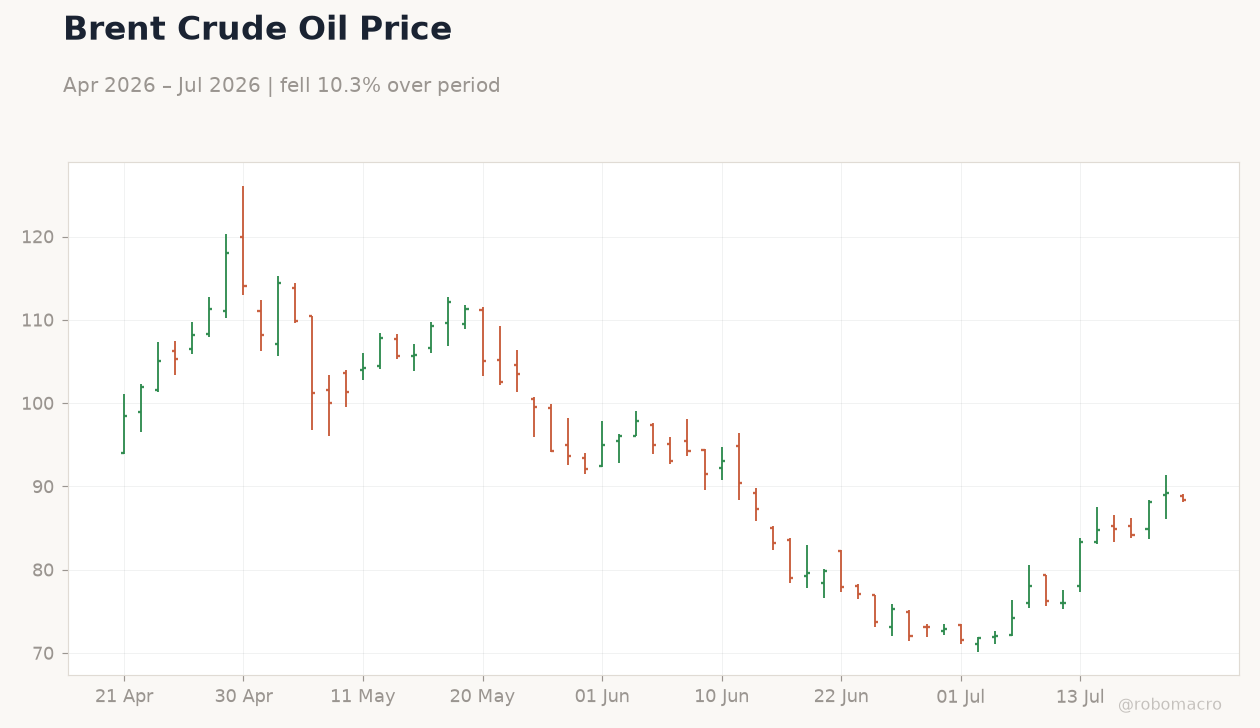
| Brent Crude | 88.23 | -1.11% |
| Gold | 4,068.80 | +1.46% |
| Bitcoin | 65,722.64 | +1.60% |
| Sweden 10Y Govt Yield | 2.78% | +1.31% |
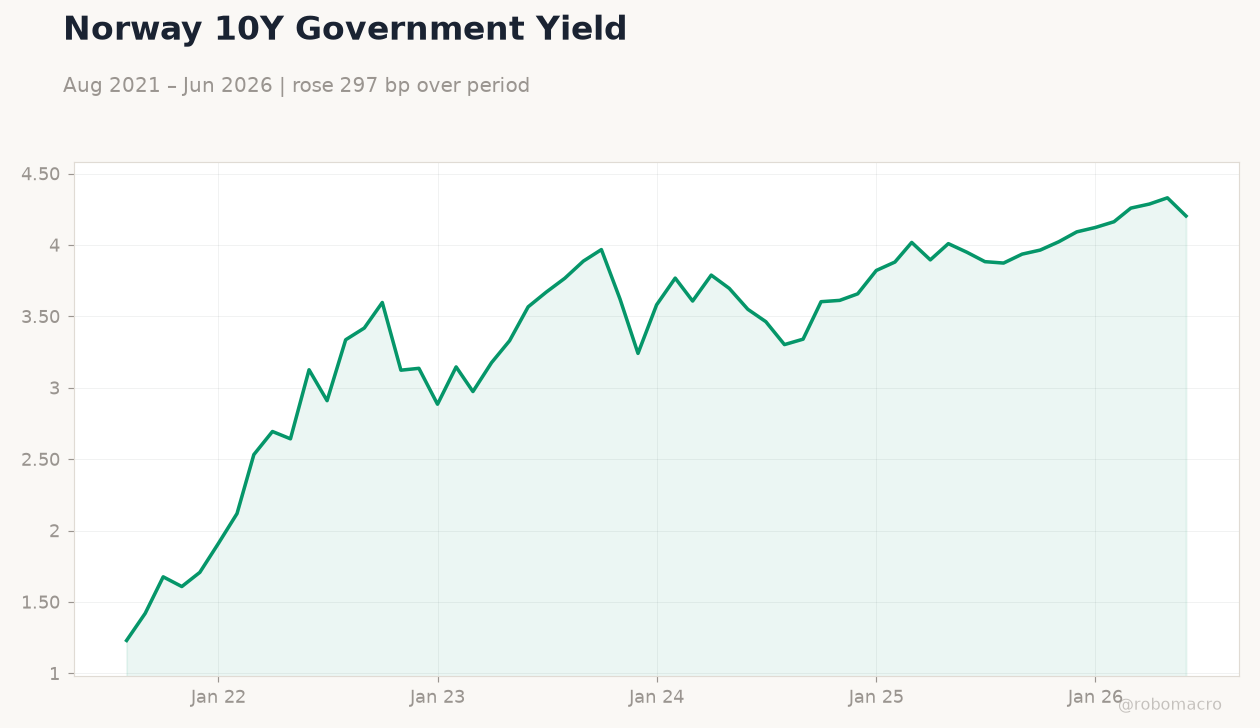
| Norway 10Y Govt Yield | 4.20% | -2.94% |
Prior Economic Events
| Data | Prior | Cons | Actual |
|---|---|---|---|
| No events available | |||
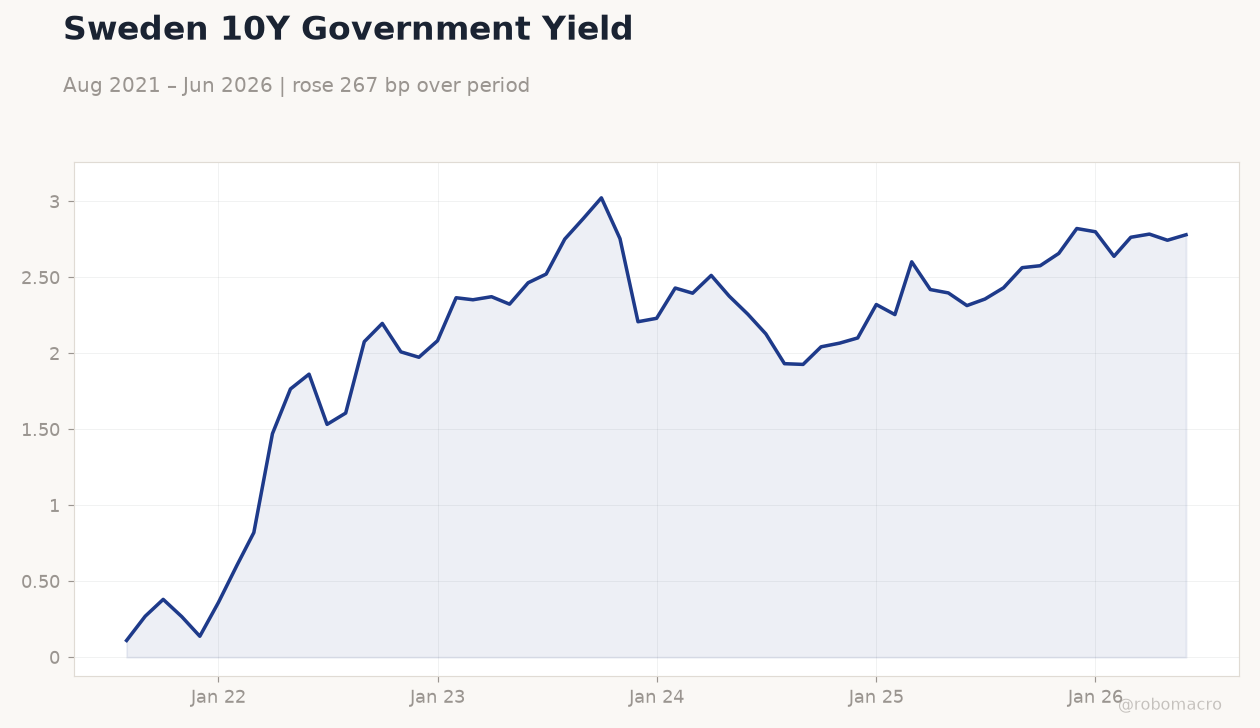 Sweden 10Y Government Yield | Type: macro_line | Yield %: 2.781 (2026-06-01) | Range: 0.1101–3.024 | Trend(6pt): 0.1101,2.197,2.208,2.255,2.785,2.781
Today's Economic Events
| Data | Prior | Cons | Time |
|---|---|---|---|
| No events available | |||
- Equities closed mixed to lower with Stockholm and Copenhagen leading declines.
- Brent crude dropped 1.11% while gold and bitcoin posted gains.
- Sweden 10-year yields rose while Norway yields declined sharply.
Yesterday's Recap
Nordic equity markets posted modest losses on 20 July with the OMX Stockholm 30 falling 0.41% to close at 3,134.00 and the Oslo Bors declining 0.20% to 1,953.49. The OMX Copenhagen 25 slipped 0.35% to 1,895.32 while the OMX Helsinki 25 edged 0.09% higher to 6,180.44. Currency pairs remained largely stable with USD/SEK at 9.67 and USD/NOK at 9.65.
Brent crude declined 1.11% to 88.23, weighing on Norway’s near-term fiscal receipts given its position as a major oil exporter. Sweden’s 10-year government yield climbed 1.31% to 2.78% while Norway’s 10-year yield fell 2.94% to 4.20%. Latest verified inflation prints showed Sweden CPI at 0.70% YoY and Norway CPI at 2.70% YoY as of end-June, providing limited new impetus for immediate policy shifts.
Denmark and Finland equity moves stayed contained within the broader regional pattern.
The Day Ahead
The Nordic calendar remains empty of scheduled data releases or central-bank events through 22 July, leaving markets to focus on external drivers. Equity and FX trading desks will monitor Brent crude and global risk sentiment for direction. Norway’s oil-service sector and shipping names may continue to track tanker-rate developments.
Danish and Finnish fixed-income markets are expected to follow ECB-related flows given the EUR/DKK peg and Finland’s euro-area membership. Any surprise moves in EUR/SEK or EUR/NOK could prompt positioning adjustments ahead of the weekend.
Other Economic Notes
Sweden’s export-oriented manufacturing base continues to face subdued external demand while housing-price data from earlier months showed modest sequential gains. Norway’s oil revenue sensitivity remains elevated with Brent near 88 dollars supporting the government’s net cash-flow outlook. Denmark’s retail sector posted an upside surprise in recent prints, offering a mild offset to softer industrial readings elsewhere.
Finland’s industrial production stayed soft, consistent with euro-area manufacturing weakness. Regional credit spreads on investment-grade names tightened modestly amid the mixed equity session.
Global Macro News
Gold prices advanced 1.46% to 4,068.80 on persistent oil-driven inflation concerns linked to Middle East tensions. <i>↓ p.2</i>