Nordics Macro Daily(Beta Mode)
Nordic Stocks Split as Oil Rally Boosts Krone
Market Snapshot
| Asset | Level | Change |
|---|---|---|
| OMX Stockholm 30 | 3,186.12 | +1.26% |
| Oslo Bors | 2,002.10 | +1.58% |
| OMX Copenhagen 25 | 1,849.82 | -2.02% |
| OMX Helsinki 25 | 6,269.91 | +1.07% |
| USD/SEK | 9.68 | -0.24% |
| USD/NOK | 9.57 | -0.65% |
| EUR/SEK | 11.06 | -0.02% |
| EUR/NOK | 10.94 | -0.43% |
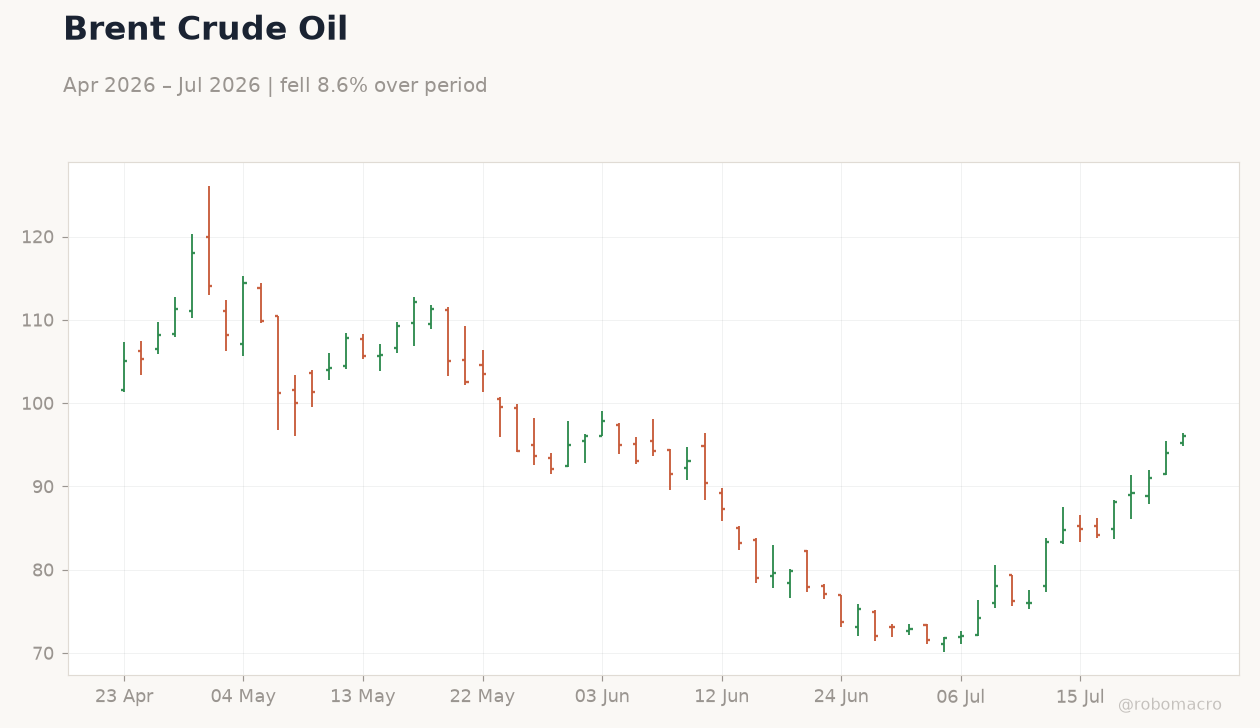
| Brent Crude | 96.10 | +2.16% |
| Gold | 4,128.30 | -0.45% |
| Bitcoin | 65,701.09 | -0.60% |
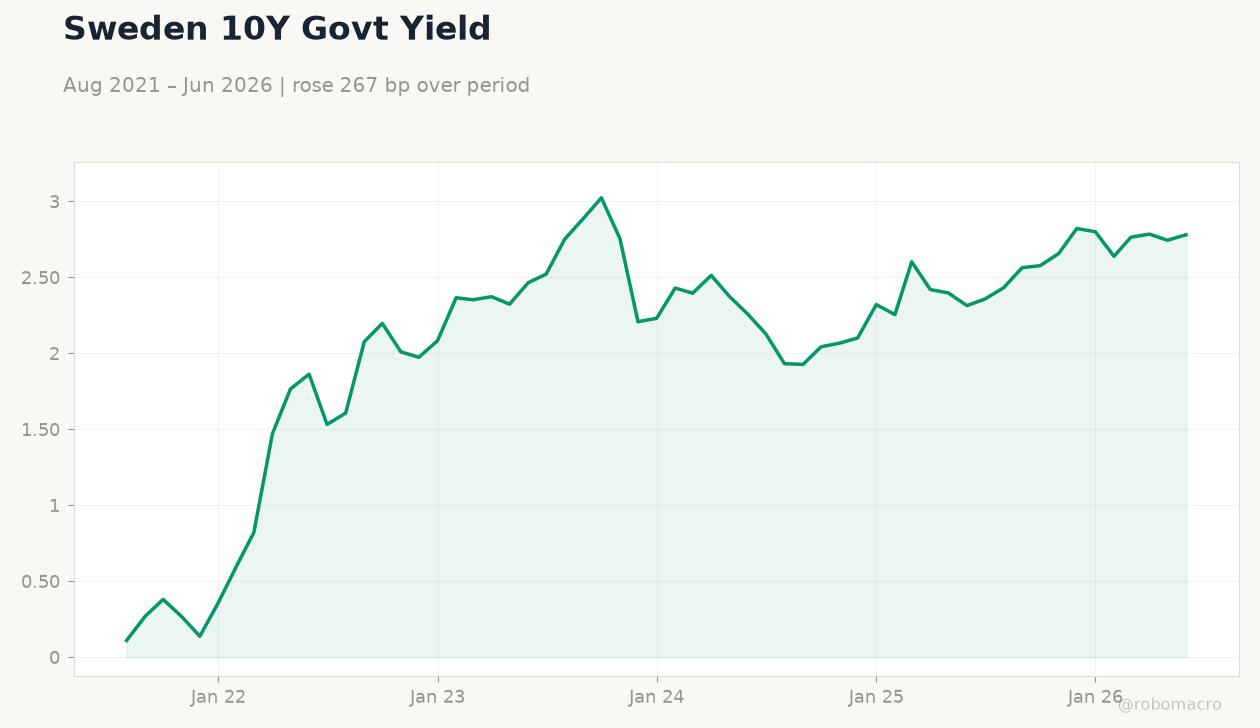
| Sweden 10Y Govt Yield | 2.78% | +1.31% |
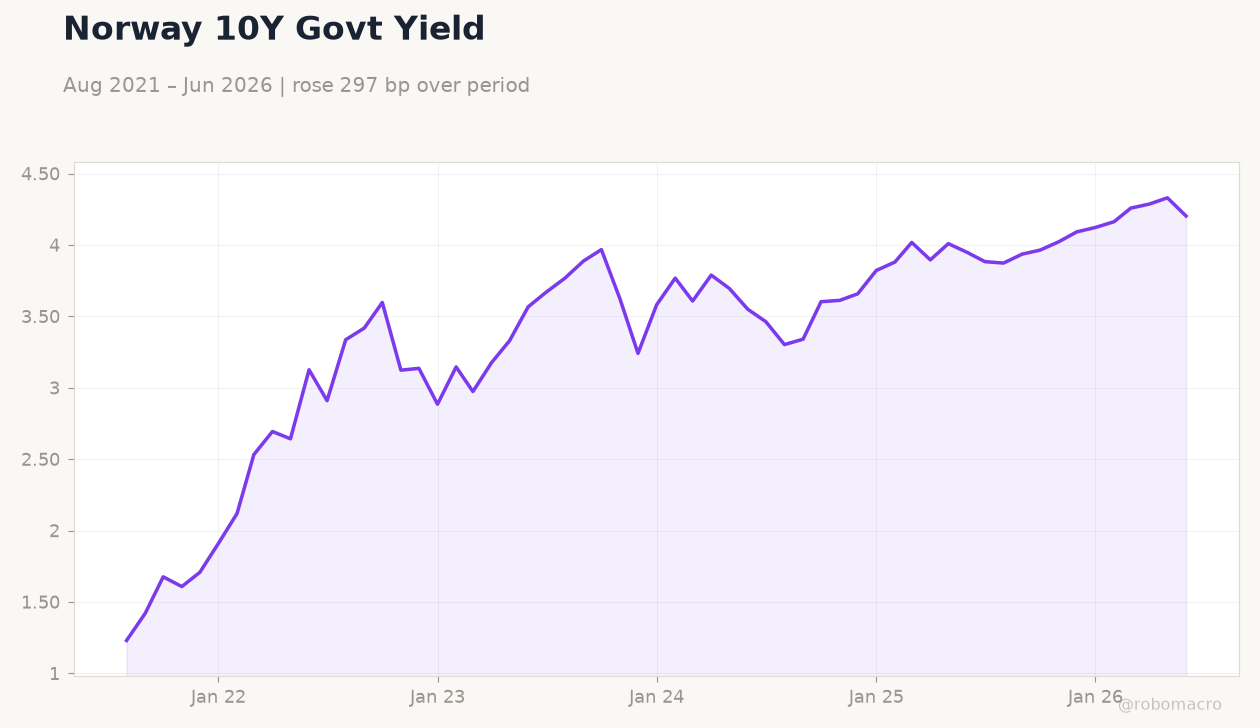
| Norway 10Y Govt Yield | 4.20% | -2.94% |
Prior Economic Events
| Data | Prior | Cons | Actual |
|---|---|---|---|
| No events available | |||
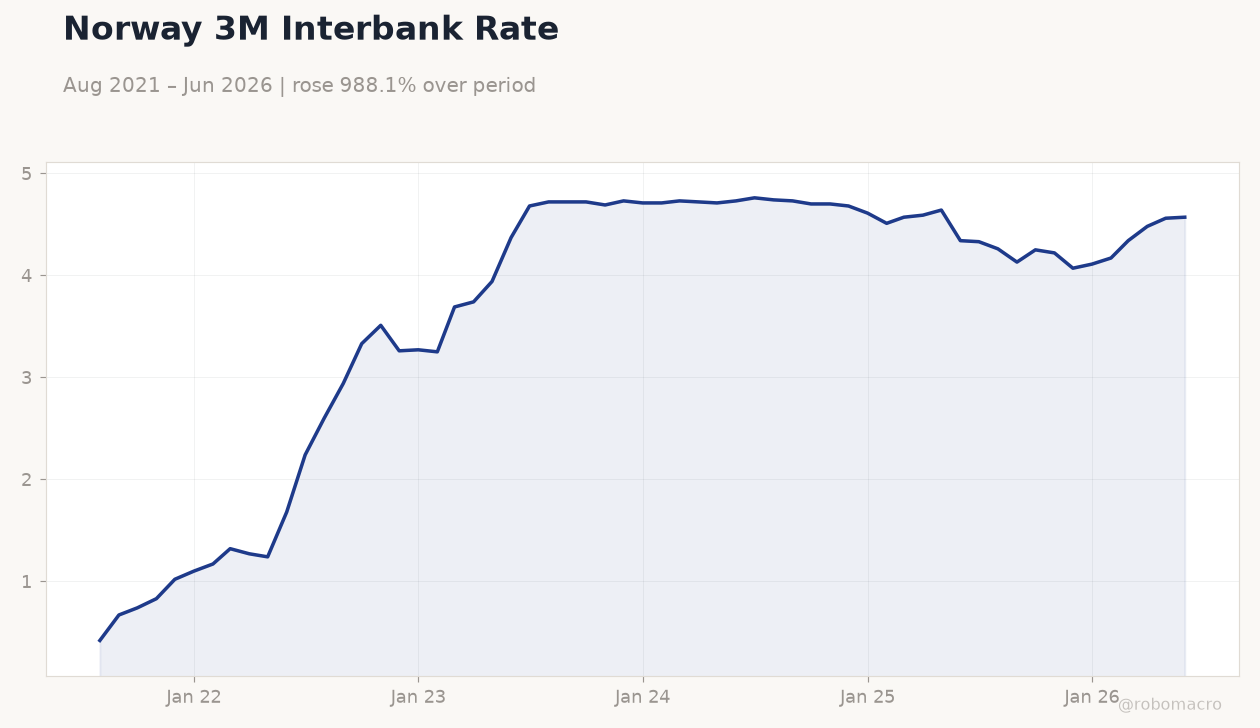 Norway 3M Interbank Rate | Type: macro_line | Rate %: 4.57 (2026-06-01) | Range: 0.42–4.76 | Trend(6pt): 0.42,3.33,4.73,4.51,4.48,4.57
Today's Economic Events
| Data | Prior | Cons | Time |
|---|---|---|---|
| No events available | |||
- Swedish and Norwegian equities advanced over 1% while Copenhagen fell 2% on thin volumes.
- Brent crude rose 2.16% to $96.10, supporting NOK and Norway’s fiscal position.
- USD/NOK fell 0.65% to 9.57 as inflation data outlook remains in focus for Norges Bank.
Yesterday's Recap
Equity markets across the Nordic region posted mixed results amid quiet summer trading with no major data releases. OMX Stockholm 30 rose 1.26% to 3,186.12 while Oslo Bors gained 1.58% to 2,002.10, supported by energy exposure. OMX Copenhagen 25 declined 2.02% to 1,849.82 as OMX Helsinki 25 added 1.07% to 6,269.91.
USD/NOK dropped 0.65% to 9.57 and USD/SEK eased 0.24% to 9.68, reflecting modest NOK outperformance. Brent crude climbed 2.16% to 96.10, lifting Norway’s petroleum revenue outlook and easing pressure on the oil-fund spending rule. Sweden 10-year yields rose 1.31% to 2.78% while Norway 10-year yields fell 2.94% to 4.20%.
Denmark and Finland saw limited domestic drivers, with activity focused on broader euro-area flows.
The Day Ahead
Trading desks expect another quiet session with no scheduled Nordic data releases or central-bank events. Attention will remain on external drivers including Brent price action and any ECB commentary that could influence Danish krone peg management. Norges Bank’s latest inflation reading at 2.70% y/y continues to shape expectations for the policy path ahead.
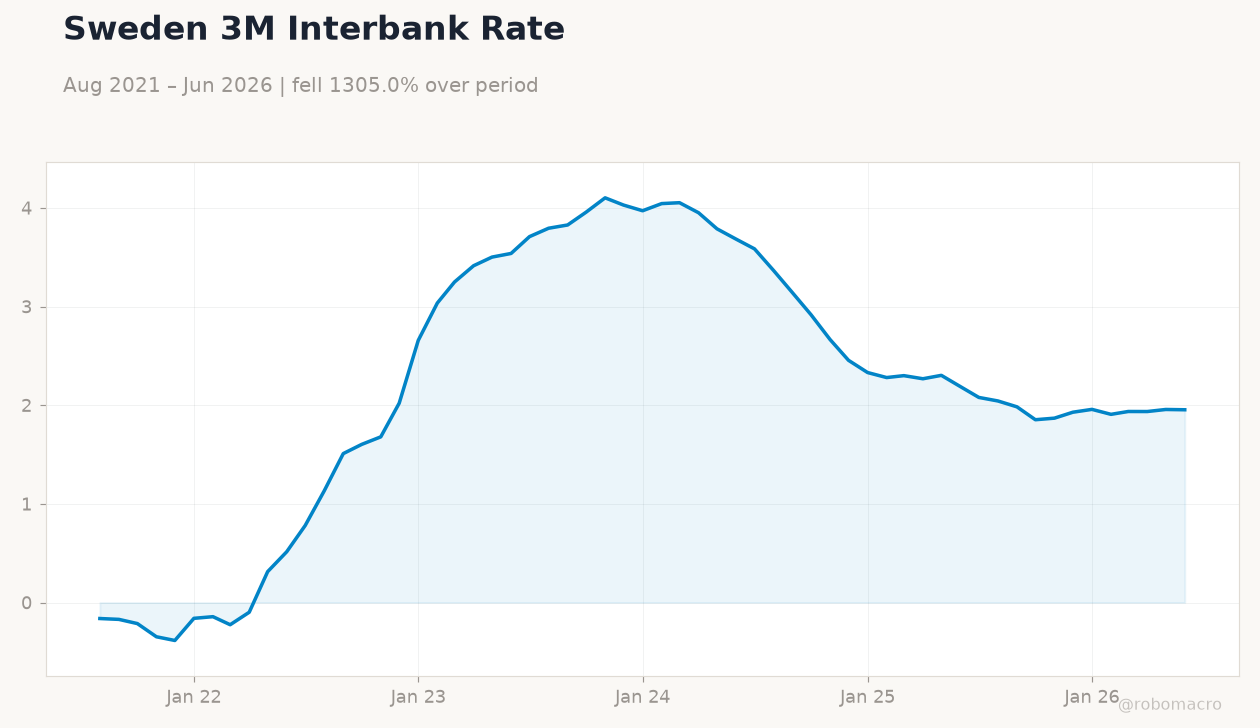
Swedish markets will monitor any follow-through from the June CPI print of 0.68% y/y and its implications for Riksbank timing. Cross-border equity flows may stay subdued until next week’s regional PMI updates appear.
Other Economic Notes
Norway’s status as a major oil exporter continues to tie krone performance directly to Brent dynamics, with recent price strength providing fiscal breathing room. Sweden’s export-oriented manufacturing sector remains sensitive to global demand signals and currency moves against the euro. Denmark’s ERM II peg constrains independent monetary policy, forcing Danmarks Nationalbank to mirror ECB actions to defend the EUR/DKK band.
Finland’s euro-area membership means its rates and inflation outlook are set entirely by the ECB, limiting domestic policy divergence. Housing-market weakness in Sweden persists as a drag on construction employment and related credit demand.