Nordics Macro Daily(Beta Mode)
Nordic Equities Diverge as Brent Crude Slumps
Market Snapshot
| Asset | Level | Change |
|---|---|---|
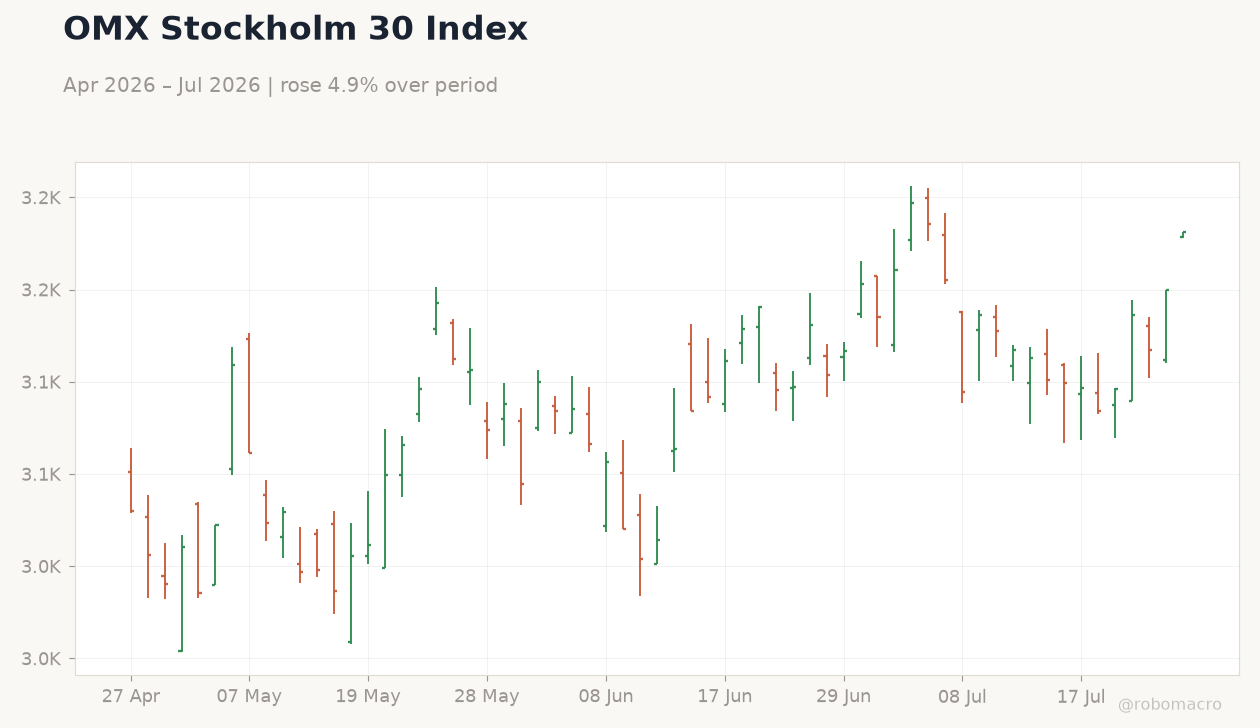
| OMX Stockholm 30 | 3,199.62 | +1.03% |
| Oslo Bors | 2,007.53 | -0.53% |
| OMX Copenhagen 25 | 1,830.99 | +0.15% |
| OMX Helsinki 25 | 6,200.36 | +0.40% |
| USD/SEK | 9.67 | -0.89% |
| USD/NOK | 9.61 | +0.22% |
| EUR/SEK | 11.10 | +0.32% |
| EUR/NOK | 10.95 | +0.16% |
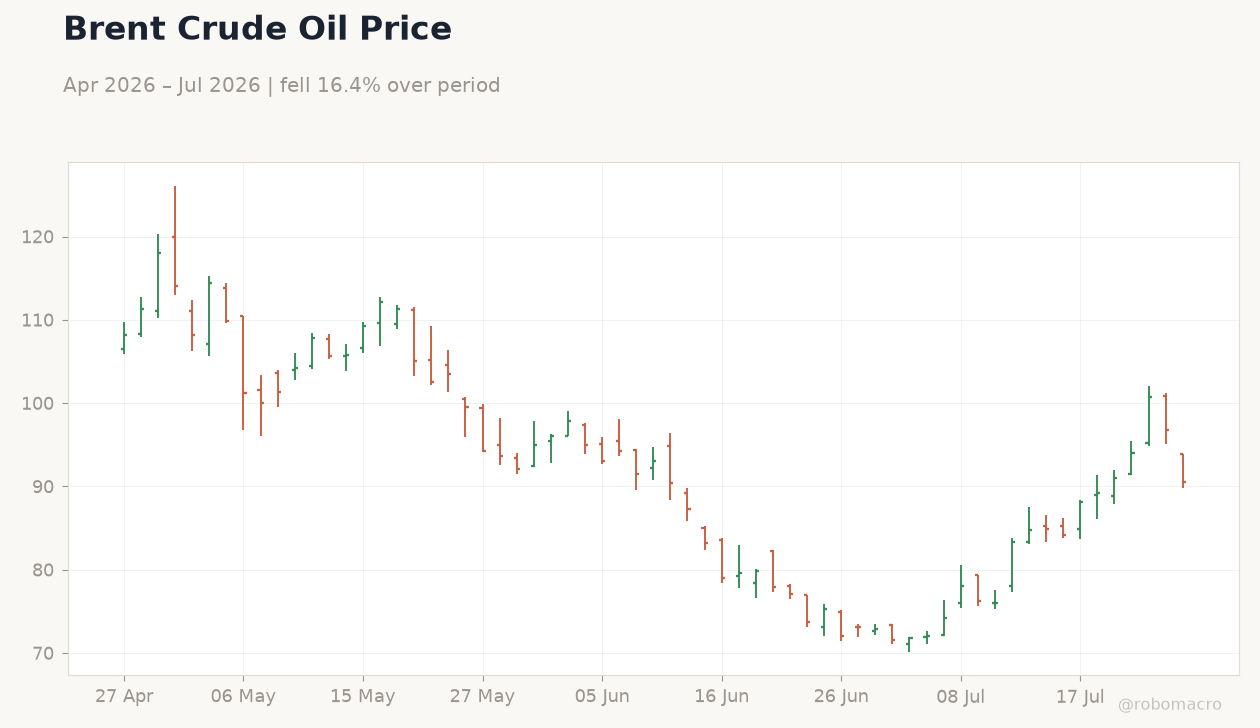
| Brent Crude | 90.33 | -6.66% |
| Gold | 4,100.30 | +0.80% |
| Bitcoin | 65,357.99 | +0.03% |
| Sweden 10Y Govt Yield | 2.78% | +1.31% |
| Norway 10Y Govt Yield | 4.20% | -2.94% |
Prior Economic Events
| Data | Prior | Cons | Actual |
|---|---|---|---|
| No events available | |||
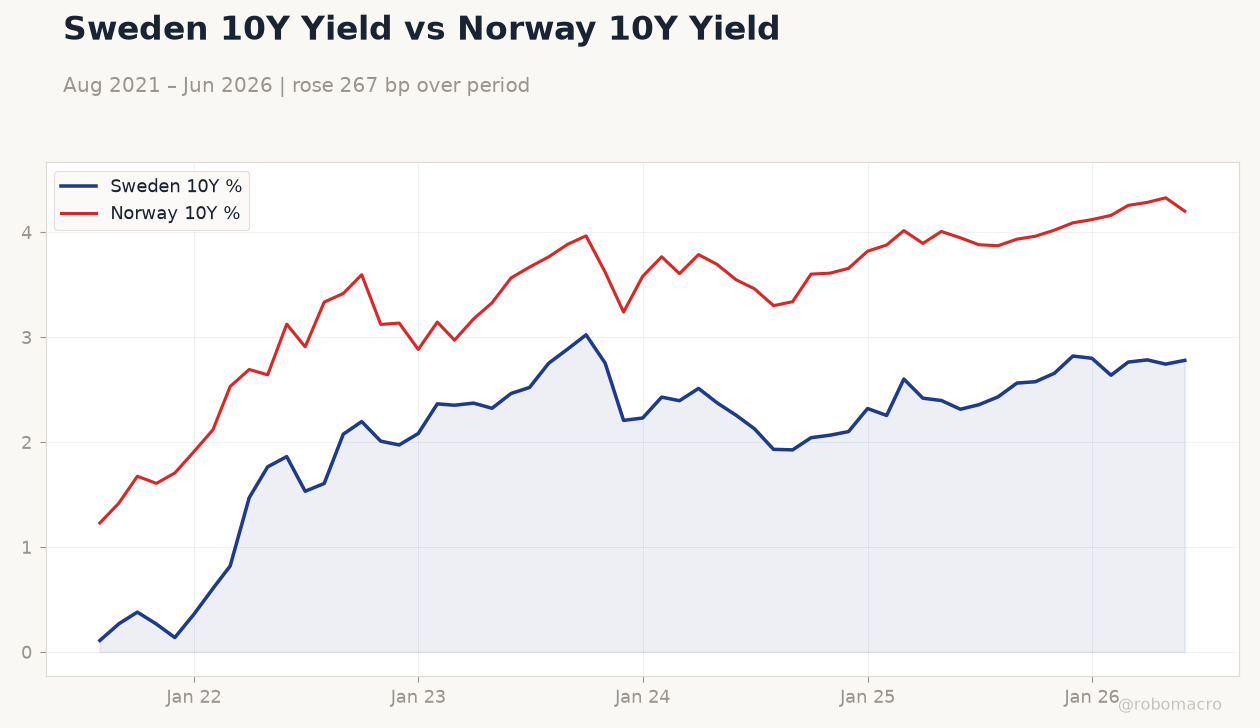 Sweden 10Y Yield vs Norway 10Y Yield | Type: macro_line | Sweden 10Y %: 2.781 (2026-06-01) | Range: 0.1101–3.024 | Trend(6pt): 0.1101,2.197,2.208,2.255,2.785,2.781 | Norway 10Y %: 4.203 (2026-06-01) | Range: 1.23–4.33 | Trend(6pt): 1.23,3.597,3.241,3.88,4.286,4.203
Today's Economic Events
| Data | Prior | Cons | Time |
|---|---|---|---|
| No events available | |||
- Stockholm equities rose 1.03% while Oslo fell 0.53% amid a 6.66% Brent drop that pressured Norway’s fiscal outlook.
- SEK strengthened 0.89% against USD as Sweden’s June CPI printed 0.68% YoY, while NOK weakened 0.22%.
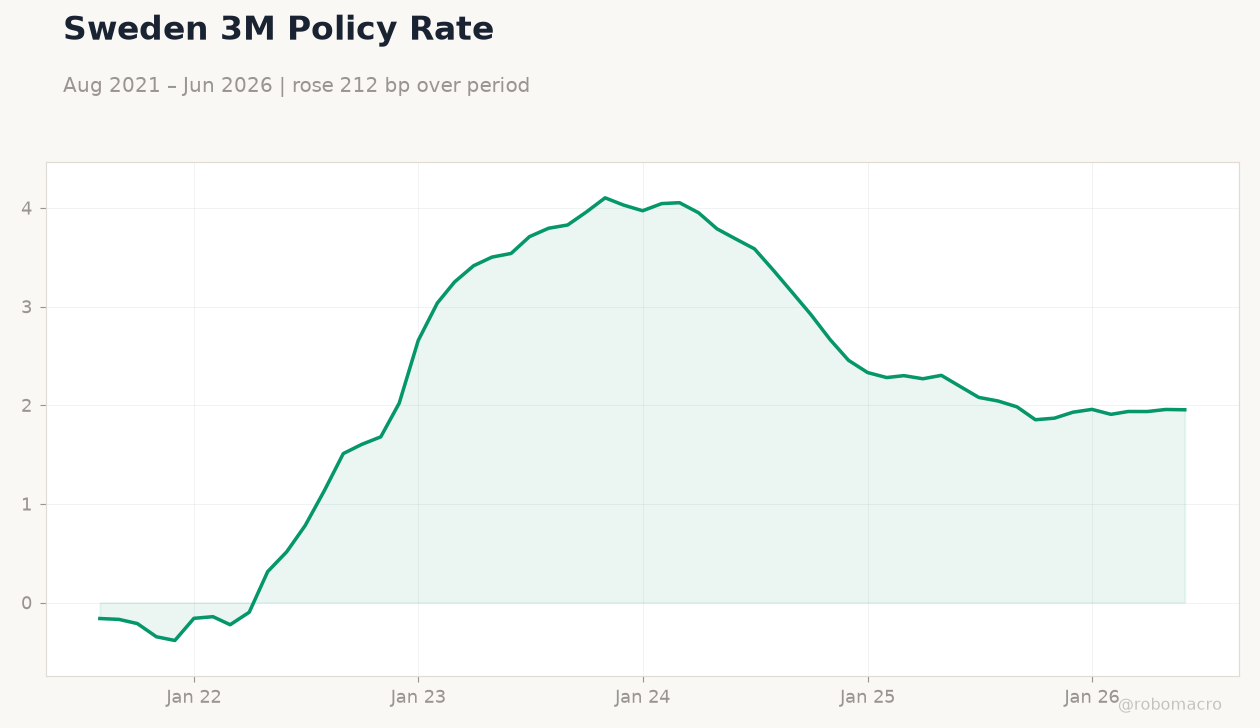
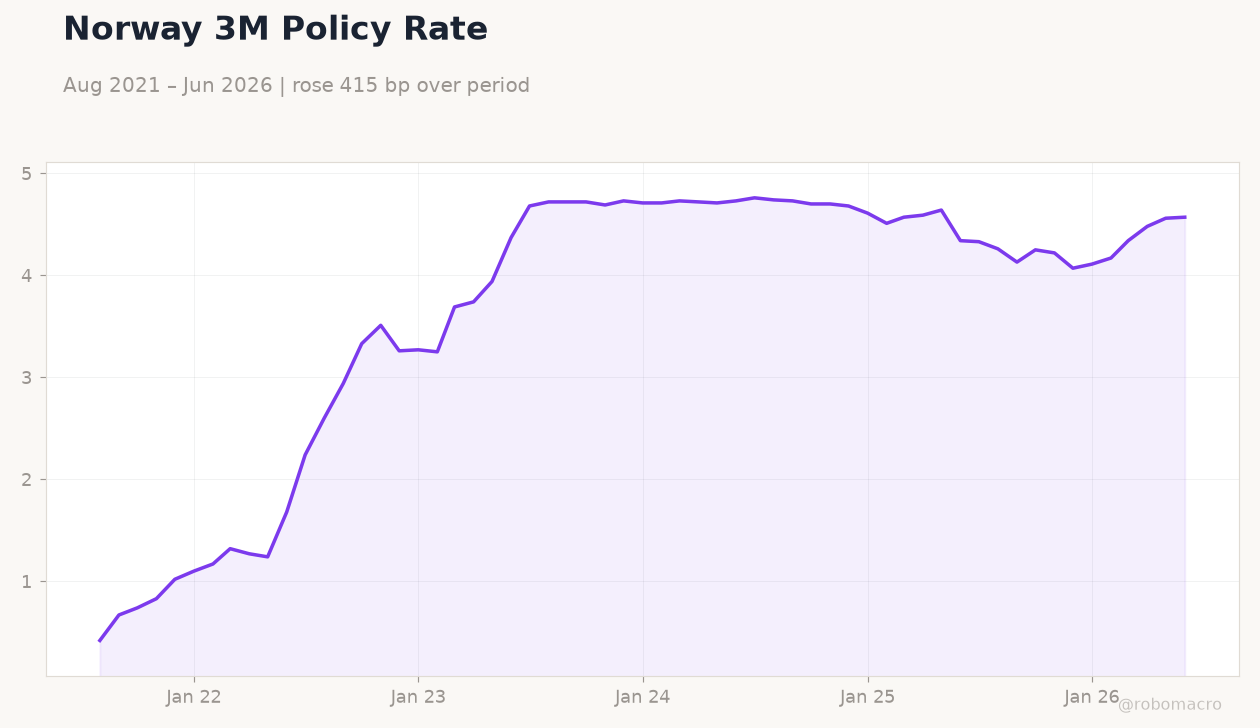
- Swedish 10-year yields rose 1.31% to 2.78% and Norwegian yields fell 2.94% to 4.20%, reflecting divergent rate paths.
Yesterday's Recap
Nordic equity markets posted mixed results on July 26 with no major data releases. OMX Stockholm 30 advanced 1.03% to 3,199.62 while Oslo Bors declined 0.53% to 2,007.53 as Brent crude fell sharply to 90.33. OMX Copenhagen 25 edged up 0.15% and OMX Helsinki 25 gained 0.40%.
The Swedish krona strengthened notably, with USD/SEK dropping 0.89% to 9.67 and EUR/SEK rising 0.32% to 11.10. In Norway, USD/NOK climbed 0.22% to 9.61 and EUR/NOK increased 0.16% to 10.95. Swedish 10-year government yields climbed to 2.78% while Norwegian yields eased to 4.20%, highlighting differing inflation backdrops after Sweden’s June CPI registered 0.68% YoY versus Norway’s 2.70% YoY.
Gold rose 0.80% to 4,100.30 and Bitcoin edged 0.03% higher to 65,357.99, offering limited directional signals amid the oil-price move.
The Day Ahead
The Nordic calendar remains quiet on July 27 with no scheduled releases across the four economies. Markets will likely focus on external drivers including any follow-through from the sharp Brent decline and broader euro-area sentiment. Sweden’s low inflation print may keep Riksbank easing expectations in focus while Norway’s higher CPI supports Norges Bank’s tighter stance.
Danish and Finnish markets will track ECB signals given the EUR/DKK peg and Finland’s eurozone membership. Equity and FX flows may remain sensitive to oil-price volatility given Norway’s exposure as an exporter. The absence of domestic data leaves attention on global commodity trends and any euro-area developments that could influence regional fixed-income and currency pairs.
Other Economic Notes
Sweden’s subdued 0.68% YoY CPI underscores weak domestic demand in its export-oriented manufacturing base while Norway’s 2.70% reading reflects oil-related price pressures. The 6.66% Brent drop directly weighs on Norway’s fiscal position and krone valuation. Denmark’s manufacturing exports remain tied to euro-area demand under the ERM II peg, limiting independent monetary flexibility.
Finland’s eurozone status channels all policy through the ECB, muting local rate signals. Housing markets in Sweden continue to face pressure from elevated real rates despite the low inflation print. These structural differences reinforce the divergence already visible in yesterday’s yield and currency moves.