Nordics Macro Daily(Beta Mode)
SEK Outlook Brightens Amid Mixed Nordic Markets
Market Snapshot
| Asset | Level | Change |
|---|---|---|
| OMX Stockholm 30 | 3,217.89 | +0.57% |
| Oslo Bors | 1,991.12 | -0.82% |
| OMX Copenhagen 25 | 1,833.36 | +0.13% |
| OMX Helsinki 25 | 6,175.52 | -0.40% |
| USD/SEK | 9.73 | +0.58% |
| USD/NOK | 9.68 | +1.04% |
| EUR/SEK | 11.06 | +0.34% |
| EUR/NOK | 11.00 | +0.79% |
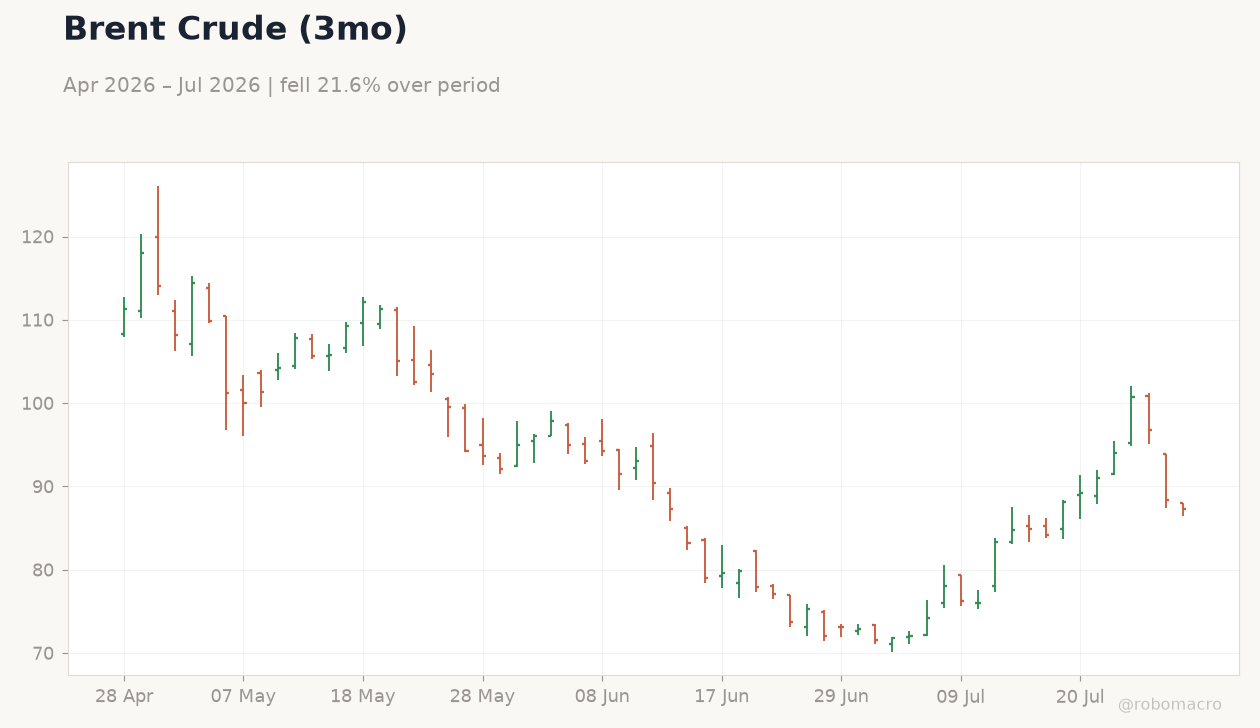
| Brent Crude | 87.28 | -1.22% |
| Gold | 4,042.40 | -0.79% |
| Bitcoin | 63,384.31 | -2.99% |
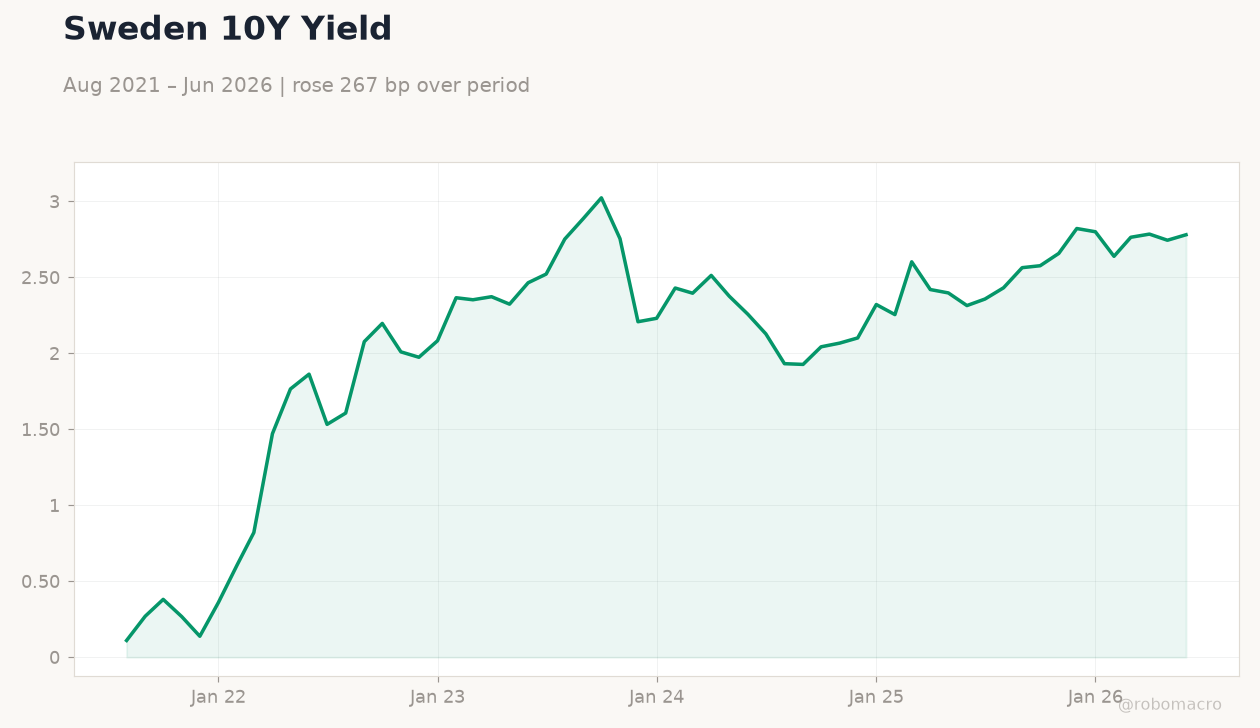
| Sweden 10Y Govt Yield | 2.78% | +1.31% |
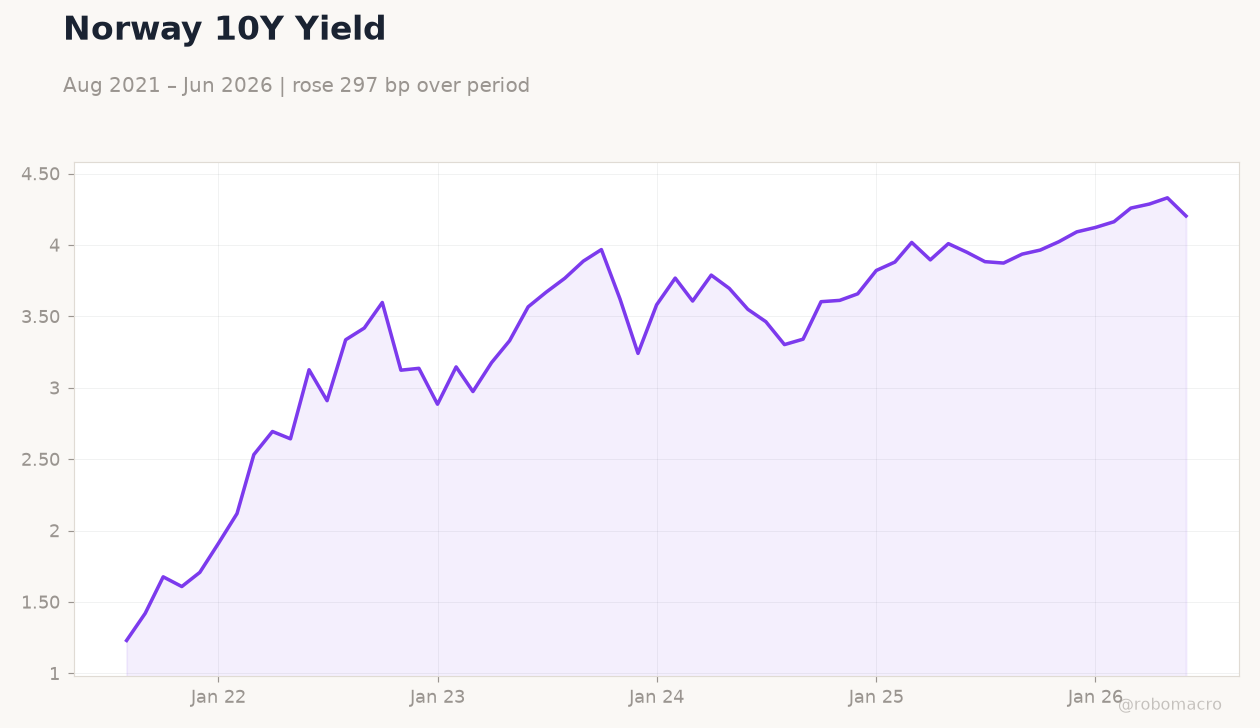
| Norway 10Y Govt Yield | 4.20% | -2.94% |
Prior Economic Events
| Data | Prior | Cons | Actual |
|---|---|---|---|
| No events available | |||
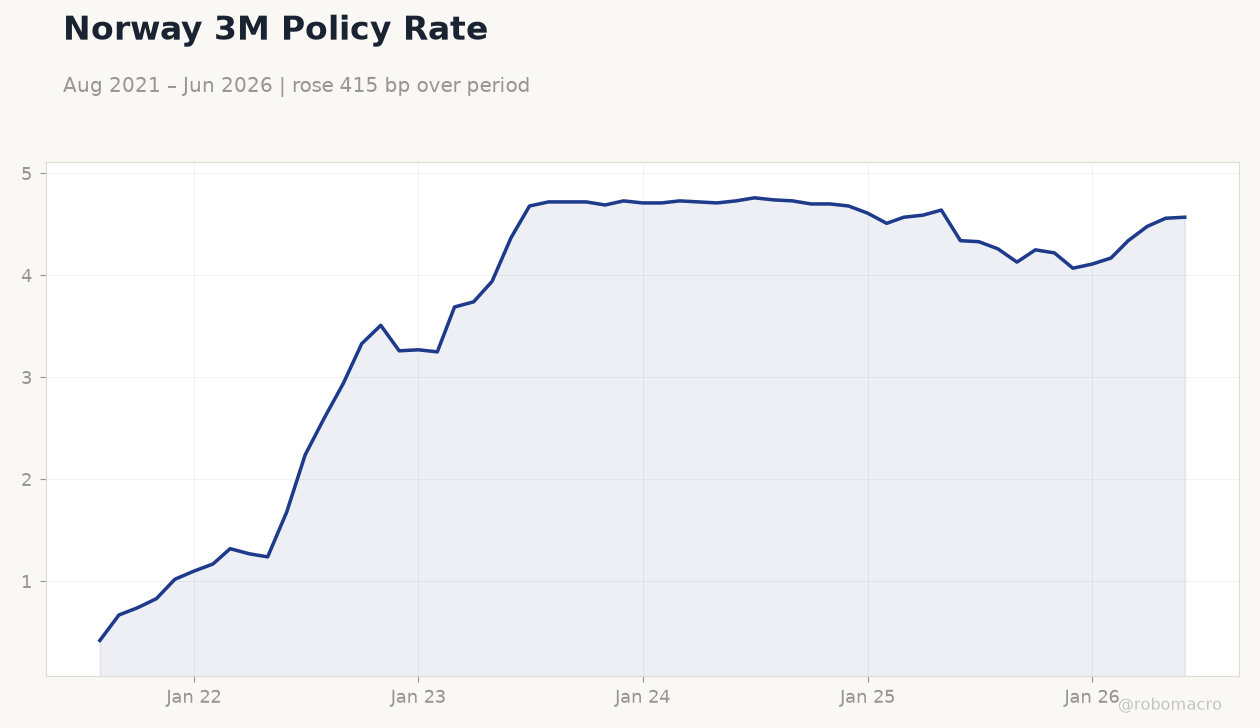 Norway 3M Policy Rate | Type: macro_line | Norway 3M %: 4.57 (2026-06-01) | Range: 0.42–4.76 | Trend(6pt): 0.42,3.33,4.73,4.51,4.48,4.57
Today's Economic Events
| Data | Prior | Cons | Time |
|---|---|---|---|
| No events available | |||
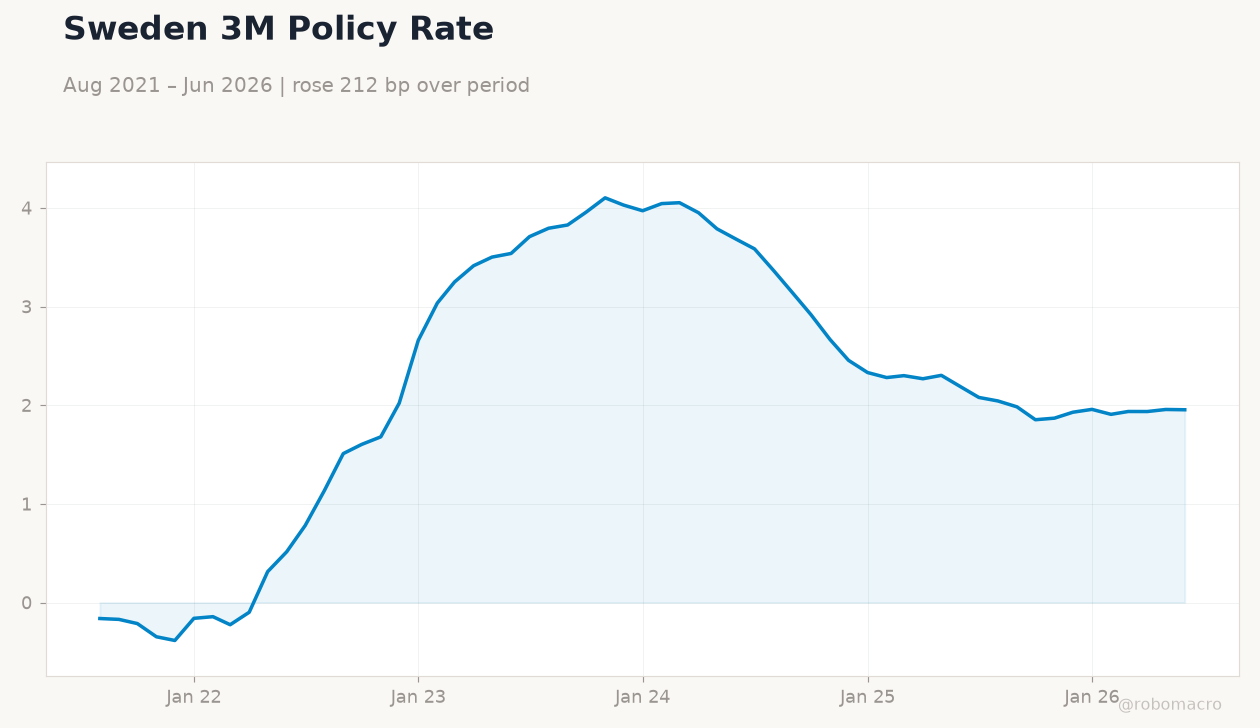
- Rabobank sees moderately firmer SEK tone into year-end on rising rate-hike risks
- Equities mixed as OMX Stockholm rises 0.57% while Oslo Bors falls 0.82%
- Sweden 10Y yield climbs while Norway 10Y drops sharply on divergent fiscal signals
Yesterday's Recap
No economic data releases occurred across Sweden, Norway, Denmark or Finland. Equity markets delivered mixed results, with the OMX Stockholm 30 advancing 0.57% to 3,217.89 while Oslo Bors declined 0.82% to 1,991.12. The OMX Copenhagen 25 edged up 0.13% and the OMX Helsinki 25 fell 0.40%.
USD/SEK rose 0.58% to 9.73 and USD/NOK gained 1.04% to 9.68, though Rabobank highlighted a moderately firmer krona outlook into year-end. Sweden’s 10Y yield increased 1.31% to 2.78% while Norway’s 10Y yield fell 2.94% to 4.20%. Brent crude declined 1.22% to 87.28, weighing on the Norwegian krone.
Sweden’s June CPI at 0.68% year-on-year and Norway’s at 2.70% continue to frame policy expectations without fresh prints.
The Day Ahead
The Nordic calendar stays empty through tomorrow with zero scheduled releases. Focus will remain on external drivers including oil-price moves and global trade developments. Swedish exporters may monitor EUR/SEK stability near 11.06 for competitiveness signals.
Norwegian fiscal projections will continue to reflect Brent revenue swings given the country’s oil-export exposure. Danish and Finnish markets will track ECB communications for any impact on the EUR/DKK peg and eurozone-wide rates. Housing-market updates from Sweden could surface in coming sessions as the sector shows tentative stabilization.
Other Economic Notes
Sweden’s export-oriented manufacturing base remains sensitive to krona fluctuations and euro-area demand. Norway’s petroleum revenue outlook improves when Brent holds above 85, supporting the Government Pension Fund and narrowing the structural deficit. Denmark’s manufacturing and shipping sectors benefit from stable EUR/DKK conditions under the ERM II peg.
Finland’s eurozone membership transmits ECB policy directly into domestic borrowing costs and trade competitiveness. Housing starts in Sweden posted the first annual increase in two years, though prices stayed flat.