Nordics Macro Daily(Beta Mode)
Nordic Stocks Rise as Krona Strengthens
Market Snapshot
| Asset | Level | Change |
|---|---|---|
| OMX Stockholm 30 | 3,233.44 | +0.45% |
| Oslo Bors | 2,014.36 | +0.39% |
| OMX Copenhagen 25 | 1,867.02 | +0.86% |
| OMX Helsinki 25 | 6,202.85 | +0.53% |
| USD/SEK | 9.55 | -0.94% |
| USD/NOK | 9.55 | -0.47% |
| EUR/SEK | 10.99 | -0.57% |
| EUR/NOK | 10.99 | -0.11% |
| Brent Crude | 87.00 | -2.28% |
| Gold | 4,132.00 | +0.78% |
| Bitcoin | 64,256.85 | +0.55% |
| Sweden 10Y Govt Yield | 2.78% | +1.31% |
| Norway 10Y Govt Yield | 4.20% | -2.94% |
Prior Economic Events
| Data | Prior | Cons | Actual |
|---|---|---|---|
| No events available | |||
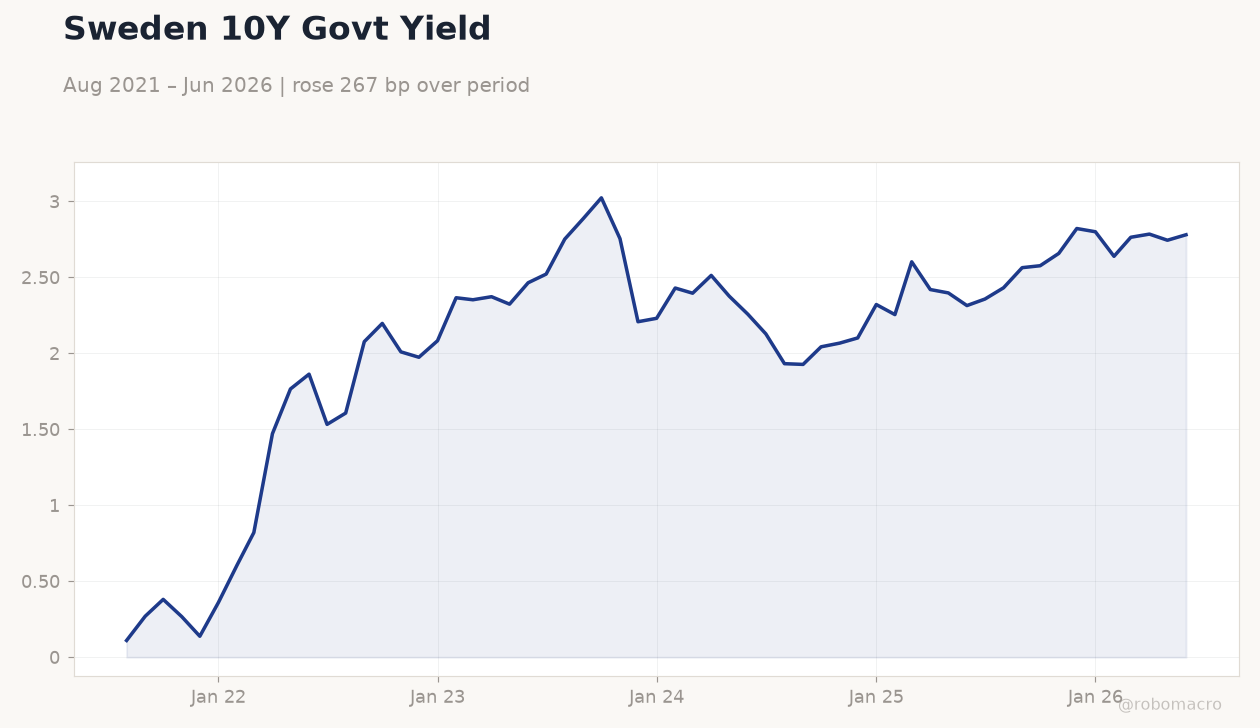 Sweden 10Y Govt Yield | Type: macro_line | Yield %: 2.781 (2026-06-01) | Range: 0.1101–3.024 | Trend(6pt): 0.1101,2.197,2.208,2.255,2.785,2.781
Today's Economic Events
| Data | Prior | Cons | Time |
|---|---|---|---|
| No events available | |||
- Nordic equity indices posted broad gains, led by Copenhagen's 0.86% rise
- Krona strengthened notably, with EUR/SEK falling below 11.00
- Brent crude declined 2.28% while Nordic government yields diverged
Yesterday's Recap
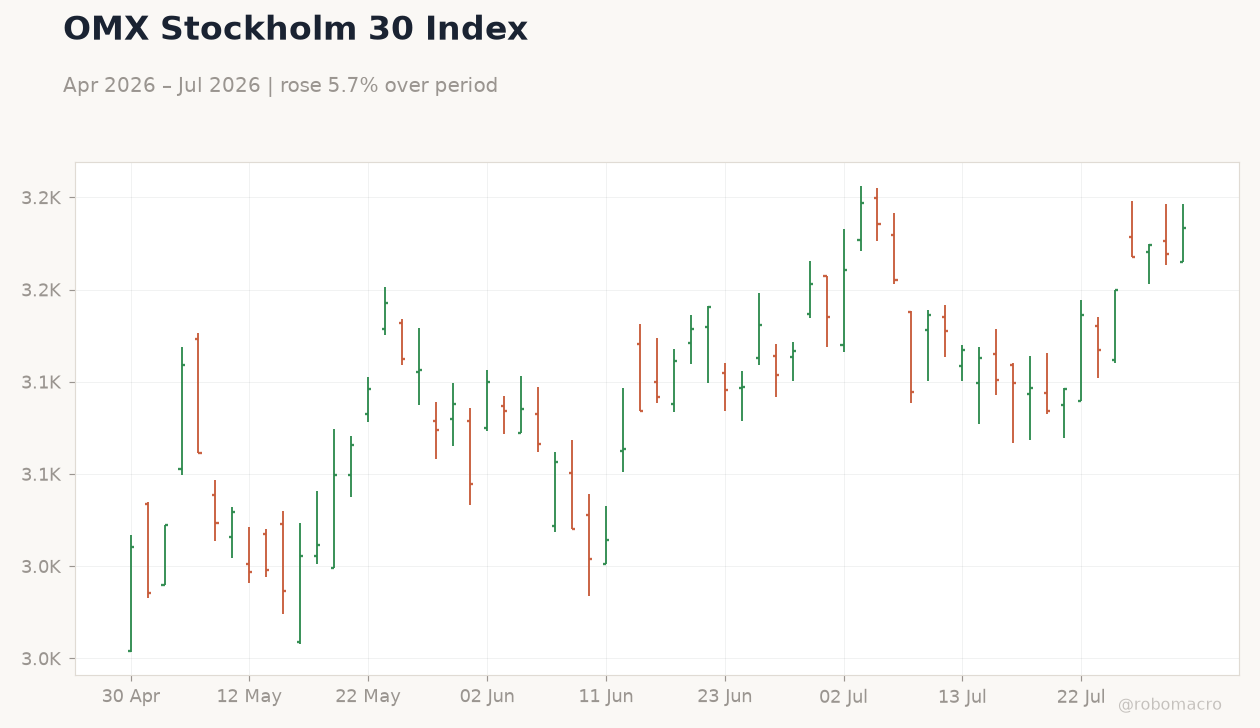
Nordic equity markets closed higher across the board on July 30. The OMX Stockholm 30 rose 0.45% to 3,233.44 while the Oslo Bors added 0.39% to 2,014.36. Copenhagen's OMX 25 outperformed with a 0.86% gain to 1,867.02 and Helsinki's OMX 25 advanced 0.53% to 6,202.85.
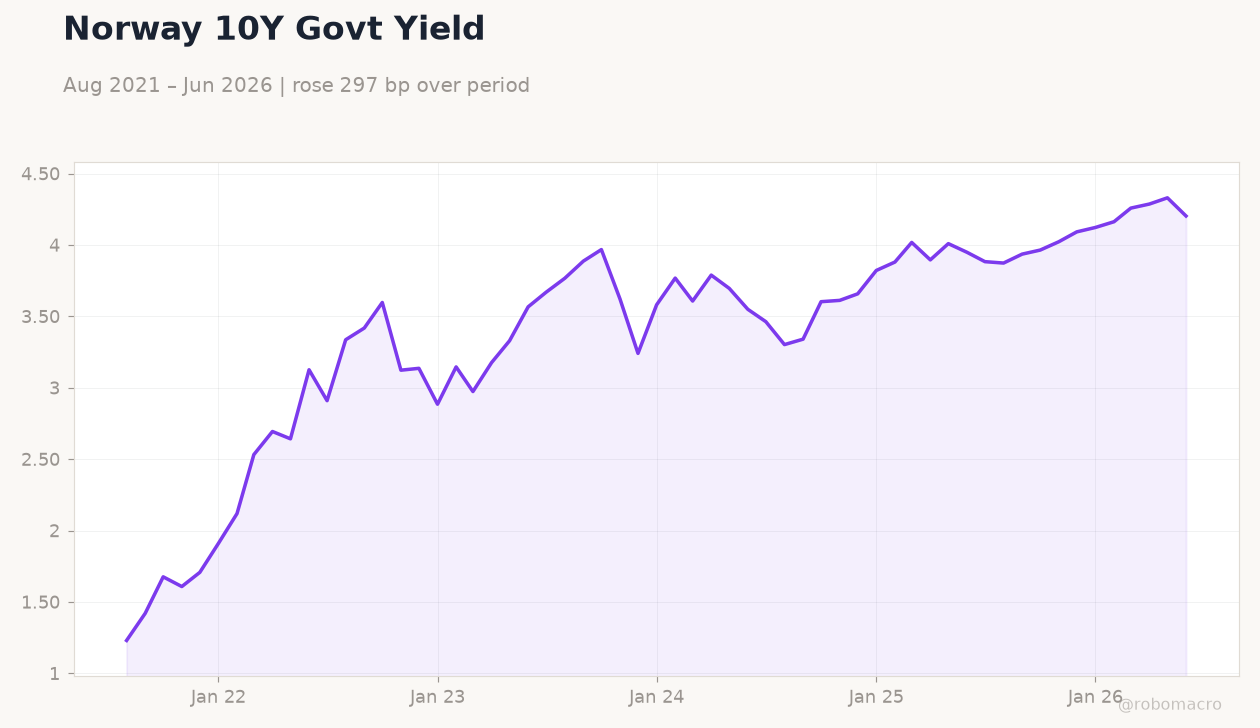
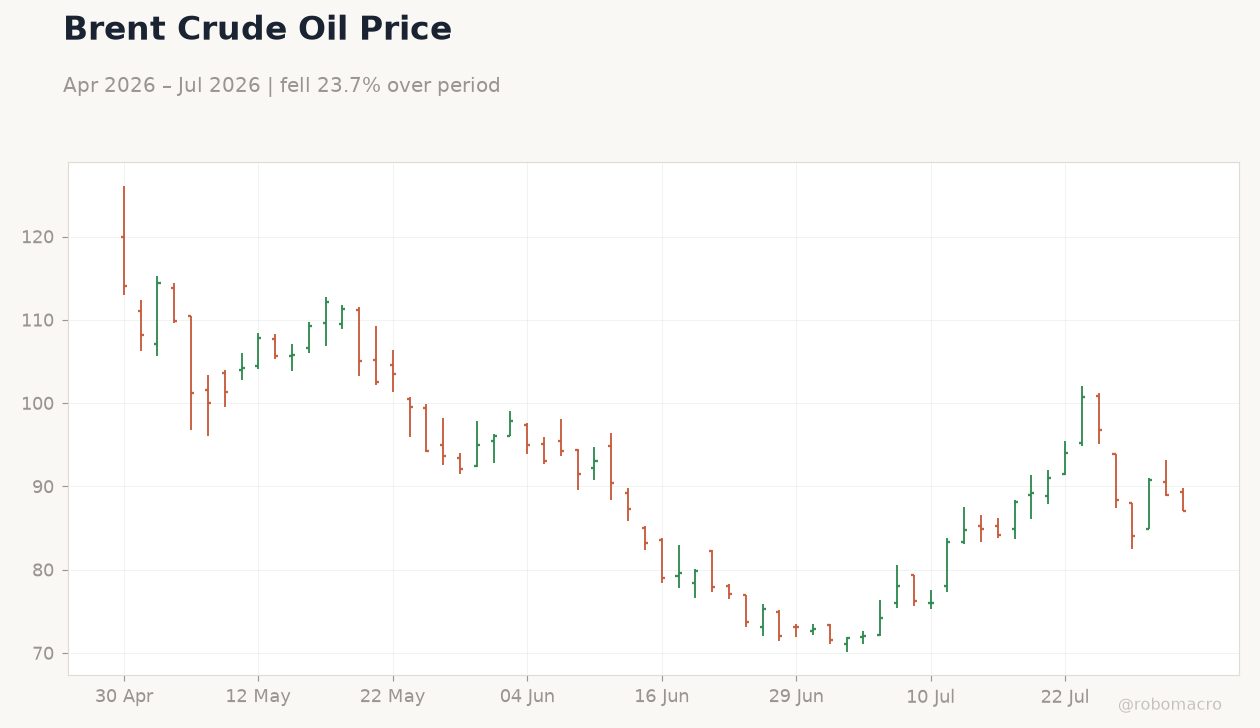
The Swedish krona strengthened materially, pushing EUR/SEK to 10.99 and USD/SEK to 9.55. Norway's 10-year yield fell 2.94% to 4.20% while Sweden's equivalent rose 1.31% to 2.78%. Brent crude's 2.28% drop to 87.00 weighed on oil-sensitive assets.
No major data releases occurred in Sweden, Norway, Denmark or Finland. Gold rose 0.78% to 4,132.00 and Bitcoin gained 0.55% to 64,256.85 amid the broader risk-on tone.
The Day Ahead
The Nordic calendar remains empty for August 1 with no scheduled releases from national statistics offices. Markets will monitor any follow-through in EUR/SEK after the krona's move below 11.00. Traders will also track Brent crude for implications on Norway's fiscal and currency outlook.
Denmark's fixed-rate policy means attention stays on ECB signals rather than domestic data. Finland's euro-area membership keeps focus on eurozone-wide indicators. Low event risk should keep attention on global risk sentiment and oil price action.
USD/NOK at 9.55 and EUR/NOK at 10.99 provide additional reference points for cross-rate movements.
Other Economic Notes
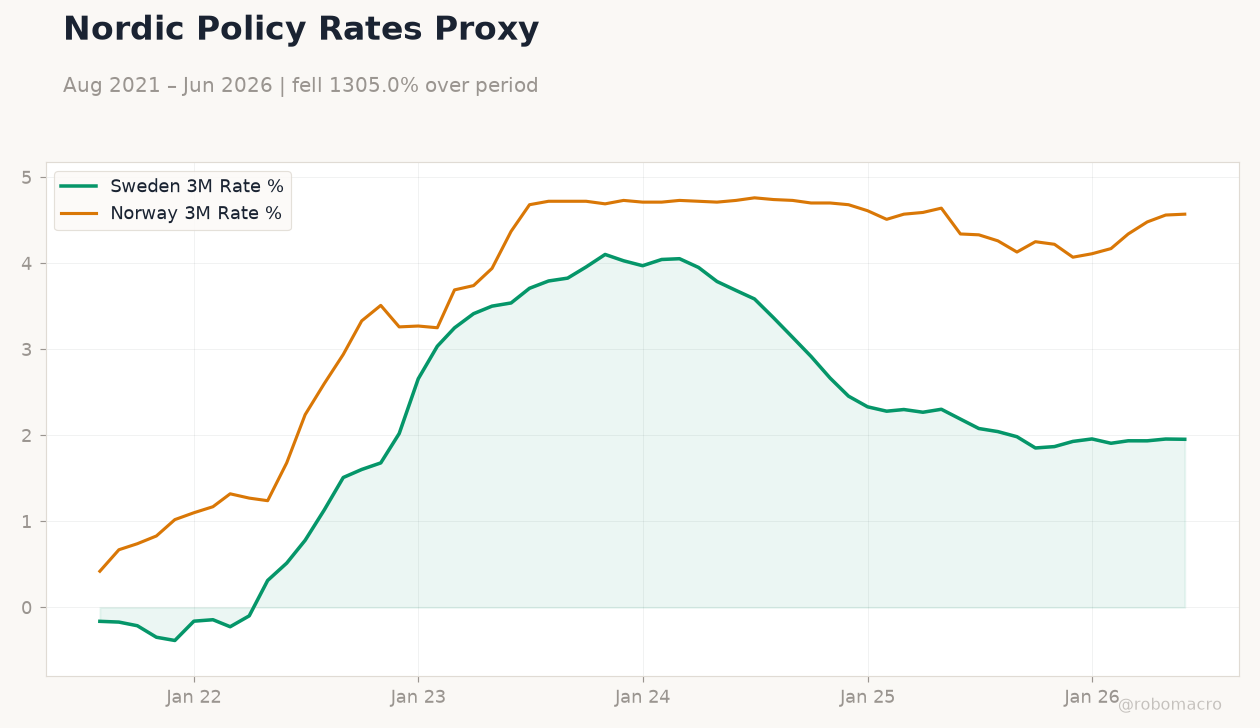
Sweden's June CPI at 0.68% YoY underscores subdued price pressures in the region's largest economy. Norway's 2.70% YoY CPI reading points to more persistent inflation, supporting a divergent policy path from the Riksbank. Export-oriented manufacturing sectors in Sweden and Denmark remain sensitive to euro-area demand and global trade flows.
Finland's integration into the eurozone transmits ECB policy directly into its financing conditions. Norway's oil revenue exposure creates a distinct fiscal buffer relative to its Nordic peers. The krona's recent gains against both the euro and dollar may ease imported inflation pressures for Sweden while challenging Norwegian exporters.
Global Macro News
The eurozone economy outpaced the U.S. despite Iran-related uncertainty. The Bank of England warned the UK economy risks flatlining in coming quarters.
<i>↓ p.2</i>