Nordics Macro Daily(Beta Mode)
Nordic Stocks Mixed as Norway Yields Drop
Market Snapshot
| Asset | Level | Change |
|---|---|---|
| OMX Stockholm 30 | 3,326.93 | +0.02% |
| Oslo Bors | 2,013.36 | -0.28% |
| OMX Copenhagen 25 | 1,819.33 | -0.87% |
| OMX Helsinki 25 | 6,221.46 | -0.61% |
| USD/SEK | 9.49 | -0.27% |
| USD/NOK | 9.53 | -0.02% |
| EUR/SEK | 10.96 | -0.15% |
| EUR/NOK | 11.01 | +0.11% |
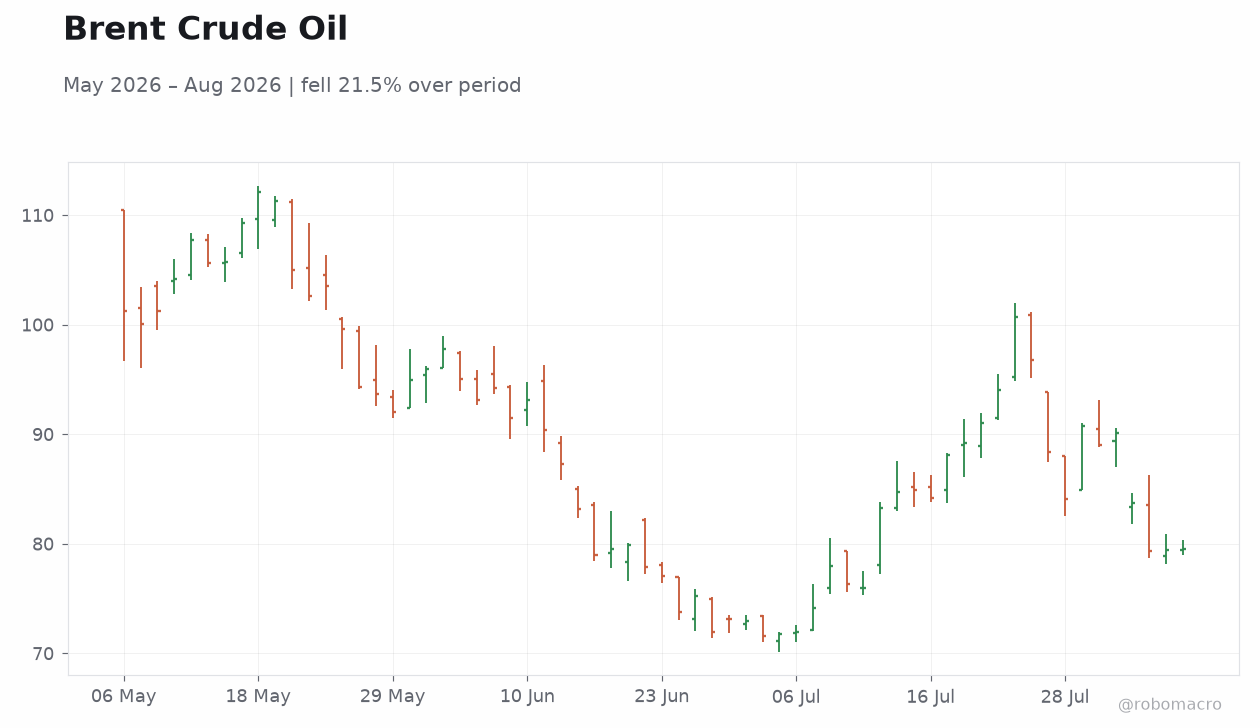
| Brent Crude | 79.48 | +0.04% |
| Gold | 4,319.40 | +1.73% |
| Bitcoin | 64,698.49 | +1.00% |
| Sweden 10Y Govt Yield | 2.78% | +1.31% |
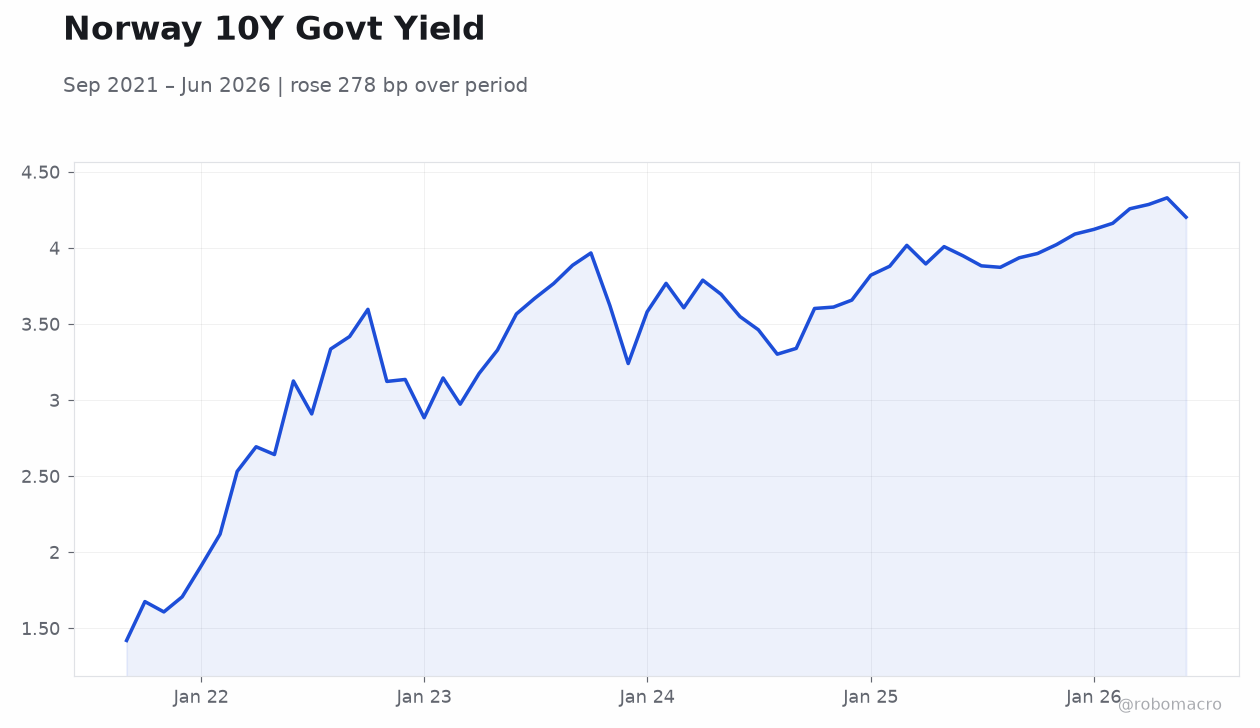
| Norway 10Y Govt Yield | 4.20% | -2.94% |
Prior Economic Events
| Data | Prior | Cons | Actual |
|---|---|---|---|
| No events available | |||
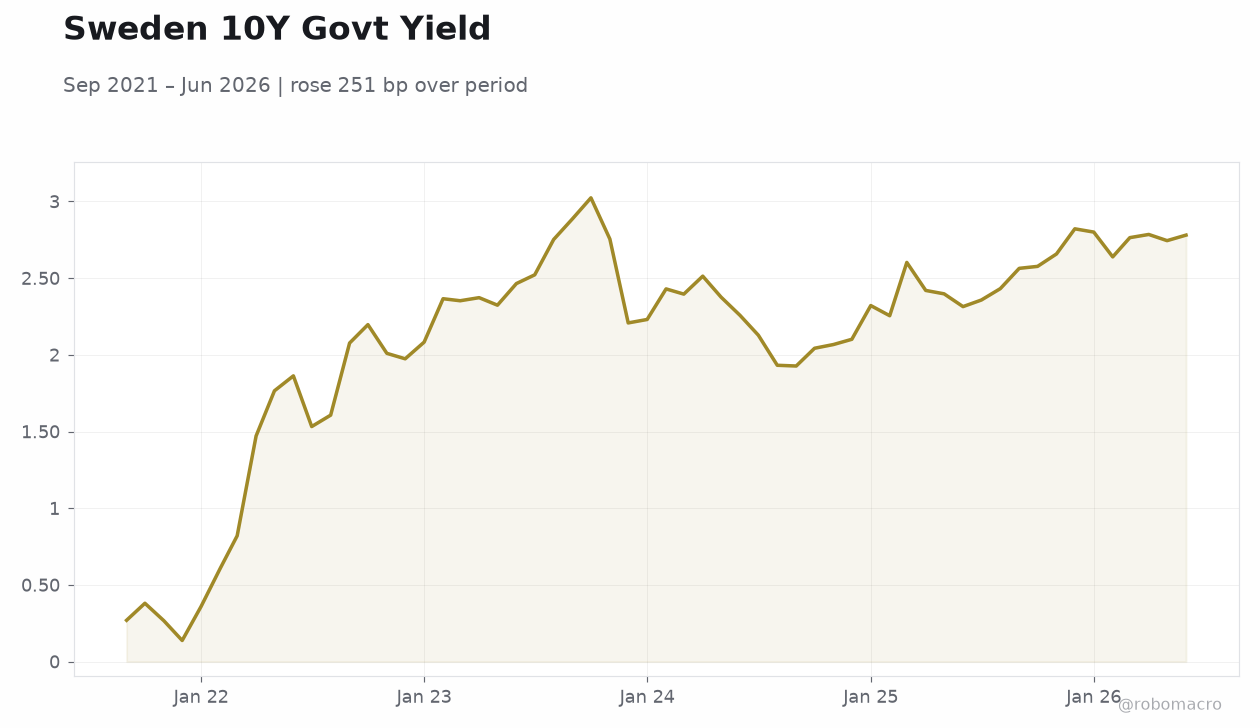 Sweden 10Y Govt Yield | Type: macro_line | Yield %: 2.781 (2026-06-01) | Range: 0.138–3.024 | Trend(6pt): 0.2696,2.01,2.231,2.602,2.745,2.781
Today's Economic Events
| Data | Prior | Cons | Time |
|---|---|---|---|
| No events available | |||
- OMX Stockholm 30 closed flat while Copenhagen and Helsinki indices fell over 0.6%
- Sweden 10Y yields rose 1.31% as Norway 10Y yields fell 2.94%
- Brent held near $79.50 with USD/SEK easing 0.27%
Yesterday's Recap
Nordic equity markets posted limited moves in thin summer trading. The OMX Stockholm 30 ended essentially unchanged at 3,326.93 while the Oslo Bors declined 0.28% to 2,013.36. Copenhagen’s OMX 25 dropped 0.87% to 1,819.33 and Helsinki’s OMX 25 fell 0.61% to 6,221.46.
Sweden’s 10-year government yield climbed to 2.78% while Norway’s 10-year yield declined to 4.20%. The Swedish krona strengthened modestly with USD/SEK at 9.49 and EUR/SEK at 10.96. Norway’s krone traded little changed against the dollar at 9.53.
No macroeconomic data releases occurred in any Nordic country. Gold rose 1.73% to 4,319.40 while Brent crude edged up 0.04% to 79.48.
The Day Ahead
No scheduled Nordic data releases or central-bank events appear on the calendar for the coming session. Market participants will therefore focus on external drivers including any follow-up commentary from ECB speakers and global oil-price developments. Norway’s fiscal position remains sensitive to Brent levels near $79.50 given the sovereign fund’s heavy equity exposure.
Swedish exporters will monitor EUR/SEK stability around 10.96 for any impact on competitiveness. Danish and Finnish markets are expected to track euro-area sentiment closely in the absence of local catalysts. Positioning is likely to stay light ahead of the weekend.
EUR/NOK at 11.01 offers little directional cue for krone volatility.
Other Economic Notes
Eurozone GDP expanded 0.4% in the second quarter, outpacing earlier forecasts and providing a mild tailwind for export-oriented Nordic economies. Norway continues to benefit from disciplined management of oil revenues, with its sovereign fund now holding stakes across global equities worth roughly 3.78 million kroner per resident. Sweden and Denmark remain exposed to manufacturing cycles that could strengthen if euro-area demand holds.
Finland’s performance stays tied to ECB policy settings and broader eurozone growth momentum. Housing-market data remain absent from the immediate pipeline, leaving credit-spread movements as the main domestic gauge of financial conditions. Bitcoin gained 1.00% to 64,698.49 amid risk-on flows.