Nordics Macro Daily(Beta Mode)
Nordic Markets Mixed on Soft Swedish CPI
Market Snapshot
| Asset | Level | Change |
|---|---|---|
| OMX Stockholm 30 | 3,323.10 | -0.12% |
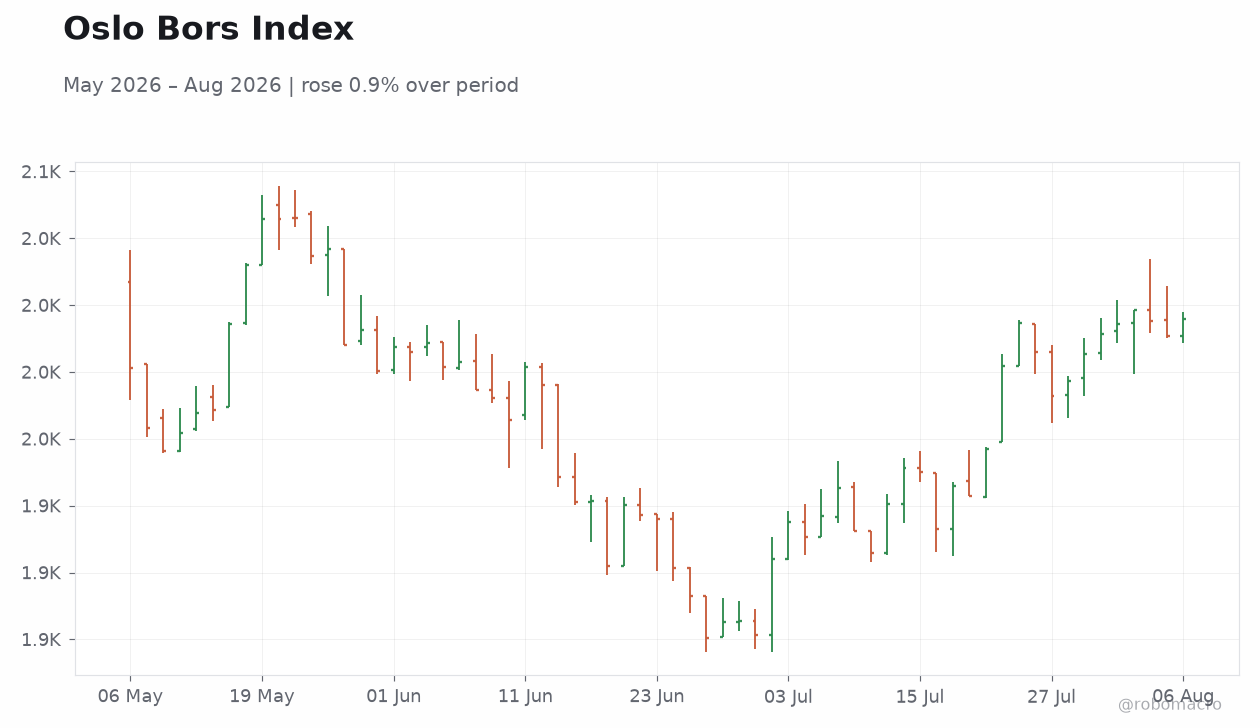
| Oslo Bors | 2,020.00 | +0.33% |
| OMX Copenhagen 25 | 1,823.66 | +0.24% |
| OMX Helsinki 25 | 6,239.64 | +0.29% |
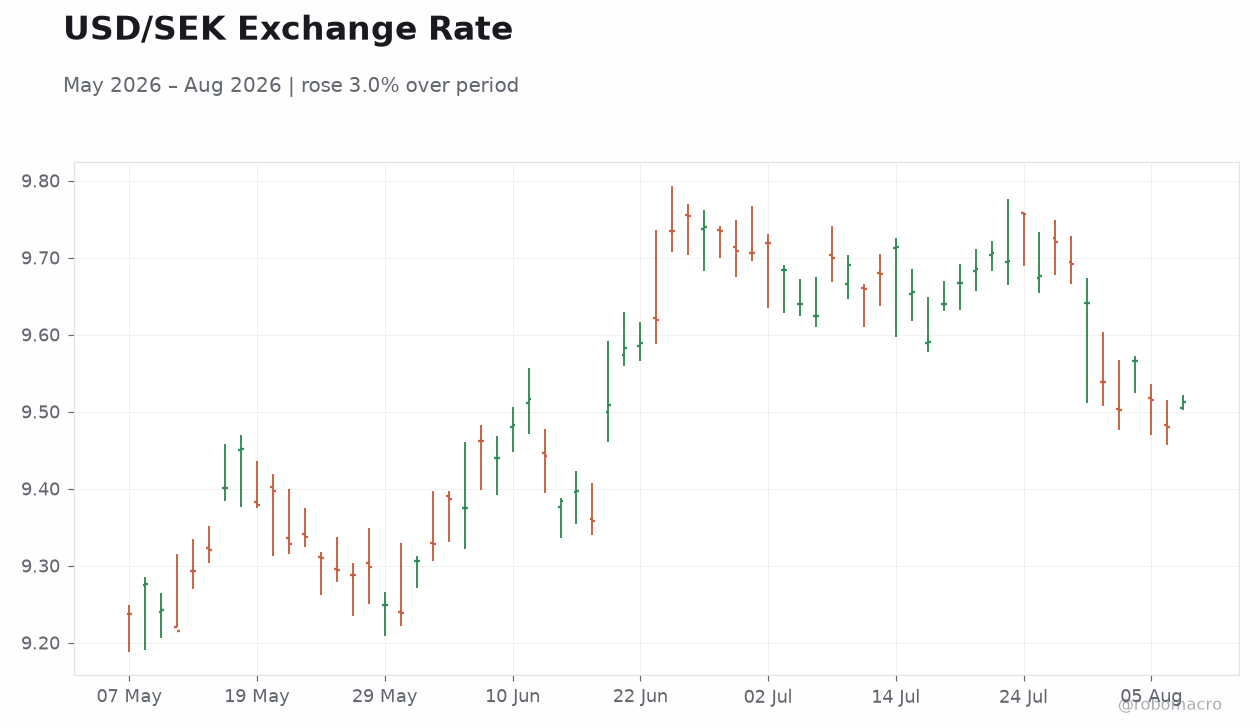
| USD/SEK | 9.51 | +0.32% |
| USD/NOK | 9.54 | +0.16% |
| EUR/SEK | 10.96 | +0.01% |
| EUR/NOK | 10.99 | -0.15% |
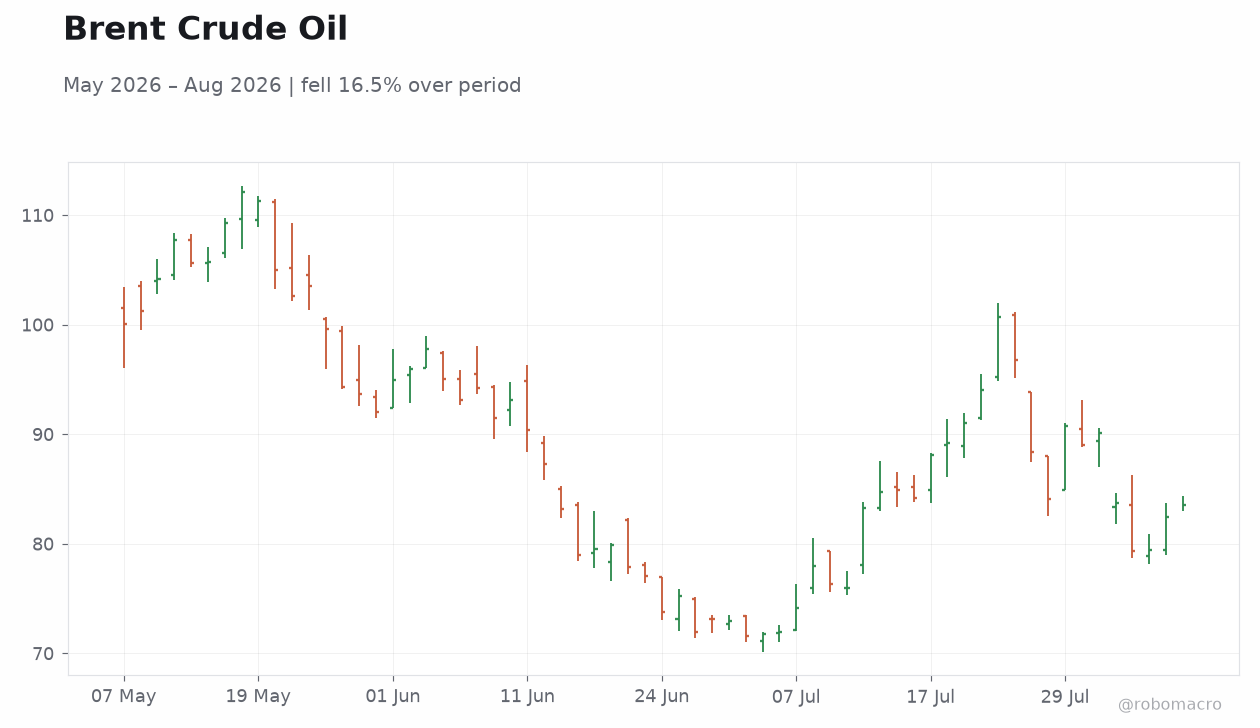
| Brent Crude | 83.54 | +1.27% |
| Gold | 4,333.80 | +2.16% |
| Bitcoin | 64,258.67 | -0.52% |
| Sweden 10Y Govt Yield | 2.78% | +1.31% |
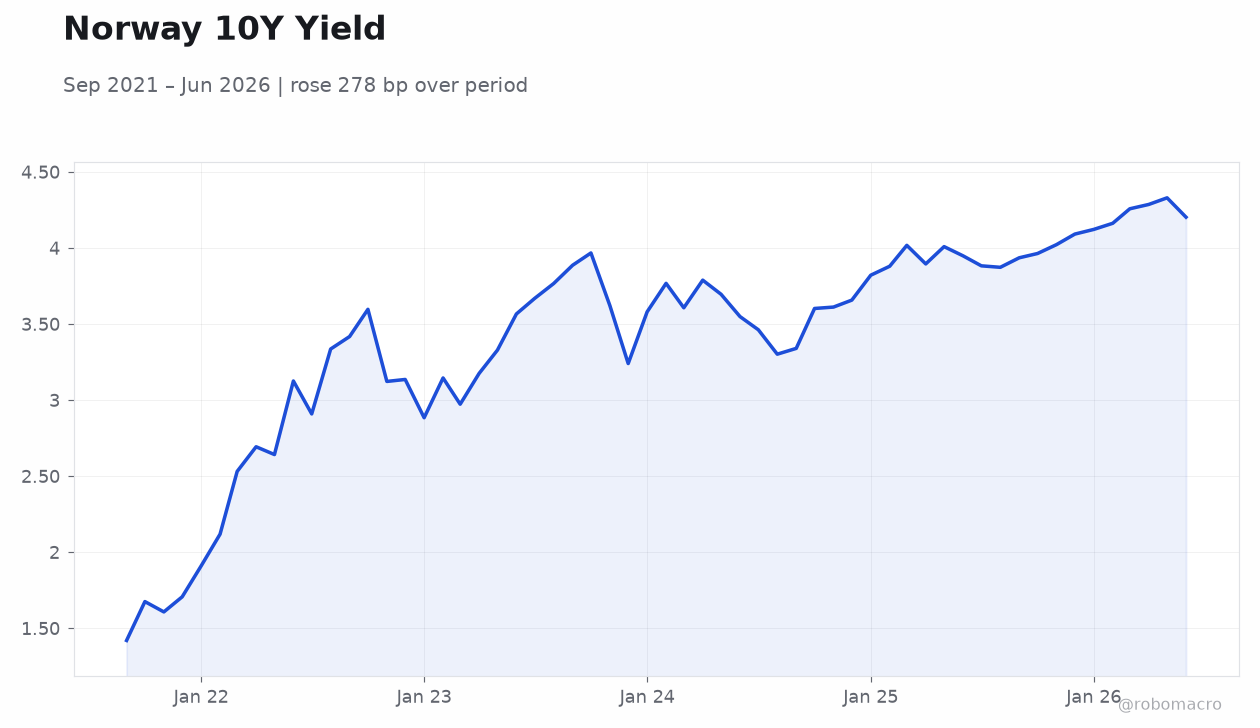
| Norway 10Y Govt Yield | 4.20% | -2.94% |
Prior Economic Events
| Data | Prior | Cons | Actual |
|---|---|---|---|
| No events available | |||
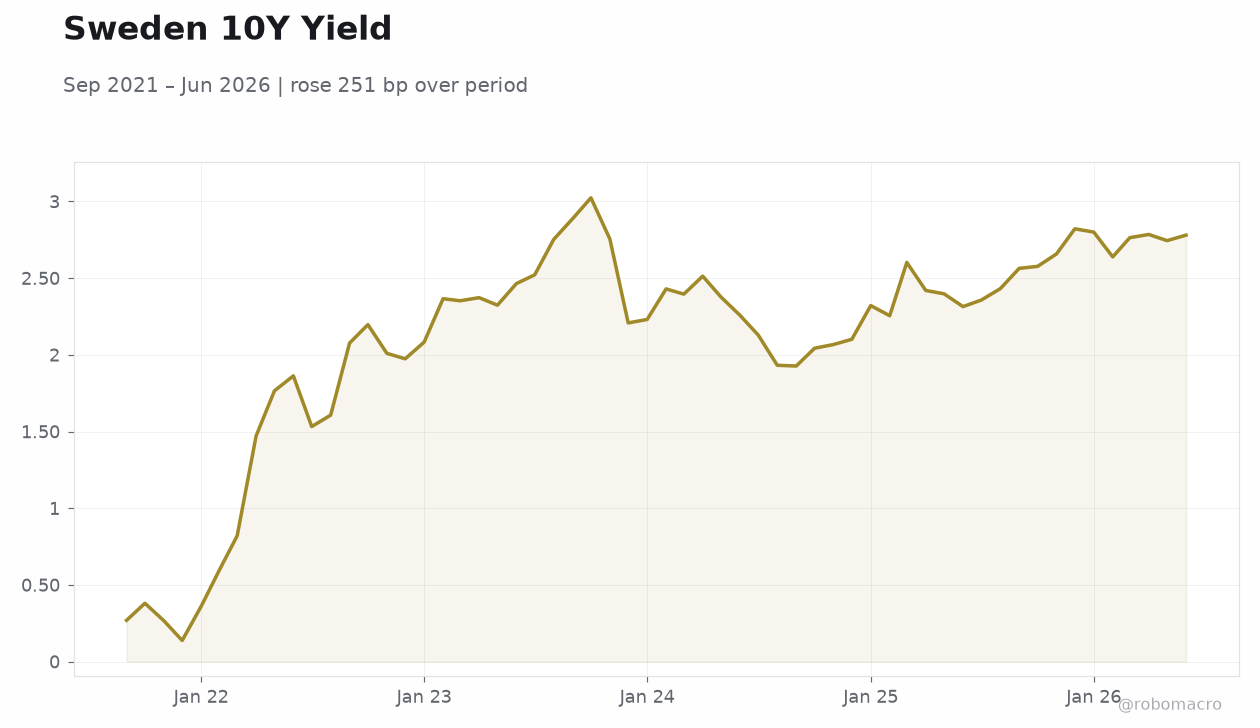 Sweden 10Y Yield | Type: macro_line | Yield %: 2.781 (2026-06-01) | Range: 0.138–3.024 | Trend(6pt): 0.2696,2.01,2.231,2.602,2.745,2.781
Today's Economic Events
| Data | Prior | Cons | Time |
|---|---|---|---|
| No events available | |||
- Swedish July CPI cooled to 0.20% y/y, supporting Riksbank hold at current settings.
- Nordic bourses closed mixed with Oslo Bors gaining 0.33% while OMX Stockholm fell 0.12%.
- Brent rose 1.27% to $83.54, lending support to NOK amid quiet data calendar.
Yesterday's Recap
Nordic markets recorded modest moves in the absence of fresh releases. OMX Stockholm 30 declined 0.12% to 3,323.10 while Oslo Bors advanced 0.33% to 2,020.00, lifted by energy exposure. OMX Copenhagen 25 rose 0.24% and OMX Helsinki 25 gained 0.29%.
USD/SEK climbed 0.32% to 9.51 and USD/NOK added 0.16% to 9.54. EUR/SEK edged 0.01% higher to 10.96 while EUR/NOK fell 0.15% to 10.99. Sweden’s July CPI print at 0.20% y/y aligned with expectations for a measured Riksbank path.
Norway’s June CPI at 2.70% y/y left Norges Bank on a steady footing. Ten-year yields diverged, with Sweden’s rising 1.31% to 2.78% and Norway’s falling 2.94% to 4.20%. Brent’s advance offered marginal tailwinds to the Norwegian krone.
Gold surged 2.16% to 4,333.80 while Bitcoin eased 0.52% to 64,258.67.
The Day Ahead
The forward calendar remains empty of scheduled Nordic releases. Market participants will monitor any follow-up commentary from Riksbank or Norges Bank officials. Equity and FX flows are expected to stay range-bound absent fresh inflation or labor data.
Denmark and Finland continue to track ECB signals through their respective policy linkages. Brent price action will remain the dominant external driver for NOK valuation. Overall activity is likely to stay light until next week’s potential mainland GDP figures from Norway.
Sovereign wealth fund flows and shipping indicators from Denmark may provide secondary color on regional risk appetite.
Other Economic Notes
Export-oriented Nordic economies continue to navigate subdued global demand. Sweden’s housing market shows tentative stabilization after earlier weakness, though transaction volumes remain depressed. Norway’s sovereign wealth fund maintains its broad equity exposure, cushioning fiscal balances against oil-price volatility.
Danish shipping indicators point to steady volumes, supporting the current-account surplus. Finnish manufacturing faces ongoing euro-area headwinds but benefits from lower energy costs. Regional credit spreads stayed stable, reflecting contained banking-sector stress.
<i>↓ p.2</i>