Nordics Macro Daily(Beta Mode)
Riksbank Decision Looms Amid Low Swedish CPI
Market Snapshot
| Asset | Level | Change |
|---|---|---|
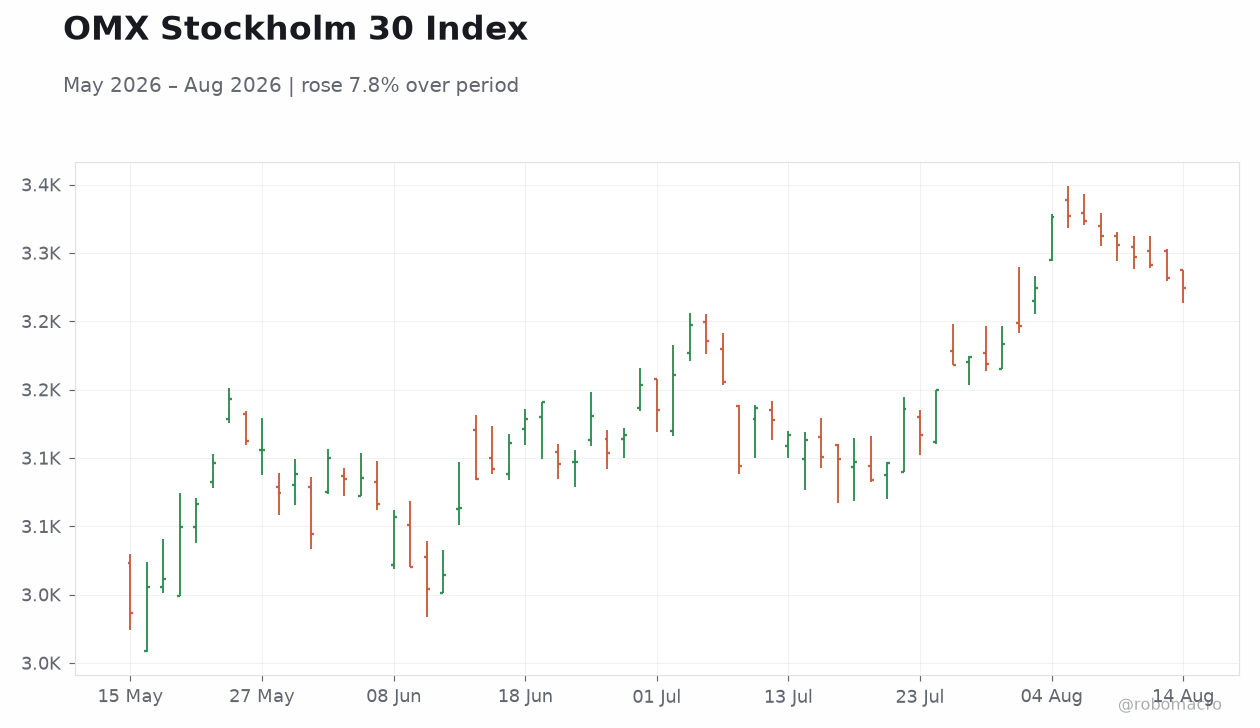
| OMX Stockholm 30 | 3,274.52 | -0.21% |
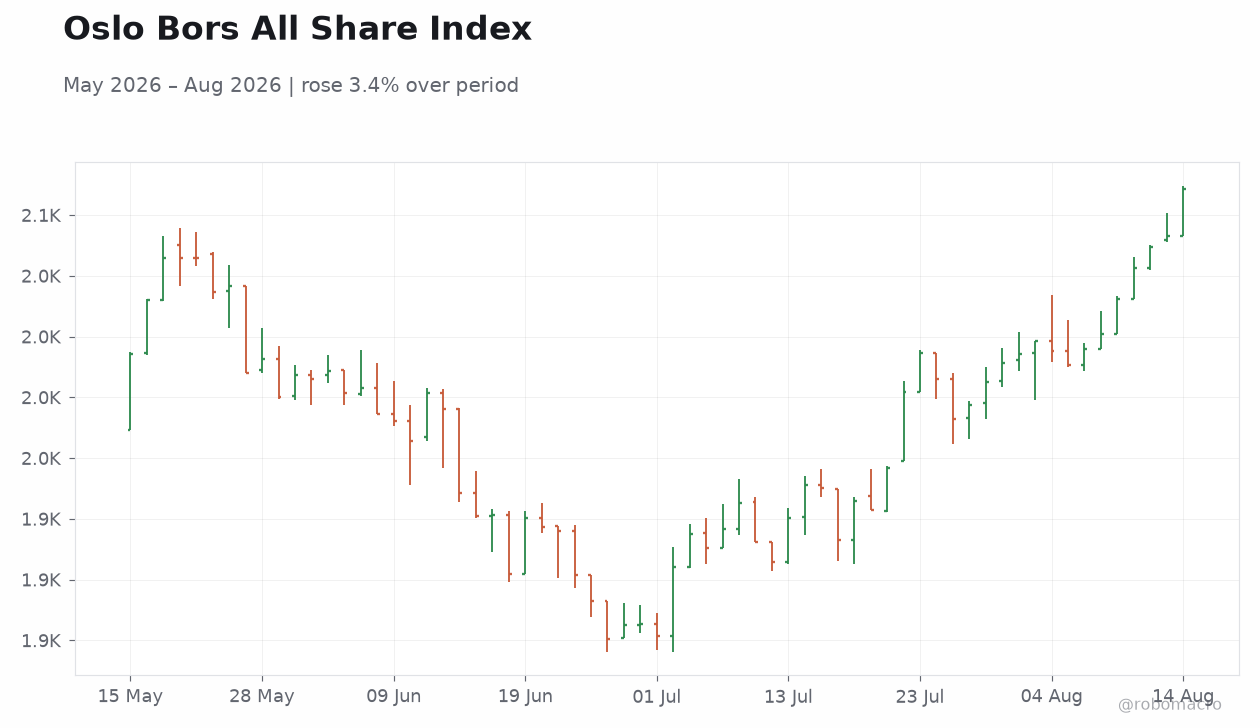
| Oslo Bors | 2,085.84 | +0.94% |
| OMX Copenhagen 25 | 1,899.24 | +0.50% |
| OMX Helsinki 25 | 6,348.86 | +0.03% |
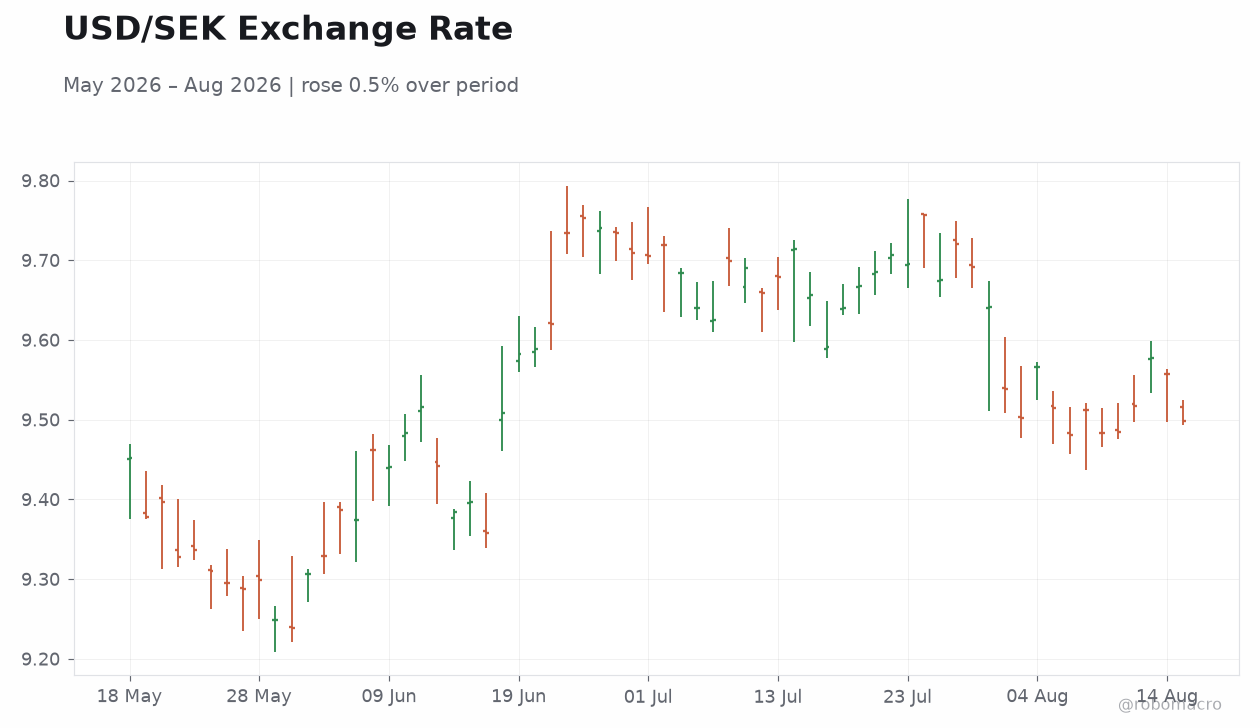
| USD/SEK | 9.50 | -0.63% |
| USD/NOK | 9.50 | +0.13% |
| EUR/SEK | 11.00 | -0.17% |
| EUR/NOK | 10.92 | -0.39% |
| Brent Crude | 88.33 | -0.21% |
| Gold | 4,451.00 | +1.61% |
| Bitcoin | 63,459.91 | +0.69% |
| Sweden 10Y Govt Yield | 2.78% | +1.31% |
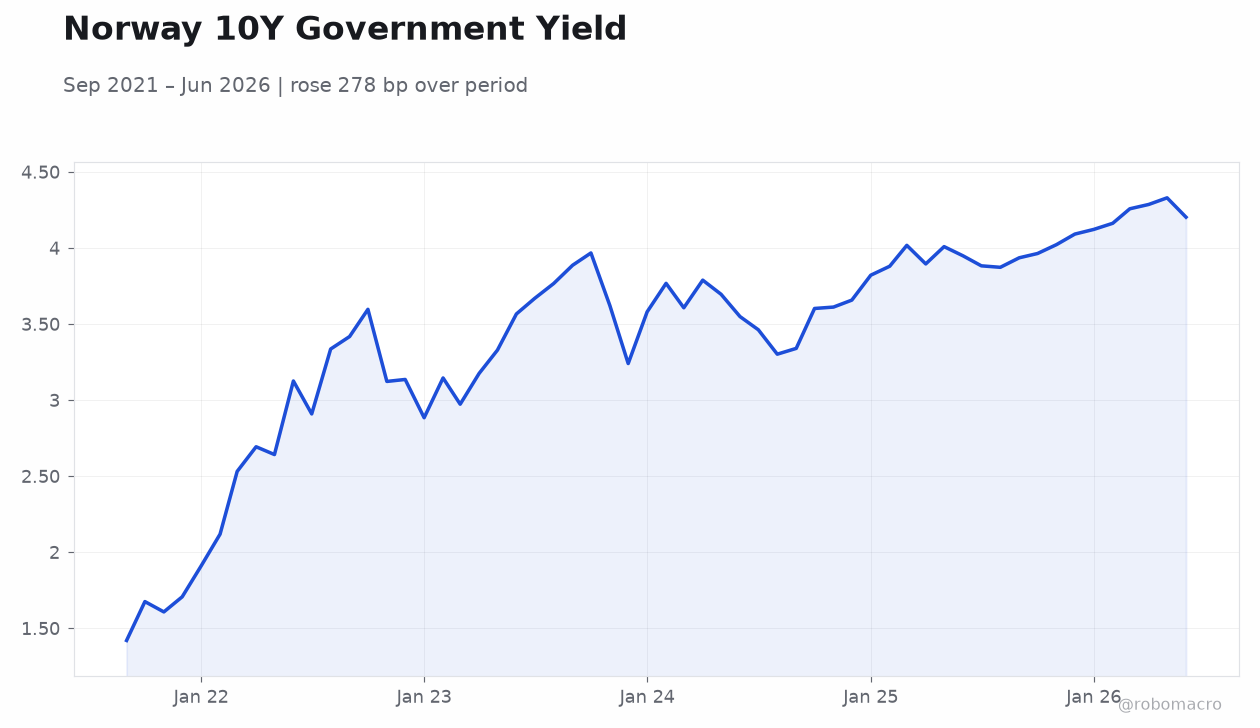
| Norway 10Y Govt Yield | 4.20% | -2.94% |
Prior Economic Events
| Data | Prior | Cons | Actual |
|---|---|---|---|
| No events available | |||
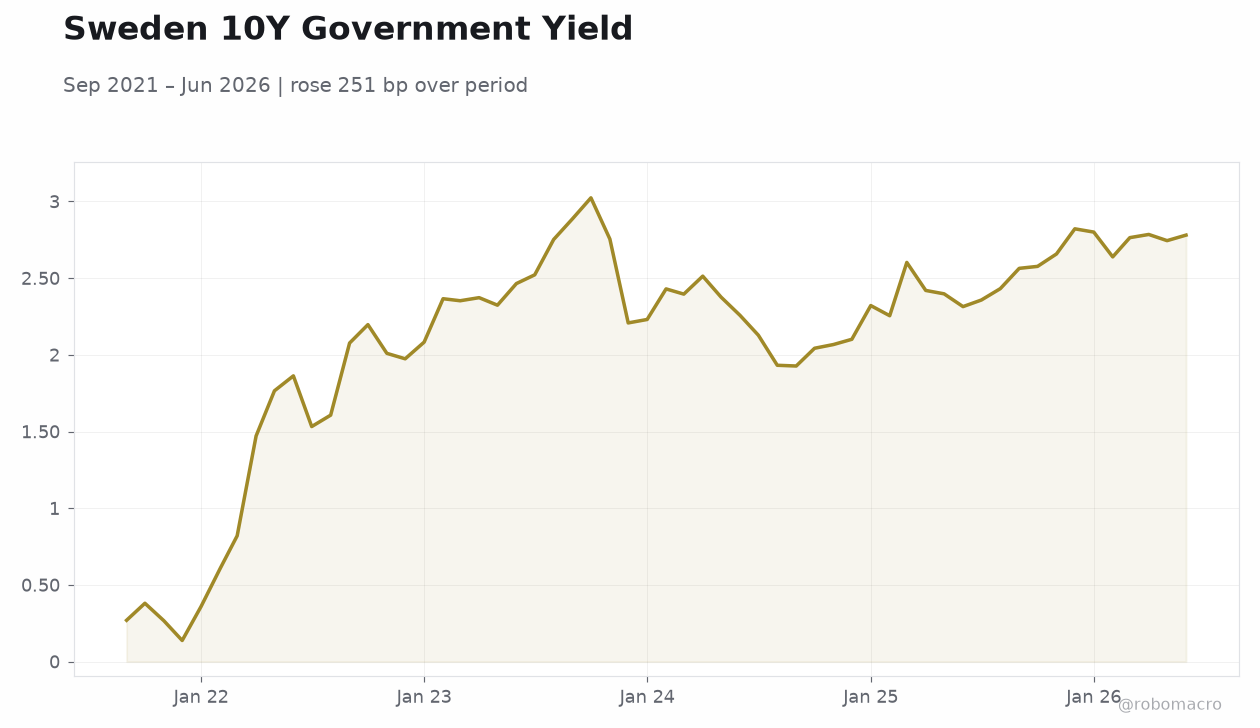 Sweden 10Y Government Yield | Type: macro_line | Yield %: 2.781 (2026-06-01) | Range: 0.138–3.024 | Trend(6pt): 0.2696,2.01,2.231,2.602,2.745,2.781
Today's Economic Events
| Data | Prior | Cons | Time |
|---|---|---|---|
| Riksbank Rate Decision | 1.75 | - | 23:30 |
| Press Conference by Riksbank | - | - | 01:00 |
- Nordic equities mixed with Oslo Bors leading gains on firmer Brent while Stockholm slipped
- Riksbank rate decision due 19 August amid low Swedish CPI at 0.20% y/y
- Norges Bank held policy rate steady with NOK showing limited reaction to oil revenue outlook
Yesterday's Recap
Nordic equity markets posted divergent closes on 16 August. The OMX Stockholm 30 fell 0.21% to 3,274.52 while the Oslo Bors rose 0.94% to 2,085.84, supported by Brent crude at 88.33. Copenhagen’s OMX 25 advanced 0.50% and Helsinki’s OMX 25 edged 0.03% higher.
Currency moves featured USD/SEK declining 0.63% to 9.50 and EUR/SEK falling 0.17% to 11.00. Norway’s 10-year yield dropped 2.94% to 4.20% while Sweden’s 10-year yield climbed 1.31% to 2.78%. Recent Swedish CPI at 0.20% y/y and Norwegian CPI at 2.98% y/y framed the subdued data backdrop with no major releases recorded on 16 August.
Gold rose 1.61% to 4,451 while Bitcoin gained 0.69% to 63,459.91.
The Day Ahead
Markets await the Riksbank rate decision scheduled for 19 August at 23:30 ET followed by the press conference at 01:00 on 20 August. No high-impact Nordic data prints are listed for 18 August. Attention will center on whether the committee maintains the current stance given Sweden’s subdued inflation print.
Norwegian oil output and Brent price movements may influence NOK flows ahead of any Norges Bank commentary. Danish and Finnish calendars remain light with no scheduled policy or inflation releases. USD/NOK at 9.50 and EUR/NOK at 10.92 provide reference levels for any NOK reaction to oil stability near 88.33.
Other Economic Notes
Sweden’s low 0.20% CPI reading underscores persistent disinflation pressures in the export-oriented manufacturing sector. Norway continues to benefit from Brent levels near 88 that bolster fiscal surpluses and support krone stability. Denmark’s euro peg constrains independent policy moves while Finland’s eurozone membership ties its outlook directly to ECB decisions.
Housing sector weakness in Sweden remains a drag on construction activity and employment. Trade data across the region show resilience in goods exports despite global uncertainty. OMX Helsinki 25 at 6,348.86 reflects limited movement amid the broader regional pattern.
Global Macro News
Softer US CPI readings have eased global rate expectations and supported risk assets that indirectly aid Nordic exporters. UK economic expansion provides a modest tailwind for Swedish and Danish manufacturing shipments. Polish growth momentum highlights continued strength in Central European demand relevant to Nordic supply chains.
<i>↓ p.2</i>