Nordics Macro Daily(Beta Mode)
Riksbank Holds as Krona Weakens on Soft Data
Market Snapshot
| Asset | Level | Change |
|---|---|---|
| OMX Stockholm 30 | 3,274.52 | -0.21% |
| Oslo Bors | nan | +nan% |
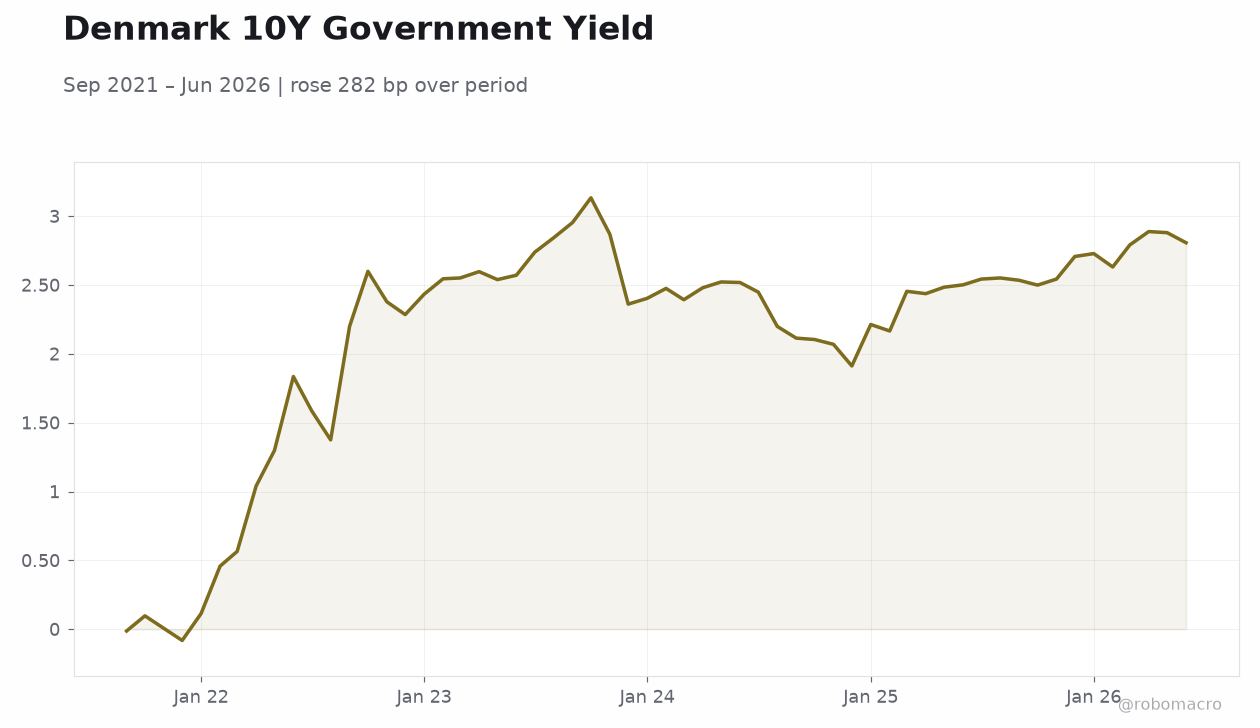
| OMX Copenhagen 25 | 1,899.24 | +0.50% |
| OMX Helsinki 25 | 6,348.86 | +0.03% |
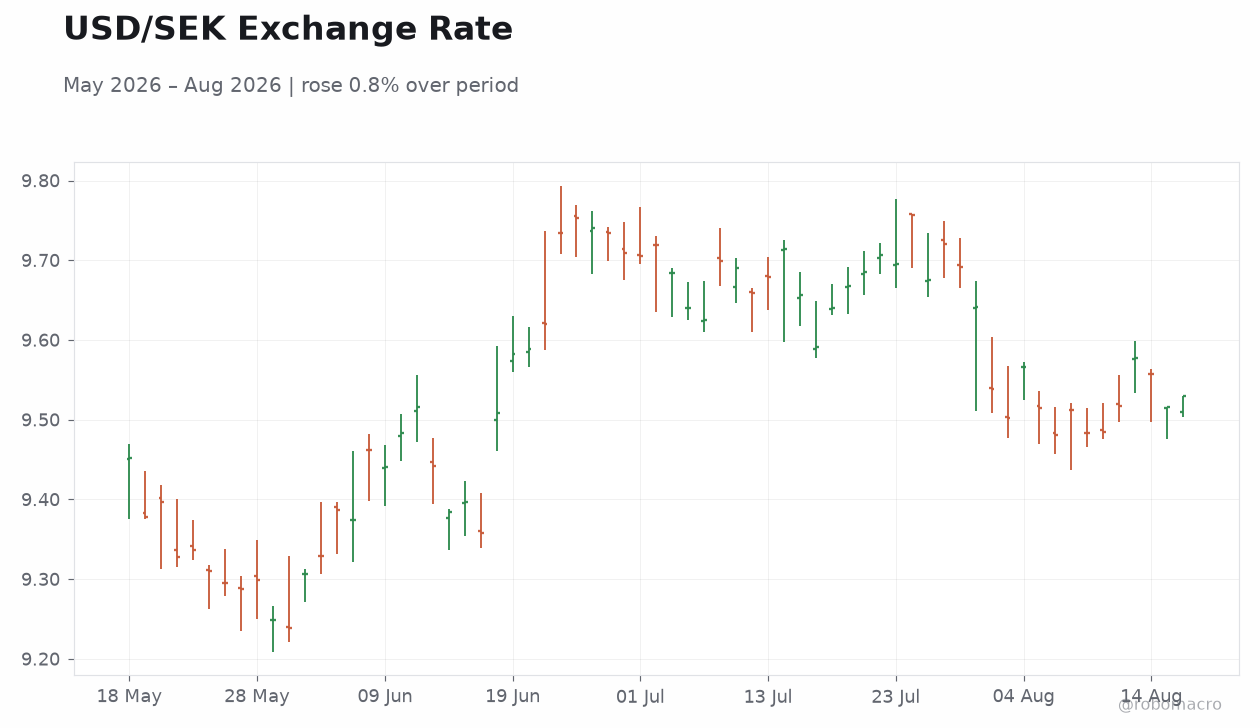
| USD/SEK | 9.53 | +0.11% |
| USD/NOK | 9.42 | -0.16% |
| EUR/SEK | 11.02 | +0.10% |
| EUR/NOK | 10.93 | -0.34% |
| Brent Crude | 91.21 | +0.37% |
| Gold | 4,451.50 | +0.76% |
| Bitcoin | 64,141.50 | +2.11% |
| Sweden 10Y Govt Yield | 2.78% | +1.31% |
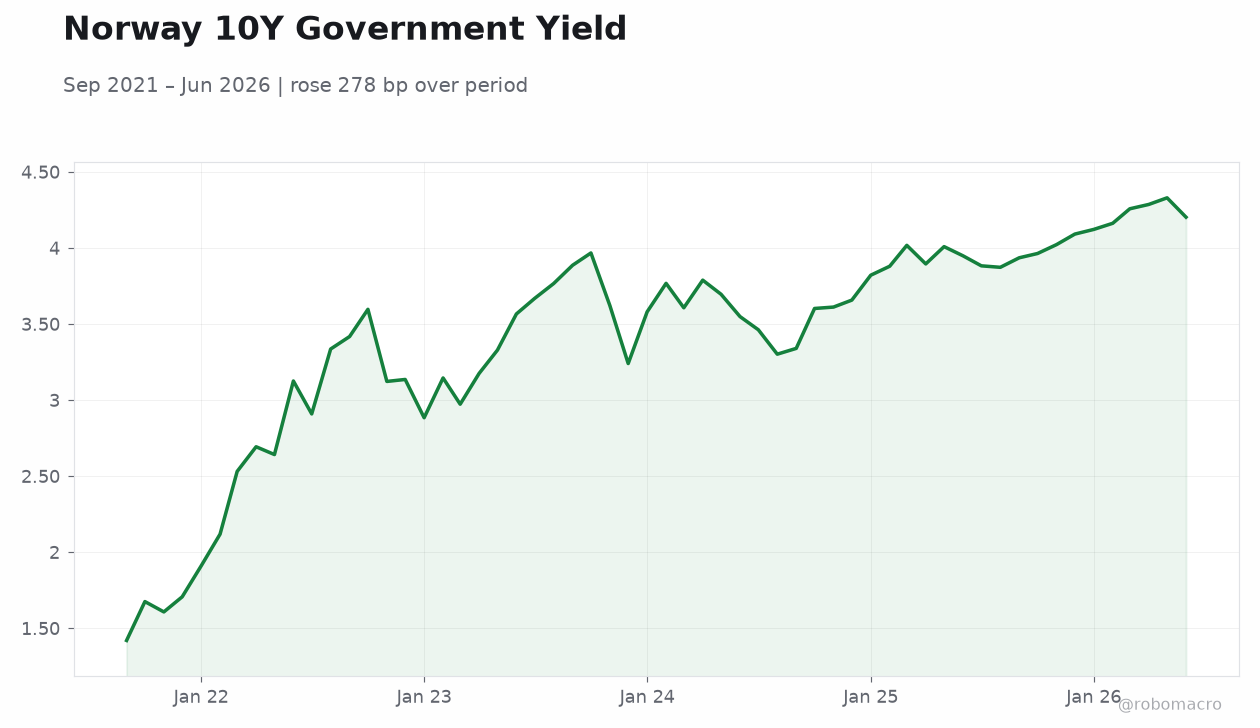
| Norway 10Y Govt Yield | 4.20% | -2.94% |
Prior Economic Events
| Data | Prior | Cons | Actual |
|---|---|---|---|
| No events available | |||
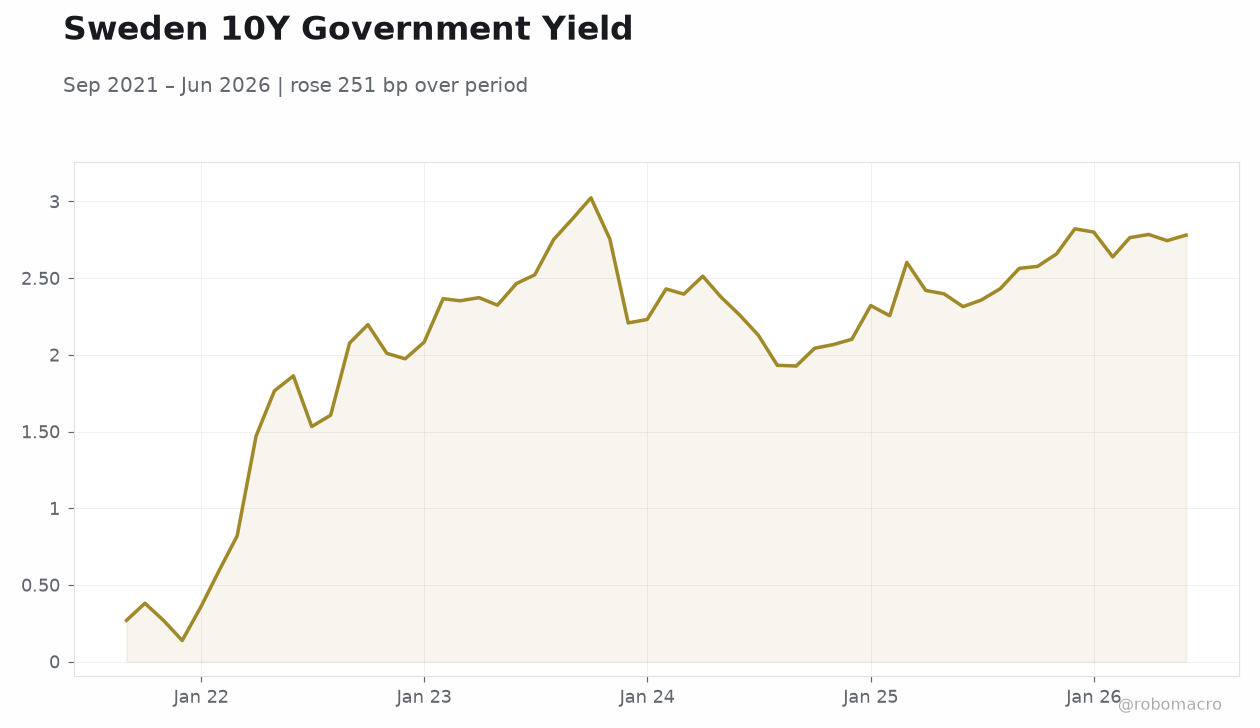 Sweden 10Y Government Yield | Type: macro_line | Yield %: 2.781 (2026-06-01) | Range: 0.138–3.024 | Trend(6pt): 0.2696,2.01,2.231,2.602,2.745,2.781
Today's Economic Events
| Data | Prior | Cons | Time |
|---|---|---|---|
| Riksbank Rate Decision | 1.75 | 1.75 | 03:30 |
- Riksbank set to hold policy rate at 1.75% on August 20 amid subdued Swedish inflation.
- OMX Stockholm fell 0.21% while Copenhagen rose 0.50% on regional equity moves.
- Norwegian krone posted modest gains versus euro as Brent crude edged higher.
Yesterday's Recap
Equity markets across the Nordics posted mixed closes on August 17 with limited economic releases. OMX Stockholm 30 declined 0.21% to 3,274.52 while OMX Copenhagen 25 advanced 0.50% to 1,899.24 and OMX Helsinki 25 rose 0.03%. The Swedish krona weakened modestly with USD/SEK rising 0.11% to 9.53 and EUR/SEK up 0.10% to 11.02.
In Norway, USD/NOK fell 0.16% to 9.42 and EUR/NOK dropped 0.34% to 10.93 as Brent crude gained 0.37% to 91.21. Sweden’s 10-year government yield rose 1.31% to 2.78% while Norway’s 10-year yield fell 2.94% to 4.20%. News flow centered on expectations that the Riksbank will maintain its current stance given Sweden’s July CPI at 0.20% year-over-year.
Market participants also noted Norway’s July CPI at 2.98% year-over-year as a benchmark for Norges Bank policy calibration. Gold rose 0.76% to 4,451.50 and Bitcoin gained 2.11% to 64,141.50, reflecting broader risk appetite that drew some flows away from Nordic currencies.
The Day Ahead
Attention turns to the Riksbank rate decision scheduled for August 20 at 03:30 ET with consensus pointing to an unchanged 1.75% policy rate. Analysts will scrutinize the accompanying statement for guidance on inflation expectations and krona stability. No major data releases are listed for Denmark or Finland on August 18.
Norwegian markets remain focused on oil price movements and any follow-through from recent krone strength versus the euro. Traders will monitor cross-border flows into Danish assets given the currency’s ERM II peg to the euro. Overall activity is expected to stay light until the Swedish announcement.
Sweden’s low July CPI reading of 0.20% year-over-year continues to anchor expectations for steady policy despite krona softness.
Other Economic Notes
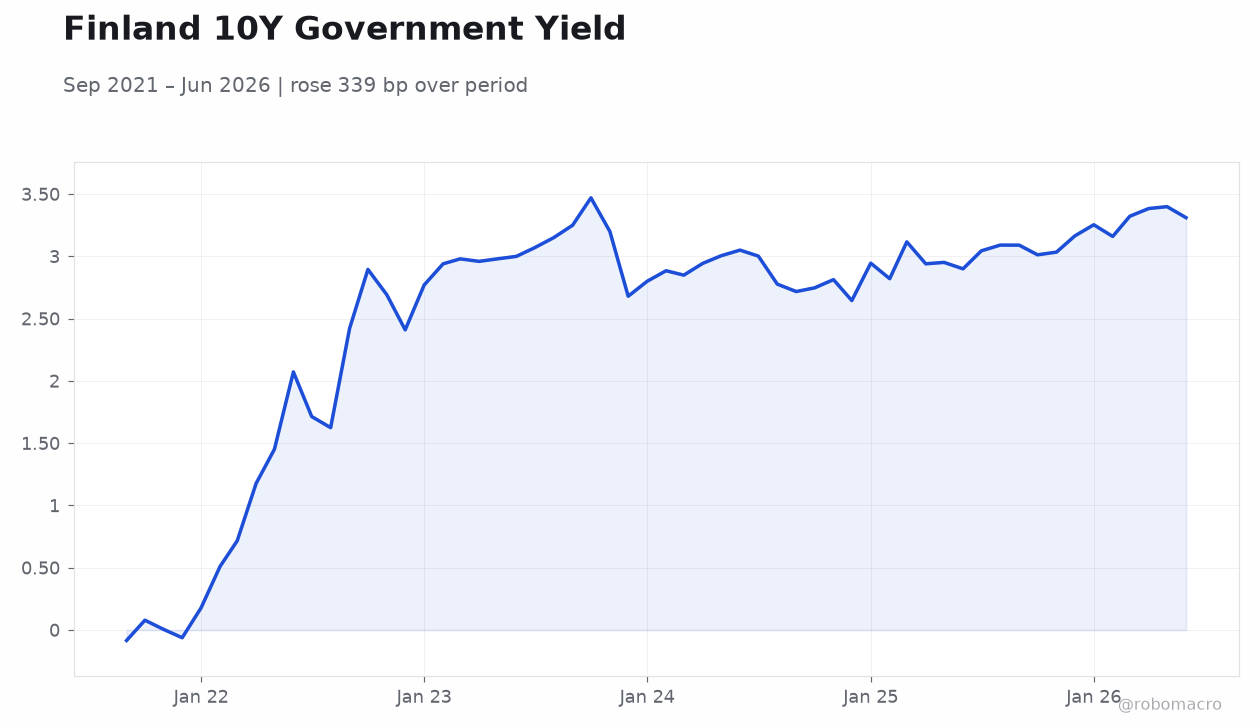
Sweden’s low July CPI reading of 0.20% year-over-year continues to anchor expectations for steady policy despite krona softness. Norway’s 2.98% CPI figure supports Norges Bank’s gradual approach amid elevated oil revenue. Export-oriented sectors in Sweden and Denmark remain sensitive to euro-area demand while Finland’s performance tracks ECB decisions directly.
<i>↓ p.2</i>