Nordics Macro Daily(Beta Mode)
Riksbank Holds at 1.75%, Keeps Hike Option Open
Market Snapshot
| Asset | Level | Change |
|---|---|---|
| OMX Stockholm 30 | 3,258.33 | +0.45% |
| Oslo Bors | 2,075.92 | -0.23% |
| OMX Copenhagen 25 | 1,890.53 | +0.30% |
| OMX Helsinki 25 | 6,336.17 | +0.67% |
| USD/SEK | 9.46 | +0.22% |
| USD/NOK | 9.33 | -0.81% |
| EUR/SEK | 11.06 | +0.42% |
| EUR/NOK | 10.90 | +0.10% |
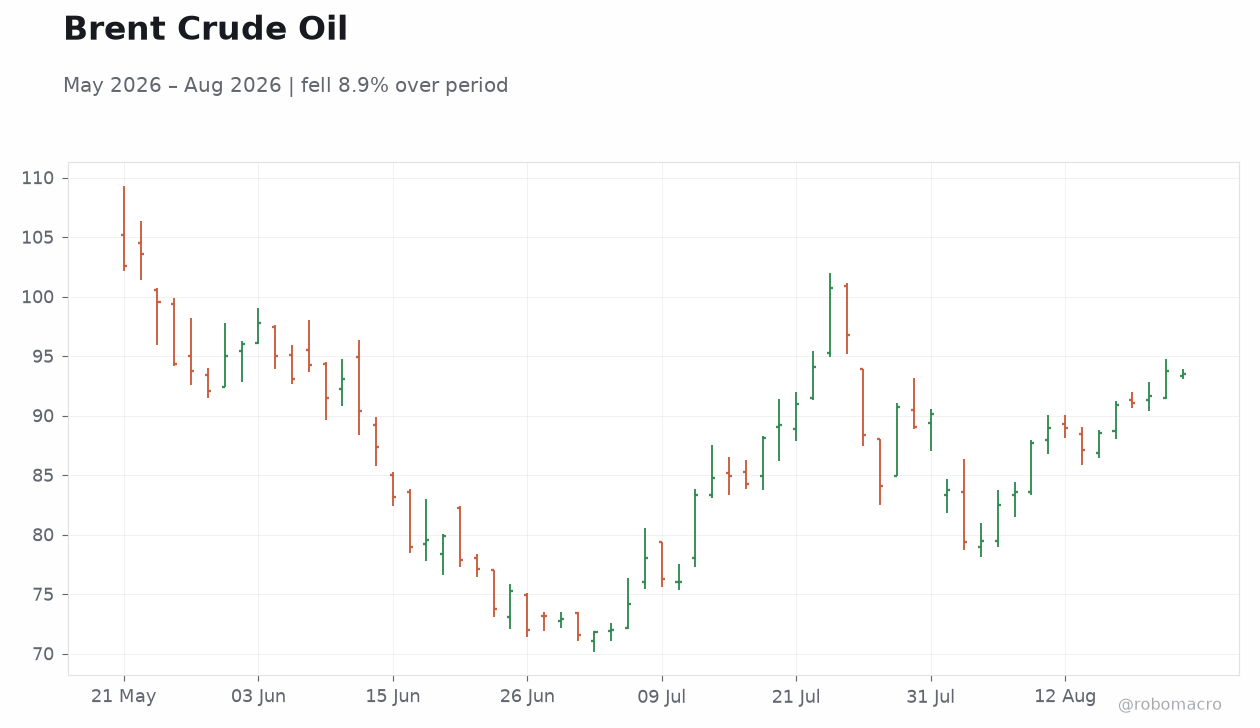
| Brent Crude | 93.49 | -0.31% |
| Gold | 4,605.20 | +1.97% |
| Bitcoin | 75,315.17 | +8.73% |
| Sweden 10Y Govt Yield | 2.78% | +1.31% |
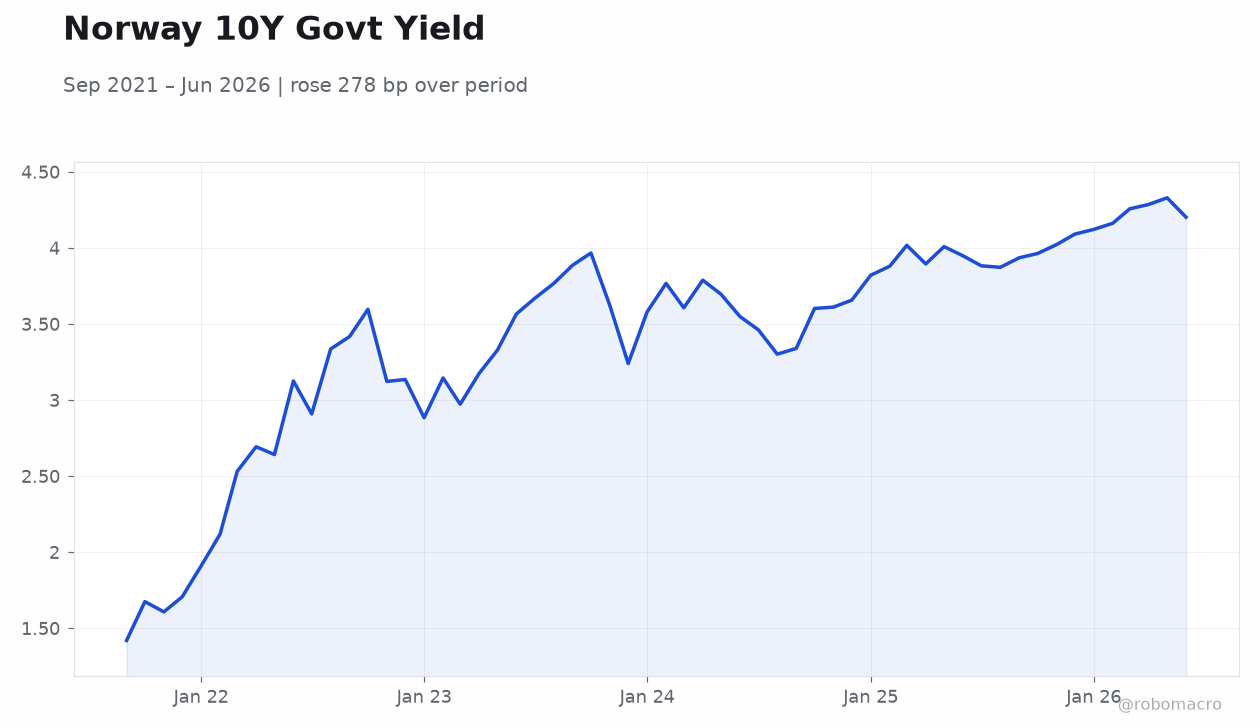
| Norway 10Y Govt Yield | 4.20% | -2.94% |
Prior Economic Events
| Data | Prior | Cons | Actual |
|---|---|---|---|
| Riksbank Rate Decision | 1.75 | 1.75 | 1.75 |
| Press Conference by Riksbank | - | - | - |
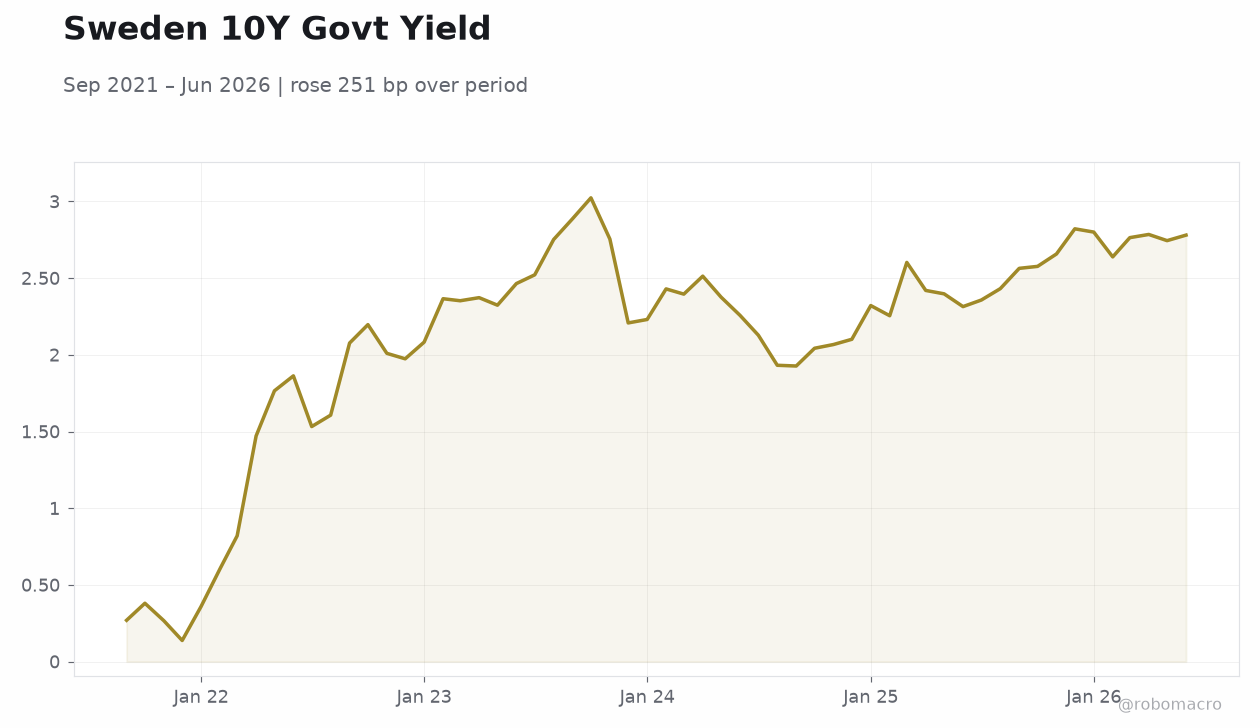 Sweden 10Y Govt Yield | Type: macro_line | Yield %: 2.781 (2026-06-01) | Range: 0.138–3.024 | Trend(6pt): 0.2696,2.01,2.231,2.602,2.745,2.781
Today's Economic Events
| Data | Prior | Cons | Time |
|---|---|---|---|
| No events available | |||
- Riksbank holds rate at 1.75% and flags possible hike this year on inflation risks.
- OMX Stockholm 30 gains 0.45% while USD/SEK rises 0.22% to 9.46.
- Norway 10Y yield falls 2.94% as Brent crude slips 0.31% to 93.49.
Yesterday's Recap
Sweden’s Riksbank held its policy rate at 1.75% and restated that further hikes remain possible this year if inflation fails to moderate. The decision followed the latest Swedish CPI reading of 0.18% year-over-year, which kept price pressures in focus despite the summer lull. Markets reacted with the OMX Stockholm 30 advancing 0.45% to 3,258.33 while the Swedish 10-year government yield rose 1.31% to 2.78%.
The Swedish krona posted modest losses, with USD/SEK climbing 0.22% to 9.46 and EUR/SEK up 0.42% to 11.06. In Norway, the Oslo Bors declined 0.23% to 2,075.92 as Brent crude eased 0.31% to 93.49, weighing on the krone despite USD/NOK falling 0.81% to 9.33. Danish and Finnish equities posted gains, with OMX Copenhagen 25 up 0.30% to 1,890.53 and OMX Helsinki 25 rising 0.67% to 6,336.17.
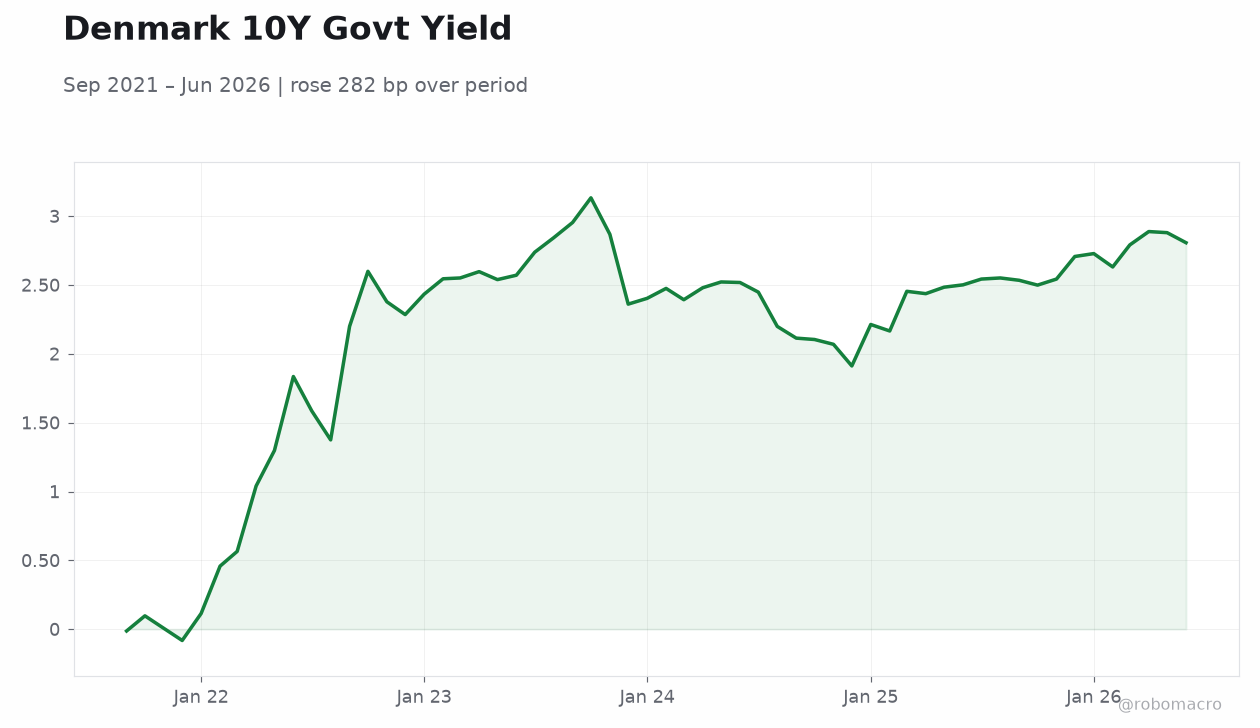
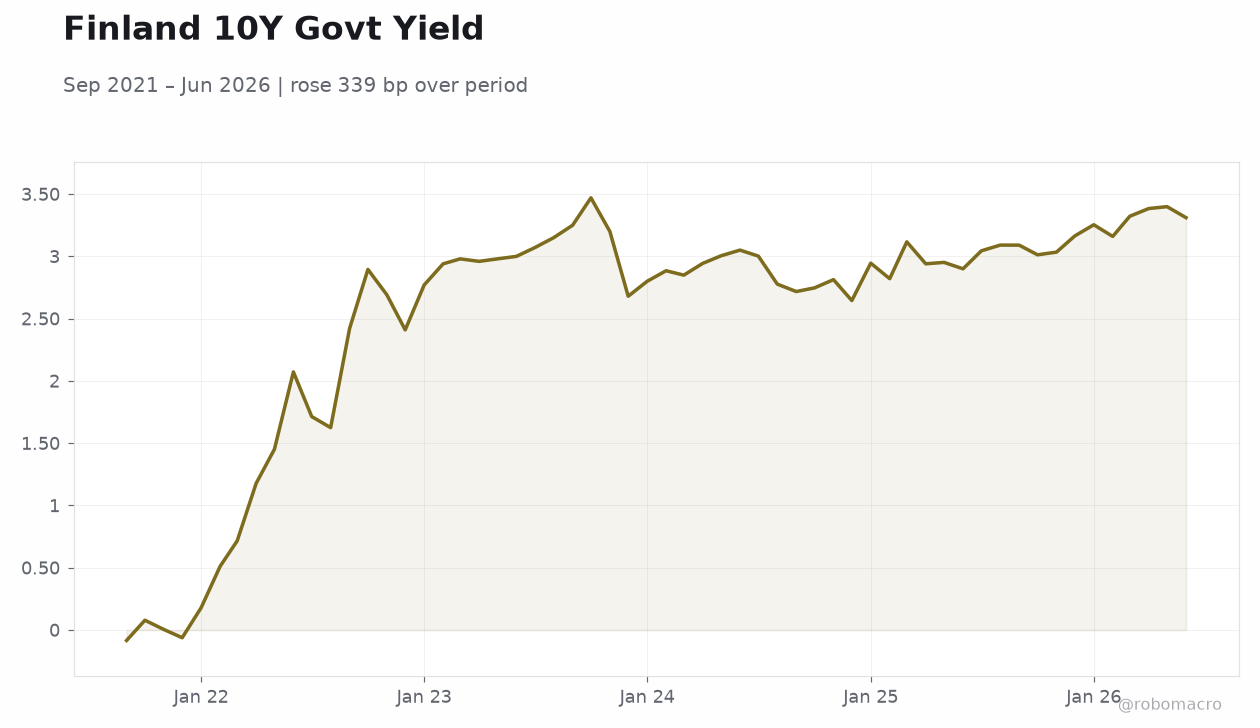
Gold advanced 1.97% to 4,605.20 and Bitcoin surged 8.73% to 75,315.17, reflecting broader risk appetite. No major data releases emerged from Denmark or Finland.
The Day Ahead
No high-impact Nordic economic releases are scheduled for today or tomorrow according to the latest calendar. Markets will monitor any follow-up comments from Riksbank officials after yesterday’s press conference. Attention may shift to oil price movements given their direct influence on Norwegian fiscal revenues and the krone.
Equity traders will watch for any updates on Swedish housing data or Norwegian industrial production trends. Broader euro-area indicators could also influence Danish and Finnish fixed-income markets through the ECB linkage. Norway’s CPI at 2.98% year-over-year provides a stable backdrop for Norges Bank deliberations, while stable Nordic electricity prices in southern regions may support near-term sentiment.
Other Economic Notes
Sweden’s export-oriented manufacturing sector continues to face mixed external demand signals while housing starts showed tentative stabilization. Norway’s oil output remains a key driver of fiscal balances, with any sustained Brent weakness potentially easing NOK appreciation pressures. Denmark’s shipping sector reports stable container rates amid softer dry-bulk conditions.
Finland’s euro-area exposure leaves its growth outlook tied to ECB policy transmission and regional trade volumes. Overall Nordic credit spreads stayed contained with no notable widening in covered bonds or senior bank debt. <i>↓ p.2</i>