Nordics Macro Daily(Beta Mode)
Nordic Equities Diverge as Yields Split
Market Snapshot
| Asset | Level | Change |
|---|---|---|
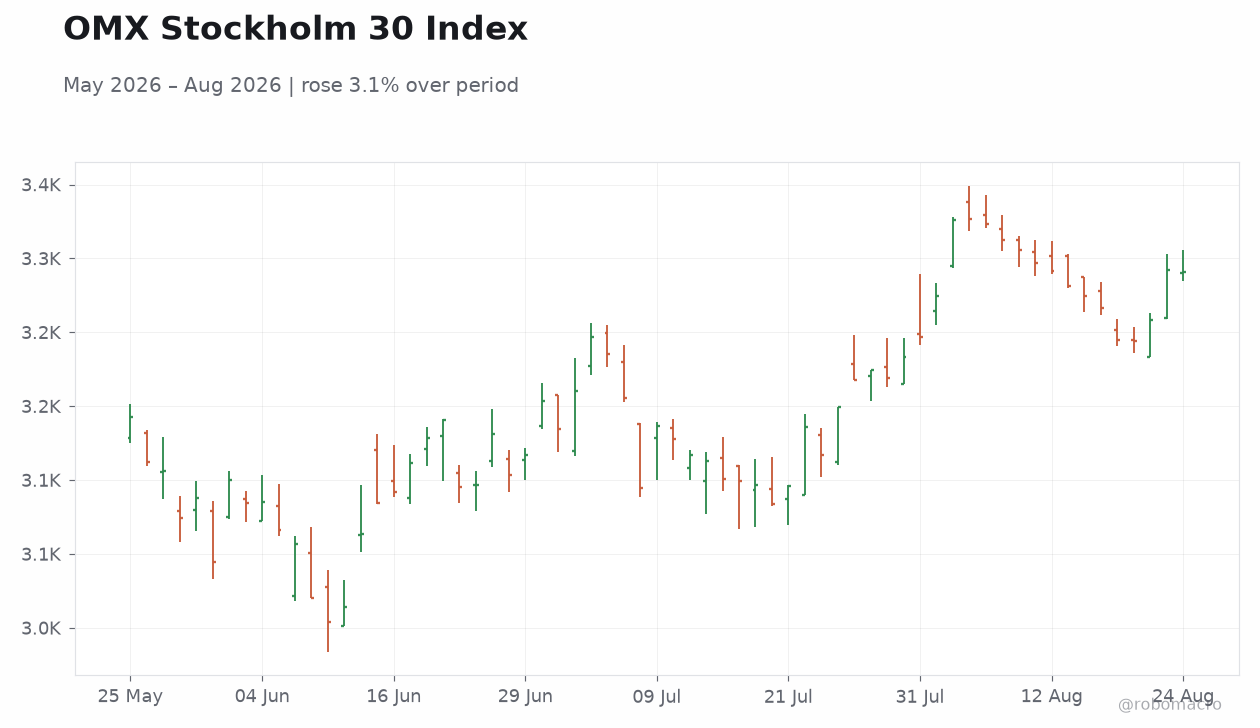
| OMX Stockholm 30 | 3,290.84 | -0.05% |
| Oslo Bors | 2,088.84 | -0.23% |
| OMX Copenhagen 25 | 1,920.33 | +0.71% |
| OMX Helsinki 25 | 6,394.11 | -0.23% |
| USD/SEK | 9.47 | -0.06% |
| USD/NOK | 9.31 | +0.07% |
| EUR/SEK | 11.07 | +0.12% |
| EUR/NOK | 10.85 | -0.14% |
| Brent Crude | 91.45 | -0.78% |
| Gold | 4,700.10 | +1.28% |
| Bitcoin | 80,703.05 | +3.79% |
| Sweden 10Y Govt Yield | 2.78% | +1.31% |
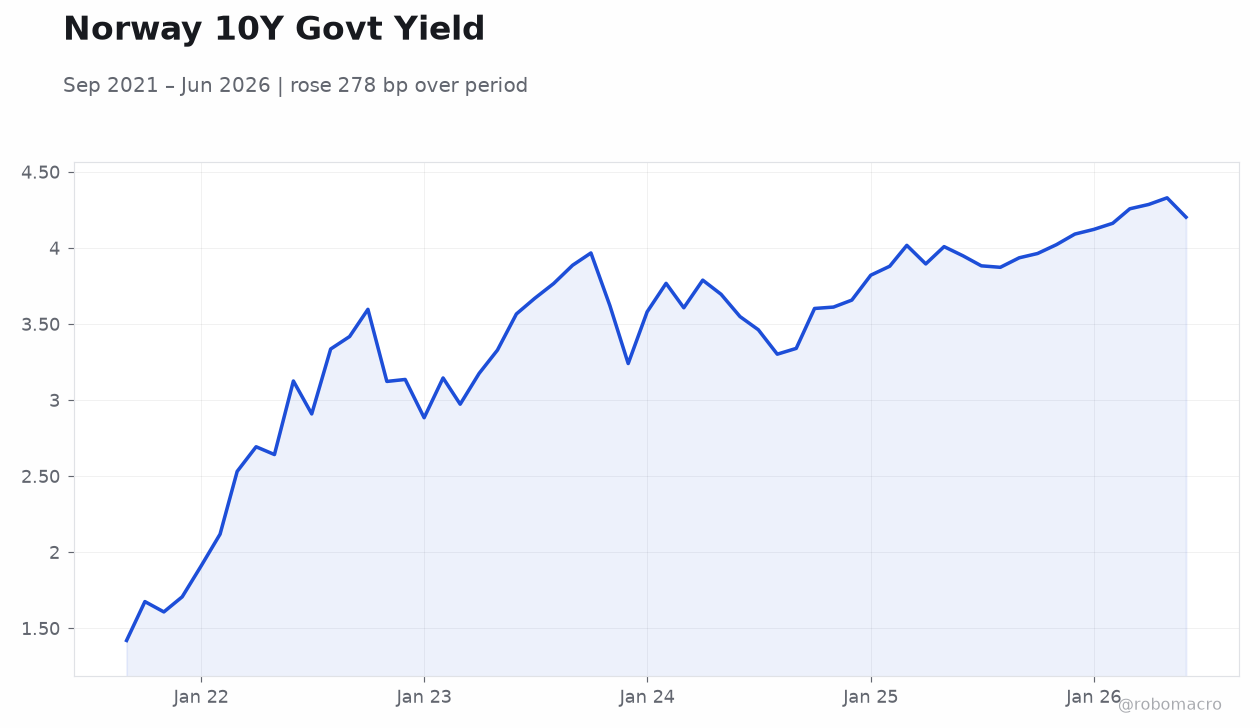
| Norway 10Y Govt Yield | 4.20% | -2.94% |
Prior Economic Events
| Data | Prior | Cons | Actual |
|---|---|---|---|
| No events available | |||
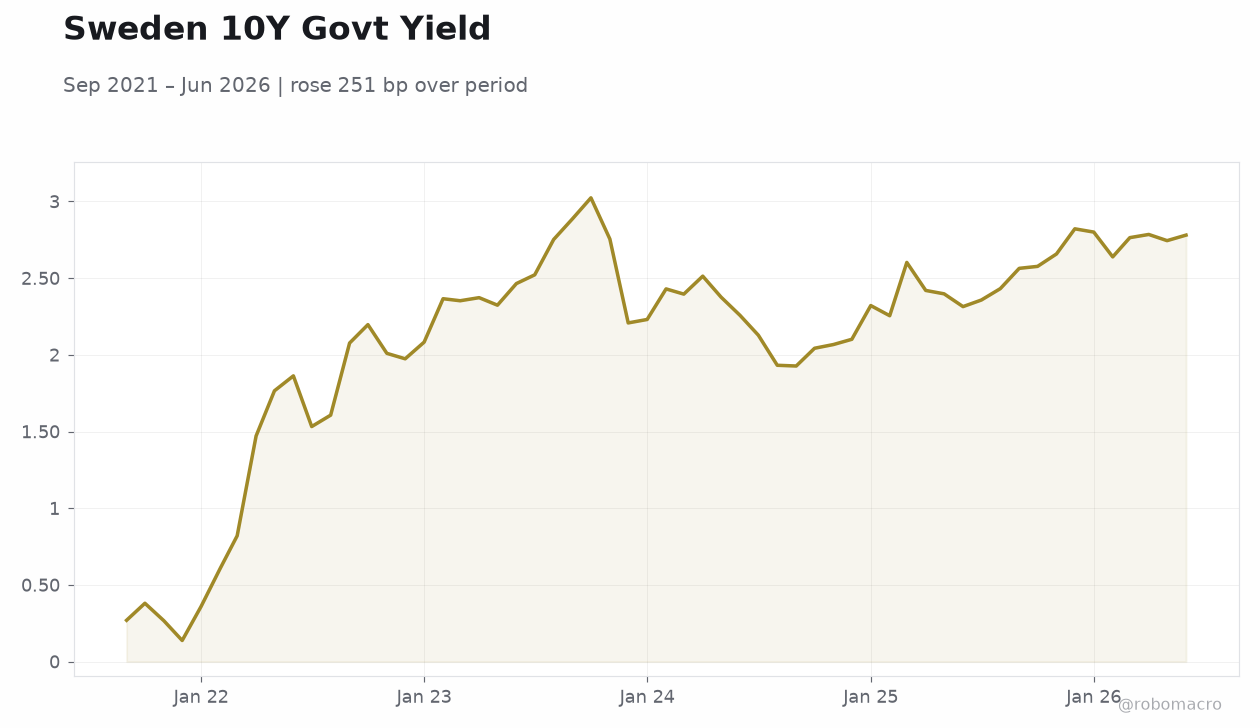 Sweden 10Y Govt Yield | Type: macro_line | Yield %: 2.781 (2026-06-01) | Range: 0.138–3.024 | Trend(6pt): 0.2696,2.01,2.231,2.602,2.745,2.781
Today's Economic Events
| Data | Prior | Cons | Time |
|---|---|---|---|
| No events available | |||
- Copenhagen 25 rises 0.71% while Stockholm slips 0.05%
- Norway 10Y yield drops 2.94% as Brent eases 0.78%
- Sweden CPI at 0.18% YoY underscores subdued price pressures
Yesterday's Recap
Nordic equity markets posted mixed results with limited volume. The OMX Copenhagen 25 advanced 0.71% to 1,920.33, while the OMX Stockholm 30 fell 0.05% to 3,290.84. Oslo Bors declined 0.23% to 2,088.84 and OMX Helsinki 25 eased 0.23% to 6,394.11.
USD/SEK settled at 9.47 after a 0.06% decline and USD/NOK rose 0.07% to 9.31. EUR/SEK rose 0.12% to 11.07 while EUR/NOK fell 0.14% to 10.85. Sweden’s 10Y government yield climbed 1.31% to 2.78%, whereas Norway’s 10Y yield fell 2.94% to 4.20%.
Brent crude declined 0.78% to 91.45, weighing on Norwegian energy names, while gold rose 1.28% to 4,700.10 and Bitcoin gained 3.79% to 80,703.05. No economic events were recorded yesterday.
The Day Ahead
No major Nordic economic releases are scheduled. Market participants will monitor global risk sentiment and any fresh signals from the ECB. Oil price movements remain key for Norway’s fiscal outlook and NOK valuation.
Equity volumes are expected to stay thin ahead of month-end. Attention may shift to any housing or trade updates from Sweden or Denmark if they surface.
Other Economic Notes
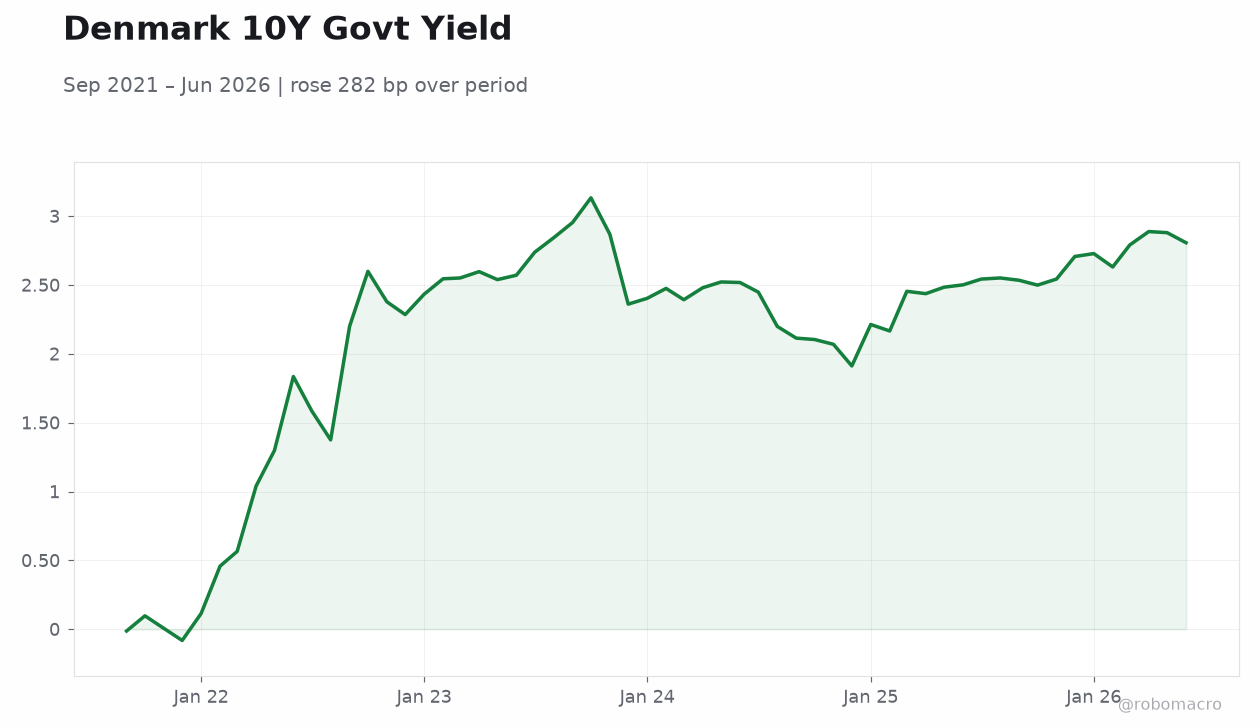
Sweden’s export-oriented manufacturing sector faces soft external demand amid subdued CPI readings. Norway continues to benefit from elevated energy revenues that support the Government Pension Fund and the krone. Denmark’s peg to the euro keeps Danmarks Nationalbank aligned with ECB policy, limiting independent rate flexibility.
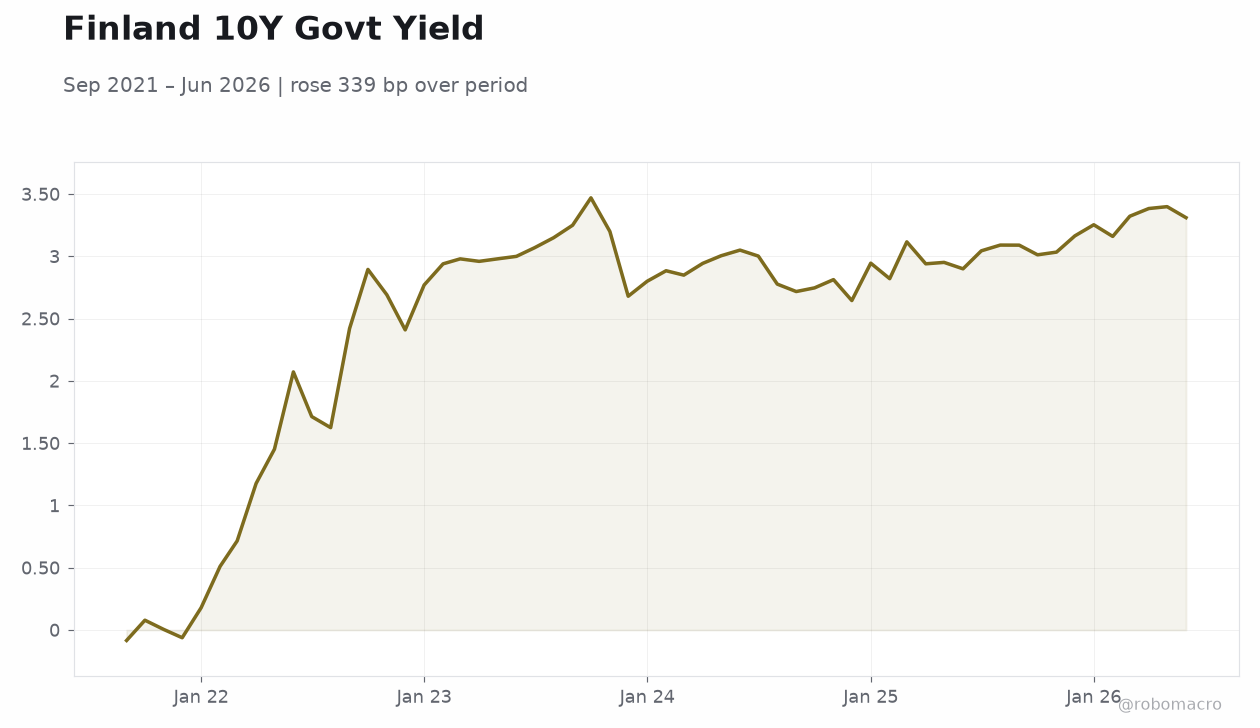
Finland’s eurozone membership means its borrowing costs track ECB decisions directly. Regional credit spreads stayed stable despite the equity divergence. Norway’s oil production data and maintenance impacts at fields such as Johan Sverdrup add further context to energy revenue stability.
Global Macro News
Questions persist over whether the euro area economy can sustain another ECB rate hike. China’s export strength masks underlying domestic weakness that could dampen demand for Nordic machinery exports. Poland’s July retail sales missed forecasts, highlighting softer consumption trends across parts of Europe.
Saudi Arabia’s expanding space economy signals new diversification away from oil, a theme relevant for Norway. Mexico’s 1.4% quarterly growth offers a contrast to the Nordic bloc’s more muted momentum. <i>↓ p.2</i>