Nordics Macro Daily(Beta Mode)
Nordic Equities Rise as Brent Crude Falls 3%
Market Snapshot
| Asset | Level | Change |
|---|---|---|
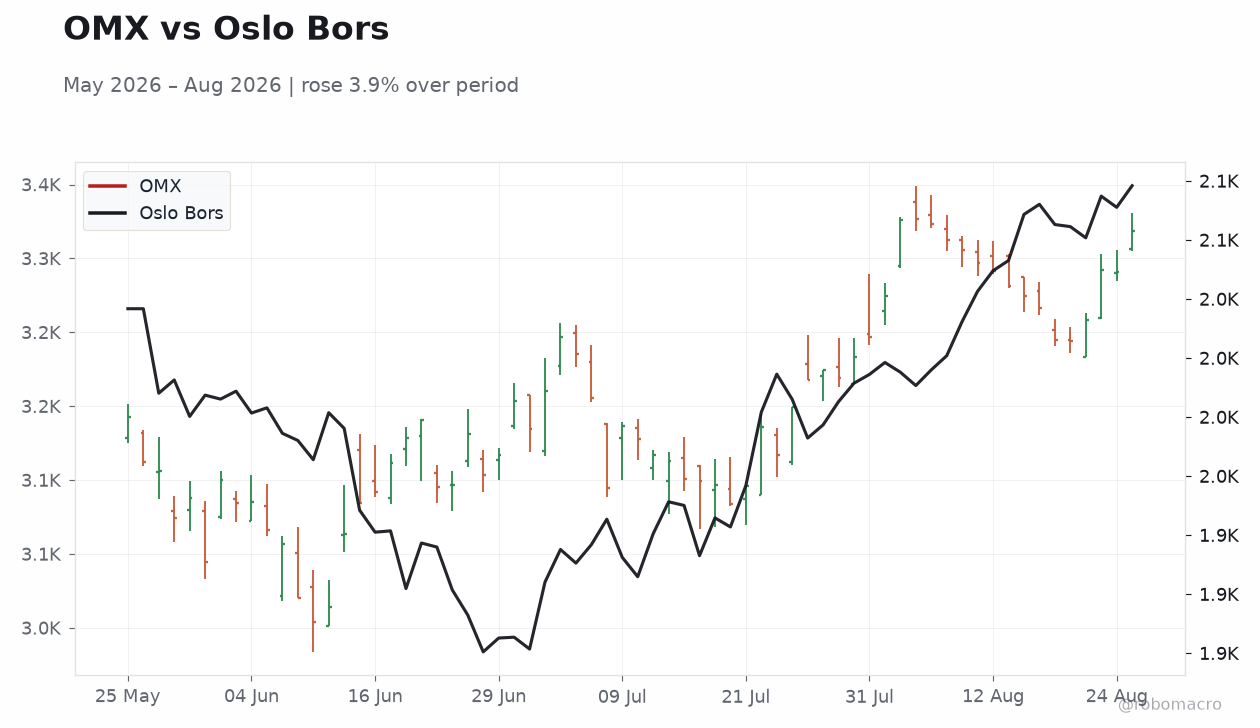
| OMX Stockholm 30 | 3,318.26 | +0.83% |
| Oslo Bors | 2,097.99 | +0.44% |
| OMX Copenhagen 25 | 1,935.07 | +0.77% |
| OMX Helsinki 25 | 6,491.09 | +1.52% |
| USD/SEK | 9.49 | +0.22% |
| USD/NOK | 9.32 | +0.27% |
| EUR/SEK | 11.07 | +0.11% |
| EUR/NOK | 10.87 | +0.22% |
| Brent Crude | 85.88 | -3.05% |
| Gold | 4,696.90 | +1.27% |
| Bitcoin | 79,055.37 | +0.12% |
| Sweden 10Y Govt Yield | 2.78% | +1.31% |
| Norway 10Y Govt Yield | 4.20% | -2.94% |
Prior Economic Events
| Data | Prior | Cons | Actual |
|---|---|---|---|
| No events available | |||
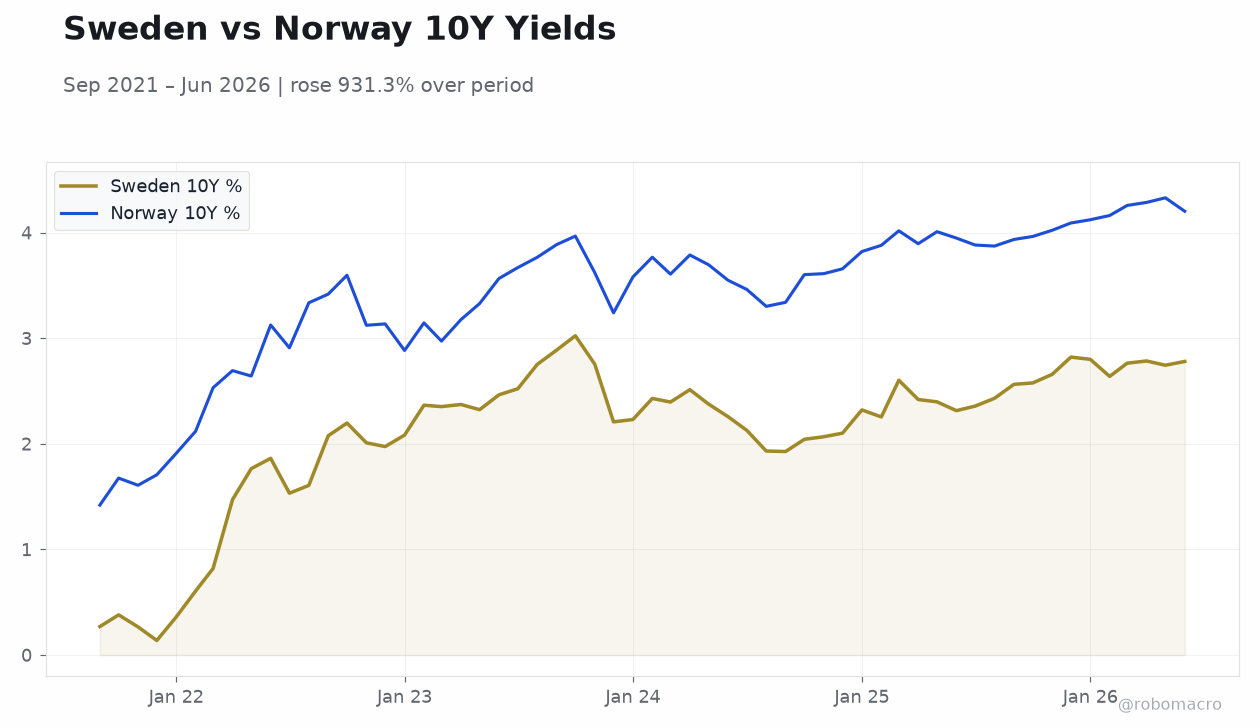 Sweden vs Norway 10Y Yields | Type: macro_line | Sweden 10Y %: 2.781 (2026-06-01) | Range: 0.138–3.024 | Trend(6pt): 0.2696,2.01,2.231,2.602,2.745,2.781 | Norway 10Y %: 4.203 (2026-06-01) | Range: 1.42–4.33 | Trend(6pt): 1.42,3.123,3.58,4.017,4.33,4.203
Today's Economic Events
| Data | Prior | Cons | Time |
|---|---|---|---|
| No events available | |||
- Nordic equity indices posted broad gains, led by Helsinki's 1.52% advance.
- Brent crude fell 3.05% to $85.88, pressuring NOK while supporting SEK.
- Nordic 10-year yields diverged, with Sweden rising 1.31% and Norway falling 2.94%.
Yesterday's Recap
Nordic equity markets closed higher across the board on 25 August. OMX Stockholm 30 rose 0.83% to 3,318.26 while Oslo Bors gained 0.44% to 2,097.99. OMX Copenhagen 25 advanced 0.77% to 1,935.07 and OMX Helsinki 25 surged 1.52% to 6,491.09.
USD/SEK climbed 0.22% to 9.49 and USD/NOK increased 0.27% to 9.32, reflecting modest dollar strength. EUR/SEK edged up 0.11% to 11.07 while EUR/NOK rose 0.22% to 10.87. Brent crude dropped sharply 3.05% to 85.88, weighing on Norway's fiscal outlook as an oil exporter.
Sweden 10Y government yield rose 1.31% to 2.78% whereas Norway 10Y yield fell 2.94% to 4.20%. Gold advanced 1.27% to 4,696.90 amid safe-haven flows. No major Nordic data releases occurred.
Bitcoin edged 0.12% higher to 79,055.37. The absence of releases left markets focused on commodity moves and external euro-area signals.
The Day Ahead
No scheduled Nordic economic releases appear on the calendar for 26 August. Markets will monitor any follow-through from yesterday's Brent decline and its implications for NOK and Norwegian fiscal transfers. Attention may shift to euro-area developments given Finland's ECB membership and Denmark's EUR/DKK peg.
Traders will also watch global risk sentiment for spillover effects on export-oriented Swedish and Danish manufacturing sectors. Oil price volatility remains a key driver for Norway's krone and sovereign wealth fund dynamics. With empty calendars across the region, flows are likely to track broader equity momentum and any fresh commentary from ECB-linked officials.
Other Economic Notes
Norway faces longer-term risks to oil and gas output after 2030 according to official warnings, potentially affecting future fiscal revenues. Eurozone retail sales contracted unexpectedly in June, highlighting persistent weakness in consumption that could indirectly pressure Nordic exporters. Sweden and Denmark, both manufacturing-focused economies, remain sensitive to any further softening in euro-area demand.
Finland's eurozone integration means ECB policy directly shapes its borrowing costs and trade competitiveness. Broader European growth concerns may influence Nordic housing markets, particularly Sweden where transaction volumes already lag prior-year levels. <i>↓ p.2</i>