Nordics Macro Daily(Beta Mode)
Riksbank Flags Inflation Risks as Equities Mixed
Market Snapshot
| Asset | Level | Change |
|---|---|---|
| OMX Stockholm 30 | 3,326.34 | +0.24% |
| Oslo Bors | 2,094.40 | -0.17% |
| OMX Copenhagen 25 | 1,920.84 | -0.74% |
| OMX Helsinki 25 | 6,493.30 | +0.03% |
| USD/SEK | 9.52 | +0.76% |
| USD/NOK | 9.35 | +0.38% |
| EUR/SEK | 11.04 | -0.35% |
| EUR/NOK | 10.90 | +0.20% |
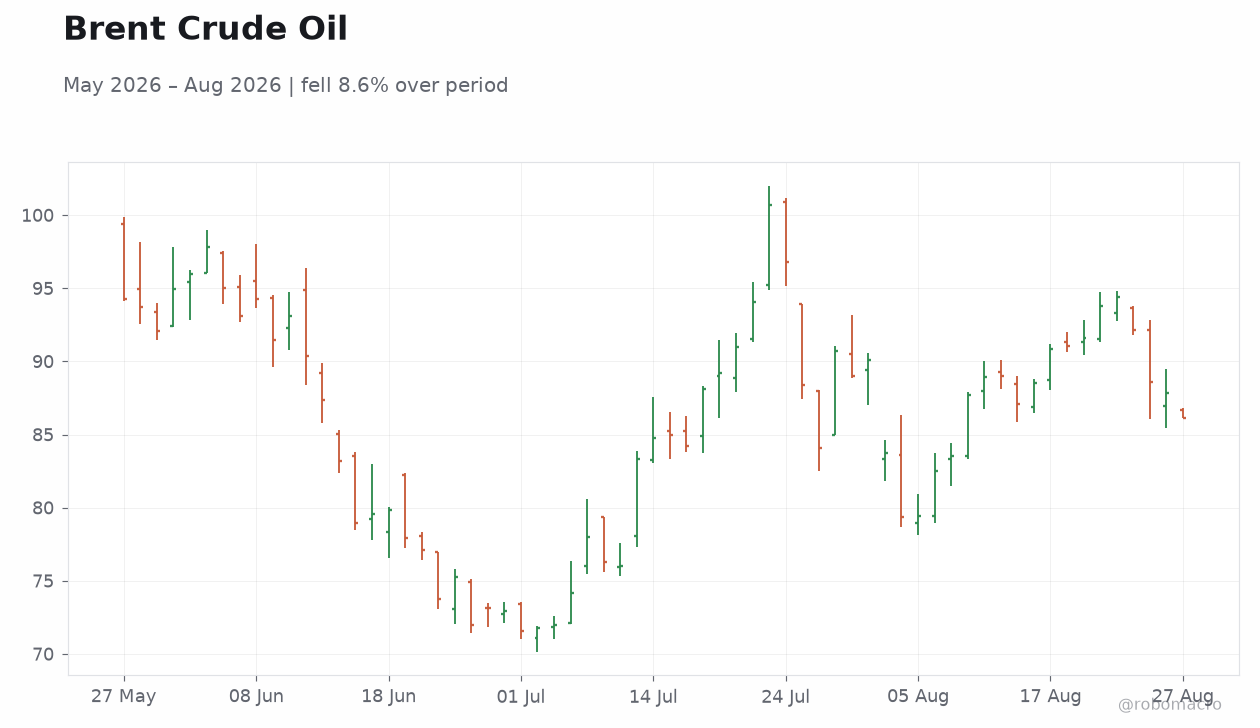
| Brent Crude | 86.15 | -1.92% |
| Gold | 4,660.80 | +1.36% |
| Bitcoin | 78,798.90 | +0.30% |
| Sweden 10Y Govt Yield | 2.78% | +1.31% |
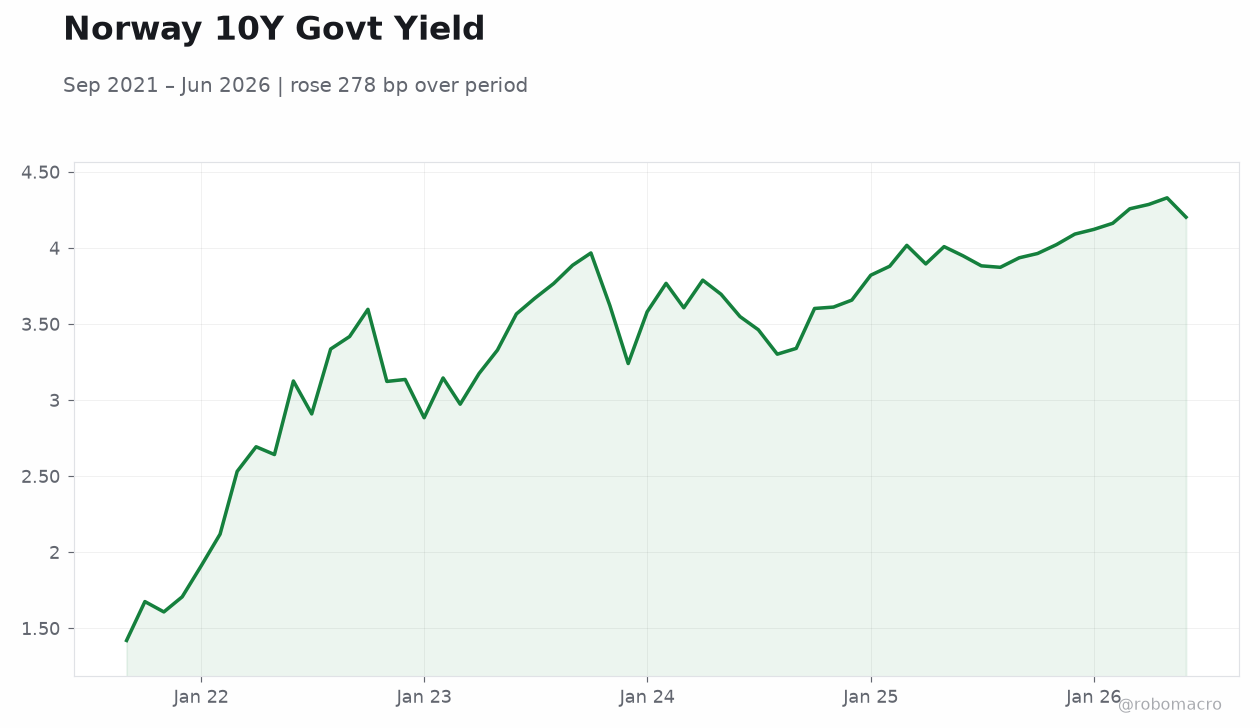
| Norway 10Y Govt Yield | 4.20% | -2.94% |
Prior Economic Events
| Data | Prior | Cons | Actual |
|---|---|---|---|
| No events available | |||
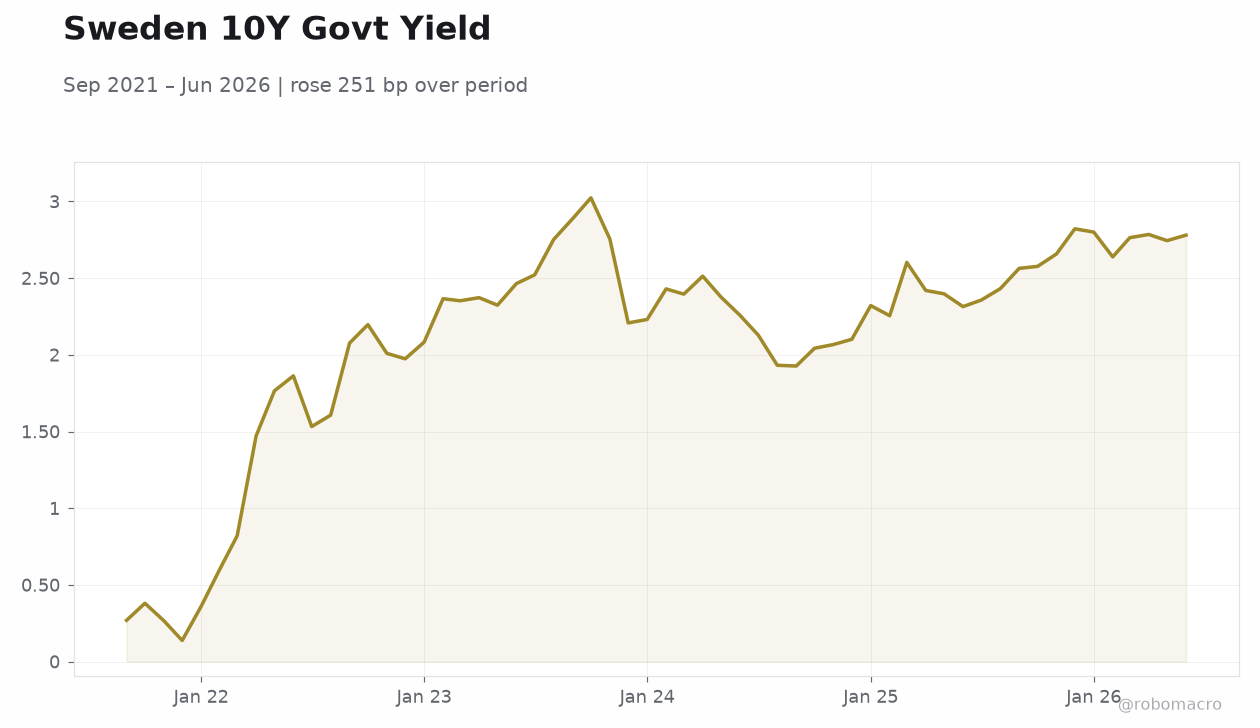 Sweden 10Y Govt Yield | Type: macro_line | Yield %: 2.781 (2026-06-01) | Range: 0.138–3.024 | Trend(6pt): 0.2696,2.01,2.231,2.602,2.745,2.781
Today's Economic Events
| Data | Prior | Cons | Time |
|---|---|---|---|
| No events available | |||
- Swedish PPI slowed to 6.4% in July while Riksbank’s Hjelm highlighted persistent inflation risks.
- Nordic equities closed mixed with Stockholm up 0.24% and Copenhagen down 0.74%; SEK weakened 0.76% versus USD.
- Brent crude fell 1.92% to $86.15, pressuring Norway’s fiscal outlook and NOK performance.
Yesterday's Recap
Nordic equity markets posted modest mixed results with limited macro data releases. OMX Stockholm 30 rose 0.24% to 3,326.34 while Oslo Bors slipped 0.17% to 2,094.40. OMX Copenhagen 25 declined 0.74% to 1,920.84 and OMX Helsinki 25 edged 0.03% higher.
Sweden’s producer price inflation eased to 6.4% in July from 7.4% in June, consistent with the verified 0.18% CPI reading. Riksbank board member Hjelm stated that inflation risks remain elevated. USD/SEK climbed 0.76% to 9.52 and USD/NOK gained 0.38% to 9.35, while Sweden’s 10-year yield rose 1.31% to 2.78% and Norway’s 10-year yield fell 2.94% to 4.20%.
Brent’s 1.92% drop to 86.15 weighed on Norway’s oil-linked revenues. Gold rose 1.36% to 4,660.80, reflecting hedging flows, and Bitcoin added 0.30% to 78,798.90. EUR/SEK eased 0.35% to 11.04 while EUR/NOK gained 0.20% to 10.90.
No tier-1 data prints occurred, leaving markets to digest the PPI easing and Hjelm’s comments without fresh surprises.
The Day Ahead
No tier-1 Nordic data releases are scheduled for the coming session. Markets will monitor any follow-up comments from Riksbank or Norges Bank officials. Sweden’s export-oriented manufacturing sector remains sensitive to EUR/SEK moves at 11.04.
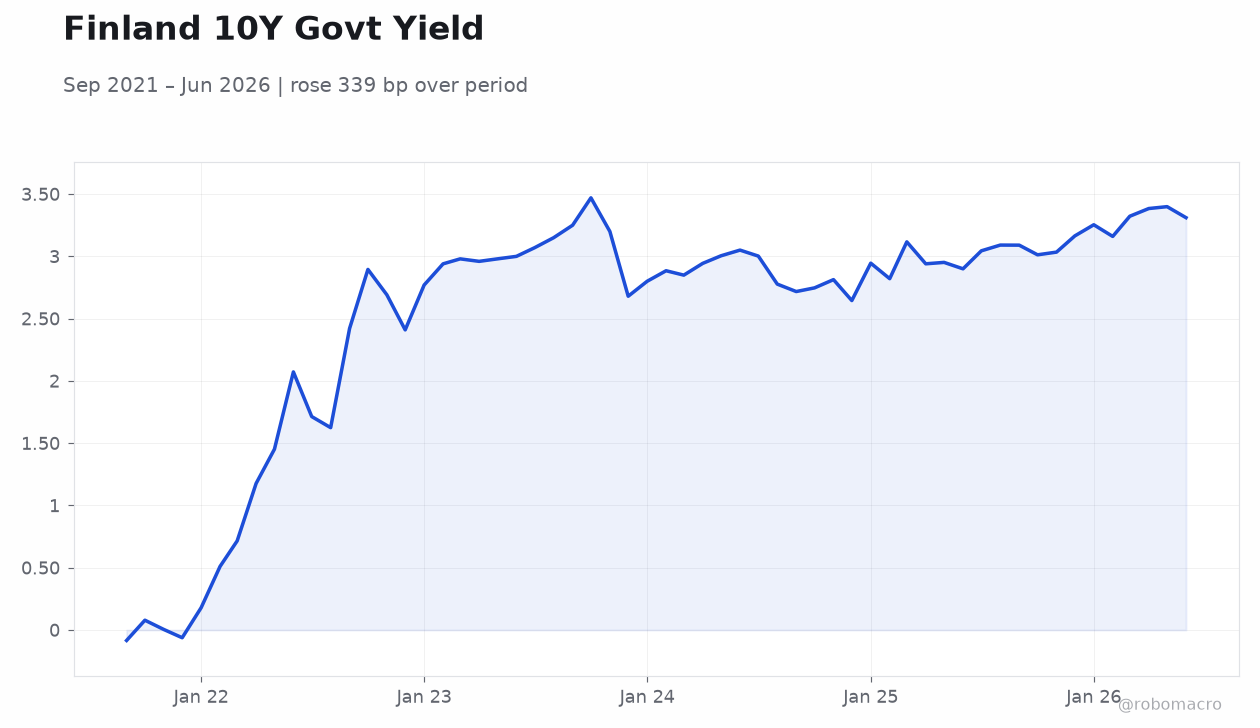
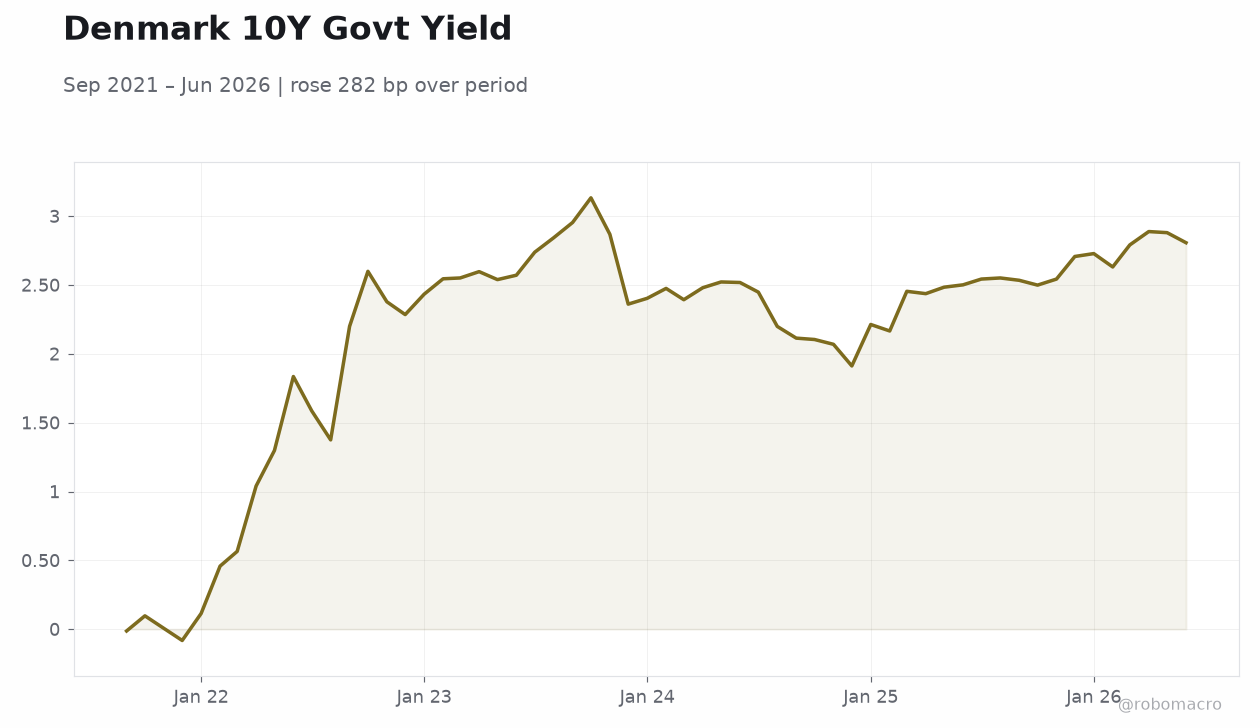
Norway’s oil revenue dynamics will track Brent price stability near current levels. Denmark’s Nationalbank continues to focus on EUR/DKK peg maintenance amid quiet domestic conditions. Finland’s euro-area exposure leaves it aligned with broader ECB developments.
Currency pairs such as USD/SEK at 9.52 and USD/NOK at 9.35 will influence import costs and competitiveness for open Nordic economies. Yield movements in Sweden at 2.78% and Norway at 4.20% may signal shifting rate expectations ahead of any central-bank speeches.
Other Economic Notes
Sweden’s export manufacturing base benefits from the observed SEK softening against the dollar. Norway’s position as an oil exporter links fiscal surpluses directly to Brent movements, with the recent decline capping NOK support. Denmark maintains its ERM II peg to the euro, limiting independent policy flexibility.
<i>↓ p.2</i>