Nordics Macro Daily(Beta Mode)
Riksbank Risks Weigh on SEK as Brent Slides
Market Snapshot
| Asset | Level | Change |
|---|---|---|
| OMX Stockholm 30 | 3,321.44 | -0.15% |
| Oslo Bors | 2,089.76 | -0.22% |
| OMX Copenhagen 25 | 1,917.50 | -0.17% |
| OMX Helsinki 25 | 6,499.01 | +0.09% |
| USD/SEK | 9.52 | +0.02% |
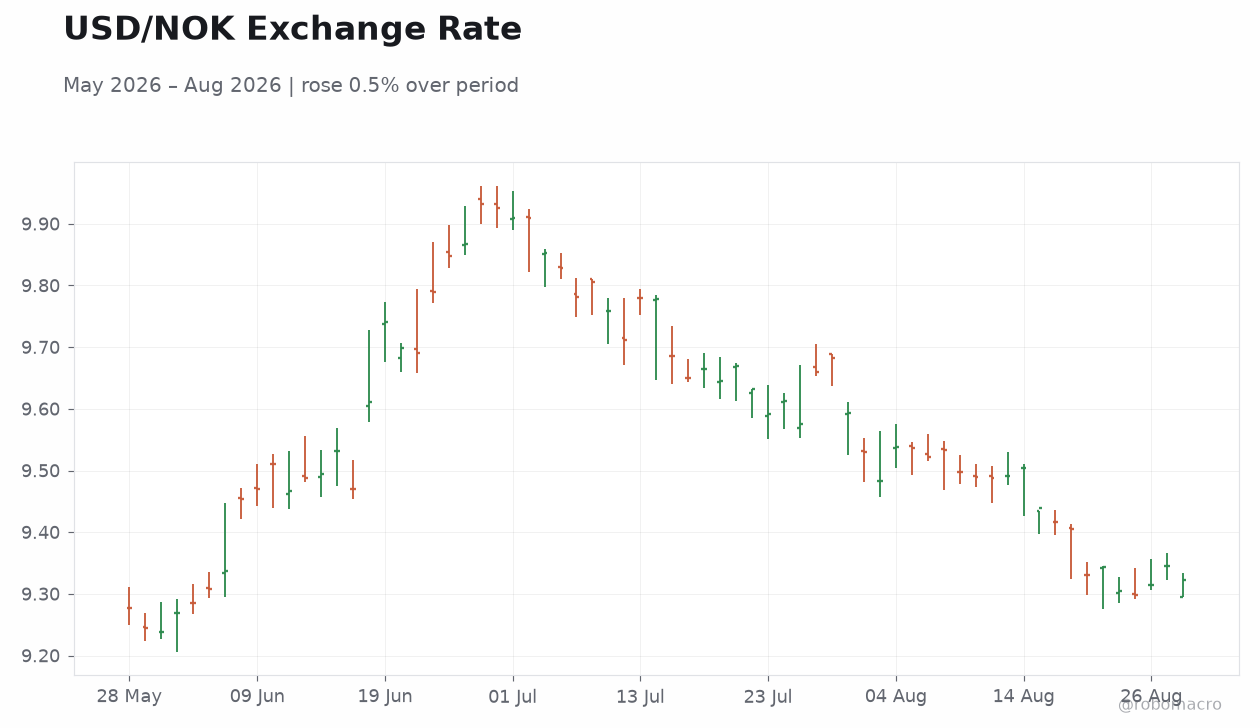
| USD/NOK | 9.32 | -0.25% |
| EUR/SEK | 11.09 | -0.02% |
| EUR/NOK | 10.86 | -0.34% |
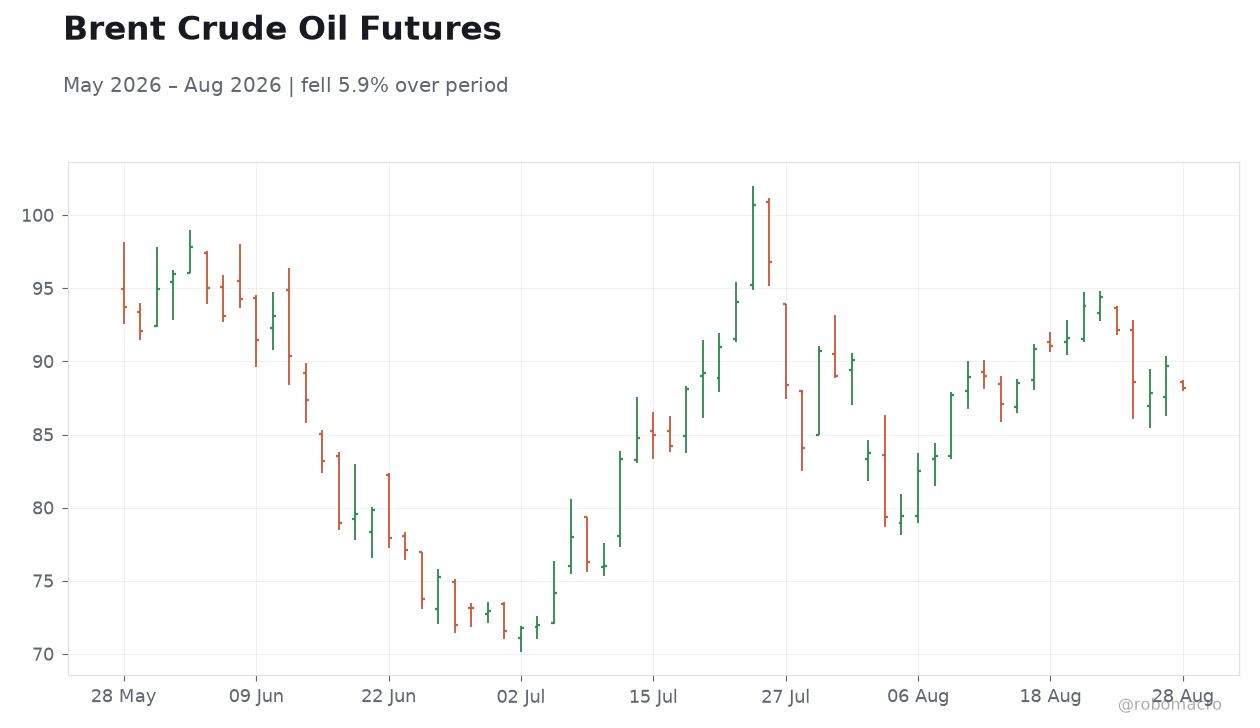
| Brent Crude | 88.24 | -1.63% |
| Gold | 4,627.20 | +0.38% |
| Bitcoin | 79,849.05 | +1.04% |
| Sweden 10Y Govt Yield | 2.78% | +1.31% |
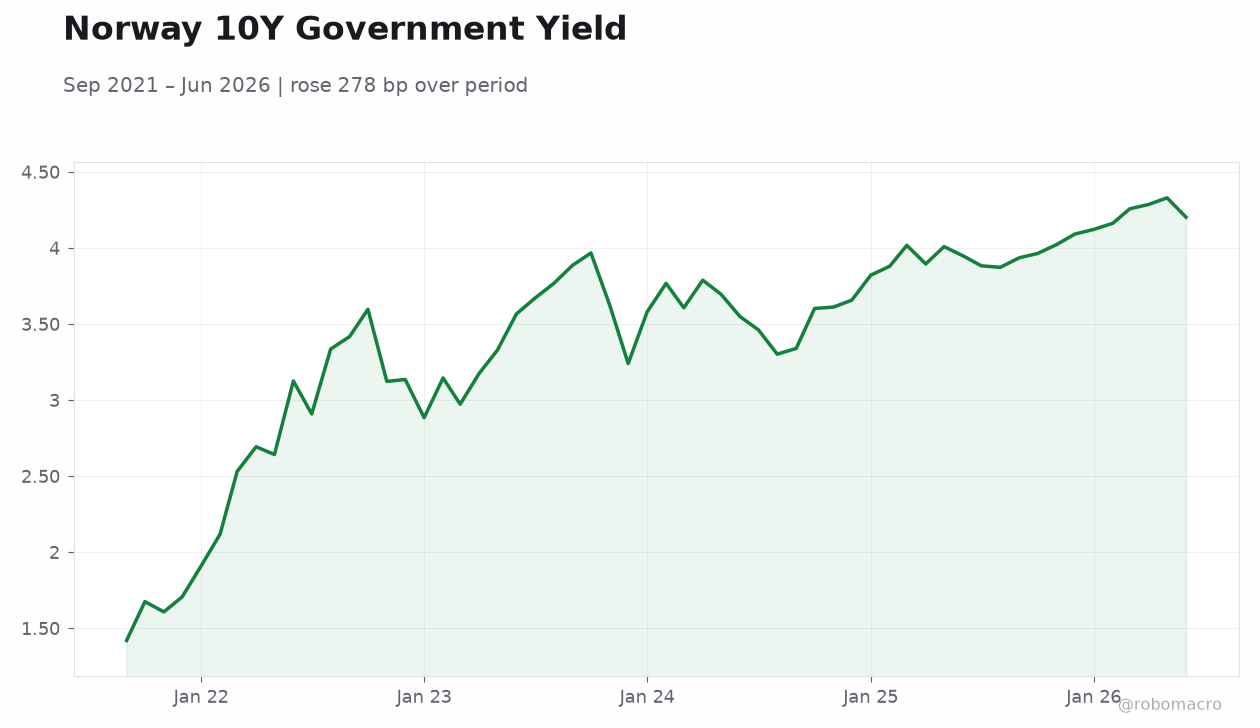
| Norway 10Y Govt Yield | 4.20% | -2.94% |
Prior Economic Events
| Data | Prior | Cons | Actual |
|---|---|---|---|
| No events available | |||
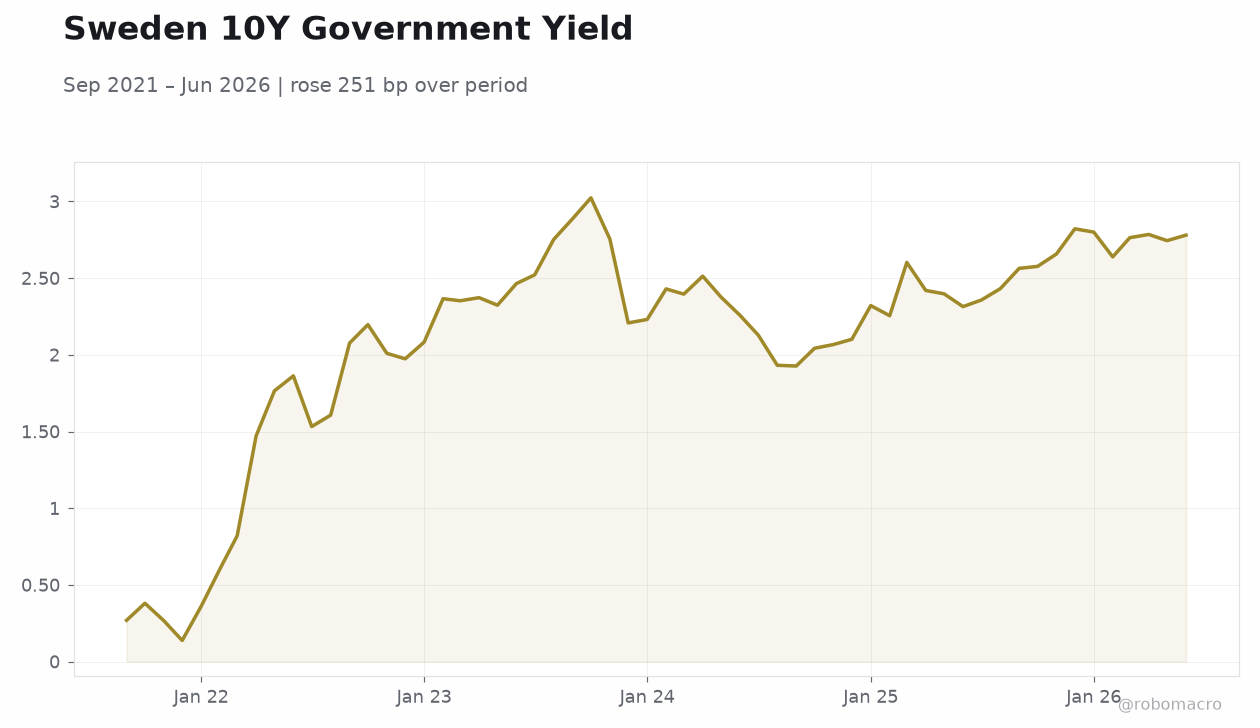 Sweden 10Y Government Yield | Type: macro_line | Yield %: 2.781 (2026-06-01) | Range: 0.138–3.024 | Trend(6pt): 0.2696,2.01,2.231,2.602,2.745,2.781
Today's Economic Events
| Data | Prior | Cons | Time |
|---|---|---|---|
| No events available | |||
- Nordic equities closed mixed with OMX Stockholm 30 down 0.15% and Oslo Bors off 0.22%, while OMX Helsinki 25 rose 0.09%.
- USD/NOK fell 0.25% and EUR/NOK dropped 0.34% amid softer Brent crude, which declined 1.63% to 88.24.
- Sweden 10Y yields rose 1.31% to 2.78% while Norway 10Y yields fell 2.94% to 4.20%, reflecting divergent rate outlooks.
Yesterday's Recap
Nordic markets reflected modest risk-off sentiment amid thin data flow. OMX Stockholm 30 eased 0.15% to 3,321.44 while Oslo Bors declined 0.22% to 2,089.76, pressured by lower Brent. OMX Copenhagen 25 fell 0.17% to 1,917.50, but OMX Helsinki 25 gained 0.09% to 6,499.01.
USD/SEK edged up 0.02% to 9.52 as BNY flagged inflation risks that could force a tougher Riksbank stance. USD/NOK dropped 0.25% to 9.32 and EUR/NOK fell 0.34% to 10.86 on valuation headwinds for the Norwegian krone. Norway Q2 GDP growth accelerated to 0.7%, led by the mainland economy, supporting Norges Bank’s cautious hiking bias.
Swedish industrial output growth slowed in May, clouding the krona and rate outlook. Denmark’s housing debt costs rose slightly per Danmarks Nationalbank data, with limited spillovers to the EUR/DKK peg. Gold rose 0.38% to 4,627.20 while Bitcoin gained 1.04% to 79,849.05.
The Day Ahead
Nordic calendars remain empty today, leaving markets to focus on external drivers. Traders will monitor Brent crude movements given Norway’s oil revenue sensitivity and potential effects on NOK. Swedish krona volatility may persist following BNY’s warning on inflation risks that could alter Riksbank timing.
Danish and Finnish data releases are absent, keeping attention on ECB signals for the EUR/DKK peg and Finnish eurozone exposure. Equity flows may stay light ahead of any weekend developments. FX markets will watch USD/SEK and EUR/NOK for continuation of yesterday’s moves.
Sweden 10Y at 2.78% and Norway 10Y at 4.20% set the tone for any yield reaction to global oil and inflation signals.
Other Economic Notes
Sweden’s export-oriented manufacturing sector faces headwinds from slower industrial output, while Norway benefits from solid mainland GDP momentum. Danish non-oil activity remains stable under the ERM II framework, limiting krone volatility. Finland’s eurozone membership ties its outlook directly to ECB policy, with housing debt trends in Denmark offering a regional parallel.
Broader Nordic housing markets show resilience in Sweden but rising costs in Denmark that could dampen consumption. Oil price swings continue to dominate Norway’s fiscal space under the 3% structural deficit rule. EUR/SEK at 11.09 and EUR/NOK at 10.86 highlight cross-border valuation gaps.